How to Bring Italian Red Wines to International Markets
Wines Export Redaktion · Zuletzt aktualisiert:
The export of Italian red wine represents a strategic opportunity for wineries looking to expand their presence in international markets. However, success in this sector requires a deep understanding of market dynamics, documentation requirements, and the preferences of foreign consumers. This article offers a comprehensive guide to navigating the complexities of red wine exporting, aimed at both Italian producers and potential importers, providing essential information to tackle this market. In-depth information: OIV — International Organisation of Vine and Wine.
What are the distinctive characteristics of Italian red wines for export?
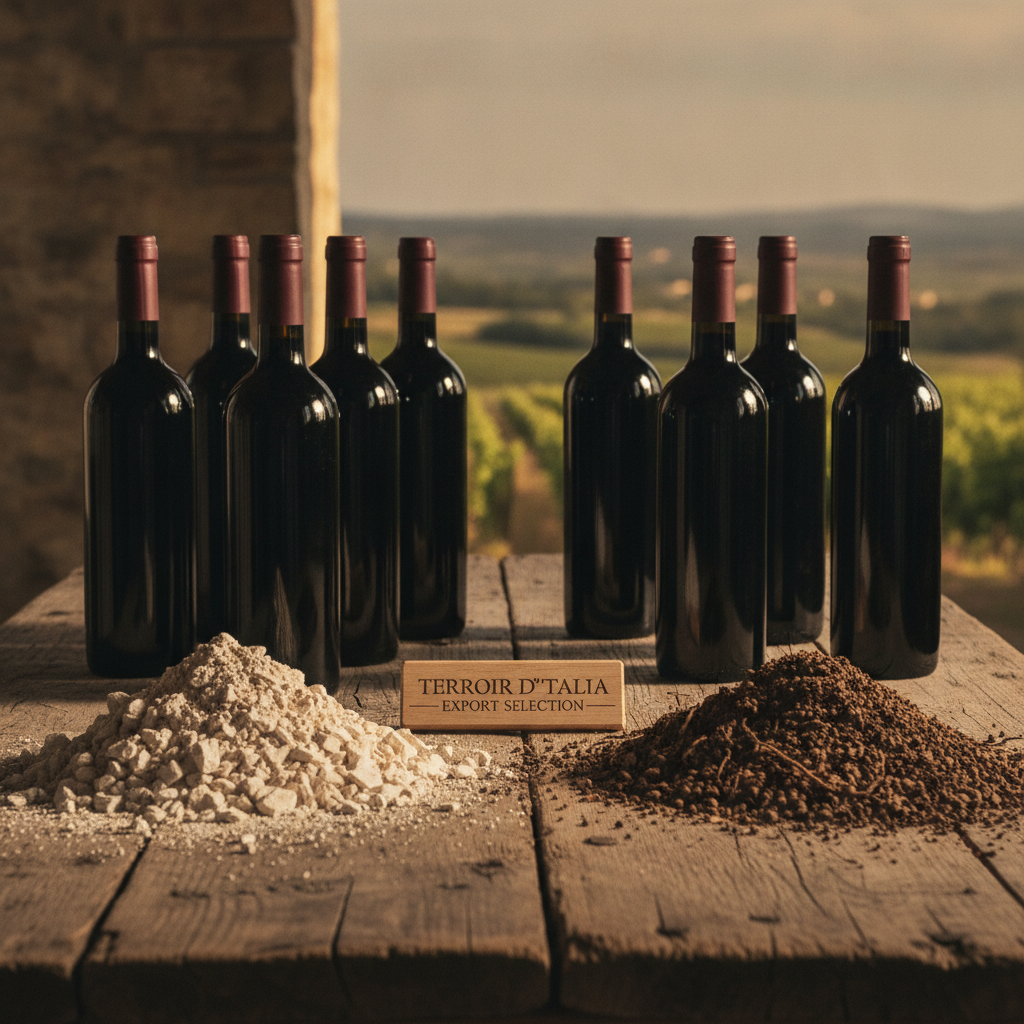
The richness and diversity of Italian red wines are an unparalleled strength. Hilly areas with soils rich in limestone and alluvial gravel give the wines a bright red color, body, and robustness. Other terroirs produce grapes suitable for table wines with a frank taste and subtle aromaticity.
Italian red wines are distinguished by:
- Color: From brilliant ruby red, with purple reflections, tending to brick red with aging, to cherry or pomegranate red.
- Aromas: Notes of red berries (blackcurrant, blackberry, sour cherry, wild plum), sweet spices (cinnamon, pink pepper), and, with aging, hints of plum, blackcurrant, raspberry, mint, and coffee.
- Taste: Light, round, and velvety, with light, high-quality tannins, excellent extraction, and an occasionally slightly bitter finish. More robust, vigorous wines with greater color intensity are often the result of abundant heliothermic resources and light soils.
- Structure: Wines with a lot of body and color, suitable for blending, i.e., mixing with lighter wines to improve their drinkability.
It is crucial, during production and selection for export, to prioritize grape varieties that produce grapes suitable for making table red wines, with adequate alcohol content and a frank taste, without special aromas not derived from aging. For markets that appreciate aromatic luxury wines, a few bottles of aromatic red wines can be meticulously prepared, intended for a niche of consumers willing to pay a premium price. However, it is important to note that this production will always be limited and will not enrich the vast majority of producers.
What documents are indispensable for exporting wine?
Wine export requires meticulous documentation to ensure regulatory compliance and facilitate customs procedures. Essential documents include the Commercial Invoice, which is mandatory and detailed, and the Proforma Invoice, useful for preliminary negotiations.
The Packing List describes the physical content of each package and must match the commercial invoice. Then, Transport Documents (CMR, Bill of Lading, or Air Bill of Lading) are required depending on the mode of shipment.
The Certificate of Origin, often requested, must be obtained from the Italian Chamber of Commerce. The State Customs Declaration (GTD) or Customs Declaration is necessary for customs clearance. For some markets, a specific Declaration of Conformity is required (e.g., EAC for Russia).
It is crucial to prepare this information during the documentation phase to avoid delays at customs. The documentation often needs to be prepared in dual language (English and the local language) and in multiple copies.
What are the key markets and trends for Italian red wines abroad?
The global market for Italian red wine is dynamic. The United States represents a significant portion of Italy's global wine exports, around 24%, but can be influenced by factors such as trade wars and tariffs.
In general, Italian red wines enjoy a historical leadership position in various segments, such as sparkling wines, where Italy holds a significant value share. To succeed, it is advisable to consider a mid-to-high-end positioning, where demand is structurally growing.
Selecting a reliable and actively licensed importer is crucial. This local partner will not only facilitate customs procedures but can also provide valuable insights into the specificities of the destination market, such as the coverage of the Horeca channel versus retail, and local regulations, including those related to online sales.

What are the strategic considerations for wineries exporting red wines?
For Italian wineries aiming to export red wines, adopting a strategic approach that begins with a thorough understanding of their product and target market is essential.
Market research is fundamental to identify the most promising markets, analyzing consumption trends, competition, and barriers to entry. Carefully selecting experienced importers and distributors is another crucial step.
Documentation must be prepared flawlessly, respecting regulations and deadlines. Finally, defining a pricing and marketing strategy that highlights the quality and uniqueness of Italian red wine, ideally targeting value-added market segments, is essential for long-term success.
The export of Italian red wines is a complex but rewarding journey. With the right preparation, solid product knowledge, and a well-defined market strategy, wineries can conquer new horizons and strengthen the reputation of Italian wine worldwide.
Frequently Asked Questions
What are the specific documentation requirements for exporting wine to Russia?
For markets like Russia, a non-preferential Certificate of Origin is required. Additionally, a specific declaration of conformity (e.g., EAC) obtained through a registered entity in the destination country is necessary for customs clearance.
How can I identify a reliable importer for my Italian red wines?
Selecting a reliable and actively licensed importer is crucial. It is advisable to seek partners who have proven experience in the target market and a solid distribution network, capable of providing insights into local specificities.
What are the most promising market segments for Italian red wines abroad?
It is advisable to consider a mid-to-high-end positioning, where the demand for Italian red wines is structurally growing. This segment allows for the valorization of the product's quality and uniqueness.