Venetian Red Wines: Opportunities for the International Market
Wines Export Redaktion · Zuletzt aktualisiert:
For Italian wineries targeting export, a thorough understanding of designations, production regulations, and the expectations of foreign buyers is crucial for navigating the global market of Venetian red wines successfully. This article offers a comprehensive overview, analyzing the regulatory and qualitative aspects that define the identity of these wines and providing valuable insights into how they are perceived and sought after by international markets, ensuring a direct and informative approach for those looking to expand their presence abroad. In-depth information: Federdoc — Confederazione Nazionale Consorzi Tutela Denominazioni Vini Italiani.
What are the main designations of Venetian red wines?
Veneto boasts a rich mosaic of designations of origin, both DOCG and DOC, which protect and enhance territorial specificities and winemaking traditions. These designations guarantee the origin, production practices, and qualitative characteristics of the wine, representing a heritage of excellence recognized internationally.
Among the most prestigious designations for Venetian red wines are:
- Amarone della Valpolicella DOCG: Produced from dried grapes, it is a wine of great structure, aromatic complexity, and aging potential.
- Recioto della Valpolicella DOCG: A sweet and enveloping wine, also made with dried grapes, ideal for contemplation.
- Valpolicella Ripasso DOC: Created by a second fermentation on the Amarone pomace, it gains more body, color, and complexity.
- Bardolino DOC: A light and fruity red wine from the Lake Garda area, ideal for young consumption.
- Colli Euganei DOC: Offers a range of red wines, including Merlot and Cabernet, as well as sweet wines like Fior d'Arancio Passito.
- Valpolicella DOC: The base designation that includes various typologies, from Classico to Superiore, offering a wide range of styles.
Each designation is defined by its own production regulation, a fundamental document that governs every aspect, from the choice of grape varieties to winemaking techniques, ensuring the authenticity and quality of the finished product.
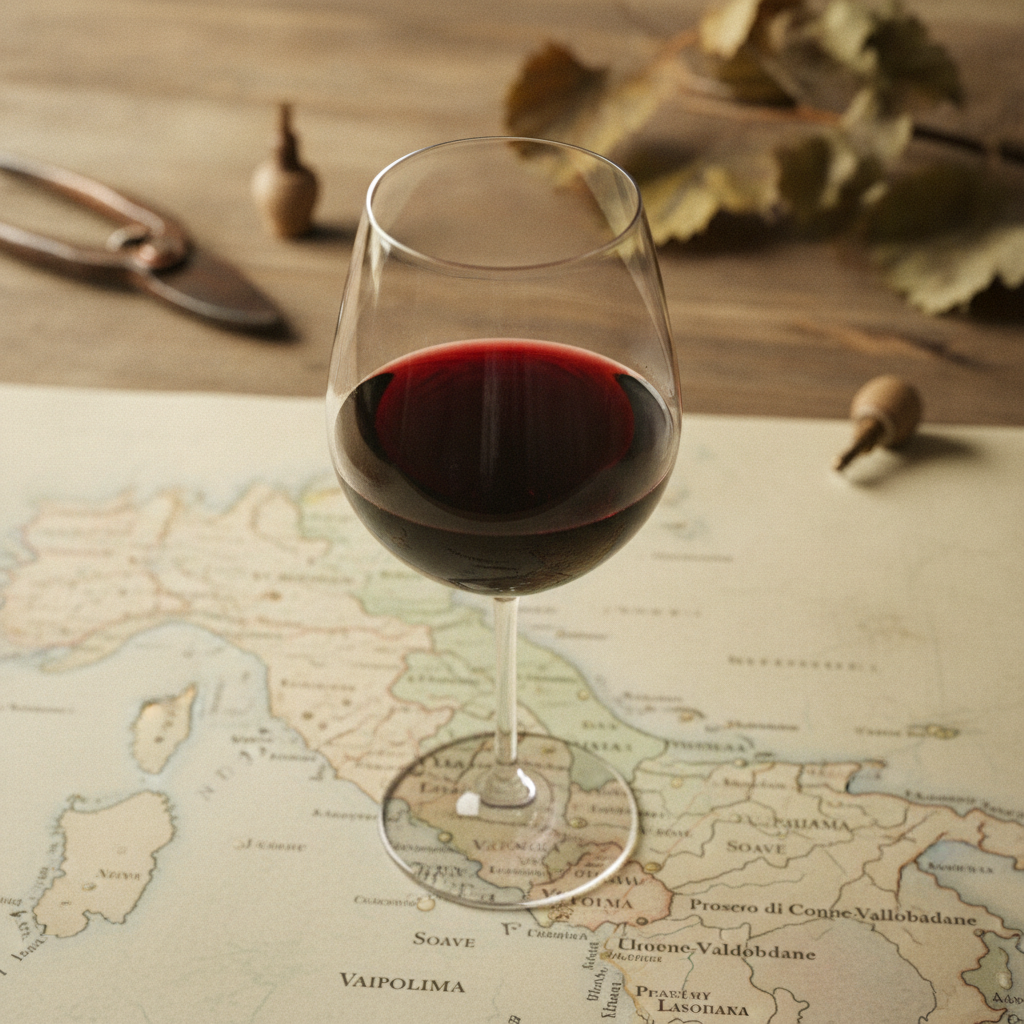
What does a production regulation establish for Venetian wines?
The production regulation is the pillar upon which the reputation of designations of origin is founded. It contains essential elements that guarantee their authenticity and quality, such as the product name, the description of its analytical and organoleptic characteristics, specific enological practices, maximum yields per hectare, and the permitted vine varieties.
These documents are crucial for verifying production conditions and are subject to rigorous controls. They ensure that every bottle bearing a designation of origin respects the established standards, protecting consumers from misleading uses and guaranteeing the integrity of the product. The possibility of modifying regulations, while requiring rigorous procedures, allows for adaptation to evolving knowledge and market trends.
What do international buyers look for in Venetian red wines?
International buyers seek wines that offer excellent value for money, uniqueness, and strong market potential. For Venetian red wines, these factors translate into several key elements that wineries must consider for success abroad.
- Authenticity and Terroir: Foreign markets are increasingly interested in wines that tell a story and express a connection to a specific territory and its traditions. Venetian designations, with their history and well-defined regulations, offer precisely this guarantee of authenticity, attracting buyers looking for distinctive products.
- Consistent Quality and Reliability: Buyers need reliable suppliers who can guarantee consistent quality over time. Adherence to production regulations is a crucial element in this regard, as it signals professionalism and reliability in producing wines that consistently meet the requirements of a DOC or DOCG.
- Aging Potential and Structure: Wines like Amarone della Valpolicella are appreciated for their aging potential and complexity. These characteristics make them ideal for premium market segments and experienced consumers, often sought after for high-end restaurants or collectors.
- Versatility and Food Pairings: While some Venetian red wines are powerful and structured, others, like Bardolino or certain Valpolicellas, are lighter and more versatile. This versatility makes them suitable for a wide range of food pairings and various consumption occasions, a strength for many markets.
- Innovation within Tradition: Buyers are open to innovations that do not alter the product's essence. The use of less-known indigenous grape varieties, modern winemaking techniques that enhance fruitiness, or sustainable viticultural approaches, can represent significant added value.
- Competitive Pricing: Despite the search for quality, price remains a determining factor. Venetian wineries must be able to offer wines that, while maintaining high quality standards, are competitive in the international market, especially in medium-to-high volume segments.
Frequently Asked Questions
What are the most recognized Venetian red wines abroad?
The most recognized Venetian red wines abroad include Amarone della Valpolicella DOCG, appreciated for its structure and longevity, and Valpolicella Ripasso DOC, known for its complexity derived from re-fermentation. Bardolino DOC, with its lighter and fruitier style, also enjoys good international recognition.
How do production regulations influence the export of Venetian wines?
Production regulations are fundamental for export as they guarantee the authenticity, quality, and typicity of Venetian wines. They provide international buyers with certainty about the origin and characteristics of the product, facilitating trust and commercialization in markets that require high and recognizable standards.
What organoleptic characteristics do international buyers seek in Venetian red wines?
International buyers look for a combination of territorial authenticity, consistent quality, and, depending on the type, aging potential, structure, and versatility in food pairings in Venetian red wines. Wines that express their terroir and maintain distinctive organoleptic characteristics are particularly appreciated.
For Venetian wineries looking to expand their presence in international markets, Wines Export offers strategic and operational support. We understand the nuances of designations, the importance of regulations, and the specific needs of international buyers. Through our network and expertise, we help wineries identify target markets, structure competitive commercial offers, and navigate the regulatory and logistical complexities of export.