Selling Italian Rosé Wine Abroad: Requirements and Strategies for Wineries
Wines Export Editorial · Last updated:
Italian rosé wine, with its growing popularity and versatility, represents a significant opportunity for wineries looking to expand their presence in international markets. From its unique characteristics to the complex network of export documents and regulations, understanding the key steps is crucial for navigating global trade successfully. This article offers a comprehensive guide for Italian wineries aiming to export their rosé wine, covering the essential aspects for a successful operation. Learn more: OIV — International Organisation of Vine and Wine.
How is Italian Rosé Wine Capturing Foreign Markets?
Rosé wine is no longer considered a niche category but a booming market segment. Its appeal lies in its ability to offer the freshness and fruitiness typical of white wines, combined with a complexity and structure that approach those of red wines. Rosé wine is produced from the fermentation of red grape must with colorless or lightly colored juice, using techniques similar to those for white wines, but with particular attention to maintaining the pink color and organoleptic qualities that resemble those of a white wine. This versatility makes it an ideal accompaniment to a wide range of dishes, increasing its appeal to global consumers.
The interest in rosé wines is justified by their attractive appearance, fresh taste, and the demand for fruitier wines, closer to the grape's flavor than red wines. Furthermore, their ability to pair with full meals further solidifies their market position. This growing international demand requires Italian wineries to be prepared not only in production but also in managing the logistical and documentary aspects of export.
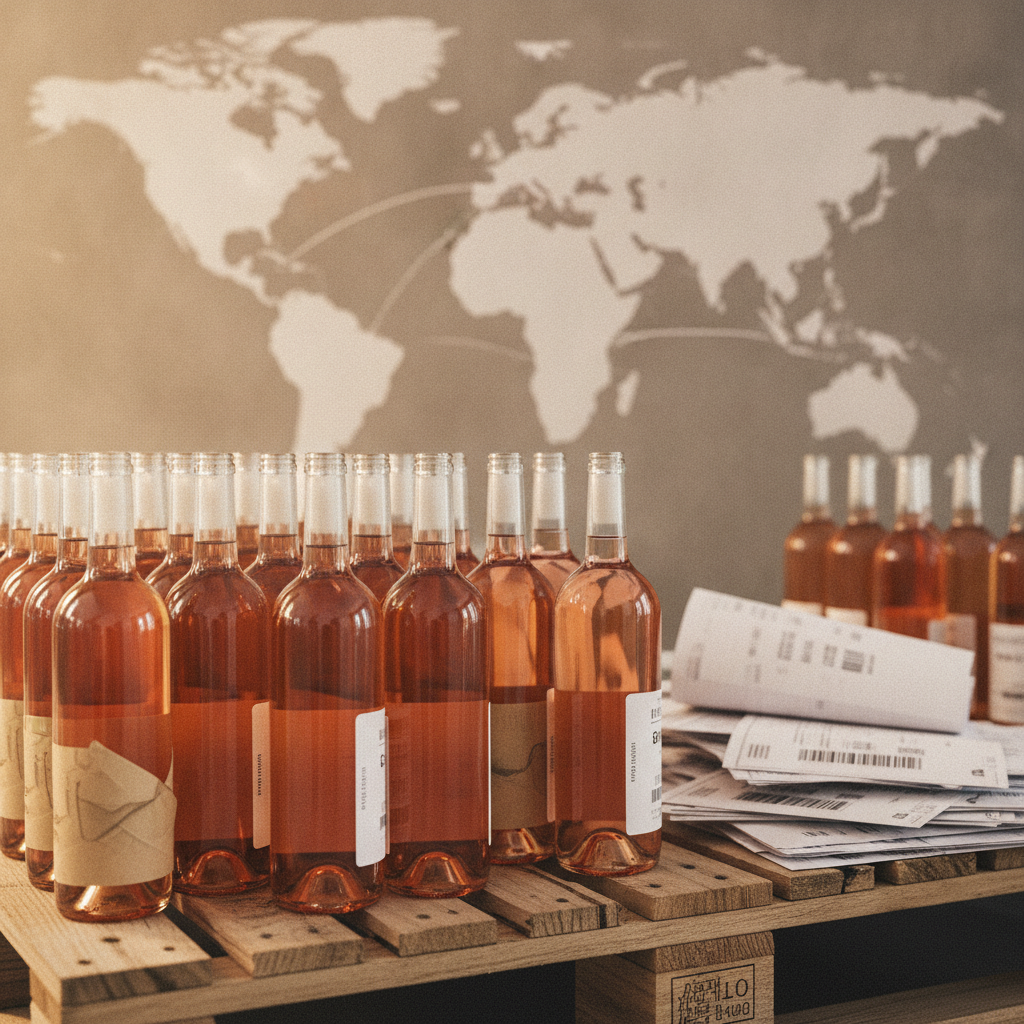
What Documents Are Essential for Exporting Wine?
Regardless of the destination country, a core set of universal documents forms the basis for every wine export operation. These documents serve as proof of the transport contract, facilitate customs clearance, and attest to the product's regulatory compliance.
What are the Universal Documents for Wine Export?
-
EORI Registration (for EU Exporters): For Italian wineries shipping outside the European Union, the EORI (Economic Operators Registration and Identification) number is mandatory for any customs operation. This number uniquely identifies the economic operator in dealings with the customs authorities of all EU countries and can be requested free of charge through the Italian Customs Agency. Without an EORI, goods risk being held up at customs.
-
Commercial Invoice: Prepared by the exporter, this document is mandatory and includes a detailed description of the product (name, vintage, format), quantity, unit and total value, delivery term (Incoterm), and HS code for customs classification (for wine: chapter 2204). Customs authorities use it to determine applicable duties and taxes. Errors in this invoice can cause delays or disputes.
-
Proforma Invoice: Although it has no fiscal value, the proforma invoice anticipates the terms of the order and can be useful in preliminary negotiations. It is sometimes required by the buyer to obtain import licenses or documentary letters of credit before shipment.
-
Packing List: This document describes the physical contents of each package, including the number of packages, type of packaging, gross and net weight per package and in total, and cubic volume. It must match exactly what is declared on the invoice.
What Specific Documents Do Some Markets Require?
In addition to universal documents, each destination market has specific requirements. These may include analysis certificates, health certificates, particular transport documents, and compliance with specific excise duty or tariff regimes.
For example, for export to Romania, as it is an intra-Community exchange, an import customs declaration or a certificate of origin is not required, as the wine originates from the EU. Essential documentation includes the export invoice or commercial accompanying document, the packing list (if not included in the invoice), and, upon request, analysis certificates. A crucial point concerns transport documents and the excise duty regime, which require the preparation of the waybill and the e-AD (electronic accompanying document) via the EMCS system, or the DAS (simplified accompanying document) if excise duty has already been paid.
For other markets, such as Saudi Arabia, current regulations make the commercial export of wine inaccessible. In South Africa, however, a series of documents must be submitted for approval by the Department of Agriculture, including the quality certificate and the export invoice, in addition to complying with specific requirements for labeling and documentary logistics, such as the EUR1 certificate for duty exemption and advance notice to the inspector for each shipment.
How to Position Italian Rosé Wine in Foreign Markets?
Accessing foreign markets for Italian rosé wine requires a well-defined strategy that considers the specifics of each country and market trends.
What Distribution Channels Are Effective for Rosé Wine?
The choice of distribution channel is crucial. In markets like Ukraine, it is essential to identify an importer with an active wholesale license and a proven presence in the Horeca channel. It is important to consider a mid-to-high-end positioning, where demand is structurally growing.
In the United States, the presence of platforms and logistical-commercial hubs dedicated to Italian wine can serve as an aggregation channel for smaller wineries. Before initial contact, it is essential to have materials in English (technical data sheet, winery presentation, FCA/FOB price list, high-resolution label images) and verify the label's compliance with TTB requirements.
Why Diversify Export Markets?
Given the decline in consumption in traditional markets and potential tariffs, Italian producers are intensifying their search for new commercial outlets. Emerging markets such as Angola, Bulgaria, Colombia, India, Kazakhstan, Mexico, Poland, and the Czech Republic, among others, represent growth opportunities. In 2025, Italian wine exports to 13 monitored emerging markets exceeded 400 million euros. This diversification trend is fundamental for the resilience and growth of the Italian wine sector.

What Do Foreign Buyers Look for in Italian Rosé Wine?
Foreign buyers are increasingly seeking wines that offer good value for money, authenticity, and a compelling story. For Italian rosé wine, this translates to:
- Consistent Quality: The ability to produce high-quality rosé wine consistently is fundamental. This includes attention to winemaking techniques to ensure the desired color, freshness, and complexity.
- Authenticity and Terroir: Buyers appreciate wines that reflect their region of origin. Communicating the origin of the grapes, the specificities of the terroir, and Italian winemaking tradition adds value to the product.
- Gastronomic Versatility: Highlighting the rosé wine's ability to pair with a wide range of cuisines and dishes is a strong point. Its freshness and fruitiness make it an ideal companion for multiple culinary occasions.
- Regulatory Compliance: The availability of all necessary documentation, compliant with the destination country's regulations, is a non-negotiable prerequisite. Preparing documents such as the commercial invoice, packing list, and required certificates demonstrates professionalism and reliability.
Conclusion: A Rosy Future for Italian Exports
Exporting Italian rosé wine offers considerable growth potential. Understanding market nuances, meticulously preparing necessary documentation, and adopting targeted positioning strategies are essential steps for success. Wineries that can combine product quality with careful management of logistical and commercial aspects will be able to fully seize the opportunities offered by international markets.
Start with four questions: we will write back →
Frequently Asked Questions About Rosé Wine Export
What are the documentary requirements for exporting rosé wine outside the EU?
To export rosé wine outside the EU, possessing an EORI number is mandatory. Additionally, a detailed Commercial Invoice and a Packing List describing the contents of each package are required. Depending on the destination country, specific documents such as certificates of analysis or origin may be requested.
Is a certificate of origin required for exporting rosé wine to Romania?
No, for the export of rosé wine to Romania, as it is an intra-Community exchange within the EU, a certificate of origin is not required. Essential documentation includes the commercial invoice and the packing list.
What are the main challenges in exporting rosé wine to South Africa?
When exporting to South Africa, a series of documents, including the quality certificate and the export invoice, must be submitted for approval by the Department of Agriculture. Specific requirements for labeling and documentary logistics must also be met, such as the EUR1 certificate for duty exemption and advance notice to the inspector for each shipment.