How to Sell Your Italian Red Wine Abroad: Strategies for the International Market
Wines Export Editorial · Last updated:
For Italian wineries aiming to expand their presence in international markets, understanding the complexities of red wine export is crucial. This article provides a comprehensive overview of the key aspects to consider, from necessary documentation to market strategies, with a particular focus on red wine, the most representative segment of Italian winemaking excellence. Italian wine exports in 2025 reached 7.7 billion euros, highlighting the sector's resilience and importance. In-depth analysis: OIV — International Organisation of Vine and Wine.
What documents are essential for shipping wine abroad?
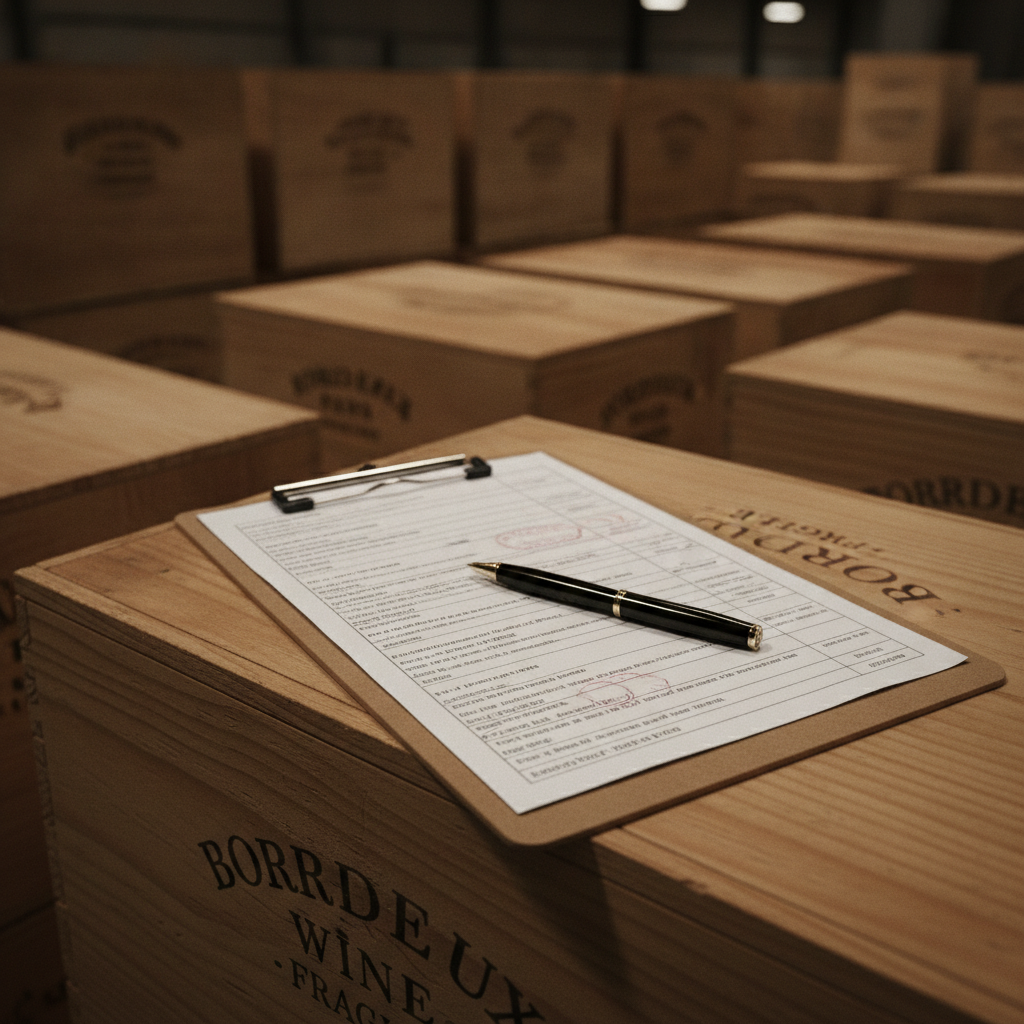
Every international wine shipment requires a standardized set of documents. These serve as proof of the transport contract, facilitate customs clearance procedures for both import and export, and attest to the product's regulatory compliance, ensuring goods can circulate freely between countries.
What are the universal documents for wine export?
Before addressing the specifics of each market, it's fundamental to have a core set of universally recognized documents. These form the basis for any export operation and are required in most countries to ensure smooth transactions.
- EORI Registration (for EU Exporters): Italian wineries exporting outside the European Union must possess an EORI number. This code uniquely identifies the economic operator in their dealings with the customs authorities of all EU countries. The application can be made free of charge online through the Italian Customs Agency. Without an EORI, goods risk being detained at customs.
- Commercial Invoice: This mandatory document, issued by the exporter, must contain a detailed description of the product (name, vintage, format), quantity, unit and total value, delivery terms (Incoterm), and HS customs classification code (for wine, chapter 2204). Customs authorities use it to determine applicable duties and taxes.
- Proforma Invoice: Although it has no fiscal value, the proforma invoice anticipates the order terms before final confirmation. It is useful during preliminary negotiations and sometimes required by the buyer to obtain import licenses or open documentary credit lines.
- Packing List: This document describes the physical contents of each package: number of packages, type of packaging, gross and net weight per package and in total, and volume. It must precisely match the information on the commercial invoice.
What specific documents may be required for certain markets?
In addition to universal documents, each country may require additional documentation to facilitate customs clearance and ensure compliance. It is essential to verify local regulations to avoid delays or complications.
For example, for exports to the Netherlands, besides the commercial invoice and packing list, the DAA/e-AD (excise duty suspension accompanying document for wine and wine products) managed through the EMCS electronic system is required, along with the CMR consignment note for road transport. In some cases, a certificate of origin or certificates of analysis may be requested. For markets like Australia, a series of information must be submitted for approval by the Department of Agriculture, including details on Horeca vs. retail coverage and quality certificates.
How to position Italian red wine in foreign markets?
Italian red wine enjoys a historical leadership position in many markets, but competition is high, and market dynamics are constantly evolving. A targeted strategy is essential to stand out.
What are the opportunities and challenges of the US market for Italian red wine?
The United States market represents a significant share of global Italian wine exports, approximately 24%. However, it presents considerable challenges, such as the decline recorded in 2025 attributed to factors like tariffs and dollar devaluation. To address this scenario, it is essential to prepare materials in English, including technical sheets, winery presentations, FCA/FOB price lists, and high-resolution label images. It is also crucial to verify label compliance with TTB (Alcohol and Tobacco Tax and Trade Bureau) requirements.
Why is it important to diversify markets for Italian red wine?
In the face of declines in traditional markets and challenges posed by tariffs, Italian producers are intensifying their search for new commercial outlets. Analysis of reports highlights how exports to emerging markets exceeded 400 million euros in 2025. This diversification trend is fundamental for ensuring sustainable growth and reducing dependence on historical markets.
How to choose the most suitable distribution channels for Italian red wine?
The choice of market positioning is crucial. For some markets, such as Ukraine, a medium-to-high-end positioning is recommended, where demand shows structural growth. It is important to identify importers with active wholesale licenses and a proven presence in the Horeca channel. Italy's historical leadership, especially in the sparkling wine segment (with a value share around 39% in 2019/2020), is an advantage to defend through rigorous distributor selection.
What is the value of Italian red wine in global exports?
Italian red wine is synonymous with quality, tradition, and diversity, capable of meeting the most demanding requirements of international markets. Italian wine exports in 2025 reached 7.7 billion euros, despite a loss of 300 million compared to the previous year, highlighting the sector's resilience and importance. To succeed, wineries must ensure documentary and logistical compliance, develop a targeted market strategy, understand the specificities of each destination country, and leverage the uniqueness of their products.

Frequently Asked Questions about Italian Red Wine Export
What are the requirements for exporting Italian red wine outside the EU?
To export Italian red wine outside the EU, it is mandatory to possess an EORI (Economic Operators Registration and Identification) number. This code uniquely identifies the economic operator in their dealings with the customs authorities of all EU countries. The application can be made free of charge online through the Italian Customs Agency.
What should I include in the commercial invoice for wine export?
The commercial invoice for wine export must contain a detailed description of the product (name, vintage, format), quantity, unit and total value, delivery terms (Incoterm), and HS customs classification code (for wine, chapter 2204).
What are the emerging markets for Italian red wine?
Emerging markets that have seen an increase in Italian wine exports include Angola, Bulgaria, Colombia, India, Poland, and the Czech Republic.
To expand your winery into international markets, a well-defined strategy and meticulous management of documentation are essential.