How to Taste and Present Franciacorta to International Markets
Rédaction Wines Export · Dernière mise à jour :
To facilitate the export of Franciacorta, an Italian Metodo Classico sparkling wine of excellence, it is essential to master tasting aspects and communicate them effectively to foreign buyers. An accurate presentation, going beyond simple pleasure, translates into an indispensable technical and commercial tool. Understanding and describing the complexity and refinement of this wine, using international language and recognized methodologies, allows for overcoming cultural and linguistic barriers, ensuring a correct interpretation of its unique qualities and fostering success in global markets. In-depth look: OIV — International Organisation of Vine and Wine.
How Does Structured Tasting Aid Exports?
In exports, structured tasting is an essential technical and commercial instrument. For foreign buyers, accustomed to international standards such as those defined by the OIV or WSET, a detailed and organized description is crucial. Sensory evaluation, divided into visual, olfactory, and gustatory-tactile examination, makes the wine's profile immediately understandable and professionally anchored to global methodologies.
The evaluation of flavor "cleanliness," for example, helps identify defects related to viticultural origin, winemaking process, or storage. These aspects, even if not always dangerous to health, can compromise the qualitative perception and marketability of the product. Tasting integrates chemical analysis, providing a qualitative perspective sought by importers.
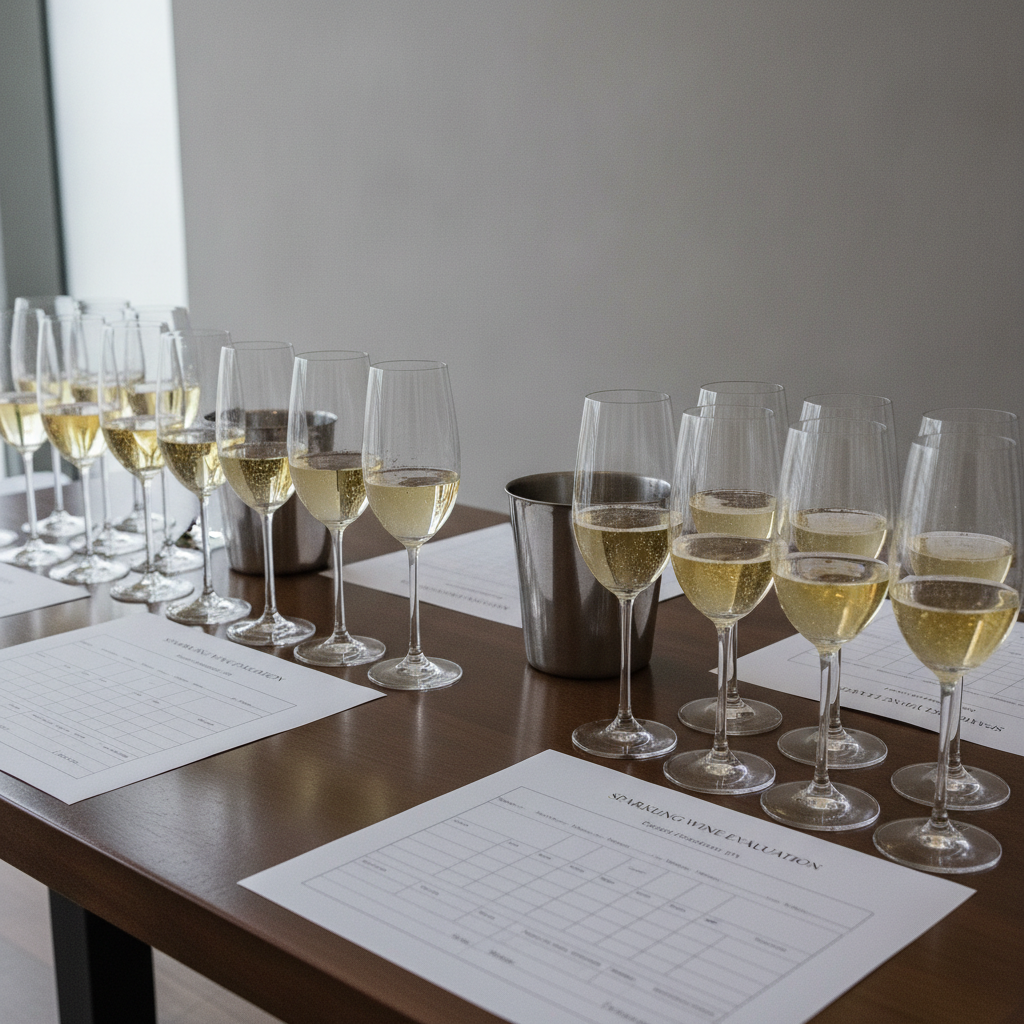
What Are the Key Elements to Evaluate in Franciacorta Tasting?
When presenting a Franciacorta to an international buyer, it is useful to focus on specific elements that define its identity and quality, ensuring clear and professional communication.
How is the Visual Aspect of Franciacorta Evaluated?
Visual examination is the first step. The fineness and persistence of the perlage are indicators of quality and maturity, suggesting a well-executed Metodo Classico. Clarity and color, which vary from pale straw yellow to more golden hues, provide clues about the wine's age and style, important elements for commercial presentation.
What Aromas Characterize Franciacorta's Bouquet?
Franciacorta's bouquet evolves with time and aging on lees. One can perceive fresh floral notes, hints of white-fleshed fruit, citrus, and more complex aromas such as bread crust, yeast, toasted almond, or dried fruit. Olfactory cleanliness, meaning the absence of unpleasant odors, is a fundamental prerequisite for a high-end wine intended for export.
How is the Gustatory-Tactile Experience of Franciacorta Described?
On the palate, structure, balance, and persistence are evaluated. Structure is influenced by the grapes and aging. Balance relies on the harmony between acidity, alcohol, and residual sugar, with vibrant acidity contributing to drinkability. Persistence is the duration of the gustatory sensations, with a pleasant aftertaste that recalls the aromas perceived on the nose, enriched by notes of bread making and minerality.
What Materials and Strategies Are Needed to Present Franciacorta to Foreign Buyers?
To facilitate export, it is essential to have professional informational material in English. An operational checklist for the first contact with a foreign buyer includes a detailed technical sheet with a structured sensory description, a winery presentation, a price list with delivery terms and MOQs, and high-resolution images.
Verifying the label's compliance with the destination country's regulations (e.g., TTB for the USA) is a crucial step. Participating in international fairs such as ProWein, Vinitaly, or Wine Paris / Vinexpo can be strategic for directly meeting importers and distributors, but it requires preparing multilingual materials to convert contacts into concrete business relationships.

Frequently Asked Questions
How can the sensory description of Franciacorta help overcome language barriers with foreign buyers?
By using standardized international terminology to describe visual, olfactory, and gustatory aspects, a common language is created that facilitates mutual understanding and objective wine evaluation by foreign buyers.
What are the main quality indicators in Franciacorta that a foreign buyer should look for?
Foreign buyers should look for fine and persistent perlage, a complex and clean bouquet, and a harmonious gustatory balance with good persistence. These elements, effectively communicated, highlight the product's intrinsic quality.
Is it necessary for the Franciacorta label to comply with the destination country's regulations for export?
Yes, it is essential to ensure that the label complies with the specific regulations of the destination country, such as those established by the TTB for the United States, to avoid customs issues and ensure the product's marketability.
The tasting of Franciacorta, presented professionally and structured according to international standards, becomes a powerful tool to attract and convince foreign buyers. Clarity in communicating its sensory qualities, supported by impeccable technical material and a strategy for presence in international markets, is the key to successfully expanding the export of this prestigious Italian wine.