Calabrian Wine: Market Opportunities for International Importers
Wines Export 編集部 · 最終更新日:
Calabria, with its unique terroir and indigenous grape varieties, represents a growing opportunity for foreign buyers and importers seeking authentic, high-quality wines. This article explores the distinctive characteristics of Calabrian wine, its main appellations, and export prospects, providing essential information for international operators interested in this promising sector. In-depth: Federdoc — National Confederation of Consortia for the Protection of Italian Wine Denominations.
What are the characteristics of the Calabrian terroir for viticulture?
Calabria, situated at the southern tip of Italy, benefits from a varied climate due to its geographical position, surrounded by the sea and with a predominantly mountainous territory. The wine-growing areas extend along river valleys, on steep slopes, and terraces, with often alluvial or clayey soils. This microclimate favors the ripening of grapes such as Aglianico, Montepulciano, Malvasia, and Trebbiano.
What are the main grape varieties cultivated in Calabria?
The most widespread black grape varieties are Aglianico and Montepulciano, known for producing structured and complex wines. Among the white grape varieties, Malvasia and Trebbiano stand out, used to produce fresh and aromatic wines. The regional vineyard area amounts to approximately 28,000 hectares, highlighting the importance of this crop.
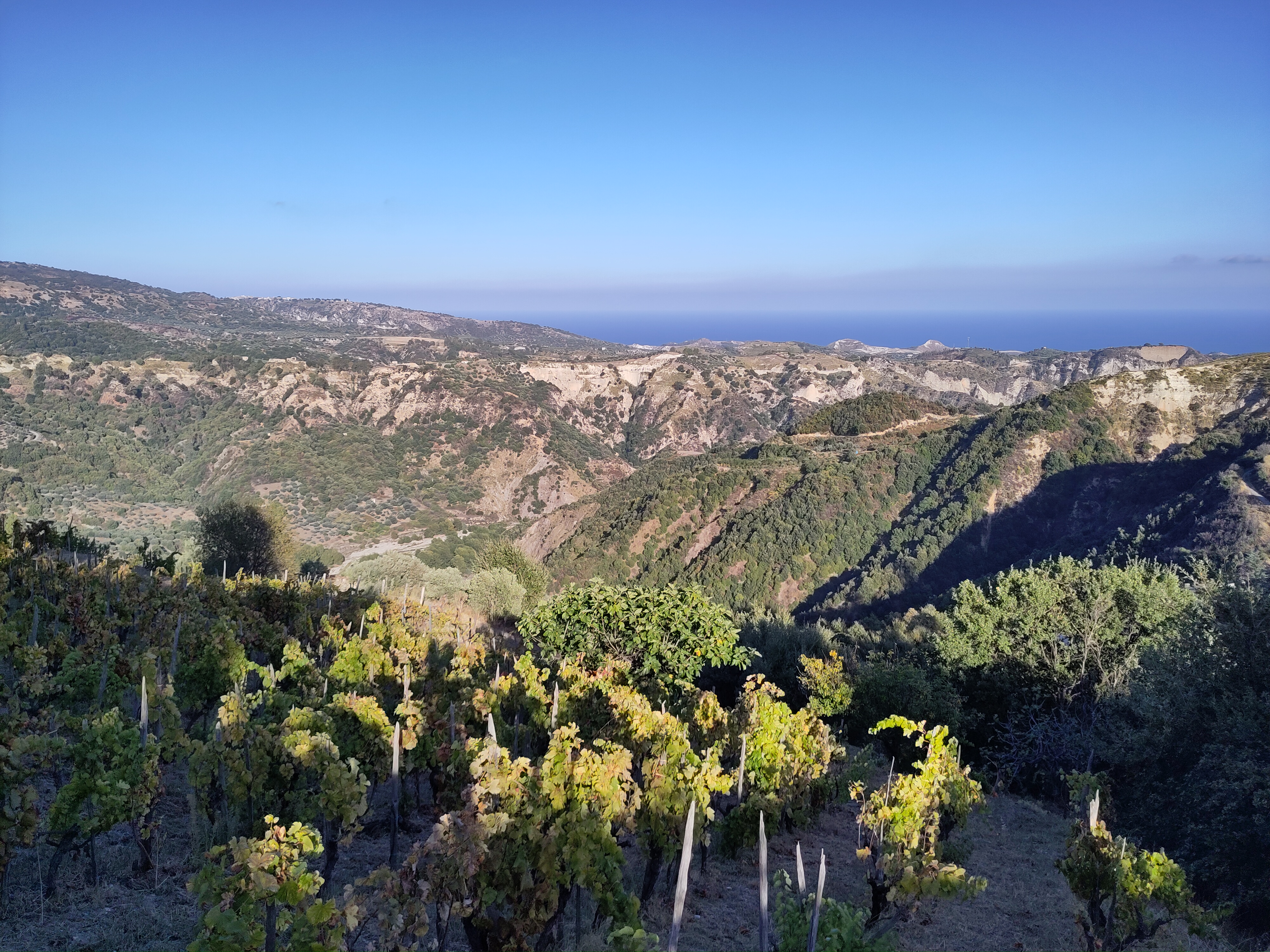
What are the most important Denominations of Controlled Origin (DOC) in Calabria?
Calabria boasts several DOCs that attest to the quality of its wines. Among the most relevant are Cirò DOC, Bivongi DOC, Lamezia DOC, Greco di Bianco DOC, Savuto DOC, and Pollino DOC. Each of these denominations is linked to specific grape varieties and territorial characteristics that give uniqueness to the wines produced.
What makes Cirò DOC special?
Cirò DOC, perhaps the most famous denomination, is primarily produced with Gaglioppo grapes. It is available as Rosso (Red), Rosato (Rosé), and Bianco (White). Cirò Rosso is appreciated for its structure, elegant tannins, and fruity and spicy notes, with good aging potential.
What grape varieties characterize Bivongi DOC?
Bivongi DOC, located in the Ionian area, is a blend of indigenous grape varieties, including Nerello Mascalese, Nerello Cappuccio, Aglianico, and Greco Nero. This wine offers a complex aromatic profile, with hints of ripe red fruits and spices.
What types of wine are produced in the Lamezia DOC?
Lamezia DOC allows for the production of red, white, and rosé wines. It uses grape varieties such as Greco, Trebbiano, Malvasia, Gaglioppo, and Aglianico. The white wines are distinguished by their freshness and aromaticity, while the reds exhibit good structure and fruity notes.
What are the characteristics of Greco di Bianco DOC?
Greco di Bianco DOC is a sweet passito wine, produced with Greco di Gerace grapes. It offers intense notes of candied fruit, honey, and spices, configuring itself as a complex and persistent dessert wine.
What are the grape varieties of Savuto DOC?
Savuto DOC, located in the inland area, is produced with a blend of indigenous and international grape varieties, including Aglianico, Greco, Malvasia, and Trebbiano. The red wines are robust and tannic, while the whites are fresh and fragrant.
What grapes are used for Pollino DOC?
Pollino DOC, produced in the mountainous area of the Pollino National Park, is based on Aglianico, Greco Nero, and Malvasia Bianca grapes. The red wines of this denomination are characterized by good acidity and fruity notes.
What are international importers looking for in Calabrian wine?
International importers are attracted to Calabrian wine for its uniqueness, authenticity, and excellent value for money. The presence of indigenous grape varieties like Gaglioppo and Greco di Gerace, combined with a centuries-old winemaking history, offers a strong differentiating element. Calabria represents a niche market with growth potential, capable of offering products that tell a story linked to the territory and its biodiversity.

What is the operational process for exporting Calabrian wine?
Exporting Calabrian wine requires a well-defined operational process. This includes qualifying the foreign buyer, negotiating the commercial offer via proforma invoice, preparing the necessary documentation for compliance with the destination market (labels, certificates), and managing logistics and shipping, defining the Incoterms. Proper management of payments and post-sales relationships is also fundamental.
How is a foreign buyer qualified for wine export?
Qualifying a foreign buyer involves verifying their commercial soundness, import licenses for alcoholic beverages, bank references, and their history of importing Italian wines. A preliminary credit risk analysis is always recommended before initiating negotiations.
What are the key elements of a commercial offer for export?
The commercial offer for export must include a detailed proforma invoice with defined products, quantities, prices, and Incoterms. Communication should be in English, accompanied by professional technical material.
What documentation is required for wine export?
For wine export, labels compliant with local regulations, certificates of analysis, certificates of origin, and other documents required for customs clearance in the destination market are necessary.
What are the recommended logistics and payment options for initial orders?
For initial orders with new partners, it is advisable to prefer terms such as FOB (Free On Board) with advance payment or Letter of Credit (L/C), rather than Open Account. Post-shipment communication with the dispatch of transport documents is crucial.
Which wineries are part of the Wines Export pool in Calabria?
Wines Export collaborates with several Calabrian wineries that offer a diverse range of wines, from full-bodied reds to fresh and aromatic whites. These companies represent the excellence of the region and are ready to meet the demands of buyers and importers seeking authenticity and value in the Italian wine landscape.
Frequently Asked Questions
What are the main indigenous Calabrian grape varieties for export?
The main indigenous Calabrian grape varieties arousing interest for export include Gaglioppo, Greco di Gerace, Nerello Mascalese, and Calabrese.
What are the most internationally recognized Calabrian appellations?
Among the most internationally recognized Calabrian appellations are Cirò DOC and Greco di Bianco DOC.
What are the advantages for a foreign importer in choosing Calabrian wines?
Advantages for a foreign importer include access to unique wines with indigenous grape varieties, authenticity linked to a centuries-old history, and the potential for positioning in growing niche markets.
Calabrian wine has a promising future in international markets, thanks to its combination of unique terroir, precious grape varieties, and a commitment to quality. Calabrian wineries, supported by services like Wines Export, are ready to face the challenges of export, offering authentic wines that tell the story of the region's passion and tradition.