Wineries of Catanzaro: Export Opportunities for Italian Wines
The province of Catanzaro, located in the heart of Calabria, boasts a wine heritage with significant export potential. Local wineries can expand their global footprint, reaching new importers and consumers. This article analyzes the procedures, necessary documentation, and market opportunities for Catanzaro wineries aiming for internationalization, focusing on territorial specificities and available resources to navigate the challenges of export. Learn more from Federdoc — National Confederation of Italian Wine Protection Consortia.
What is the wine context of Catanzaro like for export?
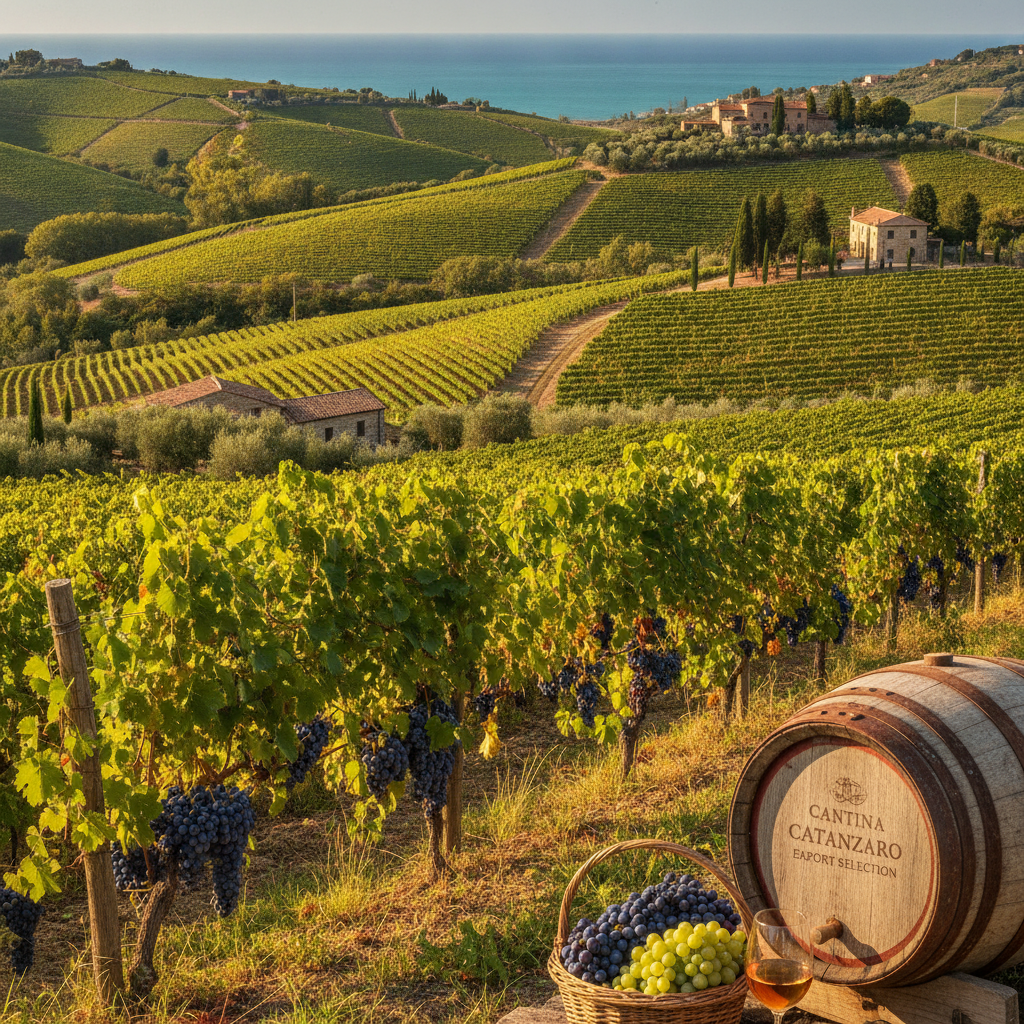
The province of Catanzaro has an ancient winemaking tradition, benefiting from a Mediterranean climate and diverse geography. Its appellations, though less known globally, offer distinctive and characterful wines. Wineries in the region, while needing to structure their export approach, are part of a globalizing context, with several already active in foreign markets, demonstrating a drive for growth and internationalization.
What are the operational steps for exporting wine?
Wine export is a complex process that requires careful planning and a thorough understanding of operational and documentary procedures, from negotiation to delivery. Each phase is critical for the success of the operation, from buyer verification to shipment and payment management, ensuring regulatory compliance and minimizing risks.
How to qualify a potential foreign buyer?
The first step is to verify the financial stability and commercial legitimacy of the potential buyer. It is essential to ascertain their VAT number or business registration, their alcohol import license (if required), and to request bank or commercial references. A preliminary credit risk analysis, potentially supported by credit check services or credit insurance like SACE, can prevent insolvency issues.
What information should be included in a commercial offer for export?
After qualifying the buyer, a proforma invoice is sent. This document, while not having fiscal value, serves as the basis for negotiation. It details essential information such as product descriptions (appellation, vintage, format), minimum order quantity (MOQ), unit price, and currency, as well as the proposed Incoterm. The proforma is the starting point for negotiating the final terms of the agreement.
What documents are necessary for customs clearance of wine shipments?
Every international wine shipment requires specific documents to attest to the transportation contract, facilitate customs clearance, and prove regulatory compliance. Among the mandatory documents are the Commercial Invoice (detailing product, quantity, value, Incoterm, and HS code), the Packing List (details of the contents of each package, weight, and volume), and, if applicable or chosen, the Insurance Policy/Certificate. The exact list may vary by country; it is crucial to verify this with the shipping agent or through guides like those from the ICE Agency.
- Commercial Invoice: Details the product, quantity, value, Incoterm, and HS code (Chapter 2204 for wine).
- Packing List: Specifies the physical contents of each package, weight, and volume.
- Insurance Policy/Certificate: Confirms cargo insurance coverage, if applicable.
What payment instruments guarantee international transactions?
For high-risk markets or new buyers, secure payment instruments are essential. A Documentary Letter of Credit (DLC) is a bank commitment to pay, conditional upon the presentation of conforming documents. Documentary Collection involves releasing shipping documents to the buyer only after payment or a commitment to pay, offering greater security than a bank transfer.
What are the specific requirements for wine labeling and export regulations?
Wine export necessitates compliance with specific regulations, particularly for labeling, which varies significantly from country to country. It is crucial to verify the compatibility of your label with the destination market's requirements before initiating negotiations.
How to adapt labeling for foreign markets?
Before entering into negotiations, it is advisable to check if your label meets the requirements of the destination market. For instance, in the United States, compliance with TTB (Alcohol and Tobacco Tax and Trade Bureau) regulations is necessary, including details on appellation, vintage, alcohol content, volume, producer, and, in some cases, health warnings or nutritional information. For markets like Cyprus or France, a precise check of mandatory mentions is required, consulting specific guides or national regulations. Consistency between the label and customs documents is paramount.
Which EU and international regulations affect wine export?
Italian wineries operate within the European Union's regulatory framework, which sets standards for production and labeling (e.g., Regulation (EU) 2021/2117). However, each third country has its own regulations. It is essential to consult ICE country guides or platforms like Access2Markets to understand specific customs and labeling requirements.
- Access2Markets: Useful for checking market access requirements, duties, and procedures. https://trade.ec.europa.eu/access-to-markets/en/content/eori-number
- ICE Agency: Provides specific guides for wine export, including country fact sheets. https://sites.google.com/ice.it/guidaexportvino/
- EU Regulations: Regulation (EU) 2021/2117 on the common agricultural policy.
- National Regulations: Each importing country has its own laws on labeling and alcohol importation.

What strategies can Catanzaro wineries adopt to penetrate foreign markets?
Wineries in the province of Catanzaro can leverage various strategies to penetrate foreign markets, highlighting their uniqueness and authenticity.
How to select a distributor and position one's wine abroad?
Choosing a reliable local distributor is crucial for market access and for gaining insights into consumer preferences and local regulations. The positioning of Catanzaro wines should emphasize their uniqueness and authenticity, differentiating them from more homogenized products by communicating their connection to the territory and tradition.
What promotional and sales channels are effective for wine export?
Beyond traditional trade shows like Vinitaly, it is important to consider platforms and logistical-commercial hubs dedicated to Italian wine, especially in markets like the USA. These channels can aggregate smaller wineries, facilitating their access to initial importers and broadening their products' visibility.
Why is it important to have promotional material in foreign languages?
For effective communication with foreign buyers, it is essential to have promotional material available in English or the target market's language. This includes wine technical sheets, company presentations, price lists with clear delivery terms (such as FCA/FOB), and high-resolution images of labels, facilitating potential importers' understanding and evaluation of the products.
Frequently Asked Questions
What are the essential documents for exporting wine from Italy?
Essential documents include the Commercial Invoice, Packing List, and, depending on sales terms and destination country, the Insurance Policy/Certificate. It is crucial to verify the complete list with the shipping agent or through ICE guides for the specific market.
How can I ensure my label complies with a foreign country's regulations?
You need to consult the specific regulations of the importing country, often available through ICE country guides or platforms like Access2Markets. For markets like the USA, TTB directives must be followed. Consistency between the label and customs documents is vital.
What are the advantages of using a Documentary Letter of Credit (DLC) for export?
A DLC offers a high payment guarantee, as it is a commitment issued by the importer's bank in favor of the exporter, conditional upon the presentation of conforming documents. This significantly reduces the buyer's insolvency risk.
Exporting wine from the province of Catanzaro to international markets is an ambitious yet achievable journey. Through thorough preparation, understanding operational and documentary procedures, and a targeted market penetration strategy, local wineries can capture new markets and strengthen their global presence. Highlighting territorial specificities, combined with a professional approach and compliance with international regulations, is the key to lasting success in the global wine landscape.