How to Sell Messina Wine Abroad: Practices and Destinations
Wineries in the province of Messina seeking to expand their operations into international markets must embark on a journey requiring meticulous documentation management and a deep understanding of each country's specific requirements. This article provides a clear guide to navigating the complexities of wine export, from buyer qualification to regulatory compliance, ensuring that Sicily's rich winemaking heritage can reach new global consumers. Learn more: Federdoc — National Confederation of Italian Wine Consortia.
How to Qualify a Foreign Wine Importer?
To minimize commercial risks in export, it is crucial to verify the reliability of a potential foreign buyer. This includes ascertaining their business registration and necessary licenses for importing alcoholic beverages, requesting bank or trade references, and evaluating their import history of similar products.
A preliminary credit risk assessment, potentially supported by services like credit insurance offered by SACE, is an essential step to prevent future defaults and ensure the robustness of international commercial relationships.
What Should a Proforma Invoice for Wine Export Include?
The proforma invoice, sent before a definitive order, serves as the basis for commercial negotiation. It must include precise details such as the wine's designation, vintage, bottle format, minimum order quantity (MOQ), unit price, and reference currency.
It is also crucial to specify the proposed Incoterm (e.g., EXW, FOB, CIF, DDP), which clearly defines the responsibilities and costs related to transport and customs clearance between seller and buyer, ensuring transparency and clear agreements.
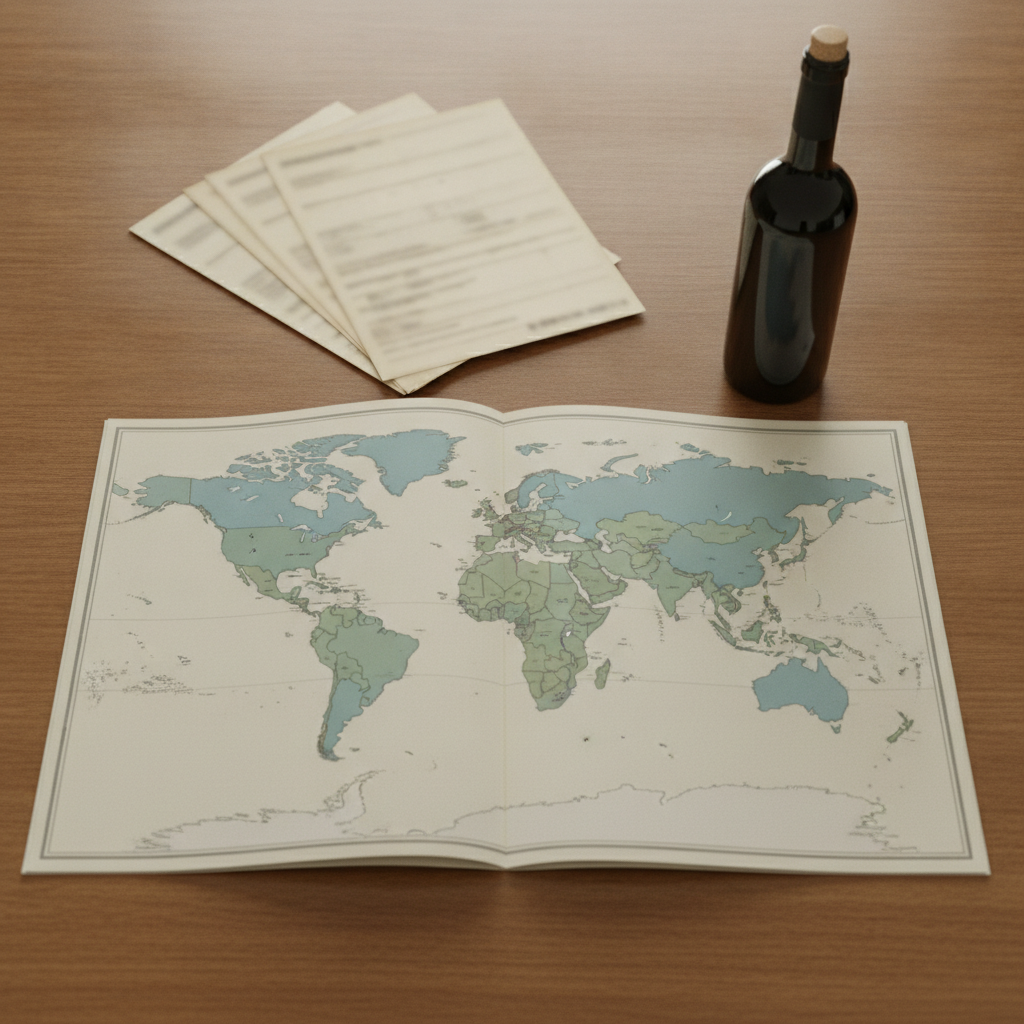
What Are the Mandatory Documents for Shipping Wine Abroad?
Every international wine shipment requires a set of essential documents to facilitate customs procedures and attest to the product's compliance. The Commercial Invoice, Packing List, and Transport Documents (such as the Bill of Lading for sea or Air Waybill for air freight) are fundamental.
Additionally, a Certificate of Origin, Certificates of Analysis attesting to the wine's chemical-physical characteristics, and compliance with the destination country's specific labeling regulations may be required.
How to Manage Customs and Insurance Documentation for Export?
The management of customs and insurance documentation is crucial for successful export. The Import/Export Customs Declaration is a formal document required by customs authorities.
If stipulated by the Incoterm or chosen voluntarily, an Insurance Policy or Certificate confirms cargo coverage during transit, protecting against unforeseen events and ensuring the continuity of the commercial transaction.
What Specific Requirements Exist for Non-EU Markets?
Non-EU markets often present more complex documentary and regulatory requirements. Countries like Mexico, for instance, require specific certificates of origin and adherence to local health regulations for labeling, as detailed in the ICE guide for Mexico.
It is essential to consult resources like the ICE Agency country guides and the European Commission's Access2Markets platform to obtain up-to-date and market-specific information for each destination.

What Are the Main Challenges for Messina Wineries in Export?
Wineries in the province of Messina, like many other Italian producers, face the challenge of adapting their offerings and documentation to the demands of international markets. Highlighting local designations, indigenous grape varieties, and territorial peculiarities is a strength to be communicated effectively.
Thoroughly understanding the operational flow and necessary documentation, leveraging export support tools offered by agencies such as ICE Agenzia, is the first step towards building a winning export strategy.
Frequently Asked Questions
What are the HS codes for wine export?
Wine generally falls under chapter 2204 of the HS (Harmonized System) codes, which identifies alcoholic beverages. The commercial invoice must include these codes to facilitate customs procedures.
How can I ensure my labeling complies with foreign regulations?
It is essential to research the specific regulations of the destination country. Platforms like the European Commission's Access2Markets and the ICE Agency country guides provide detailed information on labeling requirements, which can vary significantly.
What are the benefits of using specific Incoterms for wine export?
The use of Incoterms (such as FOB, CIF, DDP) clearly defines the responsibilities, costs, and risks between the seller and buyer during transit. An appropriate choice simplifies logistical and financial management, reducing potential disputes and ensuring greater predictability.
The province of Messina possesses significant winemaking potential, and a well-planned export strategy, supported by impeccable documentation and market knowledge, can unlock new and profitable commercial opportunities.