Roman Wines Abroad: International Sales Strategies for Wineries
The province of Rome, with its winemaking heritage and proximity to a significant consumer market, presents unexplored potential for wine exportation. Current global dynamics and the growing international demand for authentic Italian wines are opening new frontiers for Lazio's wineries. This strategic guide is designed for Roman wine producers aiming for foreign markets, analyzing opportunities, challenges, and essential requirements for successful export, providing a clear path to expand your global presence. Learn more: Federdoc — National Confederation of Italian Wine Protection Consortia.
How Has Wine Trade in Lazio Evolved?
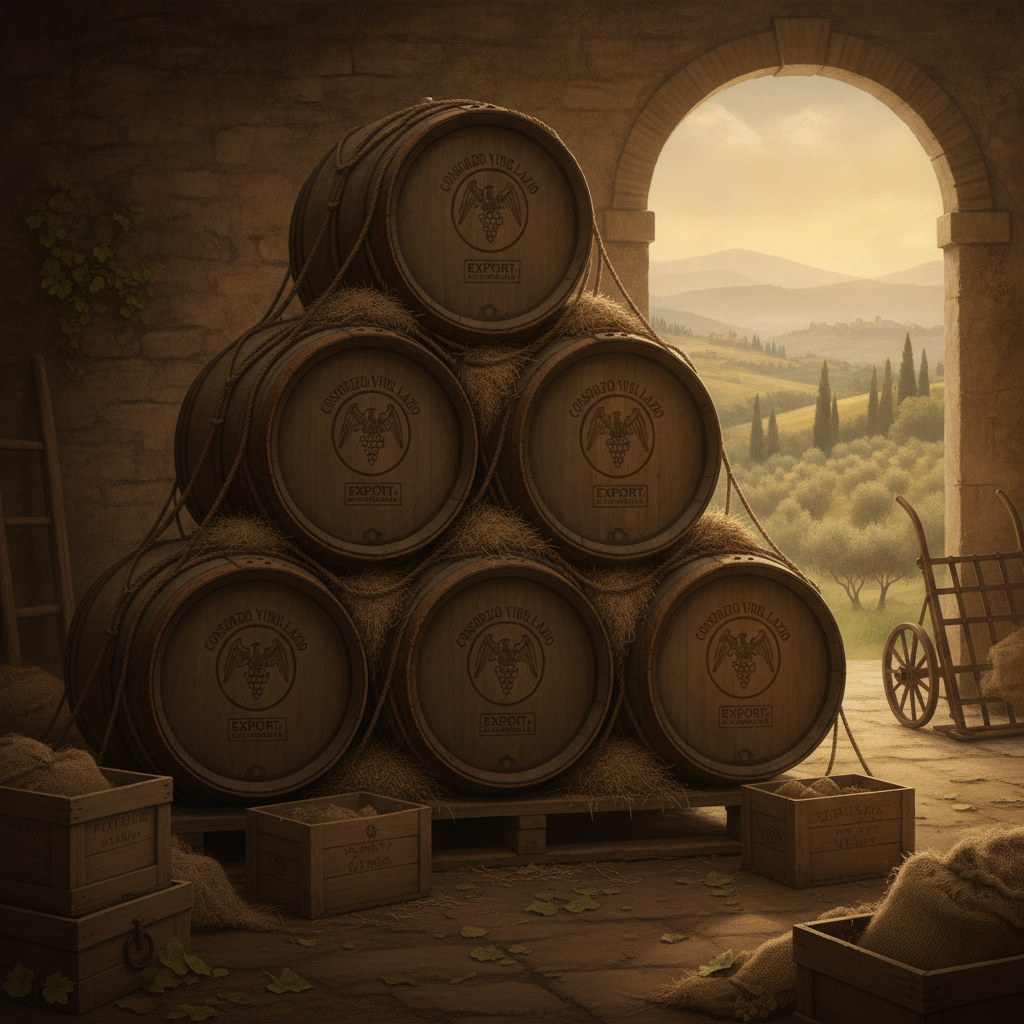
Historically, wine trade in Lazio was predominantly local, with intra-regional exchanges. Wine was often transported in 60-liter barrels from areas like the Castelli Romani, Viterbo, and Frosinone to Rome. This "retail" and limited-scale trade model characterized the regional wine landscape for a long time.
Rome, however, has always been a central consumption hub. Between 1883 and 1885, the city received an average of over 529,000 hectoliters of wine annually, with about one-third coming from Lazio itself and the remainder from other Italian regions. This proximity to a "grand consumption center" historically steered Lazio's producers towards the Roman market rather than international outlets.
Today, globalization and the increasing interest in lesser-known Italian denominations are creating new opportunities. Wineries in the province of Rome can leverage their strategic location and unique enological heritage to expand their presence in foreign markets, moving beyond the historical model.
What Are the Main Export Opportunities for Roman Wineries?
Exporting wine from the province of Rome to international markets presents several strategic opportunities that go beyond simple sales.
Is the US Market a Promising Destination?
Yes, the US market represents one of the most promising destinations for Italian wine. Export guides for the USA recommend meticulous preparation, including having promotional materials available in English, such as technical sheets, company presentations, and price lists in FCA/FOB format. It is crucial to verify label compatibility with TTB (Alcohol and Tobacco Tax and Trade Bureau) requirements before confirming immediate availability.
How Can Wineries Access Foreign Markets More Easily?
Dedicated platforms and logistic-commercial hubs for Italian wine in the USA can serve as aggregation channels for smaller wineries, facilitating access to qualified importers. Clearly defining Minimum Order Quantity (MOQ), available formats, and production timelines is crucial for establishing solid and lasting commercial relationships.
What Opportunities Exist in European Markets and Beyond?
Within the European Union, markets like Romania offer interesting opportunities. For intra-EU exports, customs documentation is simplified, but proper management of transport documents and excise duty regimes, such as the e-AD (electronic Accompanying Document) through the EMCS system, is essential.
For non-EU markets, documentary complexity increases. Documents such as the commercial invoice, packing list, and, depending on the chosen Incoterm, the insurance policy/certificate become critical. It is always necessary to verify the updated documentation list with the shipper or through ICE country guides, as the exact combination of required documents varies significantly from market to market.
What Are the Benefits of Being Part of an Export Winery Pool?
Wines Export manages a pool of several wineries from the province of Rome that have chosen to entrust us with their international presence expansion. This network offers amplified visibility to a select group of international buyers and importers, increasing contact and negotiation opportunities.
How Does Wines Export Support Wineries in Export?
Wines Export provides targeted consultancy on the specific requirements of each market, necessary documentation, and the most effective marketing strategies. The pool creates an ecosystem of producers who can share experiences and best practices, strengthening the collective ability to face export challenges and demonstrating the trust placed in our services for growth in global markets.
What Are the Essential Documents for Shipping Wine Abroad?
Every wine shipment abroad requires a fundamental package of documents to prove the transport contract, customs clearance, and regulatory compliance.
What are the Key Documents for Customs Clearance?
- Commercial Invoice: Details product, quantity, value, delivery term (Incoterm), and HS code (chapter 2204 for wine). Customs authorities use it to determine duties and taxes.
- Proforma Invoice: Has no fiscal value but anticipates order terms and is useful for preliminary negotiations, import licenses, or documentary credit lines.
- Packing List: Describes the physical contents of each package (number, packaging type, weight, volume) and must match the commercial invoice.
- Transport Documents: May include the waybill (CMR for road transport), bill of lading (for maritime transport), or air waybill.
When Are Additional Certificates Required?
- Certificates of Analysis: To be provided only upon explicit request from the buyer.
- Certificate of Origin: Required for some non-EU markets.
- Destination Market Specific Documents: Such as back labels for China or TTB requirements for the USA.

What Payment Instruments Are Recommended for Mitigating Risks?
For wineries exporting to high credit risk markets or to new buyers, the choice of payment instrument is crucial for risk management.
What is a Documentary Letter of Credit and When to Use It?
A Documentary Letter of Credit (DLC) is a commitment to pay issued by a bank in favor of the exporter, conditional upon the presentation of documents conforming to the Uniform Customs and Practice for Documentary Credits (UCP 600). Banks operate "on documents and not on goods," making formal document compliance essential to guarantee payment.
How Does Documentary Collection Work?
Documentary Collection is an arrangement where the exporter's bank presents shipping documents to the importer's bank. The latter releases the documents to the importer only after payment or acceptance of a bill of exchange, offering greater security than direct payment.
The winery must carefully assess the buyer's and destination market's credit risk, possibly using credit check services or credit insurance (like SACE) to mitigate potential losses.
What Do Foreign Buyers Look for in Wine from the Province of Rome?
International buyers, when looking at wineries from the province of Rome, seek a combination of factors that go beyond the simple quality of the wine.
What Elements Related to the Territory Are Important to Buyers?
The authenticity, history, tradition, and uniqueness of the Roman territory are strong attractive elements. Buyers look for wines that tell a story, that express the Lazio terroir, and that offer a sensory experience linked to the region, valorizing the origin.
Why Are Consistent Quality and Reliability Crucial?
The ability to deliver a product of consistent quality over time is a fundamental prerequisite. Consistency across different vintages and adherence to agreed quality standards are essential for building a long-term trust relationship and ensuring final customer satisfaction.
How Do Documentation and Compliance Influence a Buyer's Choice?
Mastery of the documentation and regulatory requirements of destination markets is a differentiating factor. Wineries capable of efficiently managing export bureaucracy demonstrate professionalism and reliability, facilitating the import process for the buyer.
How Much Do Flexibility and Adaptability Matter?
Willingness to negotiate contractual terms, bottle formats, and marketing strategies can make a difference. This is particularly important when dealing with importers seeking partners capable of adapting to specific market needs, demonstrating commercial agility.
Do Buyers Consider the Growth Potential of Wineries?
Yes, international buyers are interested in collaborating with wineries that have growth potential and the capacity to increase supply volumes over time, should demand require it. Scalability is an important factor for successful long-term partnerships.
Frequently Asked Questions
What Are the Specific Requirements for Exporting Wine to the United States?
To export wine to the United States, it is essential to verify label compatibility with TTB (Alcohol and Tobacco Tax and Trade Bureau) requirements and have promotional materials available in English, such as technical sheets and price lists in FCA/FOB format.
What Documents Are Always Necessary for Intra-EU Shipments?
For intra-EU shipments, proper management of transport documents and excise duty regimes, such as the e-AD (electronic Accompanying Document) through the EMCS system, is essential, in addition to the commercial invoice and packing list.
How Can I Ensure My Shipping Documents Are Correct for Non-EU Markets?
For non-EU markets, it is necessary to verify the updated documentation list with the shipper or through ICE country guides, as the exact combination of required documents (such as certificate of origin, commercial invoice, packing list) varies significantly from market to market.
Wineries in the province of Rome have a unique opportunity to expand their presence in international markets, valorizing the enological and historical richness of the territory. If you wish to explore the export potential for your winery and understand how Wines Export can support you on this journey, we invite you to request a personalized consultation.