Umbrian Wine Worldwide: Strategies for Terni Wineries
The province of Terni, with its rich winemaking tradition, offers significant potential for the export of Umbrian wines. For wineries looking to expand their international presence, it is crucial to expertly navigate the complexities of exporting. This article provides a detailed guide to the requirements, necessary documentation, and operational strategies for achieving commercial success abroad, with a specific focus on the production realities of the Terni territory. In-depth: Federdoc — National Confederation of Italian Wine Protection Consortia.
How can Terni Wineries Leverage Export Opportunities?
Wine export represents a strategic opportunity for Italian wineries, allowing for market diversification, increased turnover, and enhanced brand prestige. For wineries in the province of Terni, which encompasses 33 municipalities with a distinctive enological heritage, exporting can mean bringing the authentic flavors of Umbria to tables worldwide. The key to success lies in meticulous preparation and a well-defined strategy.
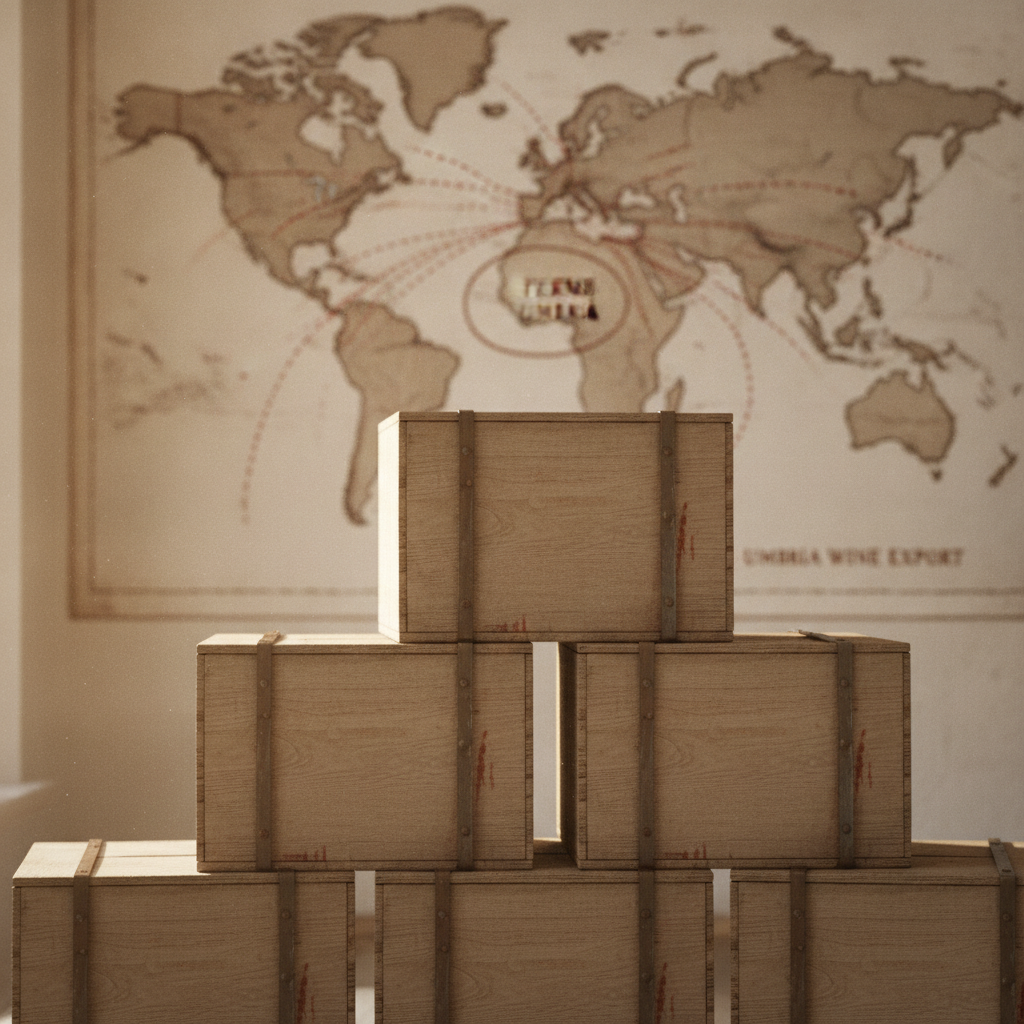
What are the Operational Phases for Exporting Wine?
Every winery embarking on an export journey must navigate a series of well-defined operational phases. Understanding this flow is the first step towards effective management of international operations, from negotiation to product delivery.
How to Qualify a Foreign Buyer Before Starting Negotiations?
Even before initiating commercial negotiations, it is crucial to verify the reliability and solvency of potential foreign buyers. This qualification process includes checking elements such as commercial registration, necessary licenses for importing alcoholic beverages, and requesting bank or commercial references to assess the counterparty's financial standing.
A thorough qualification phase, which may also include credit risk assessment through specialized services or credit insurance (such as those offered by SACE), is essential to prevent future defaults and protect the winery from financial losses.
What Information Should a Proforma Invoice Contain?
Once the buyer is qualified, the winery proceeds with sending a proforma invoice. While this document does not have fiscal value, it serves as the basis for negotiation and contains detailed information on the products offered: product description (appellation, vintage, format), minimum order quantity (MOQ), unit price and currency, and the proposed Incoterm.
The proforma invoice is the starting point for negotiation, during which the buyer and winery can agree on quantities, prices, payment terms, and other contractual conditions. The correct definition of these agreements is fundamental to avoid future disputes.
What are the Universal Documents Required for Wine Export?
Every international wine shipment requires a specific set of documents. There is a core set of documents that are requested in practically every destination market, regardless of local specifics.
- EORI Number (Economic Operators Registration and Identification): For wineries based in the EU, this number is mandatory for all customs operations. It uniquely identifies the economic operator in dealings with the customs authorities of all EU countries. The application is free of charge through the Italian Customs Agency. Without an EORI, goods cannot be declared at customs and risk being held.
- Commercial Invoice: This mandatory document, issued by the exporter, details the product, quantity, unit and total value, Incoterm, and the customs classification HS code (for wine, chapter 2204). Customs uses it to calculate duties and taxes.
- Proforma Invoice: As mentioned, this precedes the order terms and may be requested by the buyer to obtain import licenses or credit lines.
- Packing List: This describes the physical contents of each package, specifying the number of packages, type of packaging, gross and net weight, and volume. It must precisely match what is stated on the commercial invoice.
- Insurance Policy/Certificate: If required by the Incoterm (e.g., CIF/CIP) or voluntarily chosen by the winery, it attests to the cargo insurance coverage.

What Specific Documents May Be Requested for Wine Export?
In addition to universal documents, each destination market may require additional documentation. It is crucial to consult country-specific guides (such as those provided by ICE Agenzia or Access2Markets) or rely on an experienced freight forwarder to know the complete and updated list of requirements. These may include health certificates, certificates of origin, specific import licenses, or particular labeling requirements.
Wines Export actively collaborates with selected wineries to facilitate their access to international markets. In the specific case of the province of Terni, several wineries are part of our producer pool. These realities, through their participation, benefit from privileged access to market information and a network of qualified buyers. Their presence in our network attests to their commitment to excellence and their desire to expand their global presence.
How to Develop Effective Marketing and Sales Strategies for Abroad?
Once logistics and documentation are defined, it is essential to adopt effective marketing and sales strategies to reach and conquer foreign buyers.
How to Effectively Communicate with Foreign Buyers?
Communication with foreign buyers should preferably be conducted in English, with technical materials (product sheets, brochures) reviewed by professionals to ensure clarity and accuracy. Taking into account time zone differences is crucial for planning effective virtual calls and meetings. Utilizing platforms like LinkedIn, specialized Italian wine importer websites, and participation in industry trade fairs are powerful tools for identifying and contacting potential commercial partners.
In the long term, building a relationship of trust with the importer is a critical success factor, especially considering the logistical distances and direct management challenges for the winery.
How to Promote the Territory and Tradition in Wine Promotion Abroad?
For markets like Australia, but not exclusively, telling the story of the territory, the winery's history, and Italian tradition represents a marketing element of great value. Wineries in Terni can highlight the uniqueness of their terroir, their inherited winemaking techniques, and the passion that drives their production, creating an emotional connection with the buyer and, indirectly, with the end consumer.
Frequently Asked Questions
What is the first step for a Terni winery that wants to export wine?
The first step is meticulous preparation and the definition of a well-defined strategy, which includes understanding the operational phases, the necessary documentation, and the marketing strategies.
What do I need to do to obtain an EORI number?
The EORI number is requested free of charge through the Italian Customs Agency. It is mandatory for all customs operations within the EU.
Where can I find information on specific country requirements for wine export?
It is essential to consult country-specific guides provided by entities such as ICE Agenzia or the Access2Markets platform, or rely on an experienced freight forwarder.
Exporting wine from the province of Terni to international markets is an achievable path rich with potential. Through a thorough understanding of operational phases, meticulous documentation management, adoption of targeted marketing strategies, and valorization of territorial specificities, Umbrian wineries can successfully establish themselves. Collaboration with expert partners like Wines Export and constant commitment to building solid relationships with foreign buyers are key elements to transforming challenges into concrete opportunities, bringing Terni's wine excellence to the world.