Cannubi: The Premier Grape Variety for Export-Worthy Italian Wine Excellence
The world of wine is a constantly expanding universe, where the rediscovery of indigenous grape varieties and the valorization of historical ones represent a strategic opportunity for Italian wineries targeting international markets. Among these, the Cannubi grape variety, while not among the most widespread globally, possesses unique characteristics that deserve attention, especially in terms of export potential. This article explores the origins, ampelographic peculiarities, agronomic needs, and the qualities of the wine obtained from Cannubi, analyzing how these characteristics can translate into a competitive advantage in foreign markets. In-depth information: MASAF — National Register of Vine Varieties.
Are the Origins of the Cannubi Grape Variety Historical?
The origins of the Cannubi grape variety are shrouded in antiquity, with roots stretching back to regions historically renowned for viticulture. Some sources indicate a provenance from Crimea and southern Ukraine, with historical cultivation in the Sudak region. Other ampelographic testimonies place it in different geographical contexts, suggesting its diffusion and adaptation to multiple terroirs over the centuries.
For instance, it is mentioned in relation to specific areas of Piedmont, such as the districts of Casale, Asti, and Alessandria, where it has been cultivated since ancient times and held in high regard for the quality of its product and the robustness of the vine. This historical diffusion, although not always univocally documented, underscores Cannubi's resilience and adaptability, qualities fundamental for a grape variety destined for export.
What are the Ampelographic Characteristics of Cannubi?
The identification and description of ampelographic traits are crucial for understanding a grape variety's potential. Cannubi presents a series of distinctive features that define its identity:
- Shoot Tip: The shoot tip is described as downy, with colors ranging from yellowish-bronze to yellowish-red, sometimes with pink margins. In other descriptions, it is referred to as salient, conical in shape, with scales of deep Havana or dark chestnut color.
- Leaf: The adult leaf is generally of medium size, sometimes large, with an orbicular or elongated shape. It has three or five lobes, with the leaf blade sometimes slightly curled. The upper surface is smooth, while the lower surface can be downy or velvety. The color varies from glossy dark green, sometimes streaked with vermilion or yellow, with slightly prominent, whitish veins.
- Grape Cluster: The cluster's shape varies from conical to pyramidal, often irregular, with dense and abundant berries. Its size can be medium or large, with sub-round or oblong berries. The average cluster weight is indicated to be around 200-300 grams.
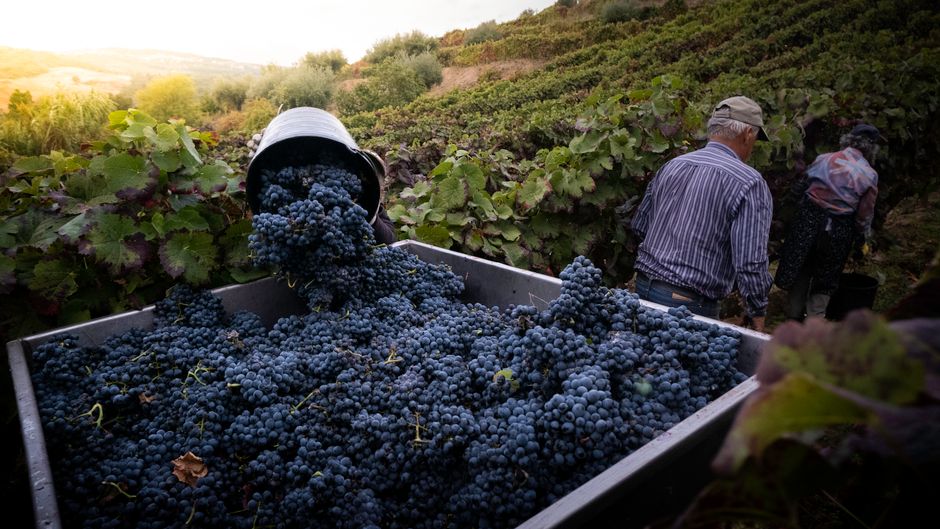
- Berry: The berry is medium to large in size, round or irregular due to high compactness. The skin is blue-black, firm, bloomy, and easy to peel. The pulp is described as firm, juicy, sweet, slightly acidic, and non-coloring, despite the high concentration of anthocyanins in the skin.
These physical characteristics are fundamental for understanding the grape variety's resilience and the quality of the resulting grapes.
What are the Agronomic Needs of Cannubi?
For a grape variety intended for export, the ability to adapt to different climates and soils is a determining factor. Cannubi demonstrates remarkable versatility:
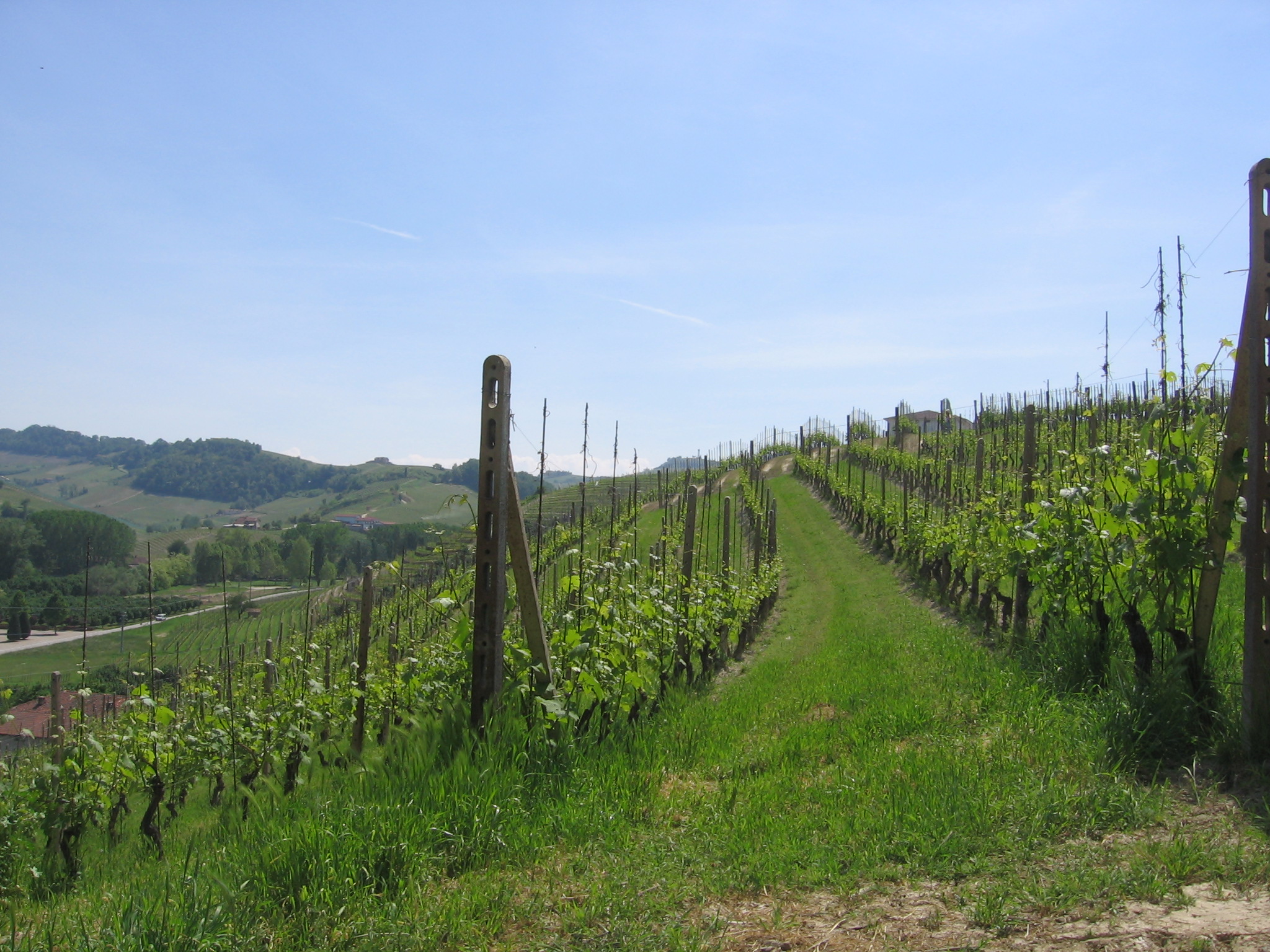
- Soil: It adapts to all types of soil, preferring fresh, fertile, and deep ones. It also thrives in light, mixed clay, and tufa soils.
- Exposure: It favors well-exposed, sunny sites, particularly south-facing, to ensure good grape quality.
- Pruning and Training: It adapts to expansive training systems with long pruning. It is trained on cordon or pergola systems, with pruning ranging from 3-5 buds to long pruning (minimum 50 buds/vine) with spurs for vegetative renewal. Vigour is generally high, although some sources describe it as medium to high.
- Yield: The yield per vine is indicated between 1.5-2.5 kg, considering planting densities of 3,000 vines/ha, or approximately 3.0 kg per vine. Bud fertility ranges from 1.0-1.5 to 1.4.
- Resistance: The grape variety is generally robust and rustic. It resists winter and spring frosts well. However, it shows susceptibility to diseases like downy mildew and powdery mildew, while being moderately resistant to grey rot.
Its hardiness and adaptability make it an interesting candidate for various wine-producing regions, facilitating entry into new markets.
What are the Characteristics of Cannubi Must and Wine?
The qualities of the must and wine obtained from Cannubi are fundamental for defining its market positioning:
- Must: The must's acidity ranges between 7.0-10.0 parts per thousand or 3.5-4.0 g/l, with sugars varying from 17.0-20.0% to 20-21° Brix. Other sources report sugar values between 17.5% and a potential alcohol content between 12.7 – 13.9% vol. Total acidity is indicated between 5.9 – 6.5 g/L of tartaric acid.
- Wine: The resulting wine is medium-bodied, full-bodied, harmonious, and slightly acidic, with a fresh and neutral taste. Other descriptions speak of a wine with a neutral-sweetish taste, or a pale ruby red color, soft, and low in tannins. Some wines possess a slight, peculiar aroma or fragrance of this grape variety. Non-reducing dry extract can reach high values (19.8 - 23.6 g/L).
These characteristics suggest the potential for medium-bodied red wines with good structure and aging potential, suitable for diverse international palates.
What is the Export Potential for the Cannubi Grape Variety?
The Cannubi grape variety, with its history, agronomic characteristics, and the organoleptic qualities of the wines it produces, offers several levers for an effective export strategy:
- Uniqueness and Niche: In an increasingly global market seeking novelty and authenticity, lesser-known grape varieties with a distinctive history and character, like Cannubi, can attract importers and consumers curious to discover new enological experiences. Its origin, though debated, can be narrated as a story of resilience and adaptation.
- Agronomic Versatility: Cannubi's ability to adapt to different soil types and climates makes it an interesting choice for wineries located in areas with different viticultural vocations. This reduces cultivation risk and broadens possibilities for producing wines with slightly different profiles, adaptable to specific markets.
- Quality Wine Potential: The characteristics of the must and wine, such as good alcohol potential, balanced acidity, and structure, suggest the possibility of producing quality red wines capable of competing in international markets. The mention of a "slight, peculiar aroma or fragrance" adds an element of sensory interest.
- Historical and Cultural Narrative: The history, even if fragmented, of the Cannubi grape variety can be used to build a compelling narrative for foreign markets. Its association with historical wine regions, its resilience, and its ampelographic peculiarities offer starting points for marketing campaigns that enhance Italian authenticity and tradition.
In conclusion, the Cannubi grape variety, while not a protagonist in high export volumes, has what it takes to carve out a significant niche in international markets. Its uniqueness, adaptability, and the qualitative potential of the wines derived from it, supported by a well-crafted historical and cultural narrative, can represent a valuable asset for Italian wineries aiming to differentiate themselves and offer the world authentic wines with character.
Frequently Asked Questions
Is the Cannubi grape variety suitable for cold or hot climates?
The Cannubi grape variety favors well-exposed, sunny sites, particularly south-facing, to ensure good grape quality. It resists winter and spring frosts well, showing considerable hardiness.
What are the main diseases to which Cannubi is susceptible?
The grape variety shows susceptibility to diseases like downy mildew and powdery mildew, while being moderately resistant to grey rot.
What type of wine is obtained from the Cannubi grape variety?
The resulting wine is medium-bodied, full-bodied, harmonious, and slightly acidic, with a fresh and neutral taste. Some wines possess a slight, peculiar aroma or fragrance of this grape variety.