Alcohol-Free Wine: Opportunities and Regulations for Italian Wineries
Wines Export Editorial · Last updated:
The global market for non-alcoholic and low-alcohol wines is experiencing significant growth, opening new perspectives for Italian wineries. To seize these opportunities, it is crucial to understand the specific regulations, labeling requirements, and market dynamics of destination countries. This article offers an essential guide for Italian wineries aiming to export their non-alcoholic products, providing the necessary information to navigate this expanding sector with success and awareness. Further insights: OIV — International Organization of Vine and Wine.
How is Non-Alcoholic Wine Defined?
The term "non-alcoholic wine" can have varying definitions depending on local regulations. Generally, it refers to beverages with an actual alcoholic content below 0.5% vol. There are also intermediate categories, such as "partially dealcoholized wines," which retain an alcohol content above 0.5% vol. but lower than that of the original product before the dealcoholization process.
The increasing popularity of these beverages is driven by several trends:
- Health Consciousness: Consumers actively seek options with less alcohol and fewer calories, favoring a healthier lifestyle.
- Lifestyle Changes: The rise of sober driving and the desire for beverages suitable for various times of the day contribute to the spread of non-alcoholic wines.
- Inclusivity: Offering non-alcoholic alternatives allows for the inclusion of a broader audience, such as teetotalers, individuals with medical restrictions, or those choosing for personal or religious reasons.
It is important to note that, in many markets, these beverages may not be legally classified as "wine" due to their low or absent alcohol content, which has direct implications for labeling and marketing.
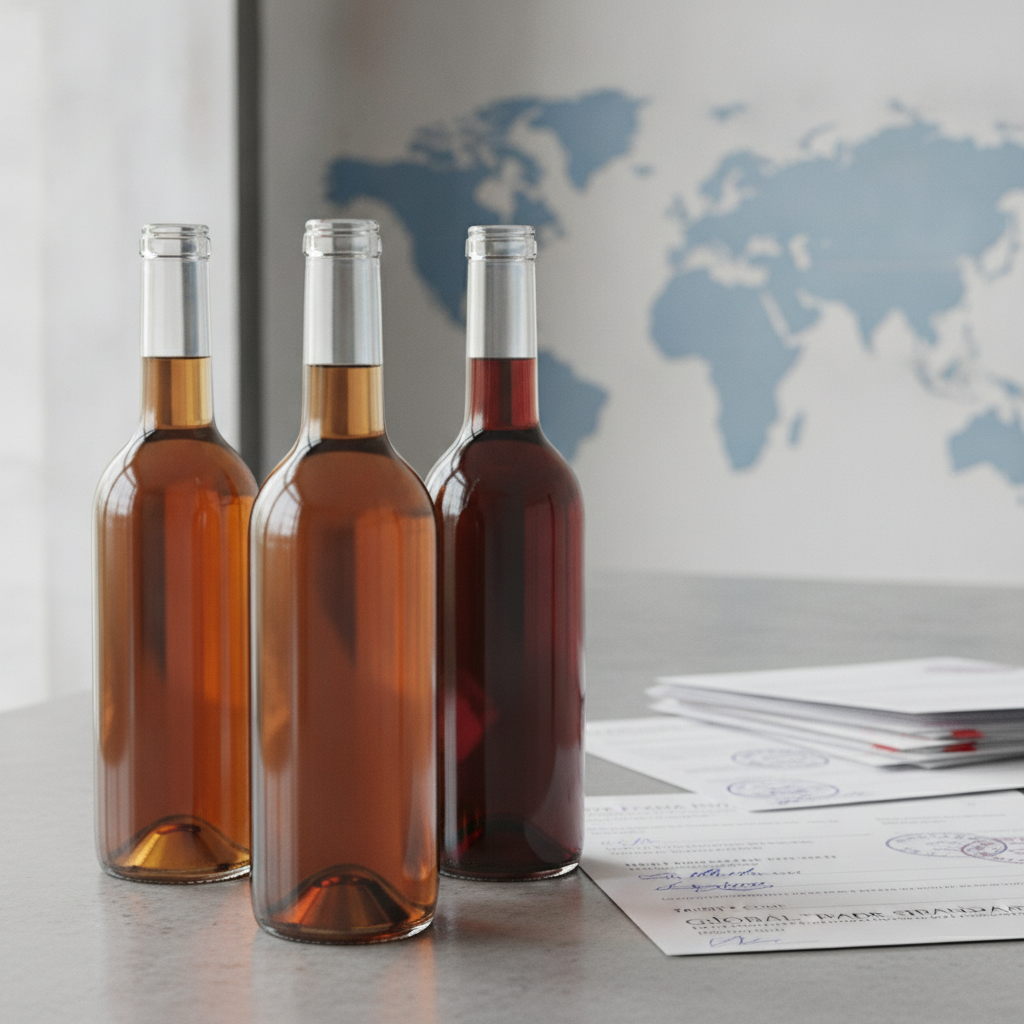
What are the Labeling Requirements for Exporting Non-Alcoholic Wine?
Exporting non-alcoholic wine requires careful compliance with labeling regulations, which vary significantly across different countries. Regulations focus on the correct product denomination, precise declaration of alcohol content, and indication of any additives or preservatives used.
How to Distinguish Between Non-Alcoholic and Partially Dealcoholized?
Labels must clearly specify whether the product is "non-alcoholic" (below 0.5% vol.) or "partially dealcoholized" (above 0.5% vol. but less than the original alcohol content before dealcoholization). This distinction is crucial to avoid customs issues and ensure consumer transparency.
What is the Mandatory Statement for Alcohol Content?
The declaration of the actual volumetric alcohol content is always mandatory. For non-alcoholic wines, this value must be strictly below 0.5% vol. Accuracy in this declaration is critical, as control authorities may conduct analyses to verify compliance.
How to Indicate Geographical Indications and Designations?
For PDO/PGI wines, appropriate statements ("Protected Designation of Origin" or "Protected Geographical Indication") must be displayed along with the name of the designation or geographical indication. This also applies to dealcoholized products, provided they comply with the origin and production requirements established by their respective specifications.
When to Declare Allergens and Preservatives?
International regulations mandate the declaration of allergens and preservatives. For example, if the sulfur dioxide content exceeds a certain threshold (such as 10 mg/l in markets like Ireland and South Africa), the statement "Contains sulfites" or "Contains sulfur dioxide" is mandatory. Similarly, if technological auxiliaries of animal origin with residues in the final product are used, a specific declaration or a non-vegetarian logo may be required.
Are Health Warnings Required?
Some markets, such as the United States, require mandatory health warnings related to alcohol consumption. Although these are primarily aimed at alcoholic products, it is important to verify if similar regulations or extended interpretations might apply to low-alcohol beverages, especially if the term "wine" is used.
What are the Specifics for Certain Markets?
- Montenegro: Requires labels in the local language or multilingual adhesive counter-labels, with mandatory information on denomination, alcohol content, origin, and bottler.
- United States (TTB): Labeling must comply with TTB (Alcohol and Tobacco Tax and Trade Bureau) requirements. Net content in metric units, alcohol content, importer's name and address, and potentially allergen declarations are necessary. The term "wine" may be subject to restrictions if the alcohol content is too low.
- Ireland: The "Public Health Alcohol Act 2018" mandates health warnings that will be phased in gradually. Wineries must monitor the evolution of these rules to adapt labels for the Irish market.
- South Africa: Requires indication of the country of origin and the statement "contains sulphites" if the sulfur dioxide content exceeds 10 mg/l. Import documentation, including certificates of analysis and origin, is fundamental.
What Marketing Strategies Should Be Adopted for Non-Alcoholic Wine?
To successfully export non-alcoholic wine, Italian wineries must develop targeted marketing strategies that meet the specific needs of foreign markets.
How to Position the Product in the Market?
In markets where the demand for non-alcoholic alternatives is structurally growing, a mid-to-high-end positioning can be advantageous. This approach allows for highlighting Italian quality and origin, differentiating from generic or low-quality products, and communicating distinctive added value.
What Kind of Promotional Material is Needed?
It is essential to have promotional material in English (and potentially other relevant languages for the target market). This should include detailed technical sheets, winery presentations, price lists (FCA/FOB), and high-quality images of labels and products to effectively communicate brand value.
How to Find the Right Importers?
Identifying importers with active licenses for alcoholic and non-alcoholic beverages and a proven presence in the Horeca or retail channels is a crucial step. Seeking partners who understand the added value of "Made in Italy" in the non-alcoholic segment can make a difference for commercial success.
How to Adapt to Market Specifics?
Understanding the specificities of each market is vital. For instance, in Ukraine, it is necessary to verify the operational status and updated licenses of importers, especially in contexts of instability. In the Netherlands, EORI registration and correct customs documentation are key steps for import, ensuring smooth operations.

What are the Operational and Logistical Challenges of Export?
Exporting non-alcoholic wine presents operational and logistical challenges that require careful planning and management.
How to Manage Operational Flow and Documentation?
The export process, from negotiation to delivery, involves several stages and documents. Wineries must be prepared to provide a detailed proforma invoice, specifying quantities, prices, Incoterms, and payment terms. Verifying the buyer's solvency and licenses is an indispensable preliminary step to mitigate risks.
How to Handle Customs and Duties?
Each country has its own customs procedures and tariff structures. For example, in Bahrain, customs duties and handling charges can be very high, significantly impacting the final price. It is essential to request a "landed cost" simulation that includes all import costs before negotiating FOB/CIF prices.
How to Organize Document Logistics?
Properly organizing documentation is vital. Certificates of origin, certificates of analysis, accompanying documents (such as e-AD for the Netherlands), and compliance with local regulations are non-negotiable requirements to avoid customs delays or shipment blockages.
Conclusion and Next Steps
The non-alcoholic wine market represents a promising frontier for Italian wineries. To navigate this sector successfully, an informed and strategic approach is essential. Wineries must invest in understanding international regulations, adapting labels, and building strong relationships with qualified foreign partners.
Wines Export supports Italian wineries in facing these challenges, providing consultancy and tools to facilitate access to international markets.
If your winery is interested in exploring export opportunities for non-alcoholic wine, request a personalized consultation to evaluate the best strategies and most promising markets.
Frequently Asked Questions
Question 1
What are the main reasons consumers choose non-alcoholic or low-alcohol wines? Consumers primarily choose these beverages for greater health consciousness, seeking options with less alcohol and fewer calories for a healthier lifestyle. Additionally, lifestyle changes, such as sober driving and the desire for beverages suitable for various times of the day, contribute to their popularity.
Question 2
How does a "non-alcoholic" wine differ from a "partially dealcoholized" wine for international labeling purposes? A "non-alcoholic" wine is generally defined as a beverage with an actual alcoholic content below 0.5% vol. "Partially dealcoholized" wines, on the other hand, retain an alcohol content above 0.5% vol. but lower than that of the original product before dealcoholization, and this distinction must be clearly specified on the label.
Question 3
What are the implications of using the term "wine" on the label of products with low or no alcohol content for export? In many markets, beverages with very low or no alcohol content may not be legally classified as "wine," which has direct implications for labeling and marketing. It is crucial to verify local regulations, especially in markets like the United States, where the term "wine" may be subject to restrictions.