How to Sell Italian Passito Wine Abroad: Tips for Producers and Buyers
Wines Export Editorial · Last updated:
Italian Passito wine, appreciated for its aromatic richness and sweetness, represents an oenological excellence with strong export potential. For Italian wineries targeting foreign markets and for interested importers, understanding logistical, documentary, and market strategy complexities is essential. This guide provides essential information to navigate the export of this nectar successfully, addressing key aspects from required documentation to international positioning and distribution strategies. In-depth analysis: OIV — International Organisation of Vine and Wine.
What is Passito Wine and How is it Produced?
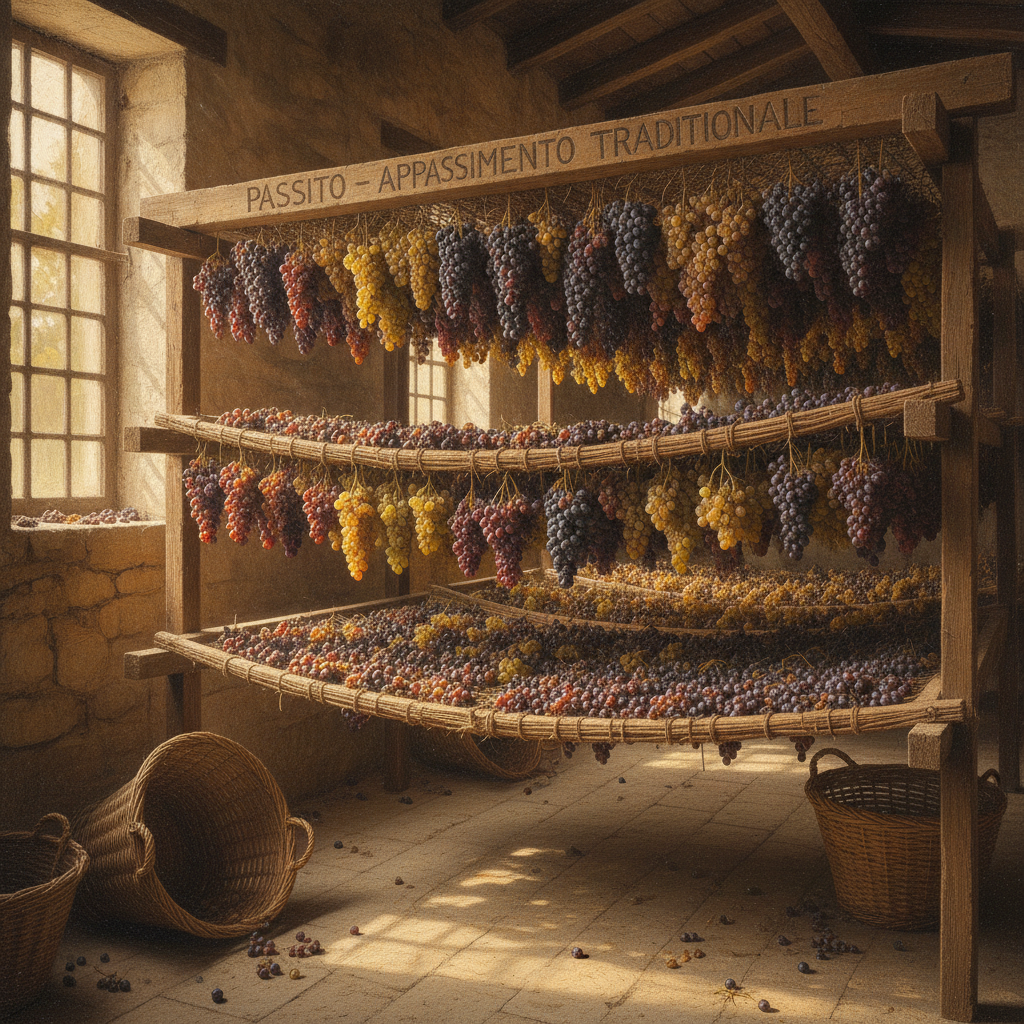
Passito wine is a category of wines made from grapes that undergo an appassimento (drying) process, either on the vine or after harvest. This ancestral technique, widespread in many Italian regions, concentrates sugars, aromas, and polyphenols, imparting unique sweetness, complexity, and longevity to the wine.
The grapes used vary widely, including varietals such as Moscato, Aleatico, and Malvasia. The drying process can occur in several ways:
- On the vine: Grapes ripen longer on the vineyard, concentrating sugars and aromas through the action of sun and wind.
- In fruttaio (drying room): Harvested grapes are spread on racks or hung in well-ventilated rooms for weeks or months, promoting water evaporation and sugar concentration, as well as the development of tertiary aromas.
- In crates: Similar to drying in a fruttaio, but with grapes arranged in crates for better management and aeration.
The result is a wine with an intense golden to dark amber color, with complex aromas of ripe fruit, honey, dried flowers, and spices. On the palate, Passito wines are distinguished by their sweetness balanced by good acidity, ensuring aromatic persistence and a pleasant equilibrium.
What Documents Are Needed to Export Passito Wine?
The export of wine, including Passito, requires meticulous documentation management to ensure regulatory compliance and facilitate customs procedures. There are universal documents and others specific to certain markets.
Essential Documents for Every Shipment
Every international wine shipment must be accompanied by essential documents that attest to the transport contract, facilitate customs clearance, and prove product compliance.
- Commercial Invoice: Issued by the exporter, it details the product (name, vintage, format, wine type – specify "Passito"), quantity, value, Incoterm, and HS code (chapter 2204 for wine). It is crucial for determining duties and taxes.
- Proforma Invoice: Anticipates order terms before final confirmation. Useful in preliminary negotiations and for import license or credit line applications.
- Packing List: Describes the physical contents of each package: number, type of packaging, gross/net weight, and volume. It must correspond to the commercial invoice.
- EORI Registration (for EU Exporters): Mandatory for shipments outside the EU, it is an identification number for economic operators valid throughout the European Union. It can be requested free of charge online from the Italian Customs Agency.
Specific Documentation for Non-EU Markets
Many markets outside the EU require additional documentation for customs clearance and compliance.
- Certificate of Origin: Attests to the Italian origin of the wine, required in some countries.
- Certificate of Analysis: Issued by an accredited laboratory, it certifies the physicochemical characteristics of the wine, including residual sugars and sulfites, which are crucial parameters for Passito wines.
- Transport Documents: Depending on the mode of transport, sea waybills (Bill of Lading) or air waybills (Air Waybill) may be required.
- Health or Phytosanitary Certificates: Some countries require attestations regarding the product’s healthiness and absence of pathogens.
It is essential to consult the specific regulations of the destination country through ICE offices or Italian embassies to ensure complete documentation.
What Are the Market Strategies for Italian Passito Wine?
The export of Italian Passito wine can thrive through targeted strategies that enhance its unique characteristics and meet the demands of various international markets.
Identifying Key Markets for Passito
Italian Passito wines have significant export potential in markets with an established or growing culture of sweet wines. These include:
- United States: A vast market with increasing demand for niche wines. Labeling and compliance with TTB regulations are crucial.
- Asian Countries (China, Japan, South Korea): Growing interest in high-end Italian products. Communication must focus on quality and uniqueness.
- Northern Europe (Sweden, Norway, Finland): High purchasing power and appreciation for quality wines, often consumed with desserts or as meditation wines.
- Established European Markets (Germany, United Kingdom): Continue to represent important outlets, with informed consumers and a strong presence of large retail chains and the Horeca sector.
How to Position and Communicate Passito Wine?
Passito wine lends itself to various market positioning strategies, each with specific communication needs.
- Dessert/Meditation Wine: A classic role, where Passito accompanies the end of a meal or complements blue cheeses. Communication should emphasize aromatic complexity, balanced sweetness, luxury, and pleasure.
- Food Pairing Wine: Some Passito wines, especially less sweet ones, can be paired with dishes such as foie gras or pâtés, and even with spicy Asian cuisines.
- Special Occasion Wine: Its richness and craftsmanship make it ideal for celebrations and gifts.
Communication should highlight:
- Designation and Territory: Each Passito wine is an expression of its territory, with unique grape varietals and microclimates.
- Drying Process: Explaining the technique (fruttaio, on the vine) adds value and allure.
- Aromatic and Gustatory Notes: Describe the aromas and flavors evocatively, suggesting pairings.
- Aging Potential: Many Passito wines develop complexity with age.
Which Distribution Channels Should Be Used?
The choice of distribution channel is crucial for effectively reaching the target market.
- Specialized Importers: Ideal for complex markets or for reaching niche segments. These partners have a good understanding of Italian wine and the sweet wine segment.
- Major Organized Retail (GDO): Suitable for larger volumes and more accessible positioning. It requires attractive packaging and effective in-store communication.
- Horeca Channel (Hotels, Restaurants, Catering): Ideal venues for promoting Passito wines, both as dessert wines and for refined food pairings.
- E-commerce: Offers direct access to consumers, both nationally and internationally, reaching specific market niches.

What Are the Challenges and Opportunities in Passito Wine Export?
Exporting Passito wine presents unique challenges, such as the perception of sweet wine as a niche product, but also considerable opportunities. The growing curiosity of consumers towards authentic, high-quality food and wine products, combined with the excellence of Italian wines, opens broad perspectives.
Market diversification, with growing exports to emerging economies, offers new frontiers. The ability to communicate the intrinsic value of these wines – tradition, craftsmanship, complexity, and sensory pleasure – will be key to international success.
For wineries, it is essential to prepare multilingual promotional materials and verify the compatibility of labels with foreign regulations. Collaboration with reliable local partners, who understand the specifics of the market and the product, is crucial for building a lasting and profitable presence.
Frequently Asked Questions About Passito Wine Export
What is the correct HS code for Passito wine for export?
The reference HS code for wine is chapter 2204. It is important to specify "Passito" in the product description for clarity.
What are the most promising foreign markets for Italian Passito wine?
Markets such as the United States, Asian countries (China, Japan, South Korea), Northern Europe, and established European markets (Germany, United Kingdom) show significant potential for Italian Passito wine.
Is a certificate of origin required for exporting Passito wine?
In some destination countries, a certificate attesting to the Italian origin of the wine is required. It is crucial to verify the specific regulations of the import market.