How Italian Wineries Can Sell Bulk Wine Abroad: Regulations and Strategies
Wines Export Editorial · Last updated:
The export of bulk wine represents a significant part of international trade for Italian products. While it may seem like a simpler option compared to bottled wine, it requires a thorough understanding of regulations, market dynamics, and logistical challenges. This article provides Italian wineries with a comprehensive guide to successfully navigate the global bulk wine market, highlighting key opportunities and aspects to consider for effective and compliant exporting. Deep dive: OIV — International Organisation of Vine and Wine.
How is Bulk Wine Positioned in the Global Market?
Bulk wine constitutes an essential component of international trade, representing a considerable share of the volumes exchanged worldwide. Despite a general decline in global wine exports in the first half of 2025, the bulk market has shown greater resilience compared to other categories such as still bottled wines and sparkling wines, with a more contained value decrease (-0.3%) and lower volume decline (-2.3%).
What are the Emerging Trends in the Bulk Wine Market?
The growth of the global bulk wine market is primarily driven by the "no-low alcohol" and "ready to drink" segments. Improvements in dealcoholization technologies and investments in dedicated facilities allow for the offering of greater quantities and higher quality of low-alcohol wines and convenient products for consumers seeking novelty.
What Challenges Influence the Bulk Wine Market?
The wine industry is affected by global economic and geopolitical instability, environmental transition, and a decline in overall consumption. Some key markets have shown significant downturns, such as the United States, which reduced bulk imports to approximately 3.3 million hectoliters, valued at 227 million euros as of June 2025, marking a 10% decrease.
What is Italy's Role in the Global Bulk Wine Trade?
Historically, Italy has seen its production-to-export ratio fluctuate between 40% and 50%. Since 2012, there has been a shift towards a predominantly exporting country status. Nevertheless, bulk wine continues to represent an important share of Italy's international trade, although a reversal of the trend favoring product bottled at origin is noted. In 1982, Italy's share of global wine imports was 10.5%, with a 7.05% share for bottled wines and 16.3% for bulk product.
What are the Regulatory and Documentation Aspects for Exporting Bulk Wine within the EU?
Exporting bulk wine within the EU requires careful management of documentary and fiscal requirements. For intra-community shipments, a commercial invoice is necessary for commercial and accounting purposes. If the wine has already been released for consumption, a simplified excise document or an equivalent commercial document is required.
How are Oenological Practices and Bulk Wine Transport Handled?
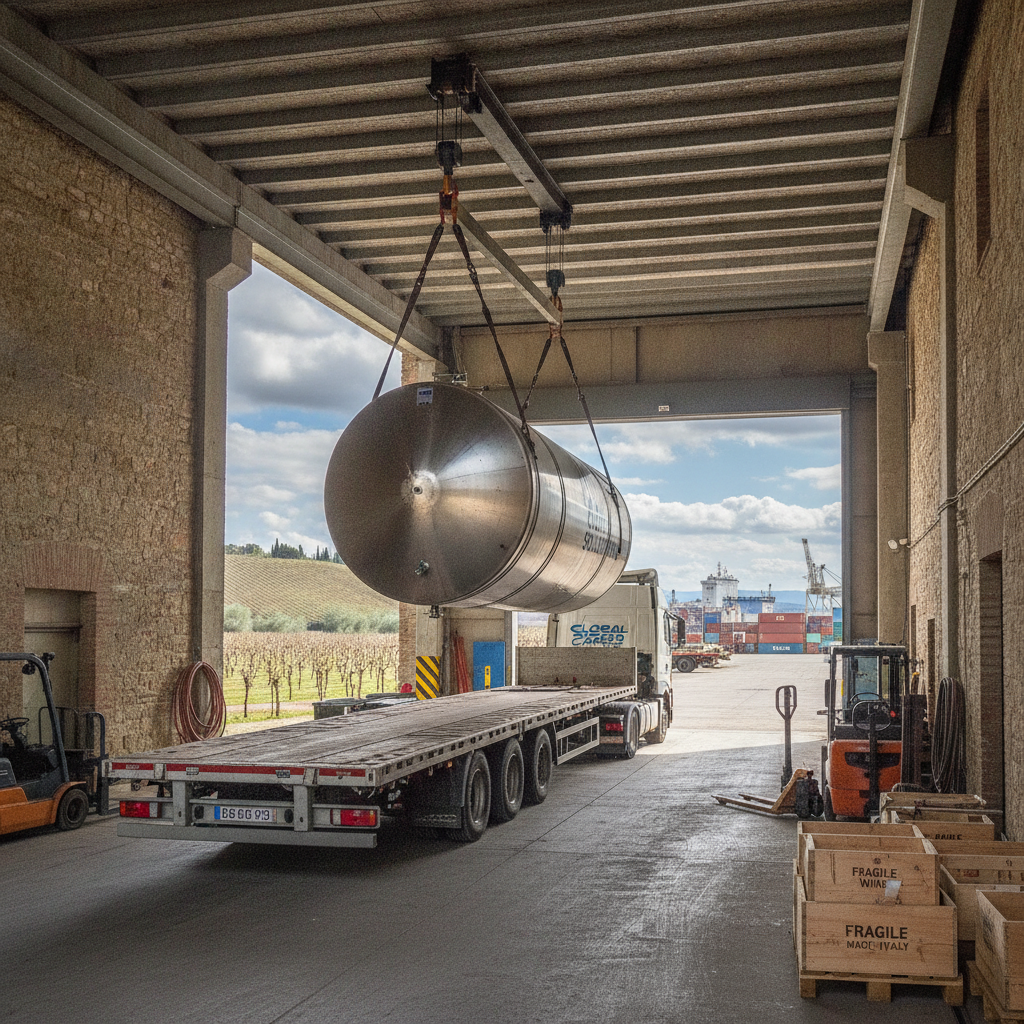
Wines with a designation of origin shipped in bulk must not undergo oenological practices at the destination, but must be bottled under the import conditions. The importer may blend different batches of wine of the same designation. It is important to consider that bulk shipment may not allow for the acquisition of specific wine characteristics, and for long transportation, additional support is necessary to protect the wine from oxidation and other transit issues.
What Opportunities Does Bulk Wine Export Offer to Italian Wineries?
Bulk wine export offers several opportunities, including access to new markets, managing larger volumes to potentially increase turnover, and a strategic entry point to test or consolidate international presence. Even in the bulk market, Italian origin and the intrinsic quality of the wine remain determining factors for a competitive advantage.
What Do International Buyers Look for When Purchasing Bulk Wine?
International bulk wine buyers seek reliability and consistency in the supply of predictable volumes and quality. Compliance with destination country regulations, including aspects related to excise duties and documentation, is fundamental. Competitive pricing remains a key factor, but traceability, Italian origin, and production practices are added value. Logistical flexibility in managing international bulk liquid shipments is also important.

Frequently Asked Questions About Bulk Wine Export
What are the main destination markets for Italian bulk wine?
The original text mentions the United States as a key market that has reduced bulk imports, indicating a downturn. Other main destination markets are not specified.
What are the regulatory differences between bulk wine shipments within the EU and to non-EU countries?
The original text focuses on intra-community (EU) trade, mentioning the commercial invoice and simplified excise or equivalent documents. Regulations for non-EU countries are not detailed.
How can I ensure the quality of my bulk wine during international transport?
For long transports, additional support is necessary to protect the wine from oxidation and other transit issues, as wine is not a stable product and can undergo changes due to environmental and handling factors.
Exporting bulk wine from Italy is a dynamic sector that requires preparation and market knowledge. From managing regulations and logistical challenges to adapting to market trends, every aspect is crucial for success. Italian wineries that can navigate these complexities, while maintaining a focus on quality and origin, will be able to seize the significant opportunities offered by the global market.
Need support navigating the complexities of bulk wine export or exploring new markets?