Gavi DOCG: Uncover the Potential of this Italian Wine for International Markets
Wines Export Editorial · Last updated:
For Italian wineries aiming for international expansion, Gavi DOCG represents a Piedmontese excellence with growing appeal in foreign markets. A thorough understanding of its production regulations, the unique characteristics of the Cortese grape, and the expectations of international buyers is essential to fully seize export opportunities. This white wine, synonymous with elegance and freshness, offers a solid starting point for those wishing to establish themselves in the global wine landscape, guaranteeing quality and authenticity. In-depth information: Federdoc — National Confederation of Italian Wineries Protection Consortia.
What is the Gavi DOCG Denomination?
The "Gavi" or "Cortese di Gavi" denomination was recognized as DOCG with the Ministerial Decree of October 14, 2010, establishing high-quality standards and protecting its identity. This recognition, based on a presidential decree from 1974, ensures the wine's authenticity and quality, protecting it from imitations.
The production regulations, in line with European legislation (Article 94 of EU Regulation 2024R1143), define the key elements that guarantee the authenticity of Gavi DOCG. These include the name, permissible wine categories (still, semi-sparkling, sparkling, Riserva), the type of geographical indication (PDO), and analytical and organoleptic characteristics. Specific winemaking practices are also established to preserve product integrity. European legislation (Article 6 of EU Regulation 1308/2013) actively protects PDO/PGI denominations against usurpation, ensuring consumers are not misled about the product's origin.
What is the Ampelographic Basis and Production Area of Gavi DOCG?
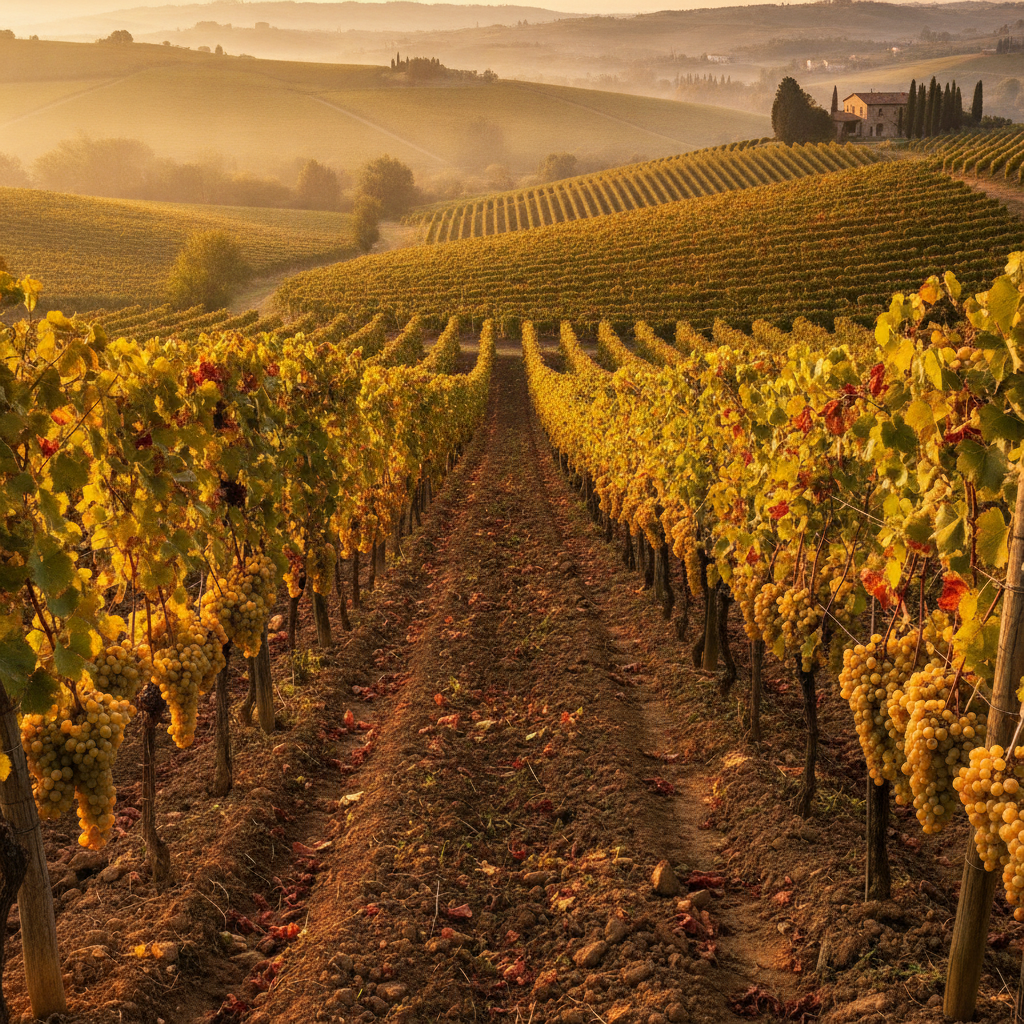
Gavi DOCG wines must be produced exclusively from grapes of the Cortese variety, guaranteeing varietal purity and a unique expression of the terroir. The production area is strictly delimited to specific municipalities in the province of Alessandria, in southeastern Piedmont, inextricably linking the wine to its region of origin. This geographical precision is an increasingly valued factor in international markets that are attentive to traceability.
What are the Characteristics of Gavi DOCG Wine?
Gavi DOCG is distinguished by a bright straw-yellow color, with possible greenish reflections in its youth. On the nose, it offers a delicate and fresh bouquet, with floral notes and fruity hints of green apple and pear. On the palate, it is dry, fresh, and savory, with a pleasant acidity that ensures its liveliness and a medium-bodied structure.
The "Riserva" version, requiring a longer aging period, can develop greater aromatic complexity and a more evolved structure, while maintaining its typical freshness. The semi-sparkling and sparkling versions offer a lively and festive alternative, ideal for aperitifs and special occasions. The finish is generally good, leaving a clean and refreshing sensation.
What Do International Buyers Look for in Gavi DOCG?
International buyers are looking for several key elements in Gavi DOCG. Firstly, authenticity and territorial connection, reinforced by the strong identity of the Cortese grape and the DOCG denomination. They appreciate wines that tell a story linked to a specific territory and established traditions.
Gastronomic versatility is another crucial factor: the freshness and sapidity of Gavi make it an ideal pairing for a wide range of dishes, from seafood appetizers to pasta dishes with vegetables and light main courses. This adaptability is a great advantage for foreign markets.
Consistent quality, guaranteed by compliance with production regulations and the protection offered by PDO/PGI legislation, is essential for buyers who must assure their customers of a reliable product. Finally, the aging potential for Riserva and Classic Method Sparkling versions, and the image of "Italian Wine" of elegance and quality, contribute to strengthening the appeal of Gavi DOCG.
How Does Wines Export Support Gavi DOCG Exports?
Wines Export has built a solid network of contacts in the Italian wine sector, including selected Gavi DOCG producers. Our network of international buyers covers key markets in Europe, North America, and Asia, where the demand for high-quality Italian white wines is constantly growing. Our expertise allows us to effectively connect Gavi producers with qualified importers and distributors, facilitating profitable and lasting business agreements.
Conclusion: Gavi DOCG, an Export Opportunity
Gavi DOCG represents a concrete export opportunity for Italian wineries, thanks to the combination of rigorous production regulations, a distinctive indigenous grape variety, appreciated organoleptic characteristics, and a strong territorial identity. Understanding the expectations of international buyers and presenting Gavi DOCG as an authentic expression of the Piedmontese terroir is the key to export success.
Frequently Asked Questions
Question 1
What are the specific requirements for producing Gavi DOCG wine in terms of grape varietal and geographical area? Gavi DOCG wines must be produced exclusively from Cortese grape varietal. The production area is strictly limited to specific municipalities in the province of Alessandria, in southeastern Piedmont.
Question 2
What are the distinctive organoleptic characteristics of Gavi DOCG that make it attractive to international markets? Gavi DOCG has a bright straw-yellow color, with a delicate and fresh bouquet of floral notes and fruity hints of green apple and pear. On the palate, it is dry, fresh, and savory, with pleasant acidity and a medium-bodied structure.
Question 3
How is the Gavi DOCG denomination legally protected to ensure authenticity and quality for foreign consumers? The "Gavi" or "Cortese di Gavi" denomination was recognized as DOCG with the Ministerial Decree of October 14, 2010, based on a presidential decree from 1974. The production regulations align with European legislation that actively protects PDO/PGI denominations against usurpation.