Mamertino DOC: Discover Sicilian Wine for the Global Market
Wines Export Editorial · Last updated:
The Mamertino DOC represents a Sicilian wine excellence with strong export potential. For Italian wineries, a deep understanding of its production regulations, distinctive characteristics, and the expectations of foreign buyers is crucial for expanding their presence in global markets. This article provides a comprehensive guide to successfully navigate the export of this prestigious denomination, highlighting the key aspects that attract international interest and the support offered by Wines Export. Further reading: Federdoc — Italian National Confederation of Consortia for the Protection of Italian Wine Designations.
What are the Rules for Producing Mamertino DOC?
The production regulations are the normative foundation that guarantees the quality and origin of Mamertino DOC. They define the product name, permitted wine categories, the type of geographical indication (DOP - Protected Designation of Origin), a detailed description of analytical and organoleptic characteristics, and any specific oenological practices.
European legislation, such as Regulation (EU) 2024/1143, governs changes to production regulations, distinguishing between "Union amendment" procedures and "ordinary amendments." These rules ensure correct application and protect the wine's protected name against unauthorized use, providing a clear framework for producers.
What are the Characteristics of Mamertino DOC Wine?
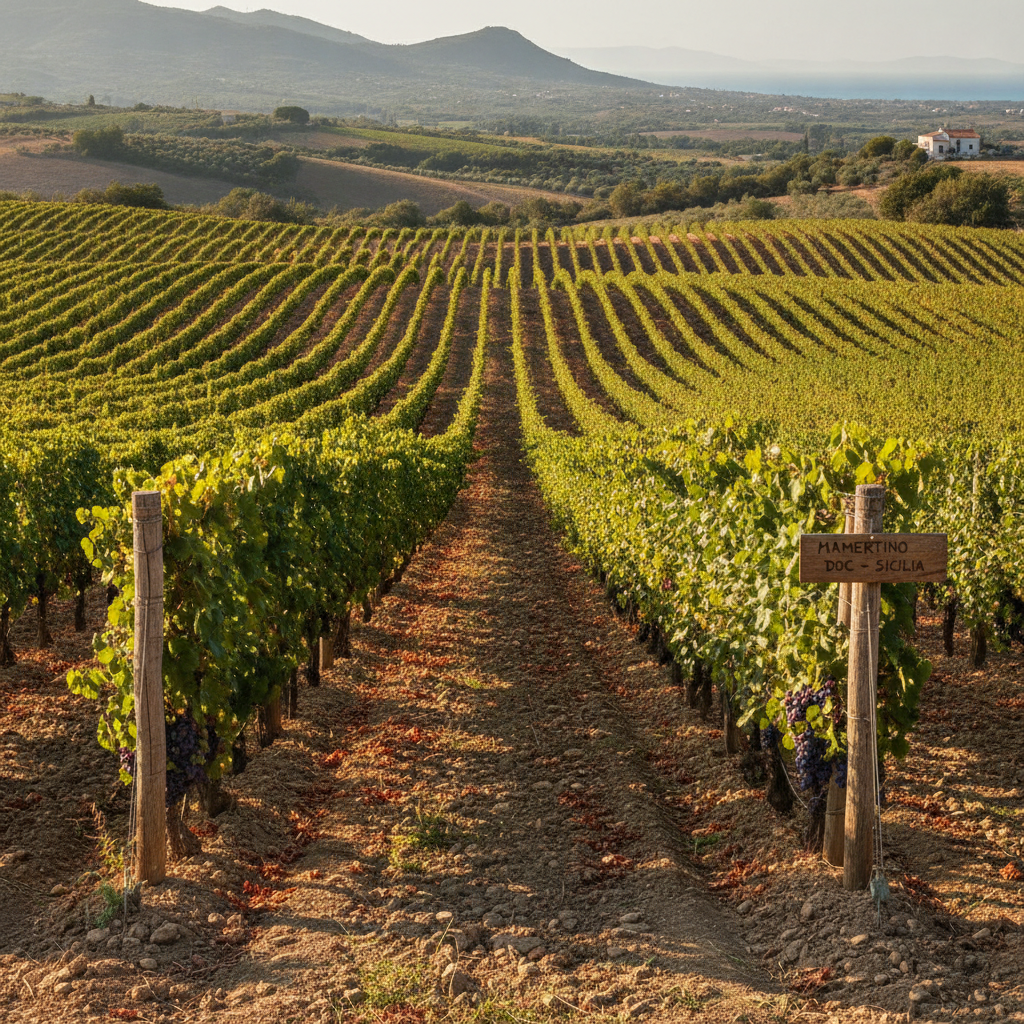
Mamertino DOC is distinguished by the use of grape varieties historically linked to the Sicilian territory. For red wines, Nero d'Avola is the primary grape variety, while for whites, Catarratto and Grillo are preferred. The regulations may allow the inclusion of other native or international grape varieties in defined percentages.
The unique combination of soil, climate, and traditional winemaking practices lends Mamertino wines distinctive aromatic profiles. White wines often present fruity and floral notes, while reds offer more complex, spicy, and fruity scents, characterized by good structure and persistence.
What are Foreign Buyers Looking For in Mamertino DOC?
International buyers seek products that offer authenticity, uniqueness, and added value. For Mamertino DOC, key factors include its millennia-old history, the distinctive organoleptic characteristics derived from native grape varieties and the Sicilian terroir, and its potential for gastronomic pairings with various cuisines.
Competitive pricing, attractive profit margins for the distribution chain, and growing attention to certifications and agricultural sustainability are equally decisive in attracting foreign market interest.
How Does Wines Export Support Mamertino DOC Exports?
Wines Export acts as a strategic partner for Italian wineries, offering targeted support for the export of Mamertino DOC. Our B2B service includes analysis of the most promising foreign markets, connection with a consolidated network of qualified importers and distributors, and consultation to navigate regulatory and logistical complexities.
We also focus on promoting and enhancing the history, production regulations, and unique characteristics of Mamertino DOC through B2B marketing strategies, helping wineries capitalize on this denomination's potential in international markets.
Frequently Asked Questions
What are the main grape varieties for Mamertino DOC?
The grape varieties historically linked to the production of Mamertino DOC include Nero d'Avola for red wines, and Catarratto and Grillo for white wines.
What organoleptic characteristics can be expected from Mamertino DOC wines?
Mamertino DOC wines offer distinctive aromatic profiles: whites present fruity and floral notes, while reds tend to have more complex, spicy, and fruity scents with good structure.
What factors make Mamertino DOC attractive to foreign buyers?
Authenticity, its connection to the territory's history, unique organoleptic characteristics, gastronomic pairing potential, competitive pricing, and attention to sustainability are key elements that attract foreign buyers.
Mamertino DOC possesses considerable potential for establishing itself in international markets. Understanding its production regulations, highlighting its territorial peculiarities, and meeting the needs of foreign buyers are fundamental steps for success.