Exporting Italian Wine to the USA: Essential Customs Documents for Wineries
Wines Export Editorial · Last updated:
Exporting Italian wine to the United States presents a significant growth opportunity for wineries. To successfully navigate the complex American customs and regulatory landscape, it is crucial to understand and prepare the correct documentation. This article provides a detailed operational guide on the essential customs documents for importing wine into the USA, helping Italian wineries avoid delays, customs blocks, and unexpected costs, ensuring their shipments reach the destination market smoothly. Further insight: ICE Agency — Wines and Alcoholic Beverages.
Who Regulates Wine Imports into the USA?
Wine import into the United States is managed by an interconnected system primarily involving three federal agencies: the Alcohol and Tobacco Tax and Trade Bureau (TTB) for regulation and taxation, the Customs and Border Protection (CBP) for physical clearance and duty collection, and the Food and Drug Administration (FDA) for ensuring food safety.
What is the TTB's role in wine importation?
The TTB, part of the Department of the Treasury, is the principal authority for the regulation and taxation of alcoholic beverages. It is responsible for approving wine labels intended for the U.S. market and issuing the necessary import permits.
How does customs clearance of wine shipments work?
CBP, an agency within the Department of Homeland Security, manages the physical customs clearance of goods. It is responsible for collecting customs duties and enforcing customs laws, ensuring that wine shipments meet all requirements before they can enter the country.
What is the FDA's involvement in wine importation?
The FDA intervenes to ensure the food safety of imported products, including wines. It verifies that wines comply with U.S. sanitary and health regulations, contributing to the protection of American consumers' health.
What are the essential permits for importing wine into the USA?
What is the Federal Basic Importer's Permit and who needs it?
The Federal Basic Importer's Permit (TTB Form 5100.24) is a crucial permit that must be held by the U.S. importer, defined as the "importer of record." This permit, issued free of charge by the TTB, is indispensable for legally importing alcoholic beverages into the USA.
It is vital for Italian wineries to verify that their commercial partner in the United States holds this valid permit. Without it, the shipment cannot be cleared through customs, regardless of the completeness of other documents. The responsibility for obtaining it lies with the importer, but its absence halts the entire operation.
How is the Certificate of Label Approval (COLA) obtained?
The Certificate of Label Approval (COLA) is a critical document for exporting wine to the USA. Every wine label with at least 7% alcohol by volume intended for the U.S. market must obtain a COLA approved by the TTB before it can be cleared through customs.
The application for the COLA is submitted by the U.S. importer (using TTB Form 5100.31). The Italian winery must promptly provide exact images of the labels that will be used. The COLA identification number (a 14-digit code) must be communicated to CBP at the time of electronic customs declaration. Failure to obtain COLA approval or using a non-compliant label will result in the shipment being blocked.
What other documents are necessary for shipment?
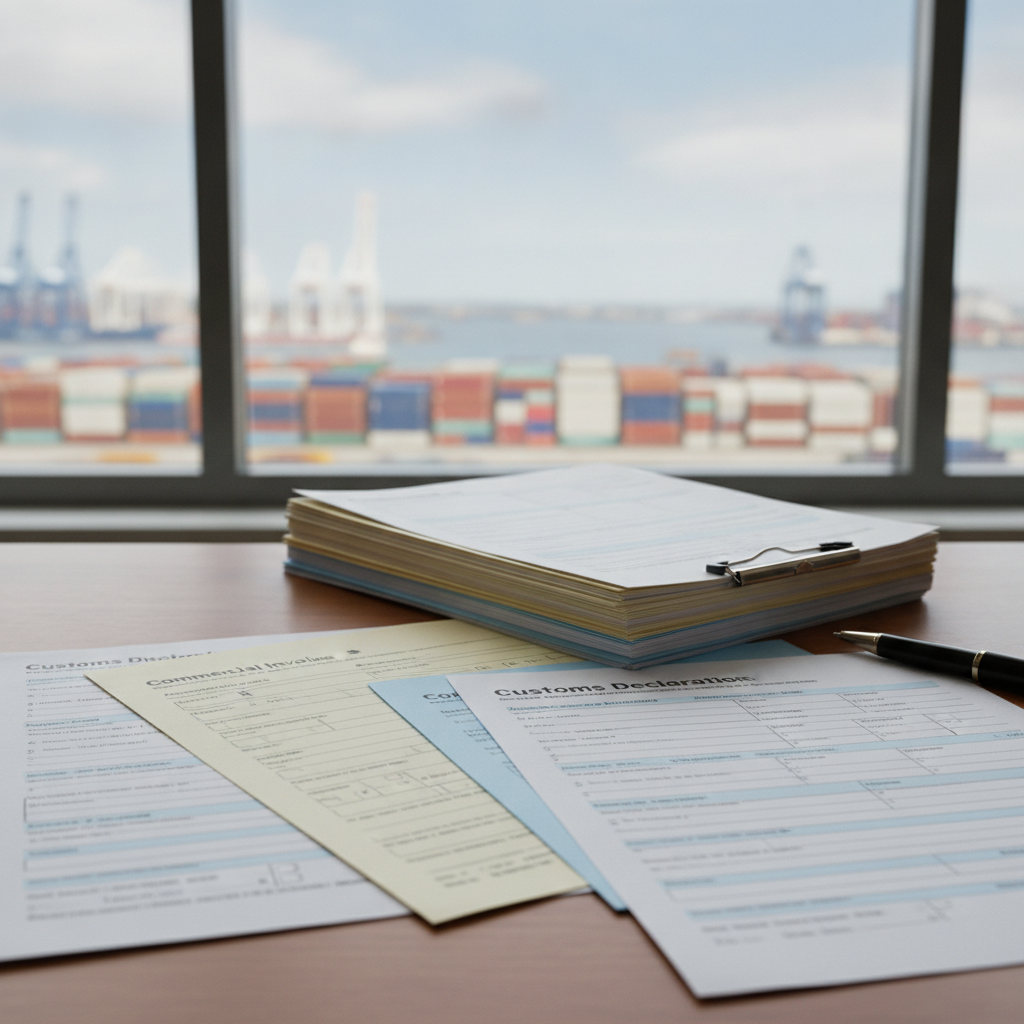
In addition to product-specific permits, the shipment must be accompanied by a series of standard transport documents and customs declarations to ensure the smooth flow of goods across borders.
What is the role of freight forwarders and customs brokers?
It is essential to engage a specialized freight forwarder for international alcoholic beverage transport and an experienced U.S. customs broker for wine clearance. These professionals are vital to ensure all documents are correctly completed and submitted on time, manage communication with U.S. customs authorities (CBP and TTB), navigate the complexities of alcohol-specific regulations, and calculate the payment of applicable duties and taxes.
The ICE guide emphasizes that the shipment of alcoholic beverages to the USA can only occur through a specialized freight forwarder and only if addressed to an operator holding an alcohol import license (Importer Permit).
How are import duties and taxes on wine handled?
Import duties and taxes on wine in the United States are borne by the importer. These costs can vary significantly based on the type of wine, its value, and the destination state. It is the customs broker's responsibility to provide an accurate estimate of these costs.
Which qualified buyers in the United States are available through Wines Export?
Wines Export boasts a pool of diverse, qualified buyers in the United States, carefully selected for their interest in importing quality wines. This network represents a strategic asset for Italian wineries seeking to expand their presence in the American market, facilitating targeted connections and providing valuable insights into the specific import dynamics for this country.
Frequently Asked Questions
What are the main agencies regulating wine imports into the USA?
The main agencies are the TTB (Alcohol and Tobacco Tax and Trade Bureau), CBP (Customs and Border Protection), and FDA (Food and Drug Administration).
Who is responsible for obtaining the Federal Basic Importer's Permit?
The Federal Basic Importer's Permit must be held by the U.S. importer, defined as the "importer of record."
Is a specific permit required for wine labels destined for the USA?
Yes, every wine label with at least 7% alcohol by volume intended for the U.S. market must obtain a Certificate of Label Approval (COLA) approved by the TTB.
Exporting wine to the United States demands precision, knowledge, and a solid network of partners. Proper management of customs documents, particularly the Federal Importer's Permit and the Certificate of Label Approval (COLA), is the key to a successful operation. Collaborating with experienced freight forwarders and customs brokers, and ensuring the U.S. importer is fully compliant with regulations, are indispensable steps. Wines Export stands by Italian wineries to navigate these complexities, offering support and access to a receptive and growing market.
- Exporting Wine to Australia: A B2B Guide for Wineries
- Exporting Wine to Brazil: Essential Customs Documents
- Exporting Wine to Ecuador: A Guide for Italian Wineries
- Wine Documentation Australia: Customs Guide for Wineries
- Exporting Wine to Finland: A Guide for Wineries
- Wine Distributors Hungary: Find Your Ideal Partner