Prosecco in export markets: average export prices by country (Consortium, Ismea), shelf taxes in the UK, USA and Germany, and where a mid-sized winery can still find margin
Wines Export Editorial · Last updated:
Prosecco DOC left Italy in 2025 at an average value of about 5.39 euros a bottle: the Consortium reported 547 million bottles exported for 2,950 million euros. From that price onward, each country adds its own taxes: in the United Kingdom, 2.53 pounds sterling of excise plus 20 per cent VAT; in Germany, 1.02 euros of excise plus 19 per cent VAT; in the United States, a 15 per cent tariff from 1 August 2025 plus the federal excise. The rest of the shelf price is the margin of the importer, the distributor and the retailer. For a mid-sized winery, the margin does not come from selling Prosecco DOC to buyers who pay 5 euros, but from DOCG, Rosé and channels where the price is not set by the British supermarket.
How much Prosecco leaves Italy, and at what average price?
The Consorzio di tutela del Prosecco DOC closed 2025 with 667 million bottles, up 1.1 per cent on 2024, for total turnover of 3.6 billion euros, up 4 per cent. More than 82 per cent of production goes abroad, to 164 countries: 547 million bottles for 2,950 million euros. In Italy, 120 million bottles remain, 18 per cent, for 650 million euros. Within the total, Prosecco DOC Rosé accounts for 60.4 million bottles.
From these figures, the average price at which the designation leaves wineries and bottlers can be derived: 2,950 million divided by 547 million gives 5.39 euros a bottle on exports, and 650 divided by 120 gives 5.42 euros on the Italian market. This is an average for the designation, not an ex-cellar price: but it is the benchmark against which the importer compares your price list.
Prosecco Superiore DOCG di Conegliano Valdobbiadene works on a different level: in 2022, the last year with complete data published by the Consortium, 104 million bottles for 634 million euros, that is 6.10 euros a bottle on average, with export growth of 3.2 per cent in volume and 7.4 per cent in value. The rules of the two designations are explained in Prosecco PDO: production rules and what foreign buyers look for; here we deal only with price.
United Kingdom: the market that sets the price
The United Kingdom is the second market for Prosecco DOC, stable in 2025 according to the Consortium, and the first export market for DOCG: in 2022 Conegliano Valdobbiadene shipped 10.3 million bottles there for 56 million euros, that is 5.44 euros a bottle, below the designation average. The UIV Observatory, based on data for the first four months of 2022, calculated that Prosecco by then accounted for over two-thirds of the sparkling wine volumes imported into the United Kingdom from all over the world. It is the market that turned Prosecco into a supermarket shelf product, and the British shelf works on price.
Taxes weigh on price first of all. From 1 February 2026, the British excise on wine, sparkling wine included, between 8.5 and 22 per cent alcohol is 30.62 pounds sterling per litre of pure alcohol. A 75 cl bottle of Prosecco at 11 per cent contains 0.0825 litres of alcohol: it pays 2.53 pounds sterling of excise, before the 20 per cent VAT applied to the final price, excise included. The Wine and Spirit Trade Association calculates that the United Kingdom alone collects twice the wine excise raised by all EU Member States combined.
The tax per litre of alcohol partly protects Prosecco compared with 14 per cent reds, but it does not protect the winery's margin: if the supermarket wants to stay below a price threshold, once excise and VAT are removed little remains, to be divided between importer, distributor and chain. How that chain is organised is explained in Wine importers in the United Kingdom: the channels.
United States and Germany: two different logics
The United States is the first market for Prosecco DOC: 23.8 per cent of exports in the first nine months of 2025, with growth of 23.3 per cent over the full year according to the data presented by the Consortium. The growth came despite the tariff: from 1 August 2025, European wine and spirits pay a 15 per cent duty on entry into the US, after decades in which the ordinary tariff on sparkling wine was 19.8 US cents per litre, that is 15 cents a bottle. To this is added the federal excise: 3.40 US dollars per gallon on naturally fermented sparkling wine, which comes to 67 cents on a 75 cl bottle, with credits that reduce the rate for the first volumes assigned to an importer. Above these come state taxes and the three-tier system, which adds a mandatory step with its own margin: it is covered in Sparkling wine importers: who buys Prosecco and metodo classico.
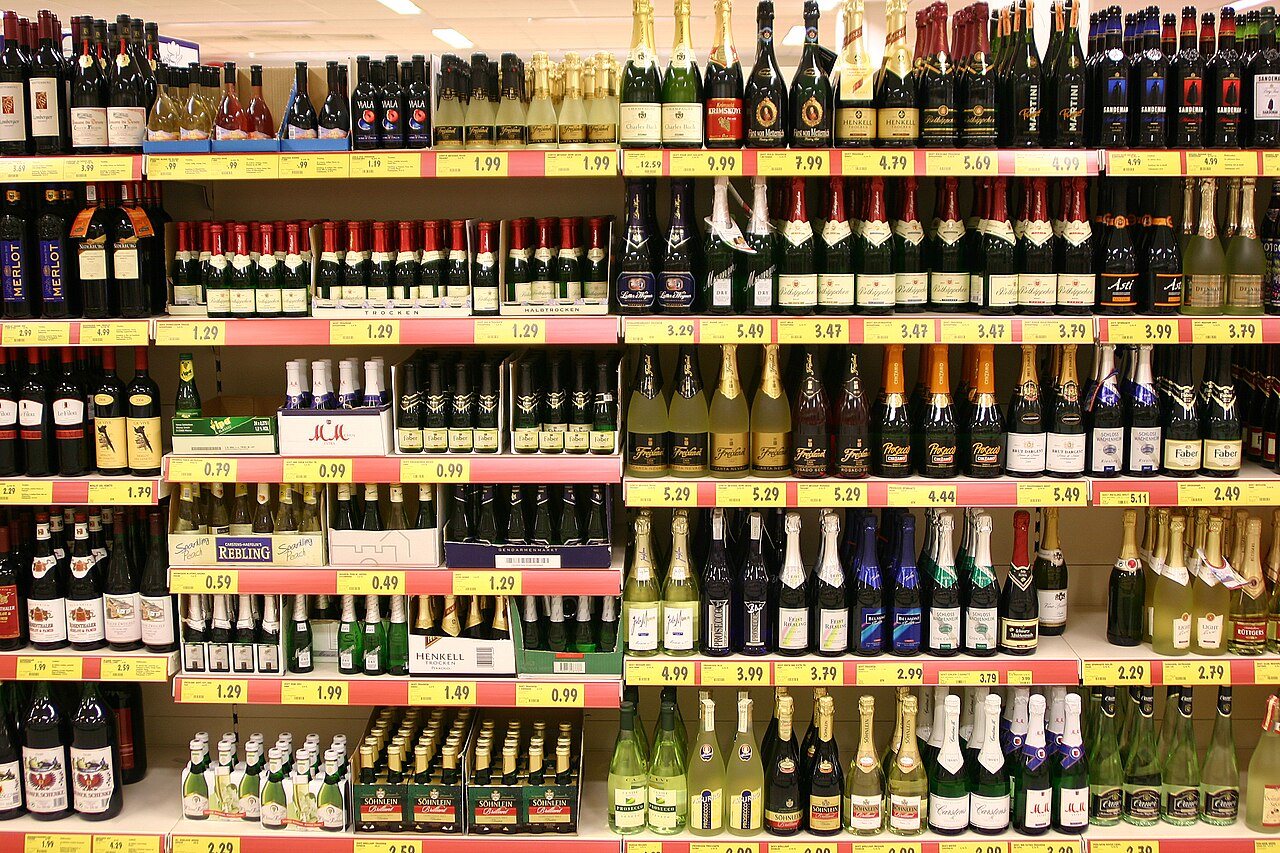
Germany is the opposite market: no duty, because it is within the single market, and a single excise, the one on sparkling wine. German law on the Schaumweinsteuer sets 136 euros per hectolitre, that is 1.02 euros per 75 cl bottle, reduced to 51 euros per hectolitre, 38 cents a bottle, for sparkling wines under 6 per cent. On top of all this, 19 per cent VAT. Prosecco DOC in Germany grew 2.1 per cent in 2025, overtaken by France, which rose to third place with a plus of 19.8 per cent. On a discount shelf at 4 or 5 euros, 1.02 euros of excise plus the VAT on top amount to almost a quarter of the price, as shown in Wine shelf prices in Germany: margins and price bands.
How much tax do three bottles of Prosecco pay in the three countries?
The table lists the taxes added to a 75 cl bottle of Prosecco at 11 per cent alcohol, starting from the 2025 average export value reported by the Consortium. Importer, distributor and retailer margins are neither public nor available: they are the part that gets negotiated.
| Country | Excise per bottle | Duty on entry | VAT on final price | Source |
|---|---|---|---|---|
| United Kingdom | £2.53 (£30.62 per litre of pure alcohol) | not covered here | 20% | gov.uk, rates from 1 February 2026 |
| United States | $0.67 federal (3.40 $ per gallon) plus state taxes | 10% in total since 24 July 2026, wine not exempt in HTSUS Revision 23 (15% from August 2025 to February 2026) | state sales taxes | TTB; Federal Register, 91 FR 47318; HTSUS Rev. 23 |
| Germany | €1.02 (€136 per hectolitre) | none (single market) | 19% | SchaumwZwStG, paragraph 2 |
At equal value at source, in the United Kingdom the excise alone is about half of the 5.39 euros average export value, in Germany one fifth, while in the United States the 15 per cent duty grows with the price. For a DOCG or a Rosé at a higher price, the percentage weight of the fixed excise falls: moving up a tier pays off more in the United Kingdom and Germany than in the United States.
| Product | Year | Average value per bottle | Calculation |
|---|---|---|---|
| Prosecco DOC, export | 2025 | €5.39 | 2,950 million euros / 547 million bottles |
| Prosecco DOC, Italy | 2025 | €5.42 | 650 million euros / 120 million bottles |
| Conegliano Valdobbiadene DOCG, total | 2022 | €6.10 | 634 million euros / 104 million bottles |
| Conegliano Valdobbiadene DOCG, United Kingdom | 2022 | €5.44 | 56 million euros / 10.3 million bottles |
Source: data from the two Consortia (Prosecco DOC, press conference January 2026; Conegliano Valdobbiadene, 2022 report cited by WineNews), with the calculations derived from them.
DOC and DOCG: how much is the price difference worth?
The difference between DOC and DOCG, at average value, is about 70 cents a bottle at source: 6.10 euros against 5.39. It is not much, but it changes the channel. DOC at 5.39 euros lives in the supermarket and the discounter, where the fixed excise weighs more and negotiation is over the cent. DOCG finds room in wine shops, in food service and in specialist retailers, where the price is built on provenance and geographical designation, and where the importer accepts a percentage margin on a higher base.
The British figure for DOCG, 5.44 euros a bottle against an average of 6.10, however tells an uncomfortable story: even DOCG, when it enters the British channel, is pulled downwards. If you sell DOCG, the market that buys the most from you is not the one that pays you the highest prices. For Rosé, the Consortium does not publish a separate value, but 60.4 million bottles out of 667 make it a young category, on which the importer does not yet have a consolidated reference price.

Where is the margin for a mid-sized winery?
The margin for a mid-sized winery lies in four places.
The first is the tier. A generic Prosecco DOC at 5 euros ex-cellar enters a chain where every step knows the average value of the designation; a DOCG, a Rive, a Cartizze, a vintage Rosé enter at a price that must be justified but that has no supermarket benchmark. How to build the price list by tier is covered in Wine export pricing: how to set it market by market and, for the positioning logic, in the page Pricing and market positioning.
The second is the country. For a 5-euro product, Germany, with no duty and an excise that weighs one fifth, leaves more room for margin; for a 10-euro product, the United States costs more in duty but pays better in selling price. France, which grew 19.8 per cent in 2025, is the European market where Prosecco is still expanding rather than defending its price.
The third is the channel. The British mass-retail shelf sets the price for everyone; food service and wine shops reason in terms of price per glass, as explained in UK on-trade: restaurants and pubs for Italian wine.
The fourth is who pays the taxes, and when. If you sell DAP or DDP, you advance the destination excise yourself; if you sell EXW or FCA, the importer pays it. The choice changes the price you can ask and the risk you take on: it is explained in Excise and VAT on exported wine: who pays them and when. For wineries in the province of Treviso, which produce most of the volume, the guide Wine exports from Treviso: a guide for wineries and buyers also applies.
Frequently asked questions
What is the average export price of Prosecco?
In 2025 Prosecco DOC was exported as 547 million bottles for 2,950 million euros, according to the Consortium: 5.39 euros a bottle on average at source. Prosecco Superiore DOCG di Conegliano Valdobbiadene, based on 2022 data, was worth 6.10 euros a bottle. These are average figures for the designation, which include bottlers and large brands; the price list of an individual winery may be above or below them.
How much excise does a bottle of Prosecco pay in the United Kingdom?
From 1 February 2026 the excise is 30.62 pounds sterling per litre of pure alcohol for wines between 8.5 and 22 per cent alcohol. A 75 cl bottle at 11 per cent pays 2.53 pounds sterling, to which the 20 per cent VAT on the final price is added. A Prosecco at 11 per cent pays less than a still wine at 14 per cent, because the tax is calculated on alcohol and not on volume.
Is it worth exporting Prosecco to the United States with the 15 per cent tariff?
The 15 per cent tariff has been in force since 1 August 2025 and applies to the customs value. Despite this, the Consortium reported growth of 23.3 per cent in the United States for 2025, which remains the first market with 23.8 per cent of exports. The tariff weighs more on high-priced products, but it is the market where the selling price of Prosecco is less compressed than in British retail.
Sources
- ICE Agenzia, “Il Prosecco DOC chiude il 2025 con 667 milioni di bottiglie”, Prosecco DOC closes 2025 with 667 million bottles (28 January 2026)
- Consorzio Prosecco DOC: 2025 data presented at a press conference, as reported by Il Nordest
- WineNews, Conegliano Valdobbiadene: 104 million bottles for 634 million euros in 2022
- GOV.UK, Alcohol Duty rates (rates from 1 February 2026)
- WSTA, British wine drinkers pay double the amount of tax than the whole of Europe (October 2026)
- TTB, Tax and Fee Rates: federal rates on still and sparkling wine
- RTE, EU wine and spirits to face 15 per cent US tariff from August 1 (31 July 2025)
- Schaumwein- und Zwischenerzeugnissteuergesetz, section 2, Steuertarif (tax rates)
- USITC, Harmonized Tariff Schedule 2026, Revision 23: headings 9903.05.39 and 9903.05.97, U.S. note 52 to chapter 99
- ProWein Düsseldorf stand costs, pavilions and German buyers
- Prosecco in Australia: name dispute and the EU deal
- Shipping Wine to Denmark: Excise, Skat and Documents
- Italian Wine Prices in Hungary: Export Analysis
- Shipping Wine to France: Excise, CRD and Documents
- Italian Wine in Ukraine: Pricing and Positioning