Shipping wine to France: excise, CRD capsules and documents for cavistes, restaurants and private buyers
Wines Export Editorial · Last updated:

To ship wine to France, you must first establish who receives the goods and under which tax regime. If the consignee is an entrepositaire agréé or a destinataire enregistré, the wine can travel under duty suspension until it reaches its destination. The entrepositaire agréé pays the duty when it releases the wine for consumption, and the destinataire enregistré pays it on receipt. If the consignee is a private individual, or a venue that does not have this status, French excise is due in France on the arrival of the goods. The CRD capsule on the bottle is the visible sign of this step, but it does not apply to every type of wine. This guide sets out the checks to carry out before shipping, with links to the Wines Export pages on intra-EU sales, fiscal representatives and e-AD.
How much tax does wine pay in France: droit de circulation and cotisation sécurité sociale
In France, wine pays a circulation tax, the droit de circulation, when it is released for consumption. In addition to this tax, certain beverages with an alcohol content above a threshold set by regulation are also subject to the cotisation sécurité sociale. This applies to the most alcoholic drinks, such as some fortified wines, and not to still or sparkling wines of ordinary strength. We do not state amounts or thresholds here, because they must be checked on the official page of the French customs in the version in force on the day of shipment. An error on this point changes the delivered duty paid price and your importer's margin, so it is wise to set the figure only after verification.
Your French customer pays these taxes differently depending on their status. For this reason, the right question is not "how much tax does wine pay in France", but "who pays, at what point and with which document". The following sections answer this question case by case.
Entrepositaire agréé and destinataire enregistré: who can receive under suspension
The entrepositaire agréé is an operator authorised by customs to hold excise goods in a tax warehouse. It can receive wine from abroad under the suspension regime, meaning without paying excise on arrival, and it takes on tax responsibility until the wine is released for consumption. The destinataire enregistré, by contrast, is a consignee registered with customs, which can receive products from another Member State of the Union under suspension, subject to precise conditions and to quantities set by the regime. Anyone who has neither status cannot receive under suspension and must pay the tax on receipt.
The table below summarises how the shipment changes depending on the consignee. The columns show what you must ask your customer before loading the truck, not a cost.
| Consignee in France | Receipt under suspension | What you ask the customer before shipping |
|---|---|---|
| Entrepositaire agréé | Yes, if the warehouse is authorised for that product | Warehouse authorisation number and confirmation of receipt |
| Destinataire enregistré | Yes, subject to the conditions and quantities of the regime | Valid registration with French customs |
| Caviste or restaurant without status | No, the tax is due on delivery | A fiscal representative or a warehouse that receives on their behalf |
| Private individual | No, distance selling follows its own rules | A fiscal representative and payment of the tax under the B2C framework |
The suspension regime requires electronic accompanying documents. For this part of the process, we refer you to our guide on how to fill in an e-AD EMCS for wine, which explains the fields to complete before departure.
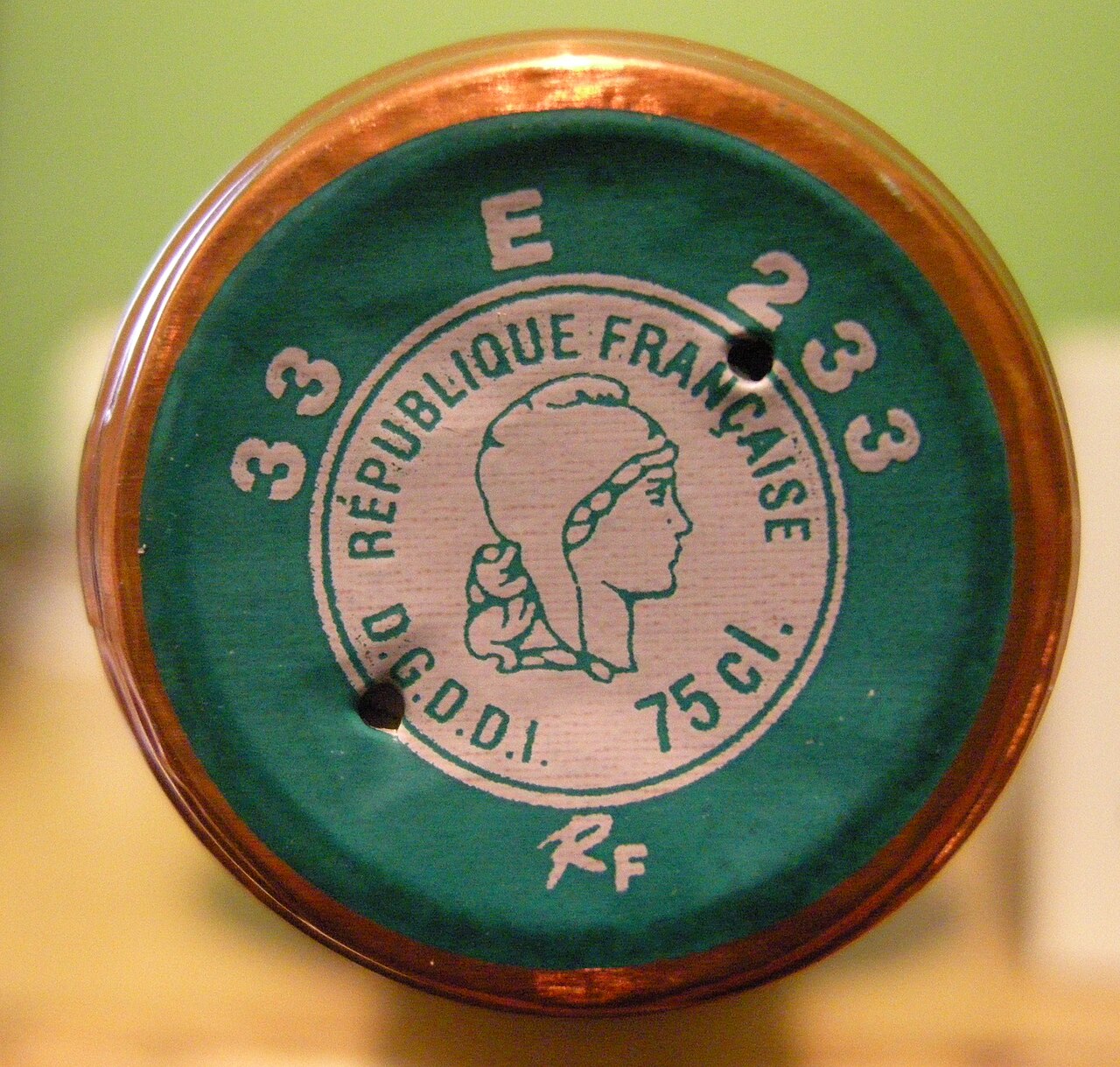
The CRD capsule: when it is required and who applies it
The capsule représentative de droits, abbreviated CRD, is the tax seal applied to the neck of the bottle to show that the duty on the product has been paid. The Bulletin officiel des douanes 05-049 covers the use of the CRD for wines moving within the national territory. Other French customs instructions, on the other hand, concern the procedures for registering CRDs for operations destined for the domestic market and for foreign markets. Document 05-049 dates from 2005, so before applying its instructions you must check that it is still in force and that it has not been replaced by more recent instructions.
The practical point is this: the CRD is not a sticker to be applied out of habit. It is required only when the product enters the French circuit with duty paid, and the category of wine (still, sparkling, aromatised) changes the answer. Before printing labels, ask your customer whether the CRD is required for that product and for that channel, or check on the official pages of French customs.
Selling to cavistes and restaurants without an importer
Many Italian wineries that want to enter France start with independent cavistes and restaurants, without going through a national importer. This channel is simpler to launch, but it moves some tax responsibilities onto the winery, which an importer usually handles. The caviste or restaurateur must know whether they can receive under suspension, which documents accompany the load and who pays the tax on delivery.
A first check is to see whether the venue has its own tax status or relies on a warehouse. If it does not, the shipment requires a party that is answerable for the tax on French territory. For how this route works, we refer you to the page on how to sell wine to restaurants abroad and the one on independent wine shops abroad and how to become a supplier.
Shipping to French private buyers: fiscal representative and e-commerce
Direct sales to a French private individual are a separate case. The private individual is not a registered operator and cannot receive under suspension, so the tax is collected in the country of consumption. In practice this usually requires a fiscal representative in the destination country, who assumes the declaration and payment obligations for your winery. The choice of representative and its costs vary, and are not covered in this article.
If the order comes from an online shop, the winery must also check how the distance selling rules apply. For the general framework of intra-EU sales to private buyers and the exchange documents, we refer you to the guide on intra-EU wine sales with invoice, VIES and Intrastat and the one on the fiscal representative for excise in B2C sales.
Loi Evin and labelling: what they check
Alongside tax law, in France the advertising and promotion of alcoholic beverages follow a specific law, the loi Evin. The text restricts advertising messages and regulates the places and content that are permitted, so social campaigns, tastings and point-of-sale materials must be prepared with this law in mind. Labelling must be checked with the same care, because the information required for the French market must be compared with the official text before printing.
For operational guidance on the French market, the ICE Agency has an office in Paris and publishes information on the country on its dedicated France page. The page contains no tax data on wine, so it serves as a starting point for institutional contacts, not as a source of amounts.
Documents to prepare before shipping
Before loading the first consignment, prepare a checklist to share with your customer. The electronic accompanying document is the first item, followed by the consignee's authorisation or registration number, confirmation of whether the CRD is required for that product, and the name of the fiscal representative, if one is needed. The invoice must show the information the French customer requires for its internal checks.
For more structured importers, it is also advisable to request a copy of the consignee's documents before shipping, because an error in status changes the regime of the entire load. A shipment held up while waiting for regularisation costs more than a paperwork delay, so every field must be verified with the customer and not taken for granted.
Frequently asked questions
Is a CRD capsule required on every bottle of wine shipped to France?
No, not for every wine. The CRD must be applied when the product enters the French circuit with duty paid, and the category of wine changes the answer. Ask your customer about the regime and check the official customs bulletin before printing labels.
Can I ship wine to France without a fiscal representative?
It depends on the consignee. If the customer is an entrepositaire agréé or a destinataire enregistré, it can receive under suspension without a representative. For a private individual or a venue without status, a party answerable for the tax on French territory is usually required.
What is an entrepositaire agréé?
It is an operator authorised by customs to hold excise goods in a tax warehouse. It can receive wine under suspension and becomes responsible for the tax until the wine is released for consumption. The status must be verified with the customer before shipping.
How much excise does wine pay in France?
Wine pays the droit de circulation when it is released for consumption, and some beverages also pay the cotisation sécurité sociale. Amounts and thresholds change over time, so they must be read on the official French customs page on the day of shipment.
Sources
- Douane, page: les capsules représentatives de droits (CRD)
- Douane, dossier: la fiscalité des alcools et des boissons alcooliques
- Douane, page: recevoir des produits soumis à accise en provenance d'un autre État membre
- Agenzia delle Dogane e dei Monopoli, EMCS page
- ICE Agenzia, France page
Who buys wine in France? A few names
According to the Wines Export Observatory (November 2026), the Italian denomination most carried by wine buyers in France is Prosecco: 35% of those whose Italian range we know carry it, followed by Barolo (15%) and Chianti (14%).
The Wines Export database covers the whole wine trade in France: importers, distributors, wholesalers, wine shops and online stores, city by city, updated continuously (23 November 2026). The Italian denominations most carried by buyers in France, in order: Prosecco, Barolo, Chianti, Nebbiolo and Sangiovese.
Paris
Comptoir Des Vignes · Rap épicerie · OENOTROPIE
Bordeaux
U'wine · La Vinothèque de Bordeaux · 1 Histoire de Vins
Lyon
Les Assembleurs Distribution · Les Assembleurs · Le baroudeur du vin
- Shipping Wine to Germany: Excise, Steuerlager, Documents
- Shipping Wine to Denmark: Excise, Skat and Documents
- Shipping wine to the UK: pallets, courier and customs
- ProWein Düsseldorf stand costs, pavilions and German buyers
- Shipping Wine to the Netherlands: Excise and Documents
- Prosecco export price: where the margin is