Corno di Rosazzo Wines: Value and International Markets
Wines Export Editorial · Last updated:
Corno di Rosazzo, in the province of Udine, is a territory with a strong winemaking vocation, whose wine production represents an economic driver with significant export potential. The quality of its products, combined with the growing international demand for authentic Italian wines, makes this area particularly interesting for foreign markets. This article analyzes the peculiarities of Corno di Rosazzo wines, from its wineries to its appellation of origin, and its export opportunities. Learn more: Federdoc — National Confederation of Italian Wine Denomination Protection Consortia.
Which wineries operate in Corno di Rosazzo and what are their characteristics?
Corno di Rosazzo hosts numerous agricultural companies and wineries, many with a long history and deep knowledge of the terroir. Realities like Azienda Agricola Butussi, with 8 hectares on marl and sandstone soils, produce approximately 750 hectoliters annually of DOC "Colli Orientali del Friuli" and "Grave del Friuli," primarily marketed in bottles.
Azienda Agricola Ronco di Gramogliano, situated on a hill bordered by the Judrio river, transforms its production into precious DOC "Colli Orientali del Friuli" wines. Casa Vinicola E. Collavini SpA, founded in 1960, is a historic name producing wines that reflect the richness of the territory. Abbazia di Rosazzo, with 20 hectares of specialized vineyards, produces wines such as Picolit and Ribolla Gialla. Azienda Agricola Perusini, with seven generations of tradition, cultivates on the Colli di Gramogliano, highlighting Ribolla Gialla. Lastly, Azienda Agricola Visintini Andrea, on the border between Colli Orientali and Collio, produces wines like Tocai Friulano.
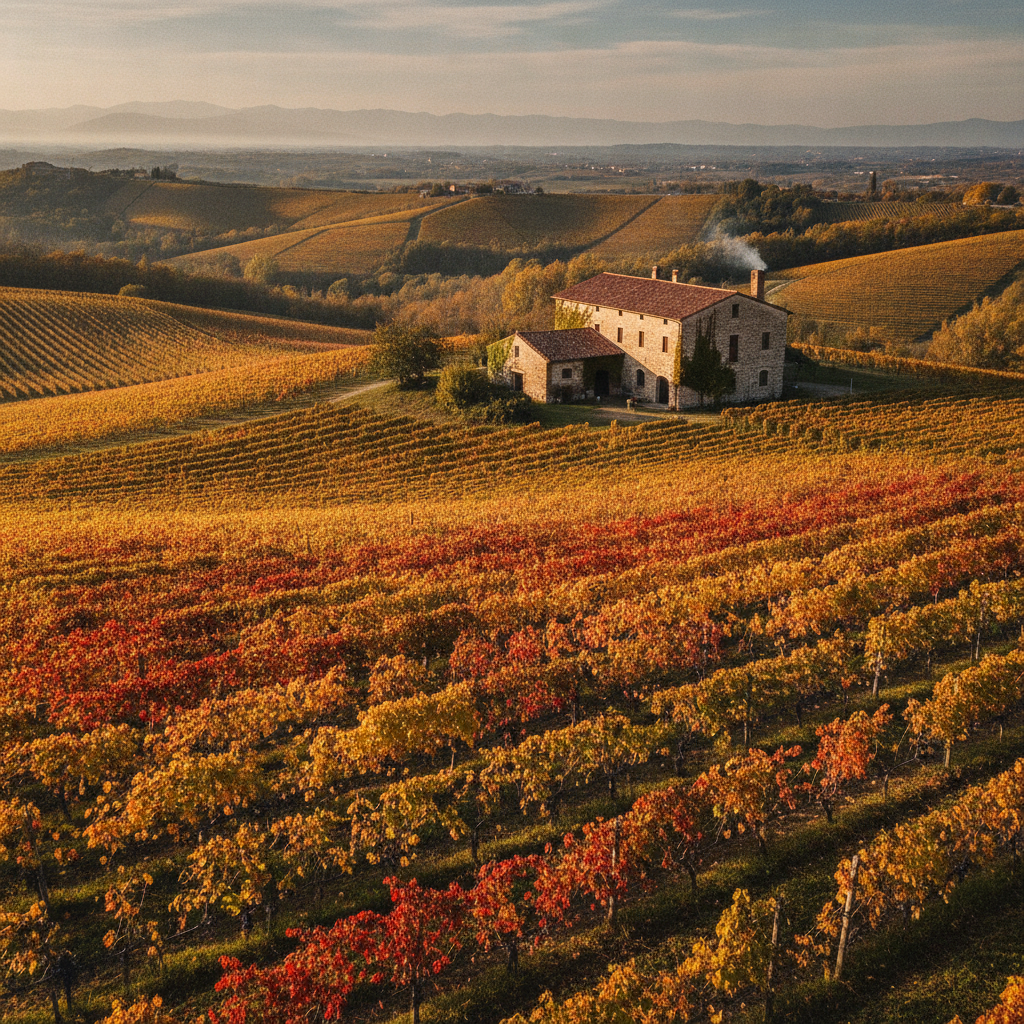
The municipality boasts approximately 300 hectares of specialized vineyards, with 65 companies and 250 operators, representing a potential of over 3,600,000 bottles.
What are the grape varietals cultivated and the appellations of origin for Corno di Rosazzo wines?
Corno di Rosazzo wines primarily fall under the Controlled Denomination of Origin (DOC) "Colli Orientali del Friuli." This appellation protects and promotes wines produced in a specific geographical area, guaranteeing origin, quality, and typical characteristics. The Colli Orientali del Friuli are renowned for their pedoclimatic diversity, which is favorable to both indigenous and international grape varietals.
Among the indigenous grapes, Ribolla Gialla is one of the oldest and most representative, known since the 1300s. Other important indigenous varieties include Friulano, Refosco dal Peduncolo Rosso, Verduzzo Friulano, and Schioppettino. Wineries also successfully cultivate international grape varietals such as Merlot, Cabernet Sauvignon, Pinot Grigio, and Chardonnay.
The "Colli Orientali del Friuli" appellation is synonymous with quality and authenticity, characteristics sought after by international buyers. The combination of indigenous and international grape varietals, coupled with careful vineyard management and modern winemaking processes, makes these wines particularly interesting for export.
What is the export potential for Corno di Rosazzo wines, and what do foreign markets seek?
The export potential for Corno di Rosazzo wines is considerable. Italy enjoys a consolidated image as a producer of high-quality wines, and Friulian wines benefit from this reputation, offering an authentic and distinctive alternative. The presence of unique indigenous grape varietals, such as Ribolla Gialla, attracts consumers and importers looking for novelty.
The DOC "Colli Orientali del Friuli" appellation provides a crucial guarantee of origin and quality for foreign markets, ensuring compliance with rigorous production standards. The ability of wineries to produce traditional wines and modern interpretations caters to a wider range of tastes. The export of approximately 15% of some wineries' production to Germany, as in the case of Borgo Conventi, demonstrates an established presence in important European markets.
To maximize export potential, wineries can highlight indigenous grape varietals, communicate authenticity and history, maintain high quality standards, develop trade networks, and leverage distribution channels. The presence of several Corno di Rosazzo wineries in the Wines Export producer pool attests to the growth potential and market interest in this Friulian excellence.

Frequently Asked Questions
What are the most representative indigenous grape varietals of Corno di Rosazzo?
The most representative indigenous grape varietals include Ribolla Gialla, Friulano, Refosco dal Peduncolo Rosso, Verduzzo Friulano, and Schioppettino.
Which European markets already show interest in Corno di Rosazzo wines?
Germany is a European market where some Corno di Rosazzo wineries already have an established presence, exporting about 15% of their production.
What characteristics of Corno di Rosazzo wines attract international buyers?
International buyers are attracted by the authenticity, the uniqueness of indigenous grape varietals, the quality assurance offered by the DOC "Colli Orientali del Friuli" appellation, and the wineries' ability to offer both traditional wines and modern interpretations.