Franciacorta Rosé: Discover Opportunities for International Traders
Wines Export Editorial · Last updated:
Franciacorta Rosé represents a high-end expression in the Italian Classic Method sparkling wine landscape, sought after by discerning palates globally. For Italian wineries oriented towards export, a deep understanding of its production regulations, unique characteristics, and the expectations of international markets is crucial for defining successful strategies. This wine, the result of a dedicated territory and a rigorous production method, offers chromatic, aromatic, and gustatory nuances that captivate consumers worldwide, positioning it as an excellent product to promote in foreign markets. Learn more: Federdoc — National Confederation of Italian Wine Consortia.
What Guarantees Does the Franciacorta Production Regulation Offer?
The Franciacorta DOCG production regulation, among the most restrictive globally for Classic Method sparkling wines, is a fundamental pillar of its identity and international positioning. It precisely defines the appellation name, product categories, type of geographical indication (PDO), analytical and organoleptic characteristics, and specific winemaking practices, ensuring a high qualitative standard and an authentic expression of the territory.
The regulatory rigor of the Franciacorta production regulation is a key element that defines its identity and value in international markets. This regulation, among the most stringent worldwide for Classic Method sparkling wines, ensures that every bottle adheres to extremely high qualitative standards. The precise rules cover the appellation itself, the categories of wines permitted, the protected designation of origin (PDO), distinctive organoleptic and analytical characteristics, and specific winemaking practices, including restrictions. This meticulous approach guarantees consistency in the production method and authenticity of the product.
The Franciacorta production regulation allows for the production of three main types: Franciacorta, Franciacorta Satèn, and Franciacorta Rosé. These are complemented by the Millesimato and Riserva designations, which further indicate the quality and aging of the product. The entire production process, from mandatory manual harvesting to secondary fermentation in the bottle and disgorgement, is meticulously regulated. This rigor is what the Franciacorta Festival in Cantina showcases every year, offering visitors, including international operators and buyers, the chance to experience firsthand a long and artisanal production process.
How Are Changes to the Production Regulation Handled?
Changes to production regulations are dynamic and are managed through "Union amendment" procedures at the European level or "ordinary modifications" at the national level. The objective is to strengthen the legal protection of appellations, preserve their reputation, and ensure clarity in international markets, preventing confusion or improper use.
These modifications, which can pertain to the delimitation of the geographical area or the adaptation of winemaking practices, are essential for maintaining the relevance and protection of appellations. "Union amendment" procedures require approval at the European level, while "ordinary modifications" are managed at the national or third-country level. The primary objective of these updates is always to strengthen the legal protection of appellations, preserve their reputation, and ensure greater clarity in international markets, especially for products destined for export. The possibility of making changes aims to improve protection and prevent confusion or improper use, particularly in complex markets.
What Are the Distinctive Characteristics of Franciacorta Rosé?
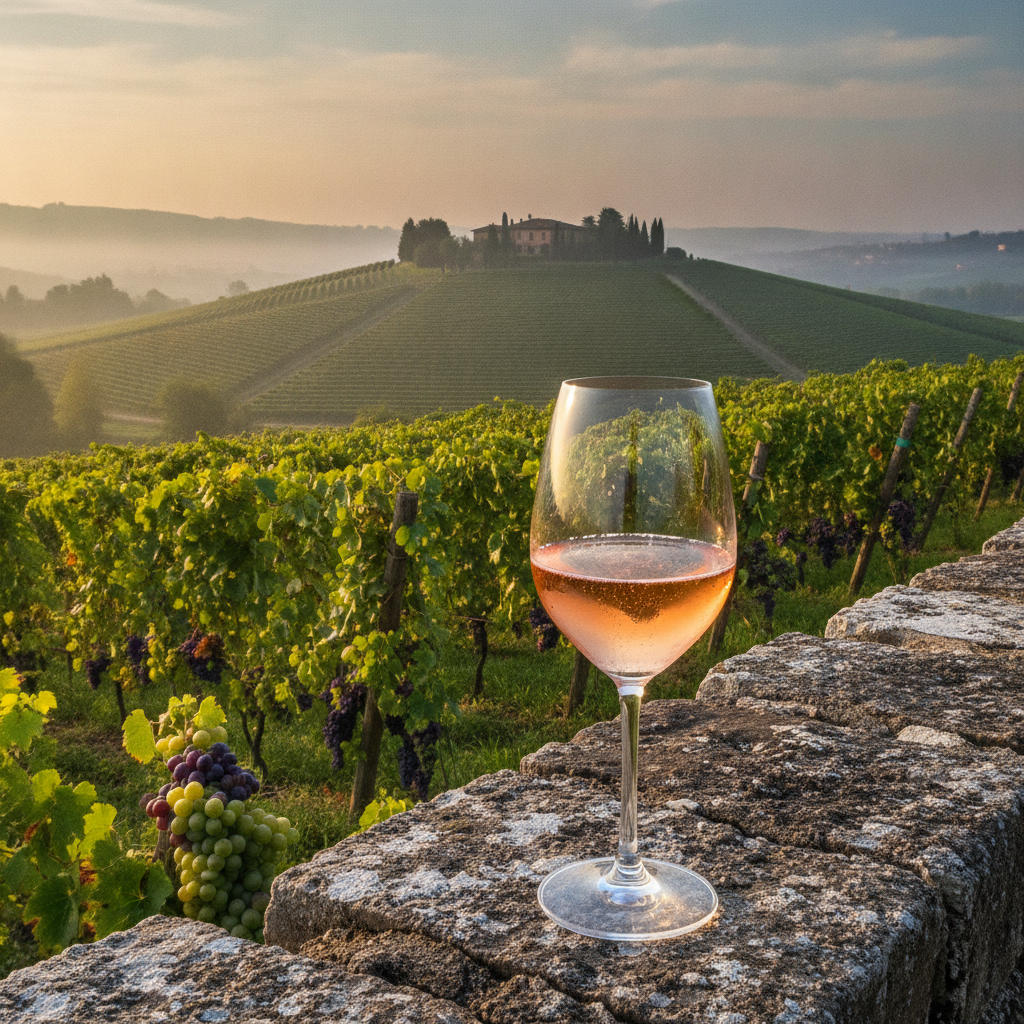
Franciacorta Rosé stands out for its color, which ranges from pale pink to intense cerasuolo, depending on the grapes and the contact with the skins. Typically produced with Chardonnay and Pinot Nero, the latter determines its hue and structure. On the nose, it offers notes of small red fruits and floral hints, while on the palate, it presents with good acidity, finesse, and persistence, making it versatile.
From an organoleptic perspective, Franciacorta Rosé offers a complex and fascinating aromatic bouquet. Notes of small red fruits such as strawberry, raspberry, and cherry can be perceived, often accompanied by floral hints of rose and violet. On the palate, it presents with good acidity, a finesse derived from the Classic Method, and a persistence that makes it a versatile and pleasant wine. Its elegance and freshness make it an excellent aperitif, but also an ideal companion for a wide range of dishes, from seafood to white meat dishes, and even more elaborate preparations.
Participating in events like the Franciacorta Festival in Cantina allows visitors, including international operators and buyers, to compare different interpretations of the Classic Method, appreciating the stylistic nuances between historic wineries and emerging realities. This type of experience is crucial for fully understanding the added value of Franciacorta Rosé.
What Do International Buyers Look for in Franciacorta Rosé?
International buyers seek quality, authenticity, and history in Franciacorta Rosé. They appreciate the DOCG regulation and the Classic Method as guarantees of qualitative consistency, the uniqueness of the Franciacorta territory, and the narrative linked to tradition. Gastronomic versatility, elegance, and the wine's distinction are strong points, as is the potential for growth and innovation of the wineries.
International buyers, particularly those from established and emerging markets, are increasingly seeking wines that offer a blend of quality, authenticity, and narrative. For Franciacorta Rosé, these elements translate into:
- Quality and Reliability: The DOCG regulation and the rigor of the Classic Method are fundamental guarantees. Buyers appreciate qualitative consistency and the certainty of acquiring a product that meets high standards.
- Origin and Territory: The uniqueness of the Franciacorta territory, with its specific pedoclimatic conditions and its winemaking history, is a strong attraction. The narrative tied to "terroir" and production tradition is highly valued.
- Gastronomic Versatility: The ability of Franciacorta Rosé to pair with diverse cuisines is a strong point. Buyers look for wines that can satisfy a broad clientele and adapt to different consumption occasions.
- Elegance and Distinction: The rosé color, refined aromatic notes, and finesse of the bubbles give Franciacorta Rosé an aura of elegance that makes it desirable for consumers seeking luxury and refinement.
- Potential for Growth and Innovation: While tradition is important, buyers are also interested in wineries that demonstrate an innovative vision, while respecting the regulations. The ability to communicate their uniqueness and adapt to market trends is an added value.
Wines Export and Franciacorta Rosé
Wines Export supports Italian wineries in exporting Franciacorta Rosé, offering a pool of excellent producers. Our international network facilitates strategic meetings with importers and distributors, promoting the uniqueness and quality of this sparkling wine.
Wines Export is committed to supporting Italian wineries in exploring and consolidating foreign markets. Regarding Franciacorta Rosé, our pool of diverse partner wineries includes producers who excel in creating this high-quality sparkling wine, with the aim of offering international buyers a curated selection of producers capable of meeting their needs. Participation in industry events and constant market trend analysis allow us to identify wineries with the highest export potential for Franciacorta Rosé. Our network of contacts with importers and distributors in major global markets enables us to facilitate strategic meetings and promote the excellence of Italian wine.
Frequently Asked Questions
What are the main grapes used for Franciacorta Rosé?
Franciacorta Rosé is typically produced using Chardonnay and Pinot Nero (Pinot Noir) grapes. The percentage of Pinot Nero plays a decisive role in defining the wine's color and contributes to its overall structure.
Does the Franciacorta Rosé production regulation allow the use of grapes other than Chardonnay and Pinot Nero?
The Franciacorta regulation permits the use of Chardonnay and Pinot Nero grapes for the production of Franciacorta Rosé. The proportion between these two grape varieties is defined by the specific regulations of the appellation.
What are the typical organoleptic characteristics of Franciacorta Rosé?
Franciacorta Rosé presents a complex aromatic bouquet with notes of small red fruits (strawberry, raspberry, cherry) and floral hints (rose, violet). On the palate, it offers good acidity, finesse, and persistence, characteristic of the Classic Method.
To discover how to export Franciacorta Rosé or to learn about Wines Export's partner wineries, Request a personalized demo.
- Franciacorta: A Guide for Wine Exports
- Franciacorta DOCG: A Guide for International Buyers
- Friulian DOC Wines: Regulations and Importers
- Franciacorta DOCG: Regulations and Quality for Importers
- Friulano Wine: Regulations and Opportunities for Buyers
- Franciacorta DOCG: A Guide to Italian Classic Method Sparkling Wines