Primitivo di Manduria DOC/DOCG: Everything You Need to Know for Export
Wines Export Editorial · Last updated:
Primitivo di Manduria is an Italian red wine with significant international appeal, appreciated for its depth and richness. Its Denominazione di Origine Controllata (DOC) and Denominazione di Origine Controllata e Garantita (DOCG) status is a seal of quality that attests to its territorial origin and history. For Italian wineries aiming for export, a thorough understanding of this wine, its production regulations, and the expectations of foreign markets is essential to seize growth opportunities and position themselves successfully. Learn more: Federdoc — National Confederation of Italian Wine Denomination Protection Consortia.
What are the historical origins of the Primitivo grape varietal?
The origins of Primitivo are ancient, with theories suggesting a provenance from Dalmatia, imported to Puglia by the Illyrians over two thousand years ago. Genetic studies indicate a relationship with Croatian varietals like Plavac Mali and, surprisingly, with Zinfandel. The name "Primitivo" derives from the early ripening of its grapes.
The varietal has been cultivated in various areas of Puglia, with noted differences between the Primitivo of Gioia del Colle and that of Manduria. The latter has established itself thanks to its intrinsic qualities, becoming the protagonist of a prestigious appellation. Its valorization, initiated by forward-thinking producers, has led to the creation of high-quality wines that express the Apulian terroir.
What defines the production regulations for Primitivo di Manduria?
The production regulations are the document that establishes the precise rules for grape cultivation, winemaking practices, and the characteristics of the finished wine, ensuring quality and authenticity. According to European regulations, it must include the name of the denomination, product categories, type of geographical indication (DOP or IGP), a description of analytical and organoleptic characteristics, and, if applicable, specific winemaking practices.
In the case of Primitivo di Manduria, the regulations ensure that the wine is representative of its territory and varietal. Wineries must adhere to strict standards to guarantee the quality and authenticity of the product, protecting it from counterfeiting and misuse of the brand in a global market.
What are the ampelographic and organoleptic characteristics of Primitivo di Manduria?
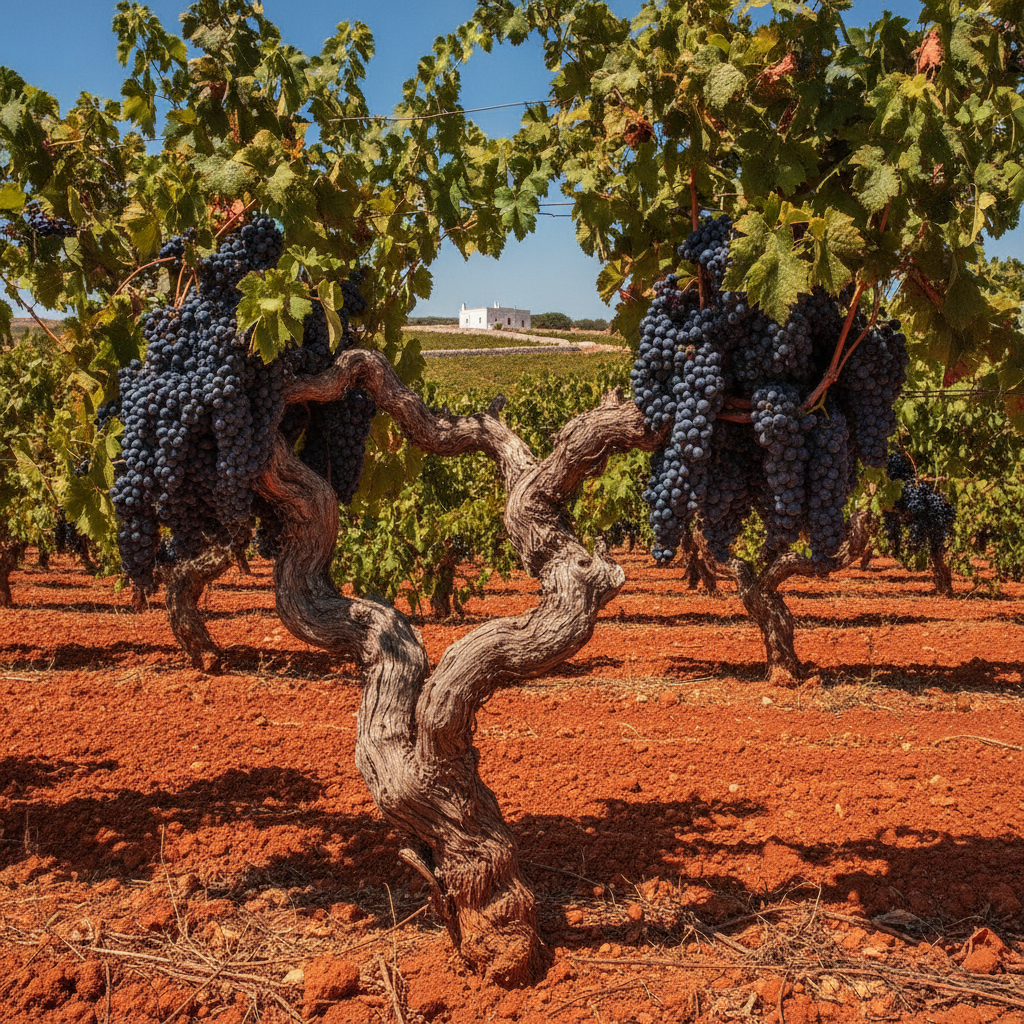
The Primitivo varietal features a shoot with an open, woolly tip, a medium-sized, pentagonal, quinquelobed leaf, a small, compact bunch, and a medium, spherical berry with an intense blue, waxy skin. The pulp is sweet and juicy.
These characteristics translate into a wine with an intense red color, with purplish reflections. On the nose, it offers notes of ripe fruit such as plum, black cherry, and raisin, with possible hints of Mediterranean scrub or spices. On the palate, it is warm, full-bodied, with good structure, integrated tannins, and balanced freshness. The high sugar content contributes to a significant alcohol level.
What are the different varietals of Primitivo di Manduria and how are they positioned?
The Primitivo di Manduria appellation is divided into several variants, each with a specific positioning:
- Primitivo di Manduria DOC: Represents the authentic expression of the varietal and territory, forming the core of production.
- Primitivo di Manduria Riserva DOC: Indicates wines that have undergone extended aging, acquiring greater complexity, structure, and aging potential.
- Primitivo di Manduria Dolce Naturale DOCG: This is the passito version, sweet and aromatic, considered a rare and prized excellence.
Primitivo di Manduria, in all its forms, is often seen as a meditation wine, but its versatility also makes it suitable for pairing with robust dishes of Mediterranean cuisine, red meats, game, and aged cheeses.
What do foreign buyers look for in Primitivo di Manduria?
International buyers seek wines that offer authenticity, consistent quality, market potential, and good value for money. For Primitivo di Manduria, these elements translate into:
- Authenticity and Terroir: Foreign markets value wines that tell a story and express the unique character of their territory. Primitivo di Manduria, with its history and connection to Puglia, possesses this distinctive element. Mentioning the appellation and its regulations is a strong guarantee.
- Consistent Quality and Reliability: Buyers need reliable suppliers who guarantee consistent quality. Compliance with production regulations is crucial to ensure that every bottle meets expected standards. The appellation's reputation is a significant commercial asset.
- Market Potential and Differentiation: Primitivo di Manduria has good recognition, but there is room for differentiation. Buyers are interested in wines that stand out for unique characteristics, capable of attracting consumers seeking new experiences. The different variants offer opportunities to segment the offering.
- Transparency and Brand Protection: Clarity on the wine's origin and composition is essential. Buyers appreciate denominations that invest in protecting their brand and fighting counterfeiting. The use of the name "Primitivo di Manduria" as an ingredient in other products, for example, requires specific authorization, demonstrating the appellation's strength and legal protection.
- Versatility and Pairings: A wine's ability to adapt to different consumption occasions and food pairings is a key factor. Primitivo di Manduria, while structured, offers a certain versatility that can be highlighted in communication aimed at foreign markets.
What is the role of the Primitivo di Manduria Protection Consortium?
The Primitivo di Manduria Protection Consortium is crucial for safeguarding and promoting the appellation. Through vigilance, control, and communication, it ensures that wines comply with production regulations, combating counterfeiting and "Italian sounding." This commitment strengthens the perception of Primitivo di Manduria's quality and reliability globally, an "erga omnes" recognition that protects its commercial and cultural value.
Frequently Asked Questions
How is the authenticity of Primitivo di Manduria DOC/DOCG guaranteed?
Authenticity is guaranteed by adherence to the production regulations, overseen by the Protection Consortium, which monitors wine compliance and combats counterfeiting.
What are the main organoleptic characteristics that foreign buyers seek in Primitivo di Manduria?
Foreign buyers look for wines with an intense red color, a rich bouquet of ripe fruit, and a palate that is warm, full-bodied, and well-structured, with integrated tannins and good persistence.
Is Primitivo di Manduria a wine suitable for various types of food pairings?
Yes, despite being a structured wine, Primitivo di Manduria offers a degree of versatility, capable of accompanying robust Mediterranean dishes, red meats, game, and aged cheeses.
Primitivo di Manduria represents a solid export opportunity for Italian wineries, thanks to its history, rigorous production regulations, distinctive organoleptic characteristics, and brand protection. Understanding the expectations of foreign buyers and effectively communicating the value of this Apulian appellation is key to expanding global presence.
For wineries looking to explore or strengthen their presence in international markets with wines like Primitivo di Manduria, Wines Export offers strategic support.