Friulian Passito: Regulations and Enhancement in Foreign Markets
Wines Export Editorial · Last updated:
Friulian Passito, a dessert wine made from dried grapes, offers a niche opportunity for Italian wineries aiming for export. To successfully enter this segment, it is crucial to understand its production regulations, distinctive characteristics, and the expectations of international buyers. This wine holds significant growth potential in foreign markets, thanks to its uniqueness and the story it tells. In-depth information: Federdoc — National Confederation of Italian Wine Protection Consortia.
What Defines the Regulations of a Passito Wine?
The production regulations are the foundation that guarantees the authenticity and quality of a designation. They establish essential elements such as the name of the designation, the categories of products allowed, and the analytical and organoleptic characteristics.
For passito wines, the regulations specify the winemaking practices related to grape drying and any restrictions. Recent amendments have clarified the "passito" type, allowing the use of the specification "appassimento" (drying) on the label, in compliance with EU legislation. This detail is vital for communication with foreign markets, where clarity and regulatory compliance are essential requirements. Regulation (EU) No 1308/2013 defines the requirements for protecting designations, requiring a complete technical file that includes the production regulations.
How Has Wine Legislation for Passito Wines Evolved?
Wine legislation continuously adapts to market dynamics and innovations. Historically, regulations have been updated to reflect advances in research, the experience of winegrowers, and consumer needs, aiming for a quality policy that strengthens the reputation of regional wines.
Updates can concern winemaking practices, consumption characteristics, and wine designations. The inclusion of new types, such as "passito," requires specific labeling provisions to ensure consumer transparency. This regulatory update process is fundamental to maintaining the competitiveness of Italian wines in global markets.
What Are the Distinctive Characteristics of Friulian Passito?
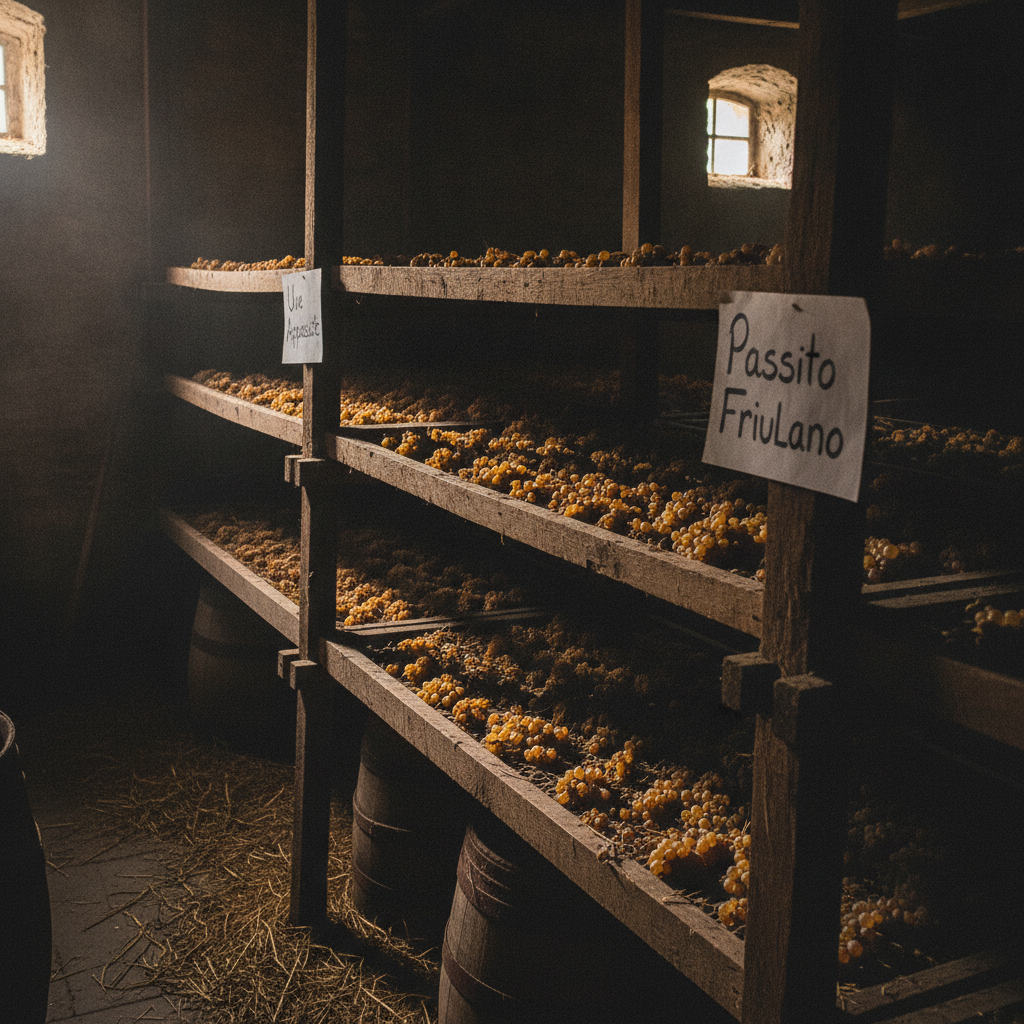
Friulian Passito stands out for its unique characteristics, derived from the grape drying process, which concentrates sugars and aromas. This method imparts particular complexity and richness to the wine.
The analytical and organoleptic characteristics are defined in the regulations, which may include specifications on sugars and acidity. Typically, passito wines present an intense amber or deep golden color, with complex aromas of ripe fruit, honey, floral, and spicy notes. On the palate, they are often full-bodied, with sweetness balanced by good acidity, ensuring freshness and persistence. The "appassimento" specification on the label, where permitted, clarifies the origin and production method, which is appreciated by foreign buyers.
How Does the Territory Influence Friulian Passito?
The connection to the geographical environment is intrinsic to protected designation of origin. The description of the environmental, pedoclimatic, and historical-cultural aspects of the territory contributes to characterizing the quality of viticultural products. In Friuli-Venezia Giulia, the cultural and cultivation traditions layered over centuries play a fundamental role in defining the identity of its wines.
Historical designations like "Isonzo" or "Colli Orientali del Friuli" attest to this strong connection. The production of Friulian Passito is situated within a rich winemaking context of history and traditions, which influences its characteristics and enhances its perceived value in international markets.
What Do Foreign Buyers Look for in Friulian Passito?
Foreign buyers, specializing in dessert and meditation wines, seek unique sensory experiences, authentic stories, and clear territorial identification. Friulian Passito meets these needs with its peculiarities.
Authenticity and Provenance
International markets appreciate wines that tell a story linked to their territory of origin. The "Friulano" designation or specific regional sub-denominations offer a guarantee of provenance and authenticity. Buyers seek wines that reflect the terroir, local traditions, and the producers' commitment to preserving their territory's identity.
Quality and Organoleptic Characteristics
The intrinsic quality of the wine is a determining factor. Buyers are interested in passito wines with harmonious balance between sweetness and acidity, complex and persistent aromatic profiles. The description of organoleptic characteristics, as indicated in the regulations, is fundamental for communicating the product's value. Wines with aging potential and good gastronomic pairing capabilities are particularly sought after.
Regulatory Compliance and Traceability
Compliance with European and international regulations is an essential prerequisite for export. Buyers require products that meet labeling, compositional, and food safety requirements. Transparency regarding the production regulations and winemaking practices used instills confidence and facilitates the import process.
Market Potential and Consumption Niches
The dessert wine market is growing, with increasing demand for high-quality products with a distinctive identity. Friulian Passito can successfully enter specific consumption niches, such as after-dinner drinks, pastry pairings, or as a meditation wine. Its versatility in pairings, which can range from blue cheeses to desserts made with dried fruit and chocolate, further increases its appeal.

Wines Export and the Territory
The Wines Export B2B network includes various wineries specializing in passito wines, including those from Friuli-Venezia Giulia. This presence represents a competitive advantage for export, allowing international buyers to connect with Italian producers of excellence in this specific segment.
Conclusion: An Opportunity to Seize
Friulian Passito represents an Italian enological excellence with considerable export potential. Thorough understanding of its regulations, unique characteristics, and international market expectations is key to success. Wineries that can enhance the authenticity, quality, and story of their territory, supported by a service like Wines Export, will be able to fully seize the opportunities offered by this fascinating dessert wine.
Frequently Asked Questions
What are the basic requirements for a passito wine regulation?
A passito wine regulation must define the name of the designation, the categories of products allowed, the type of geographical indication (PDO or PGI), and describe the analytical and organoleptic characteristics. It must also specify the winemaking practices related to grape drying.
How does European legislation support wine origin designations?
European legislation, such as Regulation (EU) No 1308/2013, defines the requirements for submitting applications for the protection of designations of origin and geographical indications. It requires a complete technical file, including the production regulations, to ensure that each designation is supported by a solid regulatory framework and protected internationally.
What characteristics do foreign buyers look for in Italian dessert wines?
Foreign buyers seek wines that offer a unique sensory experience, an authentic story linked to the territory of origin, and clear identification. They appreciate intrinsic quality, a harmonious balance between sweetness and acidity, complex and persistent aromatic profiles, and compliance with international regulations.