Exporting wine to Japan: zero duty under the EU-Japan agreement, proof of origin, analysis requirements, Japanese label and liquor tax
Wines Export Editorial · Last updated:

EU wine has entered Japan duty-free since 1 February 2019, the date the EU-Japan Economic Partnership Agreement came into force, provided that it meets the agreement's rules of origin. You still have to pay the liquor tax (100,000 yen per kilolitre, that is 100 yen per litre) and the 10 per cent consumption tax, and you still have to file the health notification with the quarantine station, provide a Japanese-language label, and go through an importer holding a licence to sell alcoholic beverages. This guide sets out the six steps; who the importers are and how to choose one is explained on the page on wine importers in Japan.
Zero duty: what you need to obtain it
Without the agreement, wine in bottles under tariff heading 2204.21 would pay in Japan, according to the customs tariff, a general duty of 21.3 per cent or 156.80 yen per litre (whichever is lower, with a minimum of 93 yen per litre) and a temporary duty of 15 per cent or 125 yen per litre, with a minimum of 67 yen per litre. The latter is the rate Japanese customs still lists as the wine duty for anyone who cannot use a preference. The EU-Japan agreement eliminated duties on EU wines upon entry into force, on 1 February 2019, according to the factsheet of the EU-Japan Centre for Industrial Cooperation, which refers to Japan's tariff schedule in Annex 2-A-4 of the text.
To obtain zero duty, the consignment must meet the specific rule of origin for heading 22.04 set out in Annex 3-B of the agreement: the wine must be produced in the Union with raw materials that comply with the rule, and proof of preferential origin must be provided in the manner set out in the agreement. In practice, ask your freight forwarder or your Chamber of Commerce which declaration of origin your shipment requires, and include it in the documents before dispatch. An Italian wine made entirely from EU-origin material meets the rule, but without the declaration the importer pays the full duty and charges it to you.
The agreement also provides for the progressive recognition of winemaking practices: according to the same factsheet, some of the practices authorised in the Union were accepted by Japan from the date of entry into force, others in later phases, with Japan able to authorise further additives such as dimethyl dicarbonate on set dates. If you use practices or additives not yet recognised, verify this before shipping. Finally, European geographical indications are protected in Japan under the agreement, as explained in the factsheet on protection of DOP and IGP in third countries.
Health notification and analysis: what Japan checks
Every consignment of food and beverages imported for sale must be notified, under the Food Sanitation Act, to the quarantine station of the Ministry of Health, Labour and Welfare (MHLW) responsible for the port of arrival, using the "Notification Form for Importation of Foods, etc." submitted by the importer. The US TTB, in its page on Japan, states that the form must be submitted in two copies together with documents describing raw materials, additives and production method; the inspector reviews the documents and, if everything complies, issues the notification certificate that allows customs clearance. According to the EU-Japan Centre guide, if the review raises a suspicion of non-compliance the goods are inspected and, if the result is negative, they are re-exported or destroyed.
What the winery must provide to the importer is the batch certificate of analysis, with the parameters that allow the verification of permitted additives and preservatives, and the complete list of additives used. The EU-Japan Centre guide notes that additives must be listed on the label on a separate line from the other ingredients, in descending order by weight, and that preservatives, antioxidants and colourants must be indicated by substance name and function. The TTB recommends attaching a detailed ingredient certificate to each shipment when the additives are not all already on the label. An incomplete certificate of analysis is the most frequent cause of delay at quarantine.
The Japanese label: who applies it and what it contains
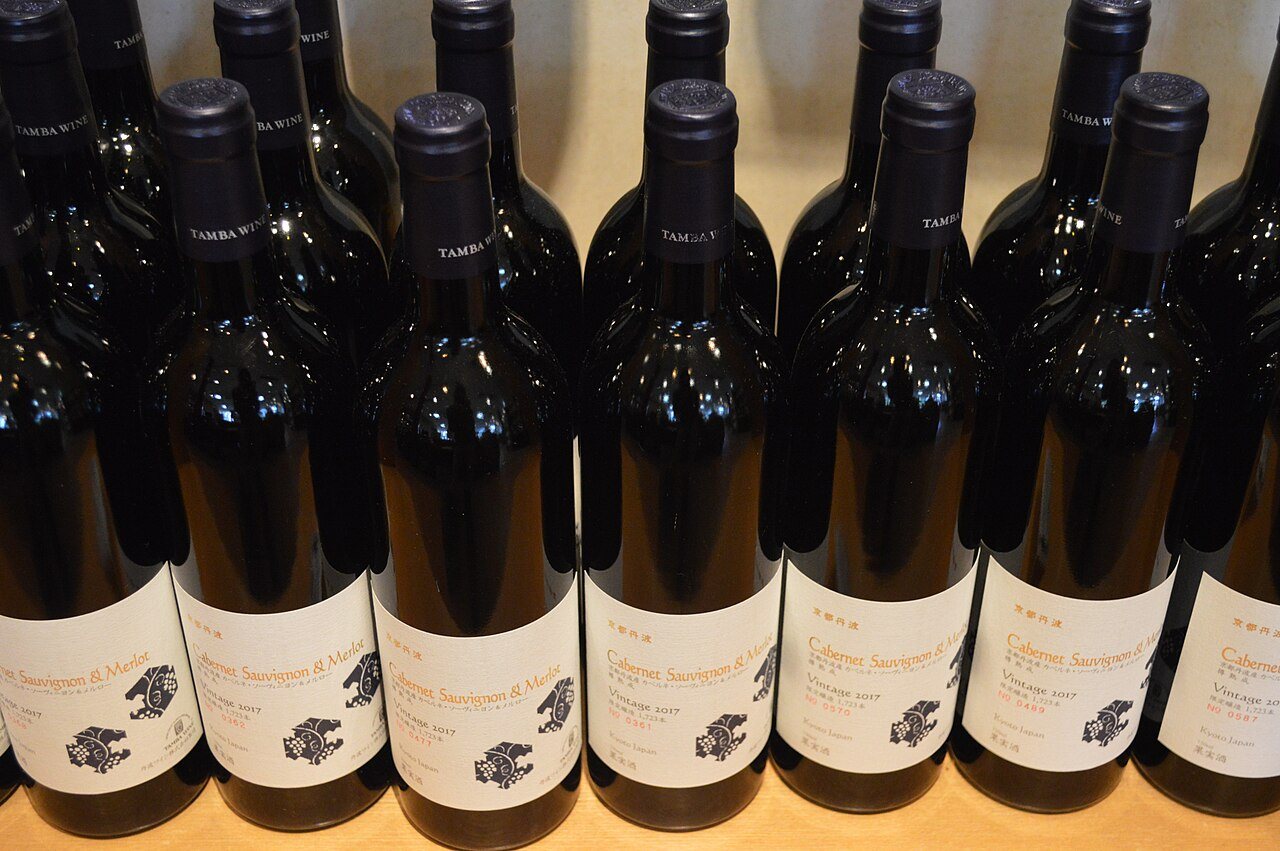
Japan accepts the original label accompanied by a back label in Japanese, which the importer normally applies in its warehouse before sale. The TTB page lists the required items: product name, the wording "imported" with the country of origin, name and address of the importer, ingredients and additives, alcohol content, container volume in millilitres or litres, the date by which the product should be consumed, and the warning that alcohol may only be consumed by persons aged 20 or over, the age set by Japanese law on drinking by minors. The text must be in Japanese with characters of about 8 point. The EU-Japan Centre guide adds that the alcohol content may be expressed in degrees or as a percentage, with a tolerance of one degree above or below.
The importer handles the text but needs your exact data: actual alcohol content, nominal volume, list of additives and preservatives, batch. Give them the updated technical sheet and ask to see the back label before printing: an error in the wine name or designation stays on shelves for the entire life of the batch. The European labelling rules, which still apply to the front label, are set out in the factsheet on wine labelling in the Union.
Liquor tax and consumption tax
Two taxes apply after customs clearance. The liquor tax, administered by the National Tax Agency (NTA), is 100,000 yen per kilolitre for wine according to the table published by Japanese customs: 100 yen per litre, that is 75 yen for a 0.75-litre bottle, the same amount applied to sake. Other categories carry different rates (beer 155,000 yen per kilolitre, sweet wines and liqueurs under 13 per cent 120,000 yen), so the product classification matters: a flavoured wine or a fortified wine does not pay the same as a still wine.
The consumption tax has been 10 per cent since 1 October 2019; the reduced rate of 8 per cent that applies to food and beverages expressly excludes alcoholic beverages, as the National Tax Agency indicates. It is applied to the customs value plus the duty and the liquor tax. Taking together zero duty, liquor tax and consumption tax, the tax burden on still wine in Japan is among the lightest of the Asian markets: the comparison with China, Korea and Hong Kong is in the factsheet on export to Asia.
The licensed importer: why it is mandatory
Japanese customs is explicit: anyone importing alcoholic beverages for sale must hold a licence to sell alcoholic beverages issued under the Liquor Tax Act; only those importing to serve them in their own restaurant or bar are exempt. The TTB specifies that a wholesaler licence is required and that there is no separate registration as an importer. The consequence for the winery is that you cannot sell directly to a restaurant or wine shop in Japan: your customer is the licensed importer, who pays the taxes, files the health notification, applies the back label and resells to the trade channels. The importer's tasks and how to choose the right one for your positioning are described on the page on wine importers in Japan; a buyer-facing version is available at how to export Italian wine to Japan.
Timelines and documents at a glance
| Step | Who does it | Document or requirement |
|---|---|---|
| Proof of preferential origin | Winery with freight forwarder | Declaration of origin under the EU-Japan agreement |
| Certificate of analysis and additive list | Winery through laboratory | For each batch shipped |
| Health notification | Importer | Notification Form to the MHLW quarantine station, with documents on raw materials and process |
| Customs declaration | Importer with freight forwarder | Zero duty if origin is proven |
| Liquor tax and consumption tax | Importer | 100,000 yen per kilolitre and 10 per cent |
| Back label in Japanese | Importer | Mandatory items, characters of about 8 point, 20-year warning |
| Licence to sell alcoholic beverages | Importer | Issued under the Liquor Tax Act |
The basic commercial documents (invoice, packing list, bill of lading) are the same as for any non-EU shipment and are listed in the guide to documents for exporting wine. Timelines depend on the outcome of the documentary review at quarantine: a batch with complete analysis and additive list passes with a document check only, while a suspicious batch is held for inspection.
Frequently asked questions
Is zero duty automatic for Italian wine?
No. The shipment must meet the rule of origin in Annex 3-B of the EU-Japan agreement, and proof of preferential origin must be in the documents. Without the declaration, the importer pays the ordinary duty, which Japanese customs lists at 15 per cent or 125 yen per litre, with a minimum of 67 yen per litre.
How much is the liquor tax on a bottle?
The liquor tax on wine is 100,000 yen per kilolitre, that is 100 yen per litre and 75 yen for a 0.75-litre bottle. The 10 per cent consumption tax is added to this, and it is not reduced for alcoholic beverages.
Who prepares the Japanese label?
Normally the importer, who applies it in its warehouse before sale. The text must state in Japanese the product name, origin, importer, ingredients and additives, alcohol content, volume, date and the 20-year warning. The winery provides the exact data and checks the draft.
Can I sell directly to Japanese restaurants?
No. Importing for sale requires a licence issued under the Liquor Tax Act. A restaurant may only import to serve wine in its own premises; for everything else, a licensed wholesaler importer is required.
Sources
- Import of alcoholic beverages: licence, notification, customs duty and liquor tax — Japan Customs
- Tariff schedule, chapter 22, heading 22.04 — Japan Customs
- EU-Japan EPA factsheet: wine products — EU-Japan Centre for Industrial Cooperation
- Alcoholic beverages in Japan: import procedures and labelling — EU-Japan Centre for Industrial Cooperation
- International affairs resources for Japan — TTB
- Consumption tax rates — National Tax Agency of Japan
- FCA wine export vs EXW: who clears customs and loads
- Export Declaration, MRN and Proof of Exit for Wine VAT
- Fermentation temperature: white, red and cooling control
- Export credit insurance: if the importer does not pay
- Fiscal warehouse for wine: when you need one, alternatives
- Excise duty on alcohol: wine at zero in Italy and abroad