Wine Importers in Austria: Who Buys Italian Wine, the Channels (Weinhandel, On-Trade, Chains) and How to Contact Them
Wines Export Editorial · Last updated:

Austria imports around 816,000 hectolitres of wine a year, and more than half of it comes from Italy: 482,000 hectolitres in 2024, equal to 59 per cent of imported volume and 48 per cent of value (UN Comtrade, Austrian customs declarations, HS code 2204, accessed 2 November 2026). Foreign wine almost always enters through an importer (Weinimporteur or Weinhandel), who then supplies restaurants, wine shops and chains, or through foodservice wholesalers. Excise duty on wine in Austria is zero, but shipments still go through EMCS and must be consigned to a registered consignee. This page explains who buys, where Italian wine is sold, what you need to ship, and how to contact an Austrian importer without wasting months.
For Austrian wine and its appellations (Grüner Veltliner, DAC, Wachau), see our dedicated pages: Austrian wine, grapes and regions and Austrian appellations explained. Here we look at Austria as a market.
How much Italian wine enters Austria?
The customs data Austria reports to UN Comtrade show that in 2024 the country imported 81.6 million litres of wine (HS 2204), with a CIF value of 324 million dollars. Italy is the top supplier with 48.2 million litres and 154.6 million dollars. Germany, Hungary and Spain follow, far behind. In 2023 the total was 87.1 million litres, and Italy accounted for 52.5 million: the market shrank by about 6 per cent in 2024, and Italy held its share.
| Supplier | Litres imported 2024 | CIF value 2024 (million dollars) | Share of volume |
|---|---|---|---|
| Italy | 48.2 million | 154.6 | 59% |
| Germany | 13.1 million | 39.6 | 16% |
| Hungary | 4.8 million | 4.7 | 6% |
| Spain | 3.8 million | 12.2 | 5% |
| World total | 81.6 million | 324.1 | 100% |
Source: UN Comtrade, reporter Austria, import flow, HS 2204, year 2024 (accessed 2 November 2026).
The ICEX 2024 market study on wine in Austria, based on 2022 data, shows the same picture by value: Italy accounts for 44 per cent of Austrian wine imports, France for 22, Germany for 15 and Spain for 7. In 2022 Austria imported 68,185 tonnes of wine worth 254 million euros, with an average import price of 2.65 euros per litre. The average price includes bulk wine, so bottled wine for wine shops sits at very different values.
The 2024 harvest was 1.87 million hectolitres, the second lowest since 2010, with Lower Austria at 1.18 million, Burgenland at 504,000 and Styria at 159,200 (Statistik Austria, Weinernte und Weinbestand 2024). Domestic consumption, according to the same ICEX study, was 2.37 million hectolitres in 2021/22. The gap is filled by imports, and Italy is the natural supplier because of proximity and price.
Vienna and the regions: where is Italian wine sold?
Austria is a market where domestic wine dominates both home and restaurant. The Austrian Wine Marketing Board (ÖWM), citing NielsenIQ and Gastrodata, reports that in the first nine months of 2025 over 75 per cent of wine sales value in Austrian grocery retail went to domestic products, and that about 70 per cent of the volume sold was Austrian; Austrian wine also remains the leader in foodservice. In the same period, wine sales in retail fell by 5.2 per cent in volume and 2.5 per cent in value, and the foodservice wholesaler lost 4.6 per cent in volume (ÖWM, 20 January 2026).
What this means for you: the room for foreign wine is the 25–30 per cent that remains, and Italy already holds the largest share of it. You sell the bottle that an Italian restaurant in Vienna or Graz cannot find among Austrian wines, not "Italian wine" in general.
Vienna concentrates Italian restaurants, wine shops with an Italy section, and importers' offices. The other key cities are Graz, Linz, Salzburg and Innsbruck, with particular attention to border areas: Tyrol and Carinthia know the wines of Trentino-Alto Adige, Veneto and Friuli well, and competition there is tougher. The wine regions (Lower Austria, Burgenland, Styria, Vienna) have Heuriger, the producers' taverns that traditionally serve their own wine. You cannot get into that channel, and it is worth knowing before you invest time.
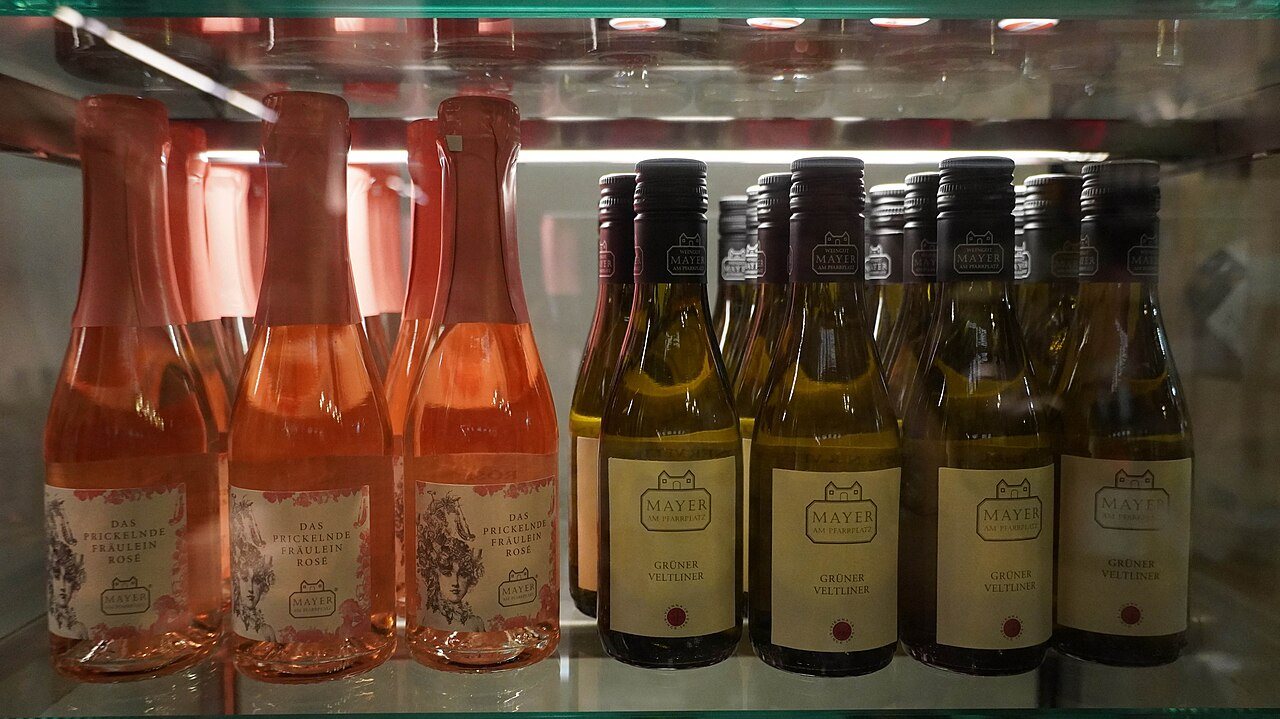
Who imports: Weinhandel, specialist importers and foodservice wholesalers
ICEX states it plainly: most foreign wine in Austria reaches the market through importers, who then distribute it to retail or the on-trade (Horeca) channel. In practice, there are three types of player.
- The Weinhandel, or specialist importer. Commercial companies, often family-run, with a catalogue of a few hundred labels, their own warehouse and a network of agents who visit restaurants and wine shops. Many have an established Italy section and look for a specific gap in their list, not "another Chianti".
- Foodservice wholesalers. ICEX names the main chains: Metro Cash & Carry, Markant Österreich, Kastner Gruppe, Wedl & Hofmann, Transgourmet Österreich. They buy in volume, expect stable prices and regular logistics, and often source foreign wine through importers rather than directly from wineries.
- Wine shops with direct import. Wein & Co, which ICEX cites as a chain of mid-to-upper-range wine shops, and some independent wine shops import part of their range themselves. Volumes are small, visibility is high.
The line between importing and distributing in Austria is less clear than in other countries: the same Weinhandel often does both. If the distinction is not clear to you, the page importer and distributor: who does what explains it.
Retail chains: how do Austrian chains buy wine?
Austrian grocery retail is highly concentrated. ICEX reports that SPAR leads with a 35 per cent share, REWE Austria (Billa) has 31 and Hofer (the Austrian brand of Aldi Süd) has 18. Three banners therefore account for more than 80 per cent of food retail.
Chains buy foreign wine in two ways: for branded labels they go through importers, who handle listings, logistics and promotions; for private labels and seasonal offers they negotiate directly with wineries able to guarantee volume and price for twelve months. The direct route carries two risks: an annual contract at a fixed price, and the loss of the wine shop and restaurant channel, which often do not want a bottle that is also on supermarket shelves.
It is better to enter through an importer first and let them propose you to a chain, if and when that makes sense. Reversing the order closes doors.
Shipping to Austria: zero excise, e-VD, registered consignee, packaging
The Austrian government's business portal (USP) is explicit: no excise duty is charged on wine and sparkling wine in Austria, and the Schaumweinsteuer (sparkling wine tax) has been at zero since 1 July 2020. But the European rules still apply: movements under duty suspension to Austria must go through EMCS, and wine on which duty has been paid also travels with the simplified electronic document. In Austria the e-AD is called e-VD and the e-DAS is called e-VBD, as the ICE wine export guide for Austria notes.
What you need, in brief:
- A consignee with an excise code. The Austrian importer must be an authorised warehousekeeper or a registered consignee (registrierter Empfänger). USP explains that registration is requested from the Zollamt Österreich. Check their code on SEED before the first shipment.
- The e-AD issued by your tax warehouse or by your forwarder with a warehouse, with the ARC code printed on the transport document. If you produce fewer than 1,000 hectolitres on average, USP notes that the small producer regime exempts you from formal warehouse authorisation, but not from the electronic document for shipments under duty suspension to other states. For a step-by-step guide to the document, read EMCS, tax warehouses and documents.
- No guarantee required. USP specifies that no security deposit (Sicherheitsleistung), which applies to other excise products, is required for wine and sparkling wine.
- Intra-EU invoice. Exempt supply with the VAT numbers of both parties, the Austrian UID number of the customer and the exemption wording; Intrastat above the threshold (ICE, Austria guide, updated March 2025).
- Label in German with ingredients list and nutrition declaration for wines produced from 8 December 2023, also via QR code with the word "Zutaten" before the code (ICE, EU Reg. 2021/2117).
- Packaging. From 1 January 2023, anyone selling in Austria without a local establishment must appoint an authorised representative for packaging, unless the Austrian B2B customer takes on that responsibility; for sales to private consumers, the representative is always required (ICE, Austria guide).
If Austria is your first EU destination, the full list of documents and steps is in the wine export documents guide, and the principles of EU excise duties are in EU excise duties: how they work.
How do you contact an Austrian importer?
Austrian importers receive proposals from Italian wineries every week. They select on three criteria: the gap in their catalogue, the ex-warehouse price in relation to the restaurants they supply, and your ability to follow the market after the first shipment.
An approach that works:
- Map the catalogues. Before writing, look at the importer's online list and search for your region and appellation. If they already have three Montepulciano d'Abruzzo in your price range, you are not their priority. If they have no wine from your area, you have an argument.
- Write in German or English, briefly. An email of ten lines: who you are, how many bottles you produce, which labels you propose for Austria and why, the ex-cellar price of the proposed range, and availability of samples. A template for the first email is in how to write to an importer.
- Use the right trade fairs. Austria is among the established markets present at Vinitaly, as Veronafiere stated at the close of the 2026 edition; many Austrian importers also visit ProWein in Düsseldorf. In Austria, the reference fair cited by ICEX is VieVinum in Vienna. Fix the meeting before the fair, by email; do not improvise at the stand. The page wine trade fairs: which ones matter explains how.
- Ask ICE Vienna for help. The ICE office in Vienna (vienna@ice.it, and vini@ice.it for the wine sector) offers free first-level guidance through the ICE Client Area portal, under the heading "Informazioni generali di primo orientamento" (general first-level information).
- Reply within 24 hours. An Austrian importer who asks for samples or a price list expects a quick reply and a parcel dispatched within the week, with the e-AD or MVV-E in order, including for samples.
The general method for finding importers in any country, with public sources to start from, is in the guide finding wine importers abroad.
Frequently asked questions
Is Italy really Austria's top wine supplier?
Yes. In the Austrian customs data reported to UN Comtrade for 2024, Italy accounts for 48.2 million litres out of 81.6 million imported, 59 per cent of volume and 48 per cent of value. The ICEX 2024 study, based on 2022 data, gives Italy 44 per cent of imported value, ahead of France and Germany.
Is EMCS needed even though excise on wine in Austria is zero?
Yes. The Austrian government's USP portal states that shipments under duty suspension from other Member States must go through EMCS, and that wine on which duty has been paid also travels with the simplified electronic document, even though the rate is zero in both countries. The importer must have an excise code (tax warehouse or registered consignee).
Can I sell directly to a restaurant in Vienna?
Only if the restaurant holds an excise code as a registered consignee, which is rare. In practice, the restaurant buys from the importer or the foodservice wholesaler. Direct sales to private consumers are possible but require a fiscal representative in Austria and, for packaging, an authorised representative.
Which Italian wines are Austrian importers looking for?
There is no valid list for everyone: it depends on the gap in each importer's catalogue. In general, wines from the North-East are already well represented, so competition is tougher; appellations from Central and Southern Italy with a price suited to restaurants find more room. Check online lists before making a proposal.
Sources
- UN Comtrade: wine imports (HS 2204) declared by Austria, 2023 and 2024
- USP, Austrian government portal: excise provisions for wine and sparkling wine
- Statistik Austria: Weinernte und Weinbestand 2024
- ICEX: market study on wine in Austria 2024, executive summary
- ICE Agenzia: wine export guide, Austria page
- ÖWM via vol.at: wine sales in retail and foodservice, first nine months of 2025
Who buys wine in Austria? A few names
According to the Wines Export Observatory (November 2026), the Italian denomination most carried by wine buyers in Austria is Prosecco: 54% of those whose Italian range we know carry it, followed by Barolo (20%) and Primitivo (16%).
The Wines Export database covers the whole wine trade in Austria: importers, distributors, wholesalers, wine shops and online stores, city by city, updated continuously (23 November 2026). The Italian denominations most carried by buyers in Austria, in order: Prosecco, Barolo, Primitivo, Chianti and Sangiovese.
Wien
mounier.at · Schaumweinkontor · about.wine Wein
Linz
Josef - Das Stadtbräu · Tutto Vino · Passionis
Graz
Weinhandel Kohlbacher · Wein & Wein Grollitsch · Neckermann
- South Africa wine importers: who buys Italian and Prosecco
- Hong Kong wine importers: zero duty and Asia hub
- Japan wine importers: retail, restaurants and who buys
- French supermarket Italian wine: foire aux vins and buyers
- London Wine Fair for Italian wineries: UK duty and samples
- Fine wine merchant UK: Liv-ex, in bond, Barolo and Brunello