Systembolaget for Small Wineries: Web Launches, Temporary Range and Small Lots
Wines Export Editorial · Last updated:
A small Italian winery looking at Sweden often stops at the Systembolaget tenders, believing they require tens of thousands of bottles. However, the tender is only one of the channels of the Swedish monopoly. The temporary range and web launches work with limited lots and, according to the sources listed at the end, are often purchased with a single order. This guide explains how they work, which volumes they require, why small lots tend to end up in the upper price segment and what a sold-out lot means. For the general picture of the Nordic monopolies, we refer you to Systembolaget tenders and the Nordic monopolies.
The three channels for small lots at Systembolaget
Systembolaget divides its assortment into several areas. The fixed range, called set range, generates most of the sales: the official source indicates 94% of the total, purchased through tender and blind tasting panels. The temporary range, by contrast, accounts for about 3% of sales and covers small volumes of exclusive products, available in some stores and in the online catalogue.
For a small winery, the most useful channel is precisely the temporary range. Swedish consumer guides describe it as limited lots with high demand, and place it almost every Friday, for a total of about 2,100 drinks per year. Alongside it is the web launch: a group of exclusive wines released every Thursday. The Vinhjälpen guide indicates that interesting wine comes almost exclusively from these two channels, the temporary range and the web.
| Channel | Share of sales | Volumes and purchasing | Frequency |
|---|---|---|---|
| Fixed range (set range) | 94% of total | Tender and blind tasting | New launches every quarter |
| Temporary range | 3% of total | Small volumes of exclusive products, from tender or supplier offer | Almost every Friday |
| Web launches | Not stated in the sources listed | Exclusive wines, mainly wine | Every Thursday |
| Seasonal range | Not stated in the sources listed | Christmas, Easter and Beaujolais Nouveau | Fixed dates |
The practical difference is this: the fixed range requires a response to a specific tender, while the temporary range can also originate from an offer that the supplier submits directly. Systembolaget itself, on its producer page, describes the temporary range as purchased either from a tender or from supplier offers. For a winery that does not yet have a Swedish importer, this means the entry door is narrower than it appears, but not closed.
How many bottles are really needed
The official Systembolaget pages do not publish a minimum volume for the temporary range. You will therefore not find an official figure to copy into your plan, and this article does not invent one. The most concrete data concerns tenders: in a tender for an organic flavoured sparkling wine, listed by an importer working with the monopoly, the minimum volume required was 32,000 bottles. A tender of this kind explains why many small wineries stop looking at Sweden.
The temporary range, on the other hand, is described as a single purchase of a fixed volume. A consultancy note on the Swedish market explains it this way: the wine goes through a tender, but unlike the fixed range, the volumes are smaller and there is only one purchase. To find out how many bottles your lot needs, ask your importer for the volume required for that specific launch before preparing the shipment.
Which importers work with small lots
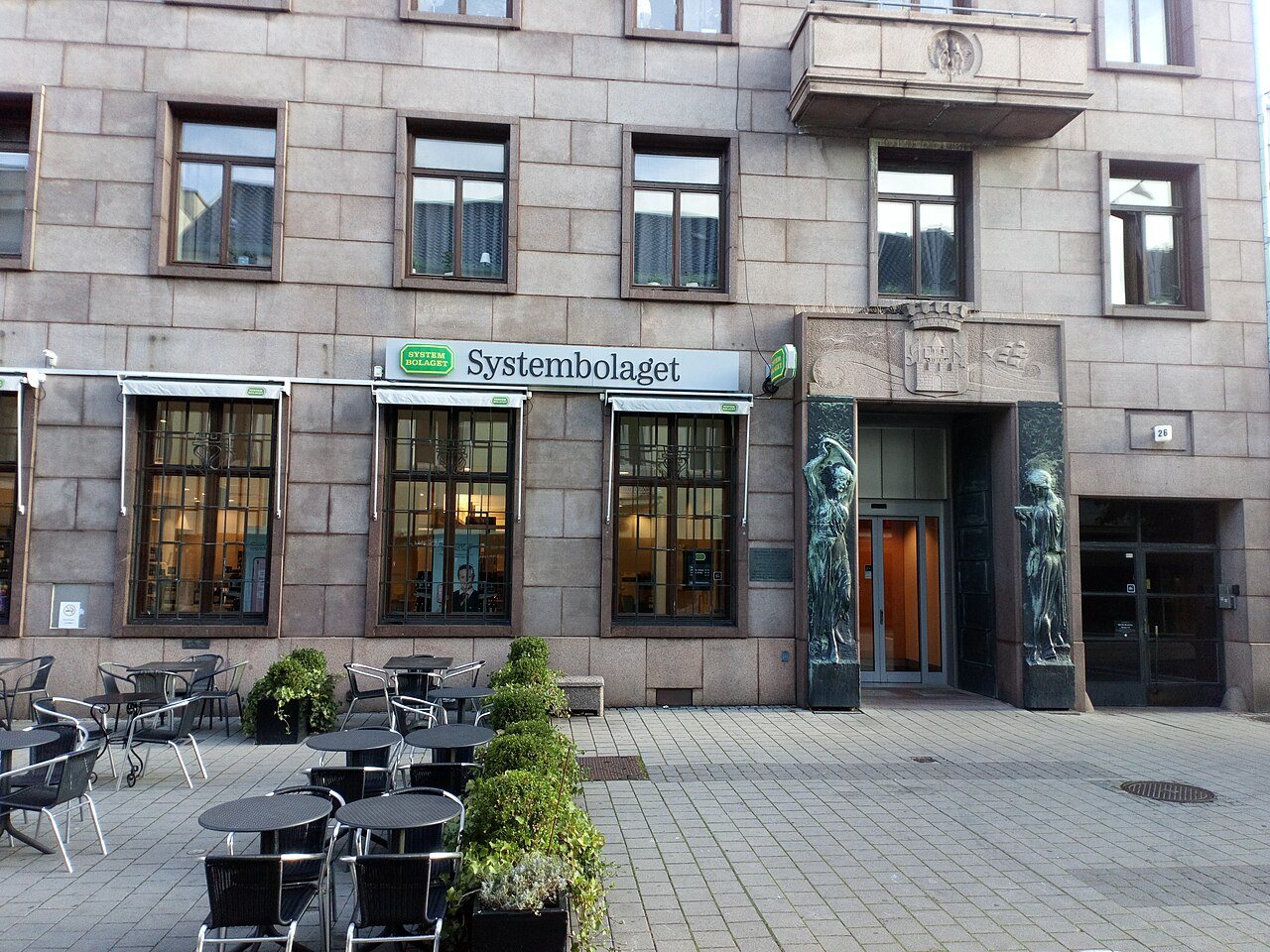
Systembolaget only buys from importers or drinks suppliers approved by the Swedish tax authority. An Italian winery therefore cannot sell directly to the monopoly: it needs a partner registered in Sweden. The monopoly's own page explains that tenders, launch plans and category strategies are accessible to all suppliers already approved, not to those approaching from abroad.
The right partner is not the one with the most brands, but the one who knows the purchasing process and the launch plan. An operator who works ahead of the launch plans can point you to the tenders suited to your wine in good time. Before signing, verify three things: that the importer is approved, that it has already brought wines into temporary or web launches, and that it can tell you how far in advance each tender is published. For selection criteria, we refer you to wine importers in Sweden, how to choose them and, from the buyer's side, to buyers and wine importers in Sweden.
Prices: why the small lot often sits in the upper segment
A listing from a Swedish shop, which reports the shelf prices of the 2026 temporary and web launches, shows a wide range: a Sauvignon Blanc at 165 kr, a Sancerre at 299 kr, a Côte-Rôtie at 759 kr. The four web launches in the same listing, however, all exceed 500 kr, with a Pinot Noir at 1,249 kr. These are retailer prices, not official monopoly price lists, but they indicate the direction.
The official pages do not explain the reason for these prices. A likely explanation is that a small lot carries fixed costs of import, labelling and transport spread over few bottles, and that the shop looks for recognisable wines for a dedicated space. If your product falls into the upper segment, the small lot works better as a demand test than as a volume play. The cost items of the first market are described in detail in how much it costs to export wine, the cost items of the first market.
The role of reviews on web launches
Web launches do not only pass through shelves. Swedish consumer guides encourage people to follow the launches and compare ratings before buying, so a bottle released on Thursday immediately enters a public debate. For an Italian winery, this changes the preparation: the technical sheet, the producer's story and the sensory description must be ready before the wine reaches the shop, because those who write and those who buy read them together.
The risk is consistency. If the launch description promises a profile that the wine does not show at tasting, the rating drops and the next lot becomes harder to obtain. For this reason, it is advisable to align the declared profile with the wine actually shipped from the start.
What a sell-out means for reputation
A lot sold within a few days is a positive signal, but it should be read with caution. The temporary range is by definition a single lot: the fact that a lot sells out quickly does not guarantee that Systembolaget will reorder. The same approach emerges from the commercial sources, which describe these launches as limited by nature and not as continuous supplies.
For reputation, what matters is how the sell-out is communicated. If the Swedish buyer asks you for a second lot, respond with a precise volume and a date, not a generic promise. A sold-out wine that does not return is remembered more than a wine that never arrived, so it is better to state from the outset that this is a single lot.
From small lot to fixed range: the path
The most realistic path starts with the temporary range and reaches the fixed range only after measurable results. Systembolaget publishes tender requests four times a year, roughly seven to eight months before the launch, and asks suppliers who comply with the tender for samples. Before the launch it carries out a quality check with chemical and sensory analyses, to verify that the wine on the shelf is identical to the one that won the tender.
So the temporary lot serves two purposes: selling a limited volume and demonstrating that the wine has real demand. Only with that data does it make sense to prepare a response to a tender for the fixed range, which requires more stable volumes and a longer timeline. Before committing to such a long path, check whether the winery is ready on the logistical and documentary side: when a winery is ready to export.
Frequently asked questions
Does Systembolaget accept small lots of Italian wine?
Yes, in the temporary channels and web launches the volumes are smaller than in the fixed range. The wine still goes through an approved Swedish importer, and the volume must be verified for each specific launch with the partner.
How many bottles does a Systembolaget tender require?
There is no single number. In a tender for a sparkling wine listed by an importer, the minimum was 32,000 bottles. For the temporary range, the official pages do not state a minimum, so the figure must be requested case by case.
Who can propose a wine to Systembolaget?
Only importers or drinks suppliers approved by the Swedish tax authority. A foreign winery therefore goes through a partner registered in Sweden, which receives the tender documents and the launch plans.
Does a sold-out lot lead to a second order?
Not automatically. The temporary range is a single purchase of a fixed volume, so a new order must be negotiated separately and depends on the next tender or offer.
Sources
- Systembolaget, Purchasing process (producers)
- Systembolaget, How to sell alcoholic beverages through Systembolaget
- Vinhjälpen, Så fungerar Systembolagets släpp
- Johan Lidby Vinhandel, Tillfälligt sortiment på Systembolaget under 2026
- Concealed Wines, Wine tenders Finland Systembolaget, ALKO & Vinmonopolet
- Wineability, About Systembolaget
Who buys wine in Sweden? A few names
According to the Wines Export Observatory (November 2026), the Italian denomination most carried by wine buyers in Sweden is Prosecco: 35% of those whose Italian range we know carry it, followed by Barolo (30%) and Chianti (29%).
The Wines Export database covers the whole wine trade in Sweden: importers, distributors, wholesalers, wine shops and online stores, city by city, updated continuously (23 November 2026). The Italian denominations most carried by buyers in Sweden, in order: Prosecco, Barolo, Chianti, Barbera and Barbaresco.
Stockholm
Iconic Wines · Tegnér Spirits & Wine AB · Concealed Wines
Malmö
Saltimporten Canteen · Sam Grossist AB · La Bonne Vie
Göteborg
Två Feta Grisar AB · Restaurang & Vinbaren 28+ · champagnebaren.se
- Wine consumption in Australia: imports and Italy's share
- Systembolaget range: permanent, special order and entry
- Wine consumption in Brazil: data, imports, Italy share
- Swiss wine importers: channels, cantons and buyers
- Wine in Ecuador: imports by country, consumption, Italy
- South Korea wine importers: who buys Italian wine and how