How the Systembolaget, Vinmonopolet and Alko tenders work: calendar, requirements, the importer's role and what they look for
Wines Export Editorial · Last updated:
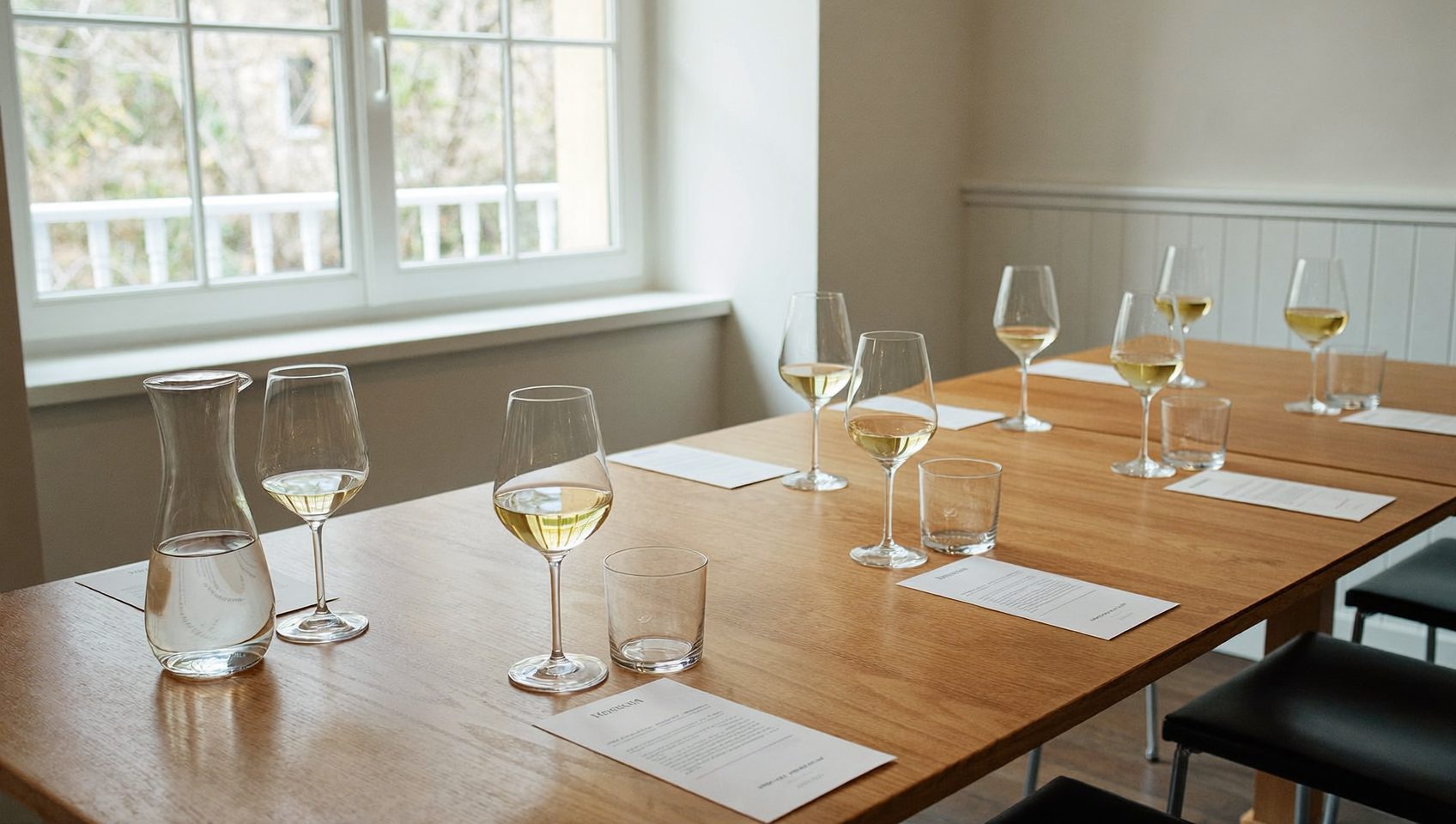
In Sweden, Norway and Finland wine is sold at retail only in the stores of the state monopoly, and the monopoly buys through public tenders: it publishes a launch plan with the wine types it is looking for, receives offers, runs blind tastings and makes its choice. An Italian winery cannot submit an offer on its own: this is done by an importer registered in the country, which is the only point of contact for Systembolaget, Vinmonopolet and Alko. The mechanism is similar in the three countries, but the calendar, the assortment categories and the rules for staying on the shelf differ. Here you will find the comparison, with the official sources of the three monopolies, and a way to prepare six months before the right tender.
The single-country pages remain the starting point for documents, excise duties and logistics: exporting wine to Sweden, exporting wine to Norway and exporting wine to Finland. This page covers only the tender mechanism.
Why can't you sell in the Nordic countries without an importer?
Because the monopoly does not buy from producers. Vinmonopolet states this in the description of its purchasing process: all products sold come from wholesalers that have signed an agreement with Vinmonopolet, and the tenders are addressed to wholesalers. Systembolaget, on its page about private import, specifies that a Swedish seller must be a beverage supplier registered with Systembolaget for the company to be able to buy. Alko, for its sale-to-order assortment, says that the seller is the importer and must hold the required permits, for example a wholesale licence.
So the sequence is always the same: the monopoly publishes the request, the local importer searches its portfolio (or among the wineries that contact it) for the wine that meets the specification, submits the offer with price and sample, and if the wine wins, the importer signs the supply contract and takes care of logistics, excise duties and delivery to the stores. Your job is to be found by the right importer with the right wine before the request expires. How to find and contact Swedish importers is explained in wine buyers and importers in Sweden and in wine distributors in Sweden.
The principle also holds from a legal standpoint. The Konkurrensverket (the Swedish competition authority) report to the European Commission of June 2026 notes that purchasing conditions are the same for all suppliers and that a rejected supplier can ask for written reasons and appeal to the Alkoholsortimentsnämnden. In Norway, appeals go to an independent board (Klagenemnda) appointed by the Ministry of Health.
Systembolaget's launch plan: how do you read it?
Systembolaget publishes its launch plan (lanseringsplan) four times a year, in March, June, September and December, as an Excel file downloadable from the dedicated page; as of 2 November 2026, plans through September 2027 are already online. The plan, in Systembolaget's words, "describes which launches Systembolaget will request and why", and it helps suppliers and producers understand what will be sought in the following months. Each line of the plan then becomes a request for offer (offertförfrågan) sent to all registered suppliers, with type, origin, price range, volume and launch date.
The June 2026 Konkurrensverket report gives the figures for the assortment at stake:
| Systembolaget assortment | Items | Share of 2025 sales | How to get in |
|---|---|---|---|
| Permanent (fast sortiment) | about 2,700 | about 90 % | Request for offer + blind tasting |
| Special order (beställningssortiment) | about 16,900 | about 4 % | The supplier lists it; Systembolaget does not taste or describe it |
| Temporary (TSV, TST, TSE, TSS) | variable | the rest | Requests for offer, 4-5 launches a month |
Source: Konkurrensverket, report to the European Commission, June 2026.
Three rules to keep in mind, all from the same report:
- Guaranteed listing period. A new item in the permanent assortment has nine months of guaranteed listing (twelve for organic or ethical products). It is then reviewed twice a year based on sales from March to August and from September to February: in 2025, 23 items were removed for low sales.
- The side door. In 2025, 4,824 new items were listed in the special-order assortment, and 224 of these qualified for the permanent assortment through sales. As of 31 December 2025, 952 special-order items were on shelves in 449 stores as a local choice. This is the route for those who do not win a tender: get in through special order, get bought by restaurants and enthusiasts, and move up.
- Exclusive temporary (TSE). Volumes from a few to a few thousand bottles, high prices, sometimes online only; here the buyer also assesses the producer's reputation through recognised industry sources.
On sustainability, Systembolaget is stricter than the other two. From the report: a ban on the sale of single-use glass bottles heavier than the maximum limits set for each volume, applied to wines bottled after 1 March 2024; from 24 March 2026 suppliers can report product carbon footprint (PCF) data on the CarbonCloud platform, for now on a voluntary basis, and in autumn 2026 Systembolaget is simulating the use of PCF in its ranking. If you want to enter Sweden, you need to know the weight of your bottle before you make a proposal.
Vinmonopolet: how do the tenders and categories work?
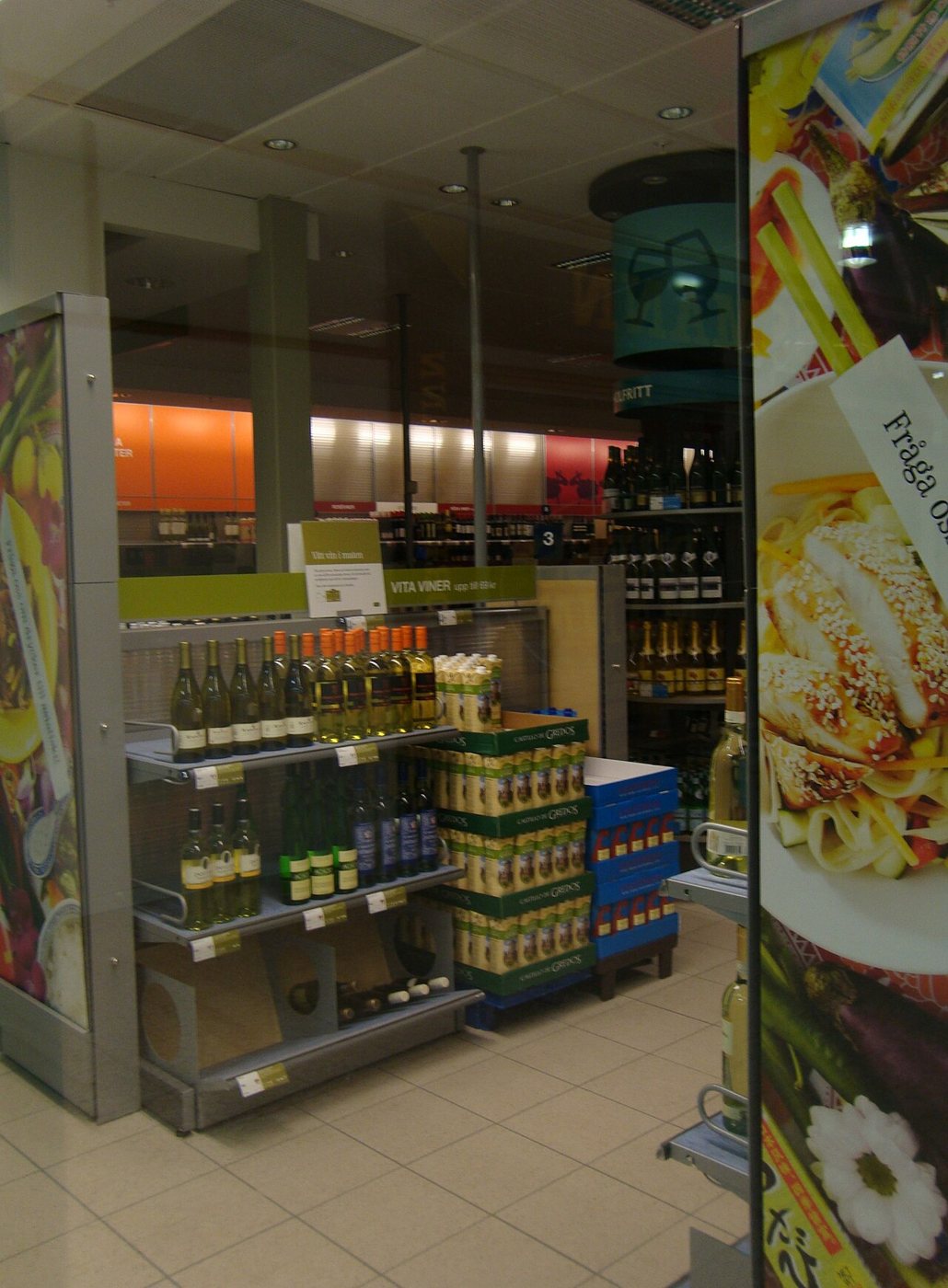
Vinmonopolet launches new products six times a year, in January, March, May, July, September and November, and publishes its launch plan twice a year, with the specifications of the products that will enter the base assortment and the batch assortment (partiutvalg) six to twelve months later. Plan 2026-1, for example, contains the specifications for the January, March and May 2026 launches and is described by Vinmonopolet itself as "a tender document" describing the products it wants to launch.
The process, from the page on the purchasing process:
- Vinmonopolet publishes tenders open to wholesalers, based on the specifications in the plan.
- Wholesalers submit offers by the deadlines; samples are tasted blind by the accredited sensory unit (SPI), which measures how closely the sample matches the specification.
- The decision is based on an overall assessment of price, sensory quality and supply capacity. The results are posted on a portal reserved for wholesalers.
- Prices are in Norwegian kroner, DDP: the wholesaler bears costs and risks up to the store. Vinmonopolet's margin is fixed: 10.40 kroner per litre plus 21 per cent of the purchase price, with a decreasing percentage above 130 kroner and a cap of 250 kroner per unit.
The assortments, from the dedicated page, work as follows: the base (basisutvalget) is the core of the stores, and anything that does not sell in the first year is removed; the batch (partiutvalget) sells out and disappears, from a few hundred to a few thousand bottles; the test (testutvalget) is a six-month trial period in the largest stores, after which sales are measured against neighbouring products on the shelf; the order assortment (bestillingsutvalget) accepts almost anything legal, is in stock in Norway and can be delivered quickly; the special assortment (spesialutvalget) has about twelve launches a year for classic and small producers. Vinmonopolet decides what enters the base and the batch; the wholesaler decides what enters order, supplementary and test. For a typical winery, the easier route is often the order or test assortment, handled by a wholesaler who believes in the wine.
The ICE country profile on Norway (updated February 2026) notes that Vinmonopolet's share of total alcoholic beverage purchases averages 90 per cent, and that wholesalers must be registered with the Norwegian customs directorate: without them, you cannot get in.
Alko: how does it select products and what does it ask of suppliers?
Alko describes its method on the page "How does Alko choose products": the assortment is based on more than 200 product segments, from which a selection plan is drawn up; on that plan Alko continuously publishes product calls, which are public and open to everyone. Suppliers and producers propose products that meet the criteria and send samples; a panel of experts assesses and ranks them, then the laboratory checks safety and the accuracy of the data (alcohol content, sugars). A store offers from 300 to 3,000 products depending on its size, and the more a product is in demand, the more stores stock it.
Alongside the tenders there is the sale-to-order assortment, which Alko itself defines as "an agile channel for listing your product, even in a short time". It can be proposed at any time, without a tender, through Alko's Partner Network; with all the information and a compliant photo, listing takes about two weeks. The seller must be a licensed importer, delivery is DDP warehouse or DDP store (Incoterms 2020), and orders go through Alko's EDI system. There is a T3 category for small producers (up to 100,000 litres a year) with local distribution, reserved for those delivering from Finland.
On the ethical front, Alko works with the other Nordic monopolies: it is a member of amfori BSCI, and all suppliers of alcoholic beverages must sign the amfori code of conduct and commit to promoting it along the supply chain. The signature is requested from the importer, but the commitment falls on the winery: expect questions about working conditions in the vineyard and in the cellar.
Common requirements: bottle, organic, price, samples
| Requirement | Systembolaget (SE) | Vinmonopolet (NO) | Alko (FI) |
|---|---|---|---|
| Who submits the offer | supplier registered in Sweden | wholesaler with agreement | licensed importer |
| Calendar | plan 4 times a year (Mar, Jun, Sep, Dec) | 6 launches a year, plan twice a year | continuous calls on the selection plan |
| Tasting | blind | blind, accredited SPI unit | expert panel + laboratory |
| Route without a tender | special-order assortment | order assortment, test | sale-to-order, about 2 weeks |
| Sustainability | limits on single-use glass weight, voluntary PCF data | criteria in the plan | amfori BSCI code mandatory |
| Delivery | as per request for offer | DDP store, Norwegian kroner | DDP warehouse or store, Incoterms 2020 |
Sources: official pages of the three monopolies and Konkurrensverket report June 2026, read on 2 November 2026.
Two points apply everywhere. The price that counts is the shelf price the monopoly calculates from your offer: taxes, fixed margin and DDP logistics add up, and a wine that costs little in Italy can end up in the wrong price band. Ask your importer to run the calculation before choosing the label to propose. And the sample must match the batch you will then deliver: Vinmonopolet measures conformity to the specification, Alko analyses in the laboratory, and a difference between sample and supply is grounds for exclusion.
How do you prepare six months ahead?
- Read the plans. Download Systembolaget's Excel file and Vinmonopolet's plan, look for the lines with "Italien", "Italia" or your appellation, and note the deadline, volume and price range. For Alko, follow the published calls.
- Choose the importer before the tender. The importer receives the request for offer and searches its portfolio. If your wine is already there, with a technical sheet, price and samples ready, you are in the race; if you come forward afterwards, it is too late. The method for finding them and writing the first email is in finding wine importers abroad.
- Prepare the file. Technical sheet with analysis, empty bottle weight, certifications (organic, vegan, sustainability), availability in bottles per vintage, ex-cellar price and a price list for the quantities requested.
- Send the right samples. One sample per tender, from the vintage you will deliver, with accompanying documents in order.
- Plan for afterwards. If you win, the monopoly measures you by sales: nine months in Sweden, one year in Norway. Ask your importer what it will do to move the wine through the stores and how it will track the ranking.
Frequently asked questions
Can an Italian winery respond directly to a Systembolaget tender?
No. Requests for offer go to suppliers registered with Systembolaget, and the same applies to Vinmonopolet's wholesalers and Alko's licensed importers. The winery takes part through its own importer, who submits the offer and the sample.
How many times a year do the tenders come out?
Systembolaget publishes its launch plan in March, June, September and December; Vinmonopolet launches new products six times a year and publishes its plan twice a year; Alko publishes product calls continuously, based on its selection plan.
Is there a way to get in without winning a tender?
Yes, in all three countries: Systembolaget's special-order assortment (from which 224 items qualified for the permanent assortment in 2025), Vinmonopolet's order and test assortments, and Alko's sale-to-order, which lists in about two weeks.
Does the weight of the bottle really matter?
In Sweden, yes: Systembolaget bans the sale of single-use glass items above the weight limits set for each volume, for wines bottled after 1 March 2024 (Konkurrensverket, June 2026). In the other two countries, sustainability is part of the criteria in the plan and of the code of conduct.
Sources
- Systembolaget: Lanseringsplaner, the published launch plans
- Konkurrensverket: report on the Systembolaget monopoly to the European Commission, June 2026
- Vinmonopolet: Innkjøpsprosess, the purchasing process
- Vinmonopolet: Vareutvalgene, the assortments
- Alko: How does Alko choose products
- Alko: Sale-to-order assortment, for suppliers
- Organic wine importers abroad: who buys and what they ask
- Natural Wine Importers Abroad: Who Buys and What They Want
- Private label wine export: how it works and what buyers ask
- Wine Fairs in Latin America: Meet Importers and Buyers
- Restaurant wine markups abroad: coefficients by country
- Japan Wine Fairs: Foodex Japan and Wine & Gourmet Japan