Vinitaly and foreign buyers: how B2B meetings work and what to prepare
Wines Export Editorial · Last updated:
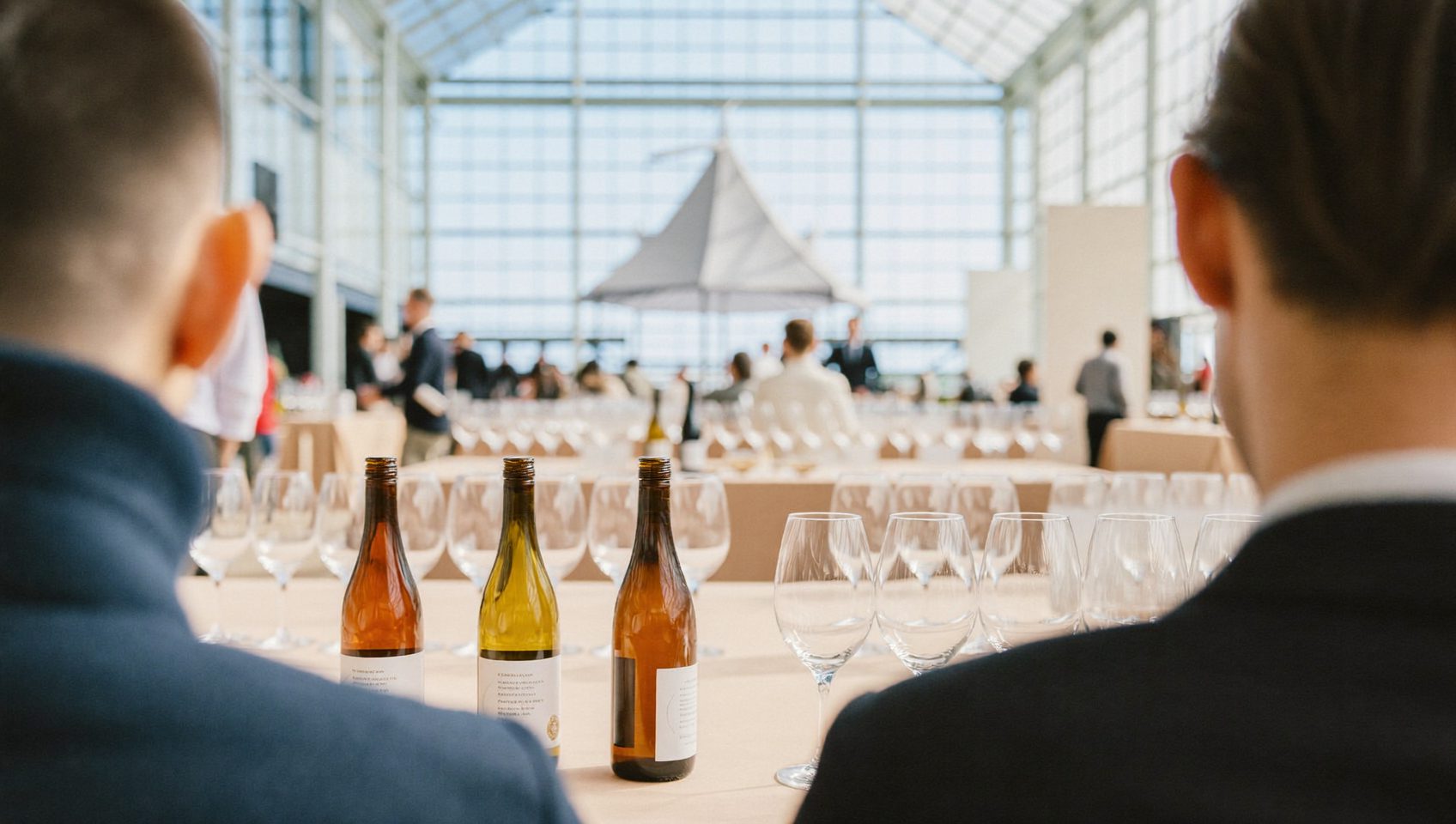
Vinitaly is the fair where many Italian wineries meet a foreign importer for the first time, but the foreign buyer programme is not explained in a simple way. The starting point is this: B2B meetings only work if you arrive in Verona with an agenda built in advance, an exportable price list and samples already ready. Ask the organiser which foreign buyers are invited and which meeting schedules are available, because access is decided before the fair and not at the stand. For the general picture of international wine fairs, you can start from our guide to international wine fairs.
How many foreign buyers attend and from where: the data Veronafiere publishes
The most recent published data concern Vinitaly.USA, the Veronafiere format dedicated to the US market. The third edition, scheduled for 26 and 27 October 2026 at Pier 36 in New York, was presented on board the training ship Amerigo Vespucci to a selected audience of about 40 top buyers from the North American macro-regions. At the time of that announcement the event had 250 confirmed exhibitors and was moving towards selling out the 11,000 square metres of exhibition space available.
The most useful figure for a winery selling in the United States concerns the North East of America, which according to the president of Veronafiere accounts for 19% of total Italian wine consumption by volume and 22% by value. This means the choice of buyer to meet should be made by geographic area, not by fair name.
For the 59th edition of Vinitaly, scheduled for 2027, the same announcement indicates that the incoming campaign aims to involve operators ahead of that event. The sources listed at the end do not publish the total number of foreign operators in Verona nor their breakdown by country: for these figures, check directly the section dedicated to foreign operators on the Veronafiere website before building your meeting plan.
Buyer programme, schedules and masterclasses: how to get in
The Vinitaly.USA buyer programme is not just a list of stands. The organisers describe two days with an agenda of masterclasses, tastings and initiatives dedicated to Vinitaly Tourism, with a focus on wine tourism incoming, alongside the wine2wine appointment for in-depth analysis of market dynamics. The organisers speak of profiled buyers, and this makes the agenda more targeted than a free visit.
For a medium-sized winery, the practical point is understanding which category you fall into. If your wine is not part of the denominations that have already confirmed their presence as a consortium, the most concrete route is often the regional collective stand or the delegation organised by an institutional body. According to the published communications, the confirmed regional collectives concern Friuli-Venezia Giulia, Lazio and Sardinia, while a delegation of 95 companies was organised by ITA-Italian Trade Agency.
When you contact the organiser, ask three things: whether there is a buyer meeting schedule for your market, which documents are needed for registration, and when invitations are closed. Do not assume that a stand is enough to secure a meeting.
What an importer really asks for in a meeting
An importer arriving at the fair has little time and many bottles to taste. They usually ask first of all: at what price the wine leaves the winery, which documents they will receive and who handles customs formalities, and whether the winery already has a registered product or a label compliant with the destination market. If these answers are ready on paper, the conversation moves forward; if they are missing, the buyer moves on to the next producer.
Prepare, therefore, a technical sheet for each wine you bring, with the elements the importer will read first, and a price list in which yield and payment conditions are written clearly. For the content of the sheet, refer to our technical sheet for importers, while for the structure of the price you can consult the page on how to build an export price list with EXW, FOB and currencies.
Price list, technical sheet and samples to have at the stand
At the stand you need samples already packed for temporary shipment, not bottles opened for hours. Bring a reduced selection: too many wines on tasting lengthen the conversation without increasing the chances of a contract. Keep a printed technical sheet and a copy of the price list next to each bottle, and check that prices match those sent before the fair.
A frequent mistake is turning up with a price list that does not distinguish between cellar price and delivered price. An importer comparing several suppliers immediately asks for the basis of the price, and the answer must be prepared in advance. The points that usually block negotiations are covered on the page about common mistakes in negotiations with a foreign importer.
Regional collective stand or own stand: differences in access to buyers
Your own stand gives more control over timing and message, but requires investment and continuous presence. A regional or consortium collective stand places your winery in an area shared with other companies, but the meeting depends more on the organiser than on you. In both cases, access to buyers is decided in the months before the fair, through registrations and agenda requests.
Those without an importer in a country can use the fair to understand who the active distributors in that market are. The useful result is not the contract of the day, but a list of contacts to verify in the following weeks.

What to do in the seven days after Verona
Within the first few days after the fair closes, send each buyer you met a short message with the technical sheet, the price list and the question left open during the meeting. Delay reduces interest, because the buyer returns to the many contacts collected at the fair. Immediately note for each meeting the country, the type of operator and the specific request, so you can separate serious contacts from simple tastings.
For the sequence of messages and checks in the days that follow, our article on how to follow up with importers in the 7 days after the fair describes the method step by step.
Frequently asked questions
How do you get access to meetings with foreign buyers at Vinitaly?
Access depends on the organiser and on the category your winery falls into. Information on schedules and invited operators should be requested from Veronafiere before the fair, not during the event. A stand alone is not enough to secure a meeting with a selected importer.
How many foreign buyers attend Vinitaly?
The third edition of Vinitaly.USA was presented in New York to an audience of about 40 top buyers from the North American macro-regions; the number of buyers present at the event is not stated in the source. The total number of foreign operators in Verona should be checked on the Veronafiere website, as the sources listed at the end do not report it in full.
What should a winery have ready for a meeting with an importer?
You need a technical sheet for each wine, a price list with a clear price basis, and samples already packed for shipment. The buyer also asks who handles customs procedures and which documents they will receive.
Is Vinitaly worthwhile for wineries that do not yet have an importer?
Yes, if the goal is to build a list of contacts for a specific market. The result should be measured in the weeks after the fair, when you check which operators respond.
Sources
- Wine Agents and Brokers Abroad: How They Work and Are Paid
- Wine fairs USA 2026: Vinitaly.USA New York, how to use it
- Asia wine fairs: ProWine Singapore, Vinexpo India, Australia
- Travel retail wine: how Italian wines enter duty free
- China wine fairs: ProWine Shanghai, Chengdu, Interwine
- Restaurant wine markups abroad: coefficients by country