Wine acidification: which acid to use, when to add it and which EU limits to respect
Wines Export Editorial · Last updated:
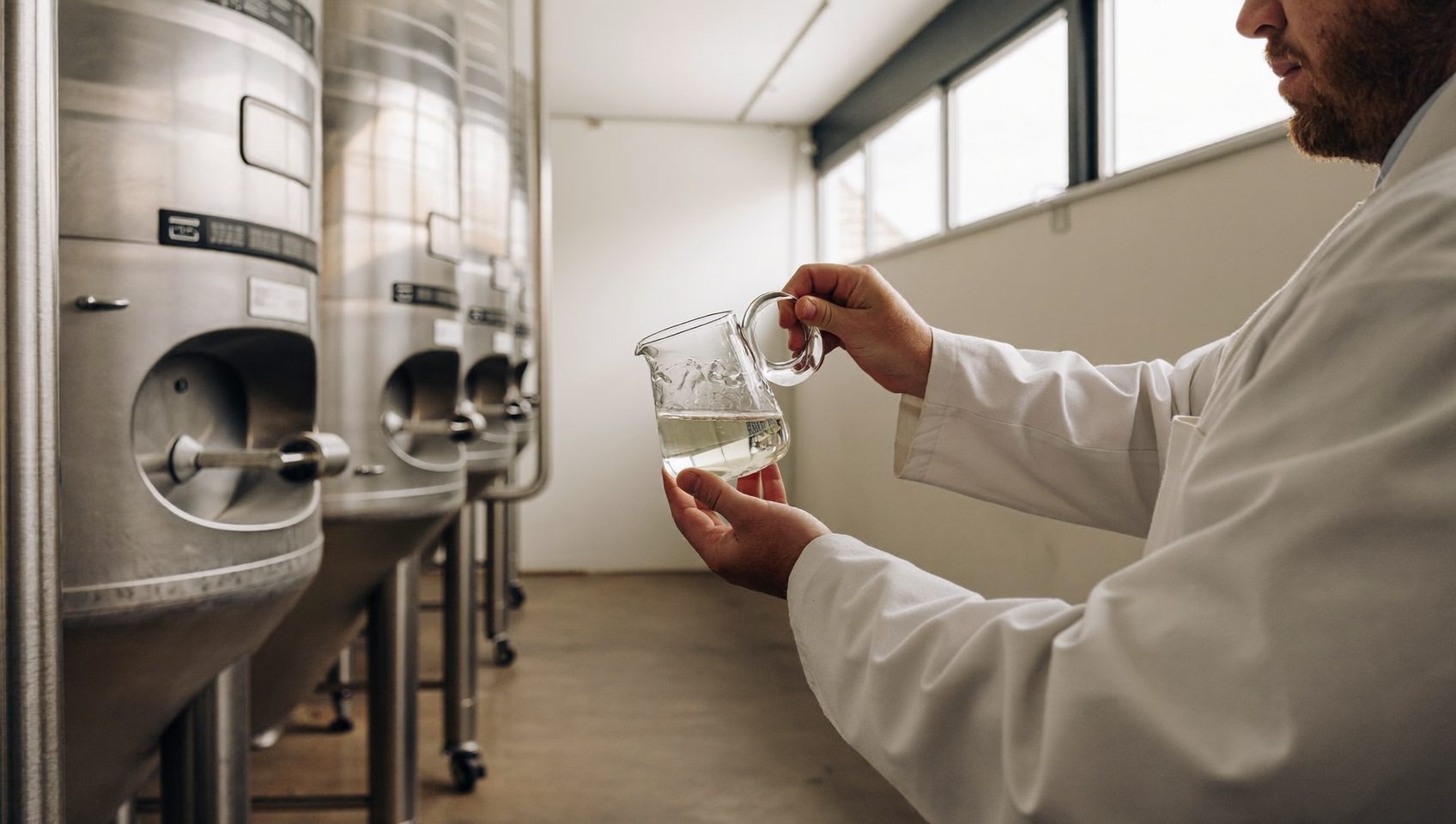
A wine acidifier is needed when the wine comes from the vineyard with low acidity, for example after a hot vintage or grapes harvested too ripe. European regulation allows only a few acids for this purpose: L(+) tartaric acid, L(-) or DL malic acid and lactic acid. The maximum limit is 4 g/l expressed as tartaric acid. The quantity to add is not chosen from a table but from the analysis of your must or wine, comparing titratable acidity and pH with the target you have in mind. This article explains which acid to use, at which stage, which limits to respect and which mistakes to avoid.
When acidification is needed, and when it is not
Before adding any acid, it is worth asking why the wine tastes flat. Delegated Regulation (EU) 2019/934 identifies as legitimate purposes producing wines that are balanced in taste, favouring good biological evolution and maturation, and correcting insufficient natural acidity. The latter may depend on the climate of the region or on cellar practices that lower natural acidity.
Acidifying is not always the answer. If the drop in acidity comes from a late harvest, from a batch of very ripe grapes or from an intense malolactic fermentation, the problem should be read in advance in the analyses. The wine may seem weak even when it is in fact well balanced, with higher sugars and alcohol, and then the chemical intervention worsens the profile. The overview of remedies and possible corrections is in the corrections and remedies page, which also covers interventions other than adding acids.
To understand how acidity is measured, what its relationship with pH is and why a low value in grams is not enough on its own, the chemical parameters page reports the basic analytical references. The wine compounds: acids and sugars page explains instead the role of individual acids in the finished wine.
Tartaric, malic, lactic, citric: the differences
The first criterion is regulatory, not taste. Regulation 2019/934 states that lactic, L(-) or DL malic and L(+) tartaric acids are the only acids that may be used to acidify. Acids that wineries keep in stock as crystals or powder must therefore fall into one of these three families. If the commercial product contains anything else, it should not be used without a specific check against the text of the regulation. The list of permitted practices and their limits is summarised in the authorised oenological practices page, useful as a starting point before reading the official text.
| Acid | Permitted for acidification (reg. 2019/934) | What changes in the cellar |
|---|---|---|
| Tartaric L(+) | Yes | It is the natural acid of the grape. It can precipitate as potassium bitartrate, especially with cold, so the effect must be checked after stabilisation. |
| Malic L(-) or DL | Yes | During malolactic fermentation it turns into lactic acid, so it loses part of its acidifying effect if the wine goes through malolactic fermentation. |
| Lactic | Yes | It can give the wine a softer sensation than the other two, and it does not transform to the same extent during later stages. |
| Citric | Not listed among the acids the regulation indicates for acidification | Before using it, check in the consolidated text of the regulation whether its use is allowed for your product and within which limits. |
Tartaric acid is the one most used to correct must. Malic and lactic acids are more often used when the wine must remain on soft tones or when malolactic fermentation is expected. In any case the choice should be agreed with your oenologist and with the analysis in hand.

Must or wine: the right moment
The OIV International Code of Oenological Practices places acidification among must treatments, in the part dedicated to acidity adjustment. The code then distinguishes chemical acidification, which uses added acids, from microbiological acidification, which occurs with selected yeasts, and from other physical methods such as treatment with electrodialysis membranes or cation exchange. For cellar work, the useful distinction is this: an intervention on the must allows you to correct acidity before the wine starts fermenting and before the pH settles, while an intervention on the wine takes place after fermentation, with its effects already partly visible.
The regulation forbids combining chemical acidification and chemical deacidification in the same process. A winemaker who has a must with excessive acidity and realises it halfway through the process must therefore choose one direction only. If the batch has been deacidified, adding acids to bring it back is a step that must be assessed carefully, because the calculation changes and the regulation does not treat it as a simple correction.
In practice it is advisable to acidify the must when the analysis already indicates it at the crushing or fermentation start stage, and the wine only if the correction cannot wait. In both cases, the product should be dissolved in water or in a portion of must before addition, so that it distributes evenly.
EU limits by wine region
The official texts set a single limit. After the amendments to Delegated Regulation (EU) 2019/934, the maximum permitted for acidification is 4 g/l expressed as tartaric acid, equal to about 53.3 milliequivalents per litre, and there is no longer any distinction of limits between wines and other products. The value of 4 g/l also appears in the practical sheets published by Federvini after the amendment to regulation 934.
These sources do not set different thresholds for individual Italian or European wine regions. Before acidifying, therefore, check the consolidated text of regulation 2019/934 and the specification of your designation of origin for any additional requirements. A specification may be stricter than the general regulation, and in that case the lower limit applies.
The limit refers to the added acid and must always be expressed in the same unit, that is, in grams per litre of tartaric acid. If the product in your warehouse is a blend or an acid other than tartaric, the conversion must be done before calculating the dose, otherwise the final result may exceed the limit without you noticing.
Doses and laboratory tests
Official sources do not set a reference dose valid for every wine. The dosage depends on the starting acidity, the pH, the grape variety and the result you want to achieve. For this reason the correct method is to measure, add in small quantities and repeat the analysis.
The procedure in the cellar can follow these steps:
- Measure the titratable acidity and pH of the must or wine, using a laboratory method or a calibrated instrument.
- Define the target acidity based on the type of wine and the designation.
- Calculate the difference between current and target acidity, expressed in grams per litre of tartaric acid.
- Convert the quantity of product to add, taking into account the purity indicated on the supplier's technical sheet.
- Add part of the quantity, let it homogenise and measure again.
- Complete the correction only if the result is still below the target, and do not exceed the 4 g/l limit.
Laboratory tests remain the decisive step. An analysis done before and one after the correction, on the same sample and with the same method, tell you whether the intervention worked. Keep the results together with the cellar register, because in case of inspection they are the proof of what you did and of compliance with the limits.
Common mistakes
The first mistake is adding the dose calculated by eye, without an up-to-date analysis. The starting value changes with fermentation, racking and cold, and a measurement from a week earlier may no longer be valid.
The second is exceeding the limit by adding several interventions. If you acidify the must and then again the wine, you must keep the total count, otherwise the limit is exceeded without you noticing.
The third is underestimating precipitation. Tartaric acid, once added, can crystallise as bitartrate, especially if the wine is brought to low temperatures. A wine that looks clear after correction may form crystals in the following months, and stabilisation must be planned before bottling.
The fourth is ignoring malolactic fermentation. If the wine goes through malolactic fermentation after the addition of malic acid, part of the acidity is lost. The result is that final acidity can drop below the target, with a wine that seems flat again.
The fifth is relying on taste as the only tool. A wine may taste sharp and in fact be within the norm, or seem balanced with low acidity but a pH poorly suited to preservation. Taste should always be checked against the numbers.
Frequently asked questions
Which acid should I use to acidify wine?
Regulation 2019/934 allows L(+) tartaric acid, L(-) or DL malic acid and lactic acid. Tartaric is the most used to correct must, while malic and lactic are chosen when malolactic fermentation is expected or when a softer taste is wanted. Check the choice with your oenologist.
What is the maximum acidification limit?
The limit is 4 g/l expressed as tartaric acid, equal to about 53.3 milliequivalents per litre, according to Delegated Regulation (EU) 2019/934 as amended. Also check the specification of your designation, which may be stricter.
Can I acidify a wine that I have already deacidified?
The regulation does not allow combining chemical acidification and chemical deacidification in the same process. If the batch has been deacidified, the case should be assessed carefully before intervening, and it is advisable to seek technical advice.
How do I work out how much acid to add?
Measure titratable acidity and pH, calculate the difference from the target, add part of the dose, measure again and complete only if needed. There is no fixed dose valid for every wine.
Sources
- Aglianico del Vulture DOC and Superiore DOCG: Rules and Zone
- Yeast for Sparkling Wine Base and Second Fermentation
- Albeisa bottle: history and who can use it for export
- Yeast nutrients for wine: nitrogen, thiamine and EU limits
- Prosecco Alcohol Content: DOC and DOCG Minimum ABV
- Wine lab analysis tools: what a winery really needs