Aglianico del Vulture DOC and Superiore DOCG explained: rules, 15 municipalities, Superiore, Riserva, sparkling, labels and export
Wines Export Editorial · Last updated:
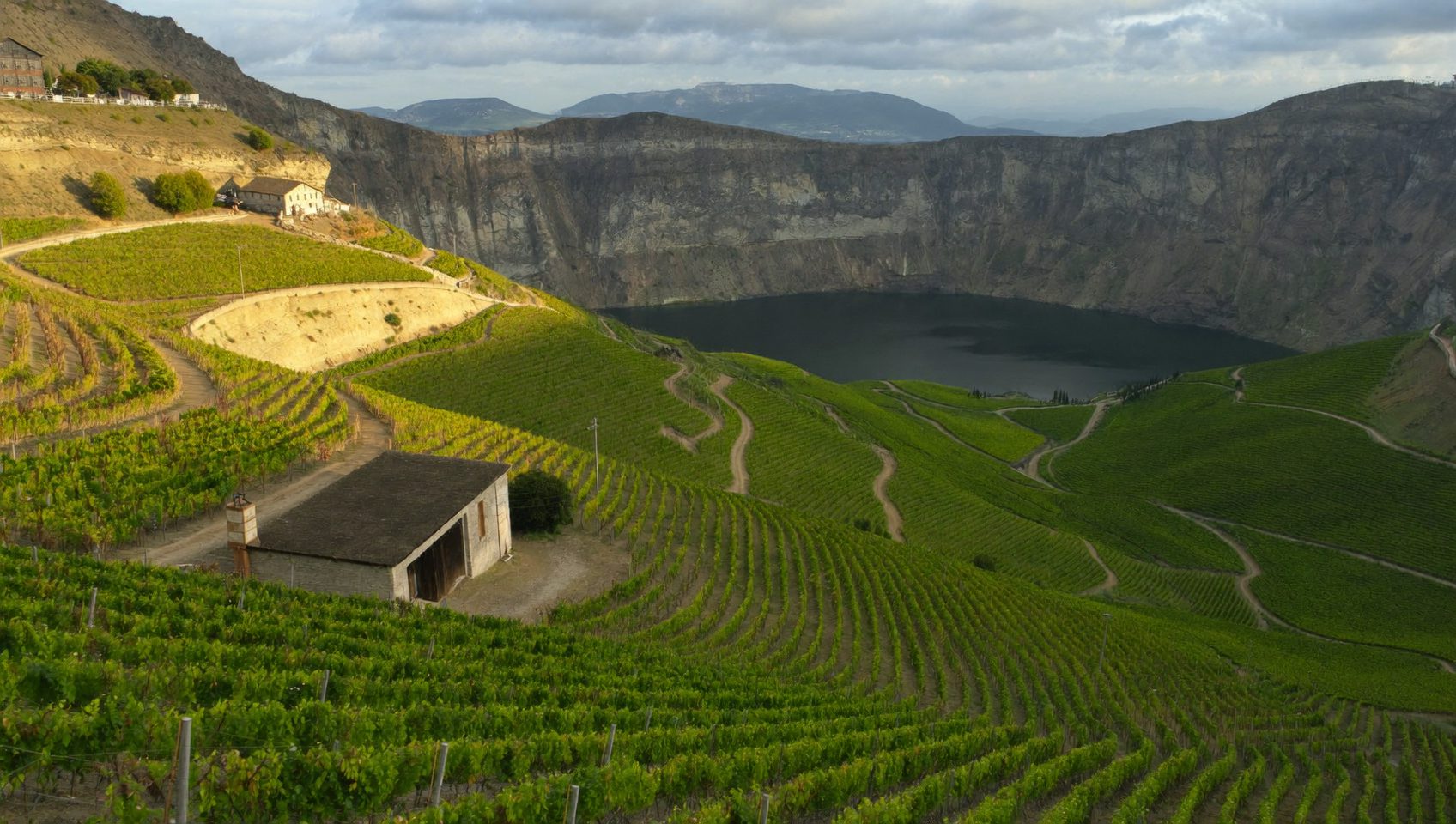
Aglianico del Vulture is the red wine of Monte Vulture, an extinct volcano in the north of Basilicata, made only from the Aglianico del Vulture and/or Aglianico grape varieties grown in 15 municipalities of the province of Potenza (Aglianico del Vulture DOC and Aglianico del Vulture Superiore DOCG disciplinari, art. 2, 3 and 9). There are two denominations with the same zone and the same grape: the DOC, which covers a still red and a sparkling wine and may be released from 1 September of the year after the harvest, and the Aglianico del Vulture Superiore DOCG, with the Superiore and Superiore Riserva types, which age at least 12 months in wood and 12 in bottle (24 in wood for the Riserva) and are released from 1 November of the third year after the harvest, or of the fifth for the Riserva (disciplinari, art. 1 and 5). The DOC was approved by presidential decree on 18 February 1971; the DOCG was created by the ministerial decree of 2 August 2010, published in Gazzetta Ufficiale n. 188 of 13 August 2010, and is the only DOCG in Basilicata (Federdoc list of Basilicata denominations). Both texts give the decree of 7 March 2014 as their latest amendment, and the EU register eAmbrosia shows no amendment in progress (eAmbrosia, files PDO-IT-A0222 and PDO-IT-A0527, checked on 12 November 2026).
This page is the full guide to the two denominations, including what a buyer abroad should check before listing them. The grape and the other denominations that use it are covered in Aglianico: the grape and its denominations, the other great Aglianico DOCG in Taurasi DOCG: zone, Aglianico, ageing and Riserva, and the town where many wineries are based in Rionero in Vulture; the region and the province are in Basilicata wine and exporting wine from Potenza.
What Aglianico del Vulture is and where it comes from
Aglianico del Vulture is a single-variety red, and the variety has two official names in the disciplinari: Aglianico del Vulture N. and Aglianico N., which may be used alone or together (DOC and DOCG disciplinari, art. 2). No other grape is allowed, not even in a small share, in either the DOC or the DOCG.
The DOCG disciplinare tells a long story. Latin authors such as Pliny, Strabo, Virgil and Martial describe an advanced viticulture in the area, and the poet Horace, born in Venosa, praised the wine of his homeland in his Odes. For centuries cellars were dug into caves: in Melfi an inventory of 1589 counted 110 of them, and the same was true in Rionero, Barile, Maschito and Ripacandida. At the 1906 Milan World Exhibition ten samples of Vulture wines were praised as "wines of body, fragrant, fine", and with the Ampélographie of Pierre Viala and Victor Vermorel, published in Paris between 1901 and 1910, Aglianico joined the internationally known grape varieties (DOCG disciplinare, art. 9).
The 1971 DOC was amended in 1987, 2010, 2011 and 2014; the decree of 2 August 2010 that amended it is the same one that recognised the Superiore DOCG (headers of the two disciplinari). Compliance with both denominations is checked by the Chamber of Commerce of Potenza, the public authority designated by the Ministry (art. 10).
The zone: 15 municipalities on the slopes of Vulture
DOC and DOCG share the same zone: the entire territory of 15 municipalities in the province of Potenza.
| Element | What the disciplinari require | Source |
|---|---|---|
| Municipalities | Rionero in Vulture, Barile, Rapolla, Ripacandida, Ginestra, Maschito, Forenza, Acerenza, Melfi, Atella, Venosa, Lavello, Palazzo San Gervasio, Banzi, Genzano di Lucania | art. 3 |
| Exclusions | the three administrative enclaves of Sant'Ilario, Riparossa and Macchia belonging to Atella | art. 3 |
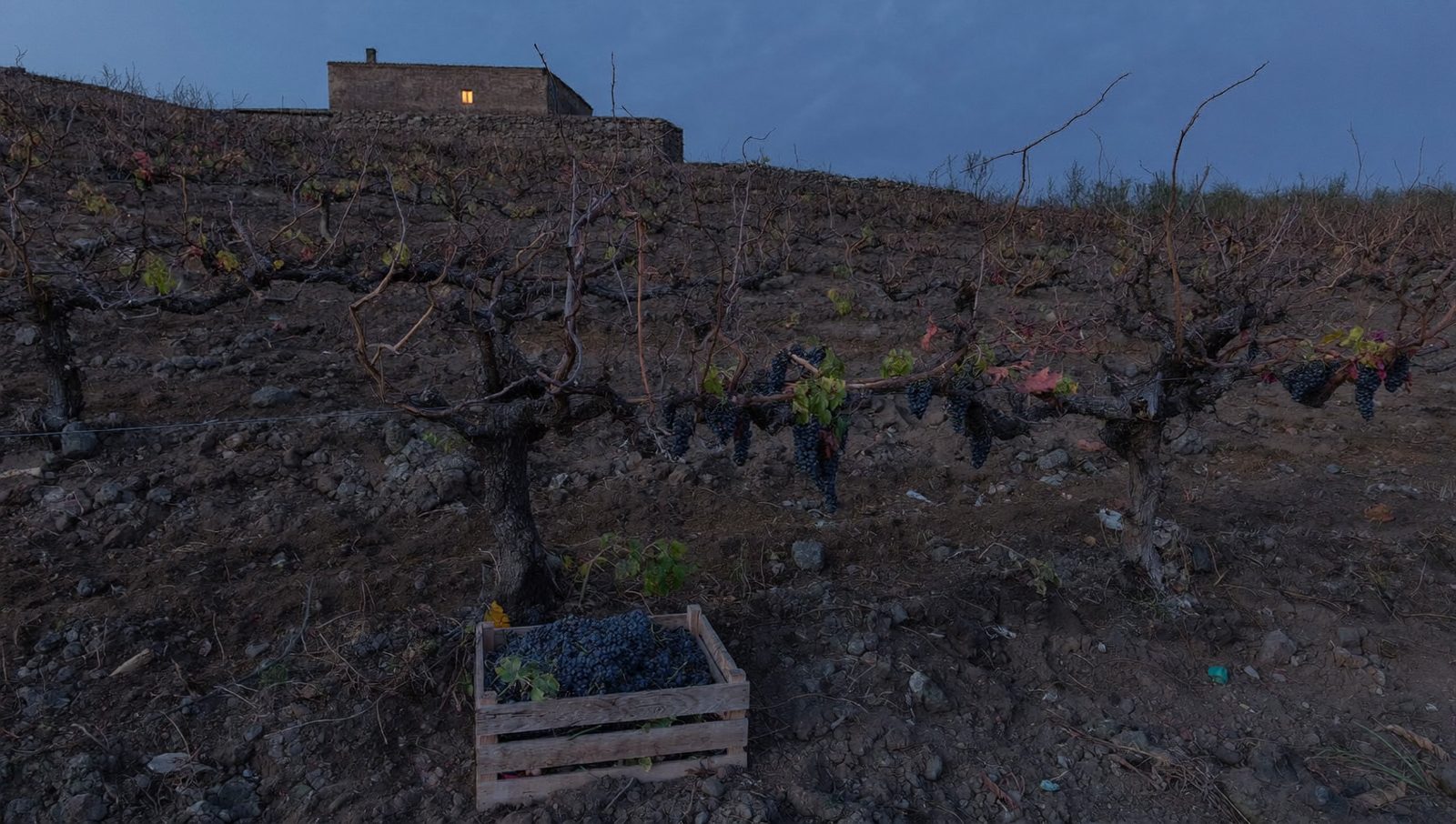
| Eligible vineyards | only hillside plots on mainly volcanic soils, between 200 and 700 metres; for the Superiore, entered in a dedicated register | art. 4 |
| Training | alberello (bush vine) or simple vertical trellis; at least 3,350 vines per hectare for new plantings | art. 4 |
| Aspect | mainly east and south-east | art. 9 |
| Rainfall | 650 to 1,300 mm a year, 650 to 750 on average, mostly in autumn and winter; under 100 mm in summer | art. 9 |
Vulture is an extinct volcano, active until the Late Pleistocene, with its summit at 1,327 metres. The eruptions, which began about 800,000 years ago, dammed rivers and formed lakes that later dried out, leaving a subsoil that alternates volcanic tuff and sandstone tuff; the tuff acts as a water reserve in the dry summer months. Soils range from sandy and sandy-pozzolanic to silty clay (disciplinari, art. 9).
July and August are dry, with summer averages of 25 °C and peaks of 35 °C brought by winds from Africa; the massif draws in air currents and breezes that cool the nights. Aglianico buds late and usually escapes spring frosts, then ripens slowly and is picked in October and November, when rain is already heavy and snow can make harvesting difficult (disciplinari, art. 9). Higher ground, up to 800 metres, mostly goes to other grapes such as Malvasia Bianca di Basilicata (DOCG disciplinare, art. 9).
On 19 September 2025 the Città del Vino association named a joint bid by 14 Vulture municipalities, led by Ripacandida, "Italian Wine City" for 2026 (WineNews, 19 September 2025).
DOC and Superiore DOCG: the requirements side by side
Same grape and same zone; yields, alcohol, oak, bottle and release date differ.
| Requirement | Aglianico del Vulture DOC | Aglianico del Vulture DOC sparkling | Aglianico del Vulture Superiore DOCG | Superiore Riserva | Source |
|---|---|---|---|---|---|
| Maximum grape yield | 10 t/ha | 10 t/ha | 8 t/ha | 8 t/ha | art. 4 |
| Minimum natural alcohol of the grapes | 12.00 percent | 11.00 percent | 13.00 percent | 13.00 percent | art. 4 |
| Yield in wine | 70 percent | 70 percent | 65 percent, 52 hectolitres per hectare | 65 percent, 52 hectolitres per hectare | art. 5 |
| Emergency irrigation | allowed | allowed | forbidden | forbidden | art. 4 |
| New vineyards | no limit | no limit | wine only from the spring of the fifth year after planting | as Superiore | art. 4 |
| Minimum total alcohol | 12.50 percent | 12.50 percent | 13.50 percent | 13.50 percent | art. 6 |
| Minimum total acidity | 4.5 g/l | 5.0 g/l | 4.5 g/l | 4.5 g/l | art. 6 |
| Minimum dry extract | 22.0 g/l | 18.0 g/l | 26.0 g/l | 26.0 g/l | art. 6 |
| Sweetness | dry to off-dry (abboccato); off-dry no more than 10 g/l | brut to extra dry | dry | dry | art. 6 |
| Ageing | none set | natural second fermentation in bottle, at least 9 months of production | at least 12 months in wood and 12 in bottle | at least 24 months in wood and 12 in bottle | art. 5 |
| Release | from 1 September of the year after the harvest | no date set; the 9-month production period applies | from 1 November of the third year after the harvest | from 1 November of the fifth year after the harvest | art. 5 |
| Inside the zone | winemaking and bottling | winemaking, sparkling production and bottling | winemaking, ageing and bottling | winemaking, ageing and bottling | art. 5 |
| Vintage on the label | compulsory | not compulsory | compulsory | compulsory | art. 7 |
| Bottle | glass, up to 6 litres | glass, up to 6 litres | glass, up to 3 litres | glass, up to 3 litres | art. 8 |
Sources: Aglianico del Vulture DOC and Aglianico del Vulture Superiore DOCG disciplinari, Ministry of Agriculture texts updated to the decree of 7 March 2014.
In practice, in November 2026 an Aglianico del Vulture DOC 2025 may already be on sale since 1 September 2026, a 2023 Superiore from 1 November 2026 and a 2021 Superiore Riserva from 1 November 2026. If the yield in wine exceeds the limit, the excess loses the denomination up to 75 percent for the DOC and 70 percent for the DOCG; beyond that, the whole batch loses it (art. 5).
Riserva exists only in the DOCG: the DOC disciplinare bans any qualification it does not provide for, and its only types are the red and the sparkling wine (DOC disciplinare, art. 1 and 7). "Superiore" is not a free adjective either: it is part of the DOCG's name.
Two slips in the official text are worth knowing when you check a technical sheet. In the DOCG disciplinare, the paragraphs on release and on the wine's characteristics call it "Aglianico del Vulture" without "Superiore", but they refer to the DOCG (art. 5 and 6). In the DOC disciplinare, the section on the link with the territory mentions a limit of 8 tonnes per hectare, while the binding rule in article 4 sets 10 tonnes (DOC disciplinare, art. 4 and 9).
The sparkling wine: the least known type
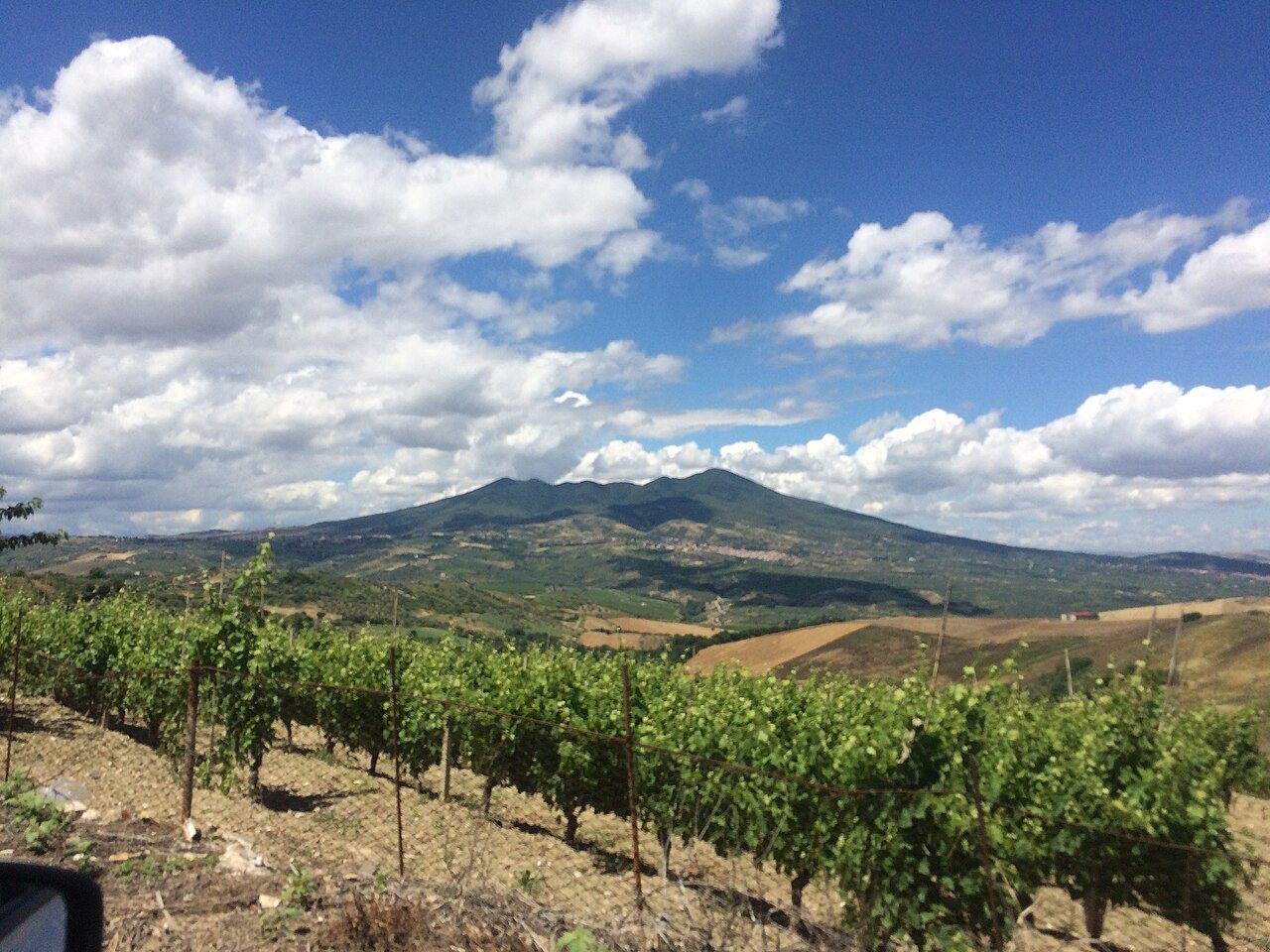
The DOC includes an Aglianico del Vulture spumante, ruby red tending to garnet, with fine, persistent bubbles, from brut to extra dry. It may only be made by natural second fermentation in the bottle, with at least 9 months of production, and the sparkling stage must also take place inside the zone (DOC disciplinare, art. 1, 5 and 6).
The disciplinare explains that this is not a recent invention. Towns such as Rionero, Ripacandida, Rapolla and Barile sold large quantities of sparkling wine outside the region for weddings, patron saints' feasts and religious holidays, with yearly orders from the Vatican as well. The first sparkling wines date from the early 1900s and the peak from the 1950s and 1960s, when sparkling wine sold at an average price three to four times that of still wine. The traditional method let grapes picked in November, too rich in sugar to finish the first fermentation, referment in the bottle: the result had 3 to 6 bar of pressure and 20 to 60 grams of sugar per litre, was not disgorged, and was closed with cork and wire cage or with string (DOC disciplinare, art. 9).
The label: place names, "vigna" and banned words
| Rule | Aglianico del Vulture DOC | Aglianico del Vulture Superiore DOCG | Source |
|---|---|---|---|
| Adjectives | "extra", "fine", "scelto", "selezionato" and similar banned | "extra", "fine", "scelto", "selezionato" and similar banned | art. 7 |
| Additional place names | names of hamlets, municipalities or administrative areas listed in annex A, which gives 70 places in one list and 72 in a second, adding Migliarese and Titolo | one of the geographical indications in the annex, referring to administrative units, contrade or hamlets: 70 places | art. 7 and annex A |
| "Vigna" with the vineyard name | not mentioned in the disciplinare | allowed under the conditions set by law | art. 7 |
| Brands and company names | allowed if not laudatory and not misleading | allowed if not laudatory and not misleading | art. 7 |
| Vintage | compulsory, except for the sparkling wine | compulsory | art. 7 |
| Container | glass up to 6 litres; closures under the rules in force | glass bottles up to 3 litres; closures under the rules in force | art. 8 |
The places in the annex include Iatta, Macarico, Gelosia, Il Titolo, Piano dell'Altare and Serra del Prete. As with other place names in Italian disciplinari, they say where the grapes come from, not a quality level: the text sets none.
What kind of wine it is: the description in the disciplinari
The disciplinare describes Aglianico del Vulture DOC as ruby red, with a typical, pleasant and intense nose and a palate from dry to off-dry, "properly tannic" and savoury (DOC disciplinare, art. 6). The Superiore is deep ruby tending to garnet, dry, tannic, savoury, persistent and balanced, with a possible light hint of wood; the Riserva may show orange tints (DOCG disciplinare, art. 6).
The section on the territory adds good acidity, mainly fruity aromas of berries and stone fruit with floral notes, which in older wines give way to spicy notes linked to the wood; on the palate a touch of bitterness and a possible residual astringency typical of the grape, with a structure that supports great longevity (DOCG disciplinare, art. 9). For a technical sheet aimed at buyers abroad, it pays to use the same categories and to state the actual time in wood and in bottle, not just the legal minimum: wine technical sheet for importers.
Aglianico del Vulture and Taurasi compared
Two Aglianico reds, in two regions, with different rules.
| Aglianico del Vulture DOC | Aglianico del Vulture Superiore DOCG | Taurasi DOCG | |
|---|---|---|---|
| Zone | 15 municipalities, province of Potenza | 15 municipalities, province of Potenza | 17 municipalities, province of Avellino |
| Aglianico | 100 percent | 100 percent | at least 85 percent; other non-aromatic red grapes up to 15 |
| Maximum grape yield | 10 t/ha | 8 t/ha | 10 t/ha |
| Minimum alcohol | 12.50 percent | 13.50 percent | 12.00 percent; 12.50 for the Riserva |
| Ageing | none set | 12 months in wood and 12 in bottle; Riserva 24 in wood and 12 in bottle | 3 years, 1 in wood; Riserva 4 years, 18 months in wood, from 1 December of the harvest year |
| Where the wine is made | winemaking and bottling inside the zone | winemaking, ageing and bottling inside the zone | winemaking and ageing in the province of Avellino |
Sources: Aglianico del Vulture DOC and Superiore DOCG disciplinari (art. 2 to 6) and Taurasi DOCG disciplinare (art. 2 to 6).
The most visible difference for a buyer: Vulture is pure Aglianico and must be bottled in the zone, while Taurasi allows 15 percent of other grapes and requires three years of ageing even for the basic version. The Taurasi rules are in Taurasi DOCG; Aglianico del Taburno and the Campania DOCs that use Aglianico in Aglianico: the grape and its denominations.
Buying Aglianico del Vulture abroad: what to check
The denomination is protected by the Consorzio di Tutela Aglianico del Vulture, based in Rionero in Vulture (eAmbrosia, PDO-IT-A0222). According to the Italian daily Avvenire, the Consorzio was founded in 1971 and brings together 35 producers and more than 300 growers; in March 2025, together with the consortium of Vulture PDO olive oil, it presented in Rome TwoEu, a three-year communication plan worth 800,000 euros, funded by the European Union and aimed at Italy and Germany (Avvenire, 12 March 2025). No recent export figures from the Consorzio and no certified volumes by type are publicly available: ask the producer for the certified quantity of the vintage on offer.
Before listing an Aglianico del Vulture, check six points, all set out in the disciplinari:
- Exact denomination. "Aglianico del Vulture" is DOC; "Aglianico del Vulture Superiore" is DOCG. A Riserva can only be a Superiore Riserva (art. 1).
- Vintage and release date. The Superiore may not be released before 1 November of the third year after the harvest, the Riserva before the fifth (DOCG, art. 5).
- Wood and bottle. The Superiore must have spent at least 12 months in wood and 12 in bottle, the Riserva 24 and 12 (DOCG, art. 5).
- Style. Only the DOC may be off-dry, with at most 10 g/l of sugar; the Superiore is dry (art. 6).
- Place of bottling. For both denominations it must be inside the production zone (art. 5).
- Format. Up to 6 litres for the DOC, up to 3 litres for the Superiore (art. 8).
Germany is the foreign market the Consorzio chose for its communication programme: wine importers in Germany. The full list of markets is in wine importers by country, and the weight of the DOCG label in trade negotiations in exporting DOCG wines.
Frequently asked questions
What is the difference between Aglianico del Vulture DOC and Superiore DOCG?
Same zone and same grape, used on its own. The Superiore has a lower yield (8 t/ha against 10), a minimum alcohol of 13.50 percent against 12.50, at least 12 months in wood and 12 in bottle, and is released from 1 November of the third year after the harvest; the DOC may be released from 1 September of the following year (disciplinari, art. 4 to 6).
Is there an Aglianico del Vulture Riserva?
Only as Aglianico del Vulture Superiore Riserva, within the DOCG: at least 24 months in wood and 12 in bottle, on sale from 1 November of the fifth year after the harvest. The DOC has no Riserva (disciplinari, art. 1 and 5).
Which municipalities produce Aglianico del Vulture?
Fifteen municipalities in the province of Potenza: Rionero in Vulture, Barile, Rapolla, Ripacandida, Ginestra, Maschito, Forenza, Acerenza, Melfi, Atella, Venosa, Lavello, Palazzo San Gervasio, Banzi and Genzano di Lucania, excluding three administrative enclaves of Atella (disciplinari, art. 3).
Is there a sparkling Aglianico del Vulture?
Yes, within the DOC: naturally refermented in the bottle for at least 9 months, from brut to extra dry, with at least 12.50 percent alcohol. The vintage on the label is not compulsory (DOC disciplinare, art. 1 and 5 to 7).
Can Aglianico del Vulture be bottled outside the zone?
No. Both disciplinari require winemaking and bottling inside the production zone, and the DOCG also requires the compulsory ageing to take place there (disciplinari, art. 5).
Is Aglianico del Vulture the "Barolo of the South"?
That is a trade nickname and does not appear in the disciplinari. On labels and price lists only the name of the denomination should be used.
Sources
- Aglianico del Vulture DOC disciplinare, Ministry of Agriculture text updated to the decree of 7 March 2014 (copy hosted by AIS)
- Aglianico del Vulture Superiore DOCG disciplinare, Ministry of Agriculture text updated to the decree of 7 March 2014 (copy hosted by AIS)
- Italian Ministry of Agriculture, list of PDO and PGI wine disciplinari
- eAmbrosia, Aglianico del Vulture, PDO-IT-A0222 and Aglianico del Vulture Superiore, PDO-IT-A0527
- Taurasi DOCG disciplinare (copy hosted by AIS)
- Federdoc, the denominations of Basilicata
- Avvenire, 12 March 2025, Vulture opens up to new markets with the TwoEu project
- WineNews, 19 September 2025, Vulture named Italian Wine City 2026
- Albeisa bottle: history and who can use it for export
- Wine acidification: which acid, when and how much
- Prosecco Alcohol Content: DOC and DOCG Minimum ABV
- Yeast for Sparkling Wine Base and Second Fermentation
- Sparkling wine base Babo degrees: when to harvest Chardonnay
- Yeast nutrients for wine: nitrogen, thiamine and EU limits