What Is the Alcohol Content of Prosecco: Minimum ABV Under the DOC and DOCG Rules for Sparkling, Frizzante and Still, and What Changes with Brut, Extra Dry and Dry
Wines Export Editorial · Last updated:
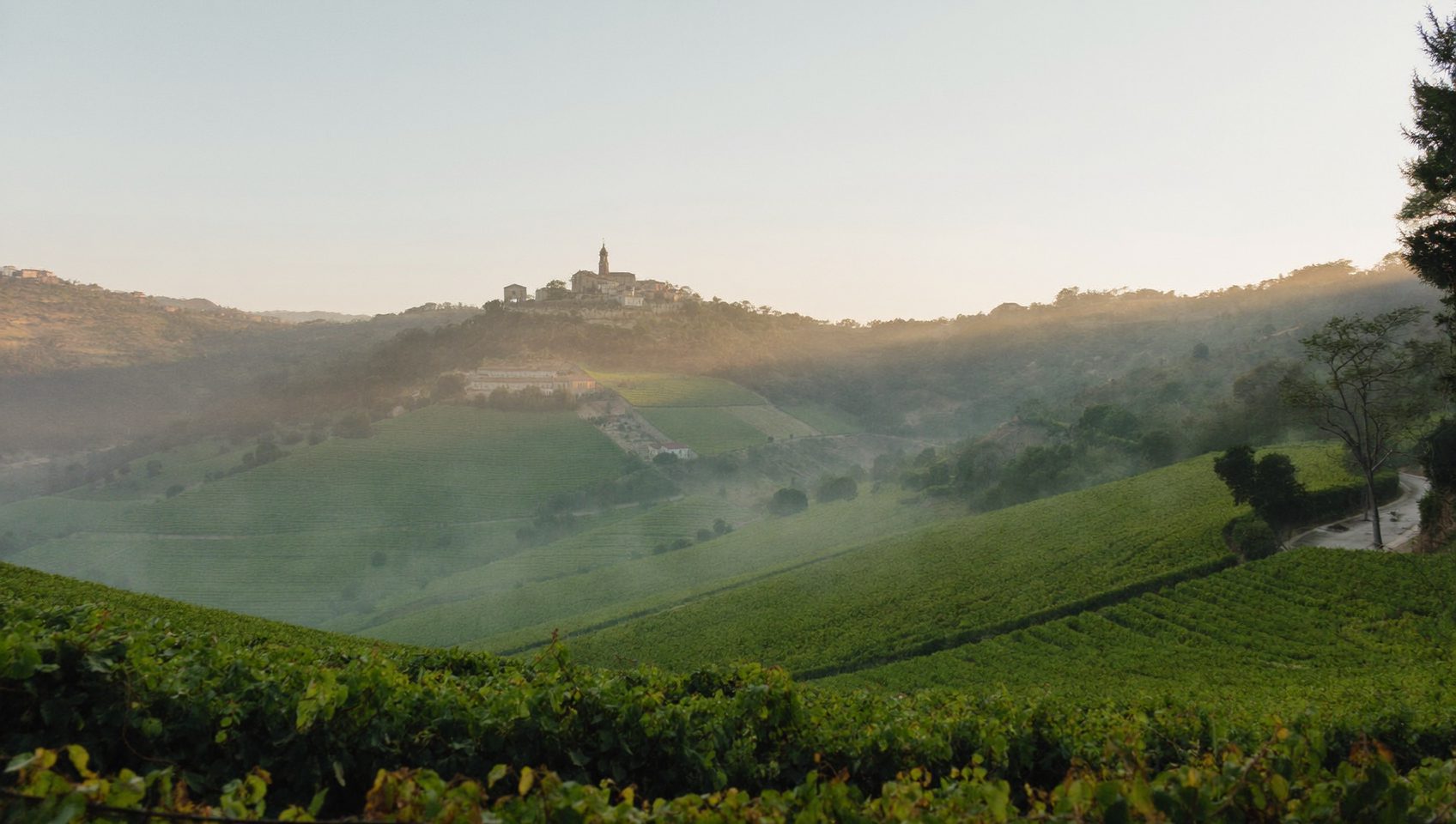
The alcohol content of Prosecco at release for consumption starts from a legal minimum of 10.50% vol for the still (tranquillo) and frizzante versions, rises to 11.00% vol for all sparkling (spumante) versions (including Rosé and the Superiore DOCG types), and reaches a minimum of 11.50% vol for Superiore di Cartizze. These values indicate the minimum total alcoholic strength by volume set by the production specifications approved by the Ministry of Agriculture (MASAF). In commercial practice, nearly all sparkling bottles show on the label an actual alcoholic strength between 11.0% and 11.5% vol, with variations linked to the vintage and to residual sugar. For your winery, knowing and managing this parameter to one-tenth of a degree is not only a matter of meeting compliance checks: in markets that tax wine by each degree of alcohol, such as the United Kingdom, half a degree of difference directly changes the tax burden per case.
The short answer: degrees by type and denomination
When a foreign importer or a retail purchasing director asks for the technical sheet of your Prosecco, the alcohol figure must be placed within the three official denominations: Prosecco DOC, Conegliano Valdobbiadene Prosecco DOCG and Asolo Prosecco DOCG. The specifications distinguish two parameters: the minimum natural alcoholic strength by volume of the grapes at harvest, and the minimum total alcoholic strength by volume of the finished wine at release for consumption.
To get a clear picture of what a foreign buyer should know about the Prosecco denomination, the fundamental distinction concerns the second fermentation. The still (tranquillo) and frizzante types have a lower minimum threshold than sparkling wine, because the second fermentation in autoclave (Martinotti method) produces additional alcohol as well as carbon dioxide.
| Denomination | Type | Minimum natural grape strength (% vol) | Minimum total strength at release (% vol) | Minimum total acidity (g/l) | Minimum non-reducing extract (g/l) |
|---|---|---|---|---|---|
| Prosecco DOC | Still (tranquillo) | 9.50% | 10.50% | 4.5 | 14.0 |
| Prosecco DOC | Frizzante | 9.00% | 10.50% | 4.5 | 14.0 |
| Prosecco DOC | Spumante and Spumante Rosé | 9.00% | 11.00% | 4.5 | 14.0 |
| Conegliano Valdobbiadene DOCG | Still and Frizzante | 9.50% (9.00% frizzante) | 10.50% | 4.5 | 14.0 |
| Conegliano Valdobbiadene DOCG | Spumante Superiore | 9.50% | 11.00% | 4.5 | 14.0 |
| Conegliano Valdobbiadene DOCG | Superiore di Cartizze | 9.50% | 11.50% | 4.5 | 14.0 |
| Asolo Prosecco DOCG | Still and Frizzante | 9.50% (9.00% frizzante) | 10.50% | 5.0 | 15.0 |
| Asolo Prosecco DOCG | Spumante Superiore (also Sui Lieviti) | 9.50% | 11.00% | 5.0 | 15.0 |
Prosecco DOC: minimums for sparkling, frizzante and still
The specification for the Prosecco DOC, which covers the suitable areas of nine provinces across Veneto (Treviso, Venezia, Vicenza, Padova, Belluno) and Friuli Venezia Giulia (Gorizia, Pordenone, Trieste, Udine), with a maximum vineyard yield of 180 quintals per hectare, sets precise rules for the grape base and for the physical-chemical parameters. The Glera grape must make up at least 85% of the blend; for the remaining 15% you may use Verdiso, Bianchetta trevigiana, Perera, Glera lunga, Chardonnay, Pinot bianco, Pinot grigio and Pinot nero vinified as white. In the Spumante Rosé version, the share of Glera ranges from 85% to 90%, completed by 10-15% Pinot nero vinified as red.
From the alcoholic strength standpoint, Article 6 of the specification sets a minimum total alcoholic strength by volume of 10.50% vol for still Prosecco DOC and for frizzante Prosecco DOC. Grapes destined for frizzante and sparkling wine may enter the winery with a minimum natural alcoholic strength by volume of 9.0% vol, provided that the destination for sparkling or frizzante production is declared in the official winery documents and in the annual grape declaration.
For Prosecco DOC Spumante and Prosecco DOC Spumante Rosé, the minimum total alcoholic strength by volume rises to 11.00% vol. The minimum total acidity required is 4.5 grams per litre, and the minimum non-reducing extract is set at 14.0 grams per litre for all versions of the DOC. The Glera grape is characterised by its nature by a moderate accumulation of sugars at ripening: this physiological trait, combined with sparkling production in large sealed vessels (autoclaves), makes it possible to obtain light finished wines, which rarely exceed 11.5% vol effectively.

Conegliano Valdobbiadene and Asolo DOCG: what changes in the specifications
Moving up the quality pyramid toward the two Denominazioni di Origine Controllata e Garantita of the province of Treviso, the yields per hectare are reduced and the vineyard requirements become more restrictive, but the basic alcoholic minimums remain aligned, with the exception of Cartizze.
In the specification for Conegliano Valdobbiadene Prosecco DOCG (produced in the 15 historic hill municipalities between Conegliano and Valdobbiadene), the still and frizzante types require a minimum total alcoholic strength by volume of 10.50% vol. When moving to the sparkling version, which by law carries the Superiore designation on the label, the minimum total alcoholic strength by volume required is 11.00% vol, with a minimum acidity of 4.5 g/l and a minimum non-reducing extract of 14.0 g/l.
The threshold rises in the historic sub-area of Superiore di Cartizze: here the maximum vineyard yield drops to 12 tonnes per hectare, the minimum natural alcoholic strength of the grapes is set at 9.50% vol, and the sparkling wine at release for consumption must guarantee a minimum total alcoholic strength by volume of 11.50% vol.
As for Asolo Prosecco DOCG (or Colli Asolani Prosecco DOCG, produced in the municipalities around the Grappa massif and the Montello), the alcoholic minimums mirror those of Conegliano Valdobbiadene: 10.50% vol for still and frizzante, and 11.00% vol for Asolo Prosecco Spumante Superiore, including the bottle-fermented type with the designation «Sui Lieviti». However, Asolo DOCG is distinguished by higher parameters for minimum total acidity, set at 5.0 g/l, and for minimum non-reducing extract, which must reach 15.0 g/l.
Brut, extra dry and dry: why they indicate sugar and not alcohol
One of the frequent questions among consumers and less experienced operators abroad concerns the link between the label terms — Brut, Extra Dry, Dry — and the alcohol content. These mandatory terms for sparkling wines do not indicate alcoholic degrees, but the residual sugar content per litre, as established by Article 47 and Annex III, Part A, of Commission Delegated Regulation (EU) 2019/33.
The sugar dosage ranges permitted in the specifications for sparkling Prosecco (which in the DOC cover the range from Brut Nature to Demi-Sec, while in Spumante Rosé they stop at Extra Dry) are defined at European level with these thresholds:
- Brut Nature (or Pas Dosé): sugar content below 3 g/l, with no sugar added after the second fermentation.
- Extra Brut: sugar content between 0 and 6 g/l.
- Brut: sugar content below 12 g/l.
- Extra Dry: sugar content between 12 and 17 g/l.
- Dry (or Secco, Asciutto): sugar content between 17 and 32 g/l.
- Demi-Sec (or Abboccato): sugar content between 32 and 50 g/l.
There is, however, an indirect technical link in the winery between these versions and the actual alcoholic strength. The specifications set the minimum total alcoholic strength by volume (for example 11.00% vol for sparkling wine). The total strength is the sum of the actual strength (the alcohol really developed and present in the wine, the figure you print on the label) and the potential strength (the alcohol that would be obtained if the residual sugars were also fermented).
Since in oenology about 16.5-17 grams of sugar per litre correspond to about 1% vol of potential alcohol, with the same sparkling base and the same total strength (11.50% vol total), a Brut in the oenological culture of sparkling wines with 8 g/l of sugar will have about 0.5% vol of potential alcohol and 11.0% vol of actual alcohol. Conversely, an Extra Dry with its residual sugar of 16 g/l, or a Dry with 24 g/l, contains almost 1-1.5 degrees of potential alcohol in the form of unfermented sugar: if you stop fermentation to preserve those sugars, the measured actual alcoholic strength will be slightly lower, while still meeting the same minimum total of 11.00% vol required by the specification.
Why alcohol content matters for export and customs duties
For an export manager, the difference between 10.5%, 11.0% and 11.5% actual vol directly affects the price list delivered duty paid (DDP) or the cleared cost for the importer. The clearest case in Europe is the United Kingdom, the leading foreign market by Prosecco volumes.
With the British tax reform and the full entry into force of the new system (updated by HM Revenue & Customs on 1 February 2026), the old surcharge on sparkling wines has been abolished, and UK excise duty is calculated by alcoholic strength. For all wines (including sparkling wines) falling within the range between 8.5% and 22% ABV (Alcohol by Volume), the rate is single and equal to £30.62 per litre of pure alcohol contained in the product.
This means that British customs no longer taxes the bottle at a flat rate, but multiplies the volume of liquid by the exact percentage of actual alcohol declared on the label and in the accompanying documents:
- A 0.75-litre bottle of Prosecco Spumante at 11.0% ABV contains 0.0825 litres of pure alcohol: the duty is £2.53 per bottle (about £15.16 per case of 6 bottles).
- The same 0.75-litre bottle declared at 11.5% ABV contains 0.08625 litres of pure alcohol: the duty rises to £2.64 per bottle (about £15.85 per case of 6 bottles).
Compared with a structured red wine at 14.0% ABV (which pays £3.22 in duty per bottle), the natural alcoholic lightness of Prosecco today represents a structural competitive advantage in the British market, allowing British buyers to save over £4 in duty for every case of 6 bottles compared with more alcoholic still wines. Also in the Scandinavian monopolies (Systembolaget in Sweden, Vinmonopolet in Norway, Alko in Finland) and in several Asian markets, keeping alcohol content around 11.0% vol responds both to more favourable tax bands and to consumer demand for wines of moderate alcohol content.
Frequently asked questions
What is the difference between actual alcohol content and total alcohol content in Prosecco?
The actual alcohol content is the percentage of ethyl alcohol really present in the bottle after sparkling production, and it is the value shown on the label. The total alcohol content (the minimum set by the specifications at 10.50%, 11.00% or 11.50% vol) is instead the sum of actual alcohol and potential alcohol, that is, the alcohol that would develop if all the residual sugars were also fermented.
Does Prosecco Rosé have a different alcohol content from white Prosecco?
No, the Prosecco DOC specification sets exactly the same minimum requirement for both sparkling types. Both Prosecco DOC Spumante white and Prosecco DOC Spumante Rosé (obtained with the addition of 10-15% Pinot nero vinified as red) must have a minimum total alcoholic strength by volume of 11.00% vol at release for consumption.
Can a dealcoholised Prosecco DOC or DOCG, or one at 8 degrees, exist?
No. The current production specifications require a minimum total alcoholic strength by volume of 10.50% vol for still and frizzante versions and 11.00% vol for sparkling. A sparkling wine with an alcohol content below these thresholds, or subjected to partial or total dealcoholisation, does not comply with Article 6 of the specification and may not use the name Prosecco DOC or DOCG on the label.
What tolerance is allowed on the label for the alcohol content of sparkling Prosecco?
Under European regulations on the labelling of wine products, the actual alcoholic strength must be stated in whole or half percentage units (e.g. 11% vol or 11.5% vol). For sparkling and frizzante wines, an analytical tolerance of 0.8% vol above or below the value declared on the label is allowed, without ever falling below the absolute minimums set by the production specification.
Sources
- Consorzio di Tutela della Denominazione di Origine Controllata Prosecco — Specification and FAQ
- Consorzio di Tutela del Conegliano Valdobbiadene Prosecco Superiore DOCG
- Ministry of Agriculture, Food Sovereignty and Forestry (MASAF) — Specifications for PDO and PGI wines
- Commission Delegated Regulation (EU) 2019/33 — Labelling and sugar content of sparkling wines (EUR-Lex)
- HM Revenue & Customs (GOV.UK) — Alcohol Duty rates
- Sparkling wine base Babo degrees: when to harvest Chardonnay
- Albeisa bottle: history and who can use it for export
- Barolo MGA: geographical mentions and villages for buyers
- Aglianico del Vulture DOC and Superiore DOCG: Rules and Zone
- Bolgheri DOC production, wineries and prices for importers
- Wine acidification: which acid, when and how much