Winery lab analysis: pH meter, hydrometer and refractometer, free SO2, total acidity, volatile acidity, malic acid. Which tools to buy, which tests to send out, and how often
Wines Export Editorial · Last updated:
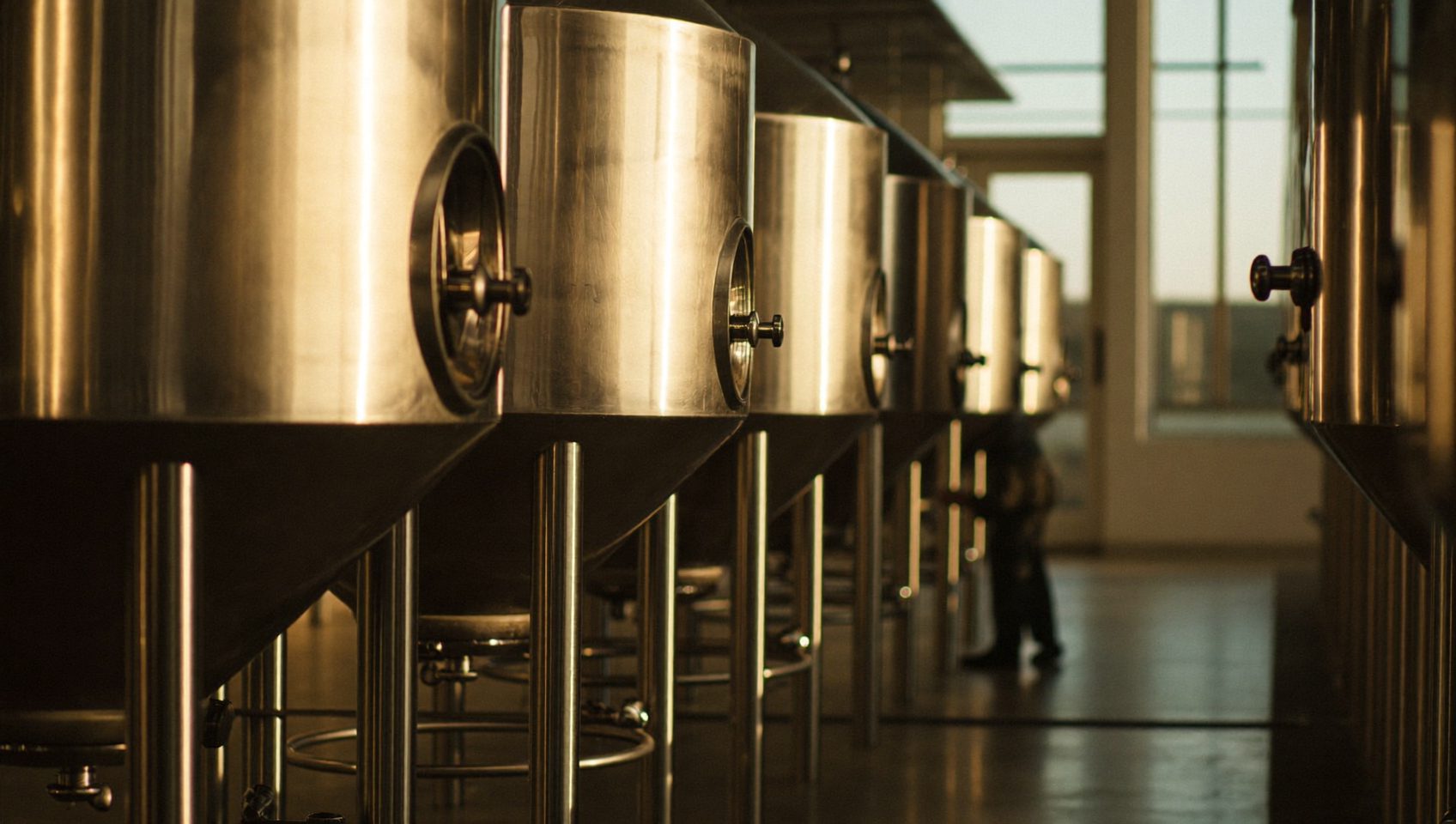
Setting up an in-house laboratory in a winery means distinguishing between routine daily checks and the determinations that require an accredited external laboratory. With a bench equipped for density, pH, total acidity and sulfur dioxide, you can manage the harvest, the fermentations and the storage in tanks independently, reducing response times during racking. Complex analyses, aroma or contaminant profiles, and the certificates required by foreign customs authorities, on the other hand, should be commissioned from external facilities equipped with chromatographic or spectroscopic instrumentation. Organising the work on this two-track basis avoids buying machinery that would sit unused and ensures that every batch reaches bottling and shipment with verified parameters.
The analyses you do in-house and those sent out
In day-to-day winery operations, the decisive factor for winemaking choices is timeliness. When grapes arrive at the yard or you monitor a tank during alcoholic fermentation, you cannot wait for a courier to tell you whether fermentation kinetics are proceeding normally or whether a white wine that has lost its sulfur protection risks oxidation. For these operations you need an essential in-house set of equipment that is robust and easy to calibrate, focused on basic analyses of must and wine.
Conversely, buying highly complex equipment for the winery brings fixed maintenance costs, pure gases, reagents with expiry dates, and staff dedicated to calibration. Determinations that require advanced techniques, such as the detection of pesticide residues, ochratoxin A, biogenic amines, heavy metals or isotopic profiles, are entrusted to an external laboratory. The same rule applies to official test reports intended for protection consortia to certify eligibility for PDO and PGI status, to control bodies, or to the customs authorities of importing countries.
| Parameter or control | Typical instrument | Where to carry it out | Main stage of use |
|---|---|---|---|
| Sugars and fermentation kinetics | Optical or digital refractometer, must hydrometer | In the winery | Vineyard ripening, crushing, alcoholic fermentation |
| pH and total acidity | Benchtop pH meter, burette or automatic titrator | In the winery | Crushing, must corrections, ageing, pre-bottling |
| Free and total sulfur dioxide | Ripper apparatus or still (Paul method) | In the winery (control) and external laboratory (pre-bottling) | End of fermentation, racking, storage, bottling preparation |
| Volatile acidity and malic acid | Steam distillation unit, enzymatic kits or multiparameter analyser | In the winery (if equipped) or external laboratory | Malolactic fermentation, storage in wood, stability checks |
| Metals (iron, copper), residues, contaminants, export certificates | Spectrometry and chromatography (ICP, GC-MS, HPLC) | Accredited external laboratory | Fining, pre-bottling, customs procedures and instrumental analysis |
Keeping the two areas clearly separate allows whoever manages production to focus investment on the instruments that are used every day. Everything with legal value, or that requires analytical sensitivity at trace levels, remains the domain of specialist centres.
Sugars and alcohol: refractometer, hydrometer, ebulliometer
Monitoring sugar levels starts in the vineyard and accompanies the entire transformation stage. The most immediate instrument for sampling berries and checking incoming loads is the refractometer, in either the manual optical version or the digital version with automatic temperature compensation. A few drops of clear must are enough to read the refractive index, expressed in degrees Brix or Babo, and to estimate the potential volumetric alcohol content even before crushing.
Once the must is in the tank and alcoholic fermentation begins, the growing presence of ethanol alters the refractive index and makes the refractometer unsuitable for tracking the fermentation curve. At this stage, hydrometers (or must densimeters) paired with a graduated cylinder and a precision thermometer come into play. By measuring the relative density (mass per unit volume) of the fermenting must-wine every day, you can track the decline in sugars and promptly identify any slowing or stalling of fermentation, intervening with oxygenation or activators within the framework of the practices set out in the OIV International Code of Oenological Practices.
When fermentation is complete and residual sugars have dropped to the levels of a dry wine, the quick estimate of the alcohol produced in the winery has traditionally been carried out with the ebulliometer (Malligand type or similar), which exploits the difference between the boiling point of water and that of the hydroalcoholic mixture. The ebulliometer provides a useful operational figure for cellar blending, but it is affected by atmospheric pressure and dry extract, especially in sweet or highly structured wines. For a more precise determination at the winery, you can equip yourself with an oenological still paired with an electronic densimeter or a hydrostatic balance on the distillate. However, for the figure to be stated on the label and in commercial documents, it is prudent to refer to the test report of an external laboratory.
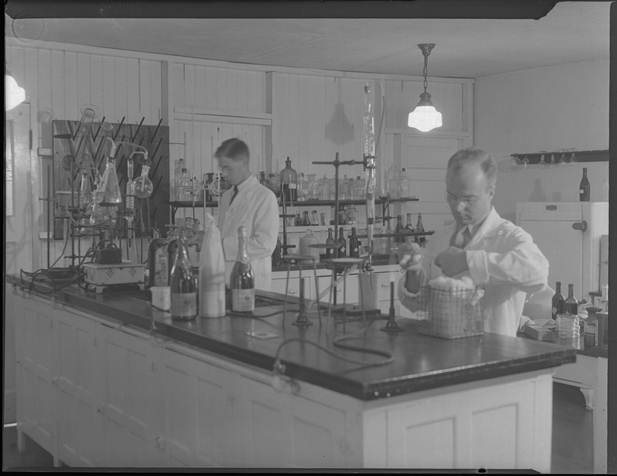
pH and total acidity
pH and total acidity govern the microbiological stability of wine, colour retention in reds, taste freshness, and the active molecular fraction of sulfur dioxide. No winery that makes its own wine can do without a reliable benchtop pH meter. Unlike pocket testers, a laboratory pH meter fitted with an electrode specific to musts and wines (with an open or sleeve junction, resistant to clogging by proteins and tartrates) and a temperature compensation probe provides repeatable readings. The essential condition is maintenance: the electrode must be calibrated every day before use with fresh buffer solutions and stored in its own electrolyte solution, never in distilled water.
Alongside the pH meter, the determination of total acidity requires an acid-base titration station. In the minimum configuration you need a precision graduated burette, a magnetic stirrer, a titrant solution of known concentration (sodium hydroxide) and a colour indicator (bromothymol blue). Alternatively, you can follow the endpoint directly by immersing the pH meter electrode in the sample under agitation. Those handling many samples during the harvest can replace the manual burette with a compact automatic titrator, which reduces operator subjectivity, especially with musts and deeply coloured red wines.
Having pH and total acidity data in real time allows you to decide whether and how to intervene with acidification or deacidification of musts and wines. All these corrections must be carried out in strict compliance with the limits, permitted products and conditions established at European level by Delegated Regulation (EU) 2019/934, which governs authorised oenological practices and incorporates the technical standards of the International Organisation of Vine and Wine (OIV).
Free and total SO2
Managing sulfur dioxide (SO2) is the most frequent control throughout the life of wine in the winery, from the end of fermentation to the moment of bottling. An insufficient dose exposes wine to chemical oxidation and microbiological deviations; an excessive dose flattens the aroma profile and risks exceeding the legal limits for total sulfur dioxide set by Delegated Regulation (EU) 2019/934 for the different wine types (red, white, rosé, sparkling, with or without residual sugar) and by the specific regulations for organic wine.
For routine quick checks on free and total sulfur dioxide, the classic winery equipment is the iodometric method (Ripper method), which can be performed with a manual burette or with dedicated titrators that detect the endpoint potentiometrically. The iodometric method is fast and inexpensive for deciding on sulfiting after racking a white wine, but it has known limitations: in red wines the visual endpoint is difficult to detect, and reducing substances such as ascorbic acid or certain phenolic compounds interfere, falsely raising the reading.
If your production includes long-ageing red wines, sweet wines, or labels with strict regimes on sulfite use, it is advisable to add to or replace the Ripper with a distillation or aspiration-oxidation unit (Paul / Rankine method). This system extracts sulfur dioxide from the acidified sample using a stream of air or nitrogen, traps it in hydrogen peroxide where it is converted into sulfuric acid, and allows an acid-base titration free of interference from colour and polyphenols. In any case, before printing labels or preparing a batch for a foreign customer who imposes tight contractual thresholds on total SO2, always have the value verified by an external laboratory.
Volatile acidity, malic acid, turbidity
Beyond the trio of sugars, acidity and sulfur dioxide, a structured winery evaluates whether to bring three other key parameters in-house for quality control in the winery: volatile acidity, malic acid and turbidity.
Volatile acidity is the thermometer of a wine's sanitary condition during fermentation and ageing in wood or steel. Its traditional determination in the winery requires a steam distillation unit (Cazenave-Ferré type or equivalent electronic models): the degassed wine, corrected for sulfur dioxide interference, is distilled, and the distillate is titrated with sodium hydroxide in the presence of phenolphthalein. It is an analysis that requires manual skill and clean glassware, but it allows you to monitor barrels during the summer months without waiting for external reports.
Monitoring malolactic fermentation, on the other hand, requires measuring the disappearance of L-malic acid and the formation of L-lactic acid. Paper chromatography, once used for a qualitative visual estimate, does not provide precise quantitative data on the tail end of fermentation. Wineries that wish to manage malolactic control in-house, together with residual sugars (glucose and fructose), volatile acidity and readily assimilable nitrogen (YAN), now use UV-Vis spectrophotometers paired with enzymatic kits, or benchtop multiparameter analysers (automated enzymatic or FTIR technology). The decision to buy a multiparameter analyser depends on the number of samples you process in a year: if you have many tanks and vinify separate lots, the investment pays for itself by reducing external laboratory fees for intermediate checks.
Finally, for those who manage fining, protein stabilisation and pre-bottling filtration preparation in-house, an indispensable instrument is the nephelometer (or turbidimeter). Measuring turbidity in NTU allows you to monitor static or flotation settling of white musts, verify the results of hot protein stability tests (bentonite tests), and ensure that wine entering cartridge filters has a clarity compatible with membrane retention, avoiding premature clogging on the bottling line.
Frequencies and records; analyses for export
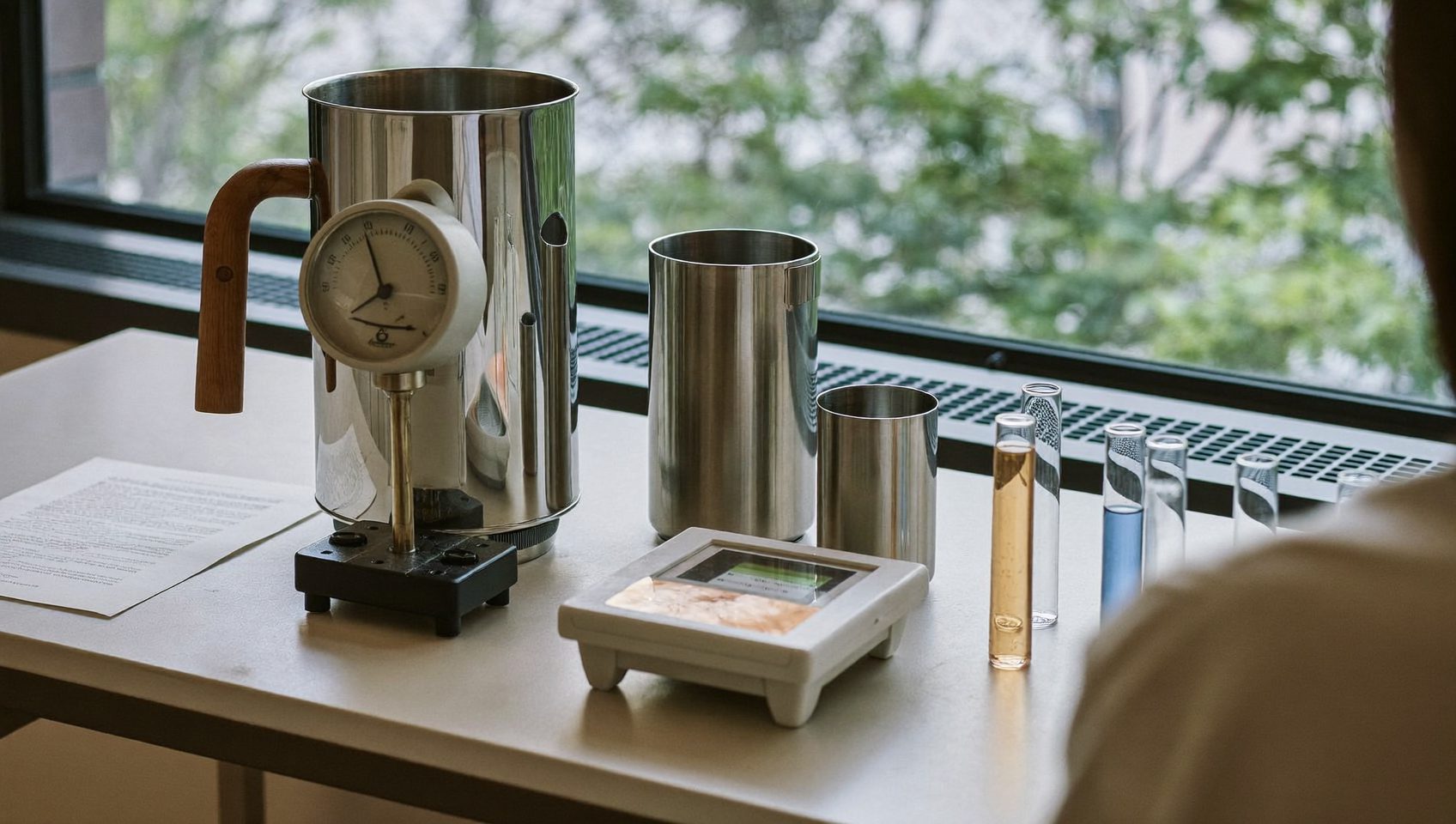
Having the instruments is of little use if data are not collected at regular intervals and stored in an orderly way. During the harvest, the density and temperature of each fermenting tank are measured once or twice a day; pH and total acidity are checked at crushing and at the end of fermentation. During storage and ageing, wines in full steel tanks have their free SO2, pH and volatile acidity checked monthly or at each movement, while for wines in barriques or large casks, checks should be closer together and coincide with topping up.
All internal analytical data should be recorded on tank sheets or in the winery management software, together with a calibration log for the instruments. In Italy, the single national accreditation body is Accredia, which accredits both testing laboratories and calibration laboratories according to international standards. Even if your small in-house laboratory is not accredited, using certified reference materials to periodically check the pH meter, hydrometers and multiparameter analysers protects you from instrumental drift that could lead you to make a mistake with a sulfur dioxide addition or a blend.
When the wine is ready for sale and for international markets, the in-house laboratory gives way to external laboratories accredited by Accredia according to the ISO/IEC 17025 standard. Export analyses require officially recognised methods at international level (OIV methods) and test reports signed by qualified chemists or enologists, on letterhead bearing the accreditation mark. Many non-EU countries in fact require specific analytical certificates to clear wine through customs. To check which destinations require dedicated forms or particular tests, you can consult the article on analysis certificate and VI-1 document for wine abroad. Entrusting the sample of the final bottling batch to an accredited laboratory ensures that the values for alcohol content, dry extract, total and volatile acidity, sulfur dioxide, reducing sugars and absence of contaminants are accepted without dispute by importers, state monopolies and destination customs.
Further reading: Winemaking Additives Allowed in EU, Not in USA, Japan, China.
Frequently asked questions
What is the minimum set of instruments for a winery starting to do in-house analyses?
To cover routine winemaking and storage checks, you need an optical or digital refractometer for grapes, a set of must hydrometers with cylinder and thermometer to follow fermentations, a benchtop pH meter with an electrode specific to wine, a titration station for total acidity, and a system to measure free and total sulfur dioxide (Ripper method or Paul still).
When is it worth buying an enzymatic or FTIR analyser instead of sending samples out?
Buying a multiparameter analyser or an enzymatic spectrophotometer makes sense when the winery manages numerous separate lots and needs to measure residual sugars, malic acid, volatile acidity and assimilable nitrogen the same day during the harvest and malolactic fermentations, cutting out waiting times for couriers.
Are the analyses done in the winery's in-house laboratory valid for export certificates?
No. Data obtained in-house serve as technological self-control of the process. For eligibility for designations of origin (PDO/PGI), for legal disputes and for analytical certificates required by foreign customs or state monopolies, test reports issued by officially accredited external laboratories according to international standards are required.
How often should the pH meter and other winery instruments be calibrated?
The pH meter should be calibrated every day of use with fresh buffer solutions of known pH, checking the slope of the electrode. Refractometers are zeroed with distilled water before readings. For titrators, balances and multiparameter analysers, periodic checks with reference wines or standard solutions are advisable, along with annual maintenance before the harvest.
Sources
- International Organisation of Vine and Wine (OIV), International Code of Oenological Practices and analysis methods
- EUR-Lex, Delegated Regulation (EU) 2019/934 of the Commission on authorised oenological practices and applicable restrictions
- Accredia, Italian National Accreditation Body: testing laboratories, calibration laboratories and reference materials
- CREA, Council for Agricultural Research and Economics
- OIV, Standards and Technical Documents for the wine sector
- Yeast nutrients for wine: nitrogen, thiamine and EU limits
- Winery Equipment List: What to Buy First, What to Rent
- Yeast for Sparkling Wine Base and Second Fermentation
- Winemaking Additives Allowed in EU, Not in USA, Japan, China
- Wine acidification: which acid, when and how much
- Wine team building Rome: corporate tastings for groups