Wine agents and private import in Canada: how Ontario and Québec work for importers of Italian wine and how to find an agent
Wines Export Editorial · Last updated:
In Canada wine is sold to the provincial monopolies, but not everything goes through the monopoly's shelf: in Québec and Ontario there is a second channel, private import, in which a local agency chooses a wine, brings it in through the monopoly on the order of a restaurant or a private buyer, and sells it by the case, without waiting for a tender. In Québec the agencies grouped in Raspipav have grown private import sales by 106.8% in ten years, and the SAQ catalogue counts more products in private import (23,900) than on the regular list (16,200). In Ontario the LCBO Consignment Program does the same job with written rules: a minimum of 20 cases per product, a single agent per product, deposit and warehouse fees. In both cases a foreign winery cannot act alone: it needs an agent with a provincial licence, who works on commission and represents it before the monopoly and the restaurants. If you import or distribute Italian wine, this is the structure you will be working inside. Below you will find how it works, what changes in Alberta and British Columbia, and how a serious agent is selected.
What is private import and who uses it?
In the two largest provinces the monopoly imports everything, but sells in two ways. The first is listing: the SAQ and the LCBO choose through tenders and product calls the wines they put in stores, as explained in the article on Canadian monopolies and their tenders. The second is the private order: a customer, usually a restaurant, asks for a wine that is not listed, the monopoly imports it for them, and a local agency does all the work in between.
In Québec Raspipav, the grouping of agencies specialised in promoting private imports, describes the mechanism as follows: the agencies select the products and take on the financial risk toward the SAQ, which imports and distributes them legally; each agent is solely responsible for the marketing of the products in its portfolio, and to buy a wine in private import one has to contact the agency that represents it. In Ontario the LCBO writes that its Specialty Services Department facilitates sales by eligible suppliers and their Ontario agents to LCBO customers, and that an agent may order or pick up products from the LCBO's designated warehouse only on behalf of an LCBO customer.
| Province | Who imports | Off-list channel | Who sells to restaurants | Role of the agent |
|---|---|---|---|---|
| Québec | SAQ | Private import (importation privée), through agencies (Raspipav) | The agency, with delivery via SAQ | Selects, promotes, takes on the financial risk toward SAQ |
| Ontario | LCBO | Consignment Program (Regular, Seasonal, High-Volume) | The agent with an AGCO licence, on behalf of the LCBO customer | Orders from the LCBO warehouse on behalf of the customer, cannot sell alcohol on its own |
| Alberta | AGLC (privatised system since 1993) | Private retail | Private retailers and agencies | Represents the supplier to retailers |
| British Columbia | LDB | Purchase through the BC agent | Agency and public wholesaler | The LDB purchases products made outside Canada through the BC agent |
Source: Raspipav, LCBO Consignment Program Guidelines, AGLC, BC Liquor Distribution Branch.
Who uses the channel: restaurants whose list does not want the same wines as the monopoly, sommeliers looking for small denominations, enthusiastic private buyers who buy by the case. For a mid-sized Italian winery it is often the first step in Canada: an agency takes it to twenty restaurants in Montréal before a tender takes it into a store.
How does a Canadian wine agent work: contract, exclusivity, commission?
The Canadian agent does not buy the wine. It represents it: proposes the wine to restaurants and private buyers, collects orders, passes them to the monopoly, follows up on payment and, in the case of tenders, prepares the dossiers. It is paid with a commission on sales, to which promotional contributions are often added. There is no public commission rate: it must be negotiated in writing, comparing two or three agencies, and the contract should be built as an international agency contract, with territory, duration, exclusivity, targets and exit clauses, as described in the reference sheet on international agency and distribution contracts.
Exclusivity in Ontario is a rule of the monopoly before it is a choice: the LCBO writes that in all modules of the Consignment Program only one agent can represent a product at a given time. The same applies in practice in Québec, where a wine is tied to the agency that presented it. Changing agent is possible, but means moving the product, and the monopoly wants the written release of the outgoing agent.
Ontario agents need a manufacturer's representative licence issued by the AGCO, the provincial alcohol authority, and an agreement signed with the LCBO; their association, Drinks Ontario, states that its members represent 95% of the alcoholic products sold in the LCBO, by volume. In Québec the agencies are private businesses working under the SAQ's internal policies: in its brief for the provincial government's 2026-2027 budget, Raspipav asks for an official status of private importers in law precisely because today their role is not legally recognised. The difference between agent, importer and distributor, and why in monopoly markets the agent takes the place of the importer, is in the article on importer or distributor: which one is needed.
How does private import work in Québec?
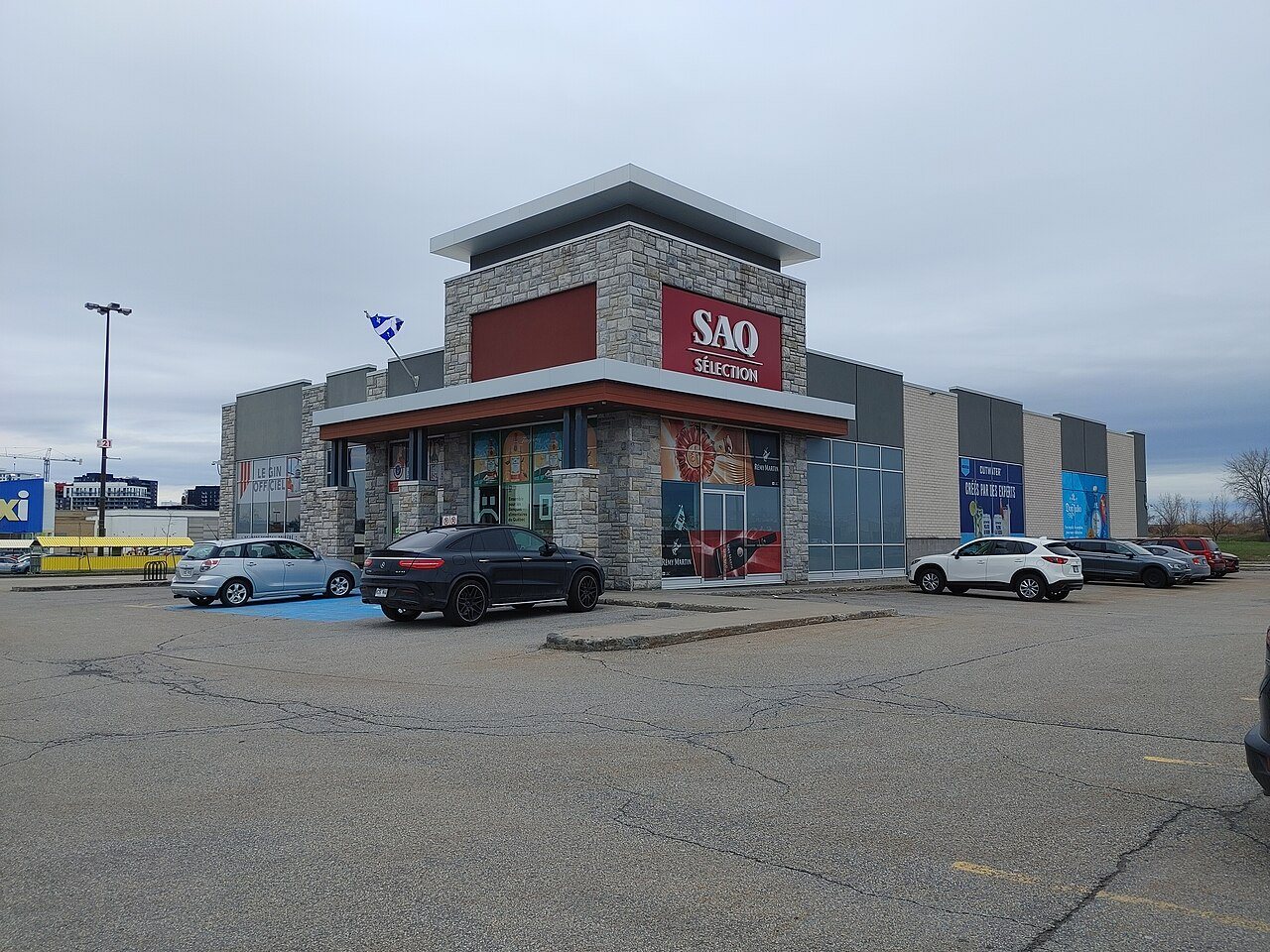
Raspipav was founded in 2007 and brings together 66 agencies across Québec, according to its website; the 2025 brief counts 64, active both in the channels of the SAQ store network and in private import. The figures it supplies to the government say how much the channel is worth: private import sales have grown by 106.8% over the last decade, against 35.8% for total SAQ sales; in the 2022-2023 financial year they generated 156 million Canadian dollars, more than 4% of total SAQ sales; in summer 2025 they were growing by 5.8% while SAQ sales were falling. According to the 2025 SAQ annual report cited in the brief, the monopoly's portfolio is made up of 16,200 wines, beers, spirits and ready-to-drink products on the list and 23,900 products in private import; the sector counts about 400 small and medium-sized businesses and more than 1,000 jobs.
| Québec data | Value | Source |
|---|---|---|
| Agencies that are Raspipav members | 66 (website) / 64 (2025 brief) | Raspipav |
| Growth of private import sales in ten years | +106.8% | Raspipav, 2026-2027 brief |
| Private import sales 2022-2023 | 156 million Canadian dollars, over 4% of SAQ sales | Raspipav, brief |
| Products on SAQ list / in private import | 16,200 / 23,900 | SAQ annual report 2025, cited by Raspipav |
| Businesses and employees in the sector | about 400 SMEs, over 1,000 jobs | Raspipav, brief |
The channel also has a limit that the brief denounces: since 2023 the SAQ has introduced restrictions on the agencies' purchasing capacity, tied to the physical space of its warehouse and to an indicator of weeks of stock, in order to reduce inventory. For a producer this means that an agency cannot order unlimited quantities of its wine: it works on orders measured against rotation.
The restaurant remains the main customer, but the SAQ has opened a door to private buyers too: the "IP boutique" on its website offers every month a rotating selection of about 100 products in private import, sold by the bottle, with a supplement that is entirely paid to the agencies to cover the research and representation work, and in autumn it hosts the wines of trade events. Raspipav organises two shows a year, in Montréal and in Québec City, with over 1,000 products for tasting and sale: in 2026 on 17-19 October at the Marché Bonsecours and on 24-25 October at the Manège militaire in Québec City. These are the occasions in which an agency presents a new wine to its customers. The operating procedure of the private order at the SAQ, with deposit and pick-up at the store, is described in the article on Canadian monopolies.
How does the LCBO Consignment Program work in Ontario?
In Ontario the rules are written in the LCBO's Consignment Program Guidelines. The supplier appoints an agent; the agent orders from the LCBO's designated warehouse the products it represents, on behalf of a customer, and picks them up by appointment once the customer has paid. Agents cannot sell alcohol: their invoices must state that they are arranging the purchase from the LCBO for the customer, and the price on the invoice is the LCBO retail price per unit, with which a non-LCBO fee cannot be in any way associated.
| Module | Minimum quantity per order | Conditions |
|---|---|---|
| Regular | 20 cases per product, or 1 case if the supply price is at least 20 Canadian dollars per bottle | Orderable quantities tied to inventory thresholds by sales band |
| Seasonal | at least 1 case | For seasonal products |
| High-Volume Consignment (HVC) | at least one full pallet | Annual sales target of 200 cases per product; admission decided by the LCBO at the agent's request |
Source: LCBO, Consignment Program Guidelines (version 1.0, November 2021).
The costs are public: a non-refundable registration fee of 200 Canadian dollars plus taxes, an initial security deposit of 2,500 dollars (plus 2,500 for each vendor of record in the HVC module), a handling fee of 1.15 dollars per case on entry, and storage per case after the first 30 free days. In the Regular module handling and storage are paid by the agent, in HVC by the vendor of record. The rule that weighs most is the one about time: the inventory must be sold within 365 days, otherwise it may be destroyed, returned or discounted by up to 30%. A wine that enters consignment in Ontario should have customers before it ships, not after.
The channel serves restaurants, bars and private buyers who order by the case through the agent, and sits alongside the listings described in the Italian reference sheet on export to Canada, CFIA and LCBO. Many Italian wineries start this way: one or two products in consignment, an agent who takes them to restaurants in Toronto, and only afterwards, with a sales history, a bid for a product call.
What changes in Alberta and British Columbia?
Alberta is the Canadian exception. In 1993 it became the first Canadian jurisdiction to privatise the retail sale, warehousing and distribution of alcohol, keeping the regulatory role and the collection of revenue with the AGLC. The AGLC's own figures say what happened: from 304 points of sale to 1,135 in October 2006, from 3,325 products to 13,650. For a producer this means that in Alberta there is no tender to win: a registered agency is needed to bring the wine into the central warehouse and to offer it to private retailers and restaurants, with a price list decided by the market and not by the monopoly.
British Columbia sits in the middle. The Liquor Distribution Branch is the public wholesaler and runs the BC Liquor Stores, but foreign products are not bought from the producer: the LDB purchases products made outside Canada through the BC agent, where the agent is the person or company appointed by the producer or supplier to act as its agent in BC. Here too, therefore, before an order a mandate to a local agency is needed, which registers on the LDB's supplier portal.
How do you select a reliable agent?
The Canadian market is full of small agencies, and the wrong choice costs a year. These are the five checks to run before signing.
Licence and registrations: in Ontario the AGCO manufacturer's representative licence and the agreement with the LCBO, in Québec membership of Raspipav or at least a documented history of private orders with the SAQ, in BC registration as an agent on the LDB portal. Ask for the numbers and verify them, with the method of the due diligence on a foreign importer.
Portfolio: how many wineries it represents, how many Italian, how many from the same region and price tier. An agency with three Chianti has no room for a fourth; an agency without Italians does not have the right customers.
Customers: ask for the names of ten restaurants that serve its wines and, if possible, visit them. In Québec and Ontario the wine list is public and can be read online.
Plan: how many cases it expects to sell in the first year, in which channel (private orders, consignment, tender), with which tastings and visits. An agent who promises the SAQ listing in the first year without a plan for private orders is making a promise, not a plan.
Contract: written commission, promotional contributions with a cap, a term of one or two years with targets, exclusivity limited to the province, an exit clause and a clause on transferring the product to another agent. The comparison between agencies has to be made on the same technical sheet and price list: how to prepare them is in the article on the technical sheet for importers, and the general criteria for Canada in the guide to wine importers in Canada.
Further reading: Exporting wine to Canada: monopolies, agents and CETA.
Frequently asked questions
Can a winery sell directly to a restaurant in Montréal or Toronto?
No. Wine enters only through the SAQ or the LCBO, and the restaurant orders through an agency or an agent with a licence. Direct sale does not exist; the private order exists, and it still passes through the monopoly.
How much commission does a Canadian agent ask?
There is no public rate: commissions are negotiated and change by province, category and volume. Ask two or three agencies for a written offer, with the commission separated from promotional contributions, and compare them on the same price list.
What is the minimum quantity to enter LCBO consignment?
In the Regular module 20 cases per product, or a single case if the supply price is at least 20 Canadian dollars per bottle; in the Seasonal module at least one case; in High-Volume a full pallet with a target of 200 cases a year. Inventory must be sold within 365 days.
Is private import in Québec reserved for restaurants?
No. The typical customer is the restaurant, but private buyers can order by the case through an agency, and every month the SAQ sells by the bottle a selection of about 100 private import products in its online IP boutique, with a supplement paid to the agencies.
Can the same agent cover the whole of Canada?
Rarely. Licences and registrations are provincial, and most agencies work in one or two provinces. It is normal to have one agency in Québec, one in Ontario and a third for the West, each with its own contract and its own territory.
Sources
- Raspipav, Regroupement des Agences Spécialisées dans la Promotion des Importations Privées des Alcools et des Vins, about us: https://raspipav.com/propos
- Raspipav, Mémoire pour le Budget du Québec 2026-2027 (Ministère des Finances du Québec): https://cdn-contenu.quebec.ca/cdn-contenu/adm/min/finances/publications-adm/Consultations_prebudgetaires/2026-2027/Raspipav.pdf
- SAQ, Importation privée (IP boutique): https://www.saq.com/fr/importation-privee
- LCBO, Consignment Program Guidelines: https://www.doingbusinesswithlcbo.com/content/dbwl/en/basepage/home/Wholesale/Specialty-services/Specialty-Services-guidelines/ProgramGuidelines.html
- Drinks Ontario, association of agents and producers of Ontario: https://drinksontario.com/
- BC Liquor Distribution Branch, Agents and suppliers: https://www.bcldb.com/doing-business-ldb/agents-suppliers
- AGLC, Alberta liquor privatization (archived page): https://bac-lac.wayback.archive-it.org/web/20061207162340/http:/www.aglc.gov.ab.ca/liquor/albertaliquorprivatization.asp
Who buys wine in Canada? A few names
According to the Wines Export Observatory (November 2026), the Italian denomination most carried by wine buyers in Canada is Prosecco: 36% of those whose Italian range we know carry it, followed by Chianti (27%) and Barolo (24%).
The Wines Export database covers the whole wine trade in Canada: importers, distributors, wholesalers, wine shops and online stores, city by city, updated continuously (23 November 2026). The Italian denominations most carried by buyers in Canada, in order: Prosecco, Chianti, Barolo, Pinot Grigio and Brunello.
Montréal
Vins Balthazard · Vinitor Wines & Spirits Inc. · RéZin
Toronto
LOYAL IMPORTS LTD · The Vine · Solo Cru
Vancouver
Marquis Wine Cellars · wine-text.ca · thisiswineschool.com
- China Wine Distributors: Importers, Wholesalers, Tier Cities
- Canada Restaurants: How Italian Wine Reaches HoReCa
- Australian Wine Distributors: Vetting and Contract Rules
- Wine Importers and Buyers in Hungary: Channels and Rules
- Wine Distributors in Brazil: Choosing and Contracting
- Who buys wine in Ukraine: importers, licences and excise