Exporting wine to Canada: how provincial monopolies, agents and CETA work
Wines Export Editorial · Last updated:
Before exporting wine to Canada, an Italian winery needs to understand that the market is not organised as a single country. Wine sales run through provincial systems: in Ontario the reference is the LCBO monopoly, in Quebec the SAQ, and each province has its own rules, calendars and channels. The first practical step is therefore to choose the province and the channel, then find an agent who knows that monopoly, and only afterwards prepare documents, labelling and price list. For details on the two monopolies, see our guide on LCBO and SAQ tenders and listings for Italian wine and our page on agents and private import between Ontario and Quebec.
How much Italian wine Canada buys and in which provinces
A frequent question from wineries is how much wine enters Canada and where it is sold. The official starting source is Statistics Canada, table 10-10-0011-01, on the value of alcoholic beverage sales by liquor authorities and other retail outlets, broken down by beverage type and province. The series covers fiscal years from 2004/2005 to 2024/2025 and can be downloaded in CSV format, with a version dedicated to the database.
Be careful, however, about what this table measures. The figure is the value of retail sales, not the origin of the product. To understand how much of the wine sold is of Italian origin, you need the linked table 10-10-0011-02, which reports sales volume by product origin. With the filters applied, the table returns no results, so no figures for Italian imports are given here: before using them in a business plan, download the series by origin and verify the wine totals for the province you are interested in.
The useful sources to start with are these:
| Source | What it contains | Use for a winery |
|---|---|---|
| Statistics Canada, table 10-10-0011-01 | Value of alcoholic beverage sales by beverage type, Canada and provinces, 2004/2005-2024/2025 | Measuring the weight of wine in the different provinces |
| Statistics Canada, table 10-10-0011-02 | Sales volume by product origin (linked table) | Estimating the share of imported wine, to be verified on the series |
| LCBO, Doing Business with LCBO | Information, programmes and updates for suppliers, agents and licensed businesses | Understanding how to enter the Ontario monopoly's listings |
| ICE, Canada page | Events, offices and information on the Canadian market | Finding appointments and institutional contacts for the country |
This table does not replace reading the series directly. It helps you immediately distinguish what measures a market figure from what explains a procedure, because the two must be used in different ways in the business plan.
The system: provincial monopolies, agents and private import
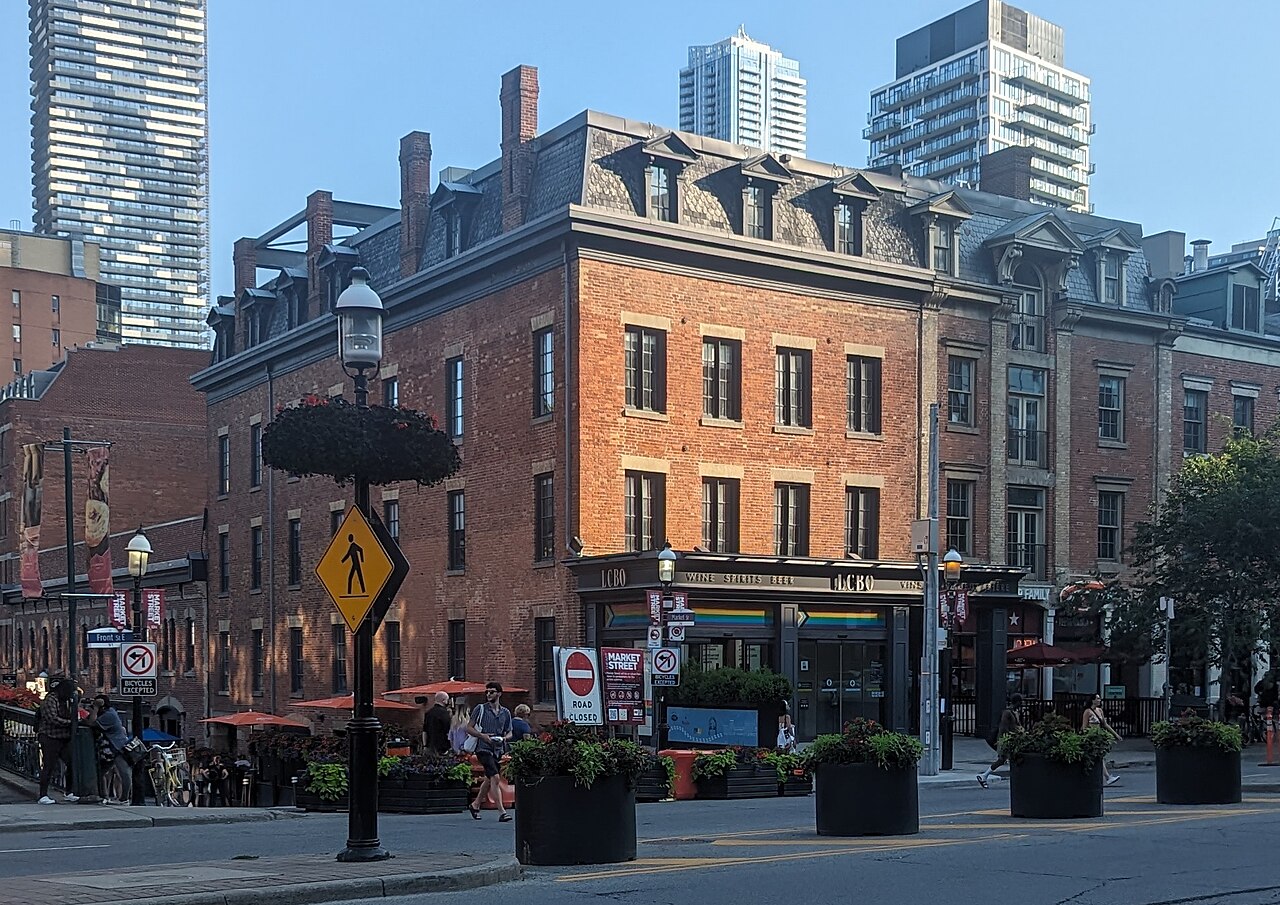
In Canada, the distribution of wine and spirits is organised by province, and the provincial monopoly is the main point of entry for anyone who wants to sell at retail. The LCBO website presents itself as the central source for suppliers, agents and licensed businesses, and gathers in one place the information needed to obtain a listing, the rules of its programmes and the data for wholesale purchases. For a winery this means there is no single registration valid across the whole country: each monopoly has its own procedures and formats.
Within the LCBO website there are several sections that help you find your way. There are product calls for retail and wholesale listings, specialised services, the supplier portal and news linked to the modernisation of the marketplace. There is also a section on wholesale application dates for fiscal year 2027. Anyone preparing a plan should read these sections carefully, because deadlines determine when a product can be submitted, not just whether it can be.
This is where the role of the agent comes in. A good agent knows the monopoly, knows which categories are being sought, presents the product through the right channels and follows the application up to its outcome. An agent is not an intermediary who replaces the winery in decisions: price, minimum quantity, promotion and service remain your responsibility. On the relationship with the agent and the criteria for distinguishing a credible agent from one who only makes promises, see our guide on how to choose wine importers in Canada.
Private import is the other route. These are imports made on order for private customers or licensed businesses, handled under procedures separate from ordinary listing, but which in Ontario and Quebec still pass through the monopoly, with rules that vary from province to province. It is an option to assess case by case, with a consultant who knows the target province, because conditions are not the same everywhere and should not be assumed by analogy.
The sequence for a winery: from agent to first listing
The route we recommend starts with the province and ends with the first listing, but the phases overlap. This is the sequence we suggest, without presenting it as a legal obligation: each step has its own deadlines and checks.
- Choose the province and the channel. A single province is easier to manage than three provinces in parallel, and the first market should be the one where the monopoly has clear demand for your category.
- Verify the market data. Use the Statistics Canada table for the chosen province and, where needed, the series by origin, so that the choice is not based on impressions.
- Select an agent or importer with experience of the chosen monopoly. Ask to see the applications already submitted and their outcomes, not just generic references.
- Prepare the product sheet in the language required by the monopoly, with technical data, origin information and bottle photos. An incomplete sheet can cause you to miss the application window.
- Follow the calendar of product calls. The monopoly publishes dates and criteria, and the agent must know in which window the product is presented.
- Prepare the origin documentation and the invoice under the CETA agreement, as explained in the dedicated section.
- Build the price list starting from the shelf price you want to achieve, not from the ex-cellar price upwards. The method is explained in the pricing section.
- Obtain the first listing and check the first delivery. The outcome arrives product by product: each reference is evaluated separately, so it is worth presenting a narrow and coherent range.
This sequence is also useful for seeing where time is lost. Delay often arises not from duty or transport, but from an incomplete sheet, an agent chosen in a hurry or an application submitted outside the window.
CETA: preferential access and origin documentation
CETA is the trade agreement between Canada and the European Union. The official Canadian government page describes it as an agreement that offers preferential access to businesses on both sides, and notes that the agreement is not yet fully in force in all Member States: until ratifications are complete, it applies provisionally. For an Italian winery this is the context to keep in mind, because the conditions must be verified against the text and not taken for granted.
The practical point is that preferential access does not apply on its own. The benefit depends on the customs tariff heading of the product, the declaration of origin that accompanies the shipment, and the consistency of documents between winery, forwarder and importer. No rate for wine is given here: it depends on the specific heading in the agreement text. Anyone deciding a price should ask the agent or customs broker for the exact heading and check it on the official text, with the full reference to the heading and not an average.
In practice, it is worth preparing the origin documentation together with the product sheet and the first order. An error in origin documentation can delay customs clearance more than an error in price, and correcting it after shipment is more costly than doing it beforehand. For the general picture of government pages on CETA, the reference is the Global Affairs Canada page listed at the end.
Labelling: what to check before printing
Labelling is where many procedures stop, and it is worth checking before printing a single batch. Language rules and mandatory content are set by the federal agency responsible for food and alcoholic beverages, the Canadian Food Inspection Agency, and must be read on its website. What can be done immediately is a three-step check.
The first step is to ask the importer or agent which languages and which information are required for the province of sale, since the monopoly may request additional data in the product sheet. The second step is to compare the back label with the requirements of the federal agency, reading its page on alcoholic beverage labels directly. The third step is to verify that the label format is the same one the monopoly will use in the images and listing documents, because a difference between actual label and sheet can block the process.
For back labelling and differences between markets, see our guide on back labels for importers in the USA, Canada, Japan and China. The practical advice is to have a revised version of the label ready before the application, so you do not have to change the file while the monopoly is evaluating the product.
Price: from ex-cellar to the LCBO and SAQ shelf
The shelf price in Canada does not coincide with the ex-cellar price. Between the two lie transport and documentation, the margin of the importer or agent, the monopoly's mark-up and the margin of the point of sale. Each step follows a different logic, and confusing them leads to price lists that do not survive the first check.
The LCBO website publishes price bulletins for suppliers, so for the Ontario monopoly the reference figure should be taken from the source and not from memory or from other wineries. The sources listed below do not publish verified mark-up percentages, so none are given here. For the mechanism of the mark-up and an example of how a price is built, see our page on shelf price and markup at LCBO and SAQ.
The method we recommend is to start from the shelf price the market accepts for your category and work backwards: subtract the monopoly and retailer mark-ups, then the importer's margin, then transport and documentation costs. The result is the sustainable ex-cellar price. If the number you get does not hold, the problem lies in the product or its positioning, not in the calculation, and it is better to change the choice before submitting the application.
Frequently asked questions
Do I need an agent to export wine to Canada?
There is no general obligation to have an agent, but in the provincial monopolies listing goes through procedures and calendars that an agent knows. The choice should be made on the province and the channel. An agent experienced with the chosen monopoly reduces the risk of applications submitted outside the window.
Does CETA make Italian wine duty-free in Canada?
CETA provides preferential access, but its application depends on the customs heading and the origin documentation. For wine, the heading must be verified on the official text of the agreement and with the customs broker before fixing a price.
Where can I find data on wine sales by province?
The source is Statistics Canada, table 10-10-0011-01, which reports the value of sales by beverage type and province. For product origin, the linked table 10-10-0011-02 is needed, to be downloaded and verified directly.
What language must wine labels have for Canada?
The required language should be verified on the page of the federal food agency and on the guidelines of the monopoly of the chosen province. Ask the importer or agent to confirm the requirements before printing the final label.
Sources
Who buys wine in Canada? A few names
According to the Wines Export Observatory (November 2026), the Italian denomination most carried by wine buyers in Canada is Prosecco: 36% of those whose Italian range we know carry it, followed by Chianti (27%) and Barolo (24%).
The Wines Export database covers the whole wine trade in Canada: importers, distributors, wholesalers, wine shops and online stores, city by city, updated continuously (23 November 2026). The Italian denominations most carried by buyers in Canada, in order: Prosecco, Chianti, Barolo, Pinot Grigio and Brunello.
Montréal
Vins Balthazard · Vinitor Wines & Spirits Inc. · RéZin
Toronto
LOYAL IMPORTS LTD · The Vine · Solo Cru
Vancouver
Marquis Wine Cellars · wine-text.ca · thisiswineschool.com
- Fine wine merchant UK: Liv-ex, in bond, Barolo and Brunello
- Export Wine to Turkey: Importers, ÖTV Tax and Banderole
- French supermarket Italian wine: foire aux vins and buyers
- Shipping wine to Hungary: e-AD, e-SAD, deposit and timing
- Hong Kong wine importers: zero duty and Asia hub
- Exporting Wine to Ukraine: Duties, Excise, Licences, Stamps