The Value of Italian 'Cru' in the International Wine Market
Wines Export Editorial · Last updated:
The concept of "cru" in Italian wine is a fascinating and complex universe, deeply rooted in the country's history, geology, and enological culture. For Italian wineries looking to export, understanding and effectively communicating the value of their cru is fundamental to standing out in international markets and attracting qualified importers. This article explores the meaning of "cru" in the Italian context, its implications for export, and what foreign operators seek when approaching these excellences. Learn more: OIV — International Organisation of Vine and Wine.
What is a "Cru" in Italian Wine?
Unlike other wine traditions where "cru" is often associated with single vineyard plots possessing exceptional and officially recognized pedoclimatic characteristics, the concept in Italy is more nuanced and varied. Italy's rich wine heritage, with its thousands of indigenous grape varietals and myriad microclimates, has led to diverse interpretations and levels of formalization of the cru concept.
In many instances, an Italian "cru" is not limited to a single vineyard but can refer to:
- Individual Vineyards or Masi: In some regions, particularly those with a strong tradition of mountain viticulture or on particularly suitable soils, there are references to "Masi" (in Trentino-Alto Adige) or single vineyards with historic names that identify a production of excellence.
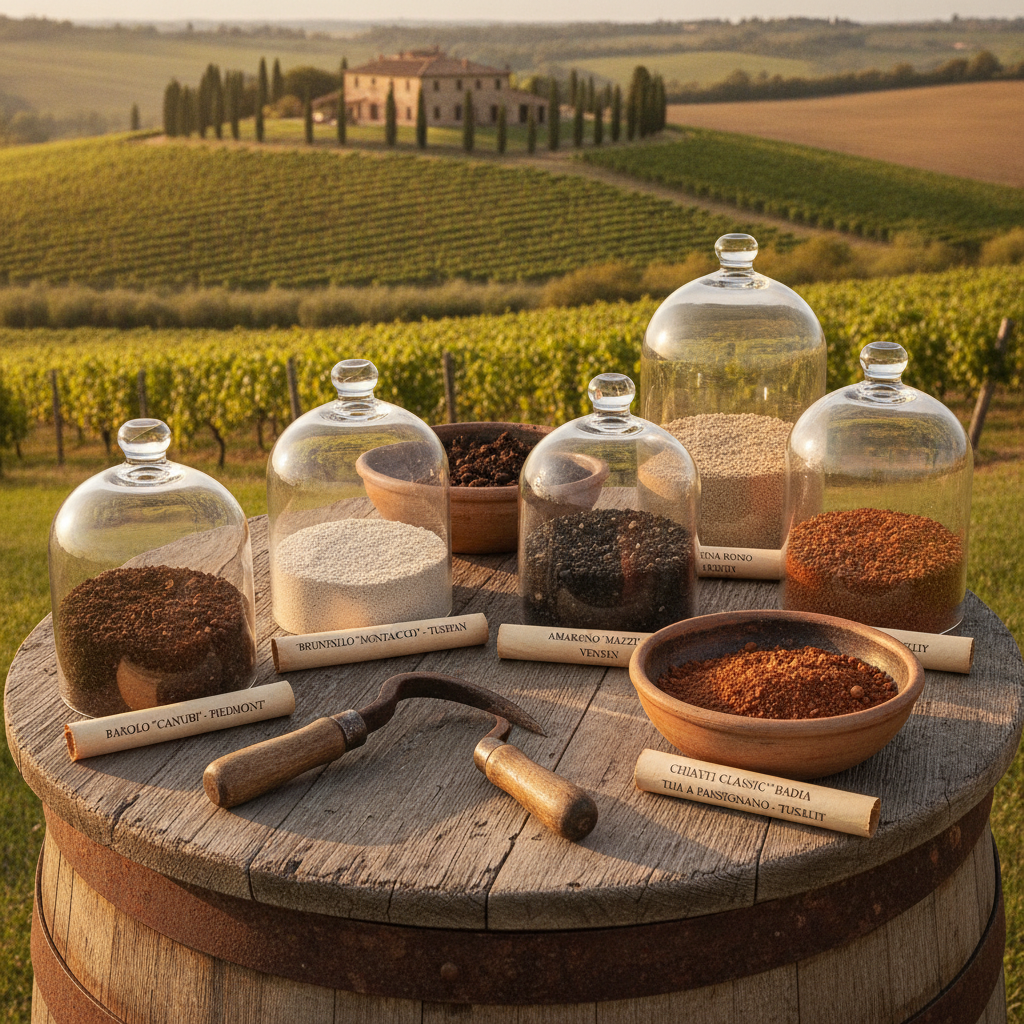
- Subzones or Additional Geographic Mentions: Many Denominazione di Origine Controllata e Garantita (DOCG) and Denominazione di Origine Controllata (DOC) appellations include subzones or additional geographic mentions that identify areas with peculiar characteristics and superior quality wines. Well-known examples include the subzones of Barolo (such as Cannubi, Brunate) or Chianti Classico (such as Greve, Radda).
- Wines Representing a Territory or Style: Sometimes, a "cru" can be understood as a wine that best embodies the characteristics of an entire appellation or a specific geographical area, even if not formally recognized as a subzone. This often occurs with wines of great prestige and longevity that become ambassadors of their territory.
- Family Wines or Wines of Long Tradition: In some historic wineries, certain wines can be considered internal "cru," produced from particularly well-maintained estate vineyards or from selected grapes that give life to flagship labels, often with a family history behind them.
The challenge for export lies in translating this complexity into a language understandable for foreign markets, which may have more standardized references.
What Do Foreign Importers Seek in Italian Cru?
When a foreign importer approaches Italian wine, especially if they are seeking high-end products, the concept of "cru" is often an attraction factor. However, expectations and demands can vary significantly depending on the target market and the distribution channel the importer serves (e.g., Horeca, Mass Market Retail, specialized wine shops).
In general, importers seek the following in Italian cru:
- Authenticity and Terroir: The desire to offer clients wines that tell an authentic story, linked to a specific place, an indigenous grape varietal, and a tradition. "Cru" is often synonymous with this authenticity.
- Consistent Quality and Aging Potential: A successful cru must demonstrate high and consistent quality over time, but also aging potential that justifies its price and makes it interesting for collectors or consumers who appreciate wine evolution.
- Accolades and Scores: International wine guides (like Wine Spectator, Robert Parker), high scores, and awards are often used by importers as a commercial lever to justify investment in high-end wines and to reassure their end customers. The presence of references in export markets or relevant accolades for the US audience, for example, is a plus.
- Clarity in Communication: Importers appreciate wineries that can clearly communicate the value of their cru: the history of the vineyard, the characteristics of the terroir, specific winemaking techniques, and why that wine is considered an excellence. Material in English, such as technical sheets and company presentations, is essential.
- Margin Potential and Positioning: While quality is paramount, importers also evaluate margin potential and how the wine will position itself in the market. A successful Italian cru can justify a medium-high price, especially in structurally growing market segments.
- Regulatory Compliance: For markets like the United States, it is crucial that the label is compatible with TTB (Alcohol and Tobacco Tax and Trade Bureau) requirements before even promising availability. The correct description of the product on the commercial invoice, including appellation, vintage, format, and HS code, is fundamental for customs clearance.
How to Leverage "Cru" for Export?
For Italian wineries, transforming their cru into an export success requires a targeted strategy and robust documentation.
Communication and Marketing Strategies
- Terroir Storytelling: Every cru has a story. Whether it's a historic vineyard, a unique microclimate, or a specific grape selection, the narrative must be authentic and engaging. Using high-quality images of labels and vineyards is a first step.
- Focus on Target Markets: Understanding the specificities of target markets is crucial. For instance, while Italian wine enjoys historic leadership in the sparkling wine segment in markets like Ukraine, other markets might be more receptive to structured red wines or specific appellations.
- Participation in Events and Trade Fairs: Events like Vinitaly.USA in New York or initiatives promoted by the ICE Agency in markets like Hungary offer valuable platforms to present their cru to an audience of importers and industry professionals.
- Collaboration with Qualified Importers: Identifying importers with active wholesale licenses and a proven presence in the Horeca channel or the mid-to-high-end segment is fundamental. Preliminary verification of their solvency and import history is a key step.
Essential Documentation for Export
Proper documentation is the backbone of any successful export operation. Beyond universal documents, specific market requirements must be considered.
Universal Documents (Essential for Almost All Markets):
- Commercial Invoice: Must detail the product (appellation, vintage, format), quantity, value, Incoterm, and HS code.
- Proforma Invoice: Useful for preliminary negotiations and import license applications.
- Packing List: Details the physical content of each package (weight, volume, number of packages).
- EORI Registration (for EU Exporters): Mandatory for customs operations outside the EU.
Market-Specific Documents (Examples):
- TTB Label Requirements (USA): Crucial to verify compatibility before promising availability.
- Transport and Excise Documents (EU): Waybill, e-AD (electronic dispatch note) via EMCS or DAS (simplified dispatch note) for movements under duty suspension.
- Certificates of Analysis: Only requested by specific buyer specification in some markets like Romania.
- HS Code (Harmonized System): Essential for customs classification and the calculation of duties and taxes.
The diversification of Italian wine exports towards emerging markets, as highlighted by analyses showing over 400 million euros of Italian wine imported across 13 monitored markets in 2025, underscores the importance of a well-defined export strategy where the valorization of one's cru plays a central role.
In conclusion, the Italian "cru" is a heritage of inestimable value that, when communicated effectively and supported by solid operational and documentary preparation, can represent a fundamental strategic lever for conquering and retaining importers and consumers in international markets.

Frequently Asked Questions
- How does the concept of Italian "cru" differ from that in other wine traditions? The Italian "cru" is more nuanced and varied, potentially referring to individual vineyards, subzones, wines representing a territory, or even family wines, unlike traditions more focused on officially recognized single plots.
- What are the fundamental requirements that foreign importers seek in Italian cru? Importers seek authenticity, consistent quality with aging potential, accolades and scores from authoritative guides, clarity in communication, and adequate market positioning, in addition to regulatory compliance.
- What documents are essential for exporting Italian wine abroad? The Commercial Invoice, Packing List, and EORI registration for EU exporters are indispensable. Depending on the market, specific documents may be required, such as TTB label requirements for the USA or transport and excise documents for the EU.