Bianco Sardo: Discover its Qualities and International Market Opportunities
Wines Export Editorial · Last updated:
Sardinia, an island kissed by the sun and caressed by Mediterranean winds, is a land of millennia-old traditions and unique grape varietals. Among the oenological excellences this region offers, "Bianco Sardo" stands out as a wine that embodies the identity of the territory, even if it is not a Protected Designation of Origin (PDO) or Protected Geographical Indication (PGI) in the strict sense of European regulations. This article aims to explore the characteristics of this wine, the regulatory framework that defines its production, and, above all, what foreign buyers look for when approaching a product that carries the charm and quality of Sardinia. Learn more: Federdoc — National Confederation of Italian Wine Denomination Protection Consortia.
How Do Italian Wine Regulations for Export Work?
European legislation, through regulations such as (EU) No 479/2008 (and subsequent amendments like (EU) 2024/1143), establishes the rules for protected designations of origin (PDO) and protected geographical indications (PGI) in the wine sector. These regulations define what constitutes a production specification, an essential document that allows interested parties to verify the production conditions related to a designation or geographical indication.
The production specification must include, among other elements: the name for which protection is sought; a description of the wine, with the main analytical and organoleptic characteristics for PDOs, and the analytical characteristics and an assessment of the organoleptic characteristics for PGIs; the specific oenological practices and related restrictions; the delimitation of the geographical area concerned; the maximum yields per hectare. The protection of these designations is rigorous and aims to safeguard consumers from deceptive practices.
Does "Bianco Sardo" Have a Specific PDO or PGI Designation?
The term "Bianco Sardo" does not correspond to a specific protected designation of origin or protected geographical indication at the European or national level, unlike more structured designations such as Vermentino di Sardegna DOC. However, this does not diminish its value or appeal. Often, these wines are expressions of indigenous grape varietals or blends that reflect the peculiarities of the Sardinian terroir, even if they do not fall under a rigidly defined production specification.
The production of these wines is based on national and regional legislation governing viticulture and oenology, still ensuring quality standards. The choice not to adhere to a specific PDO/PGI may stem from various reasons, including the desire for greater flexibility in winemaking practices or the use of grape varietals not yet officially recognized within specific production specifications.
What Are the Typical Characteristics of Bianco Sardo?
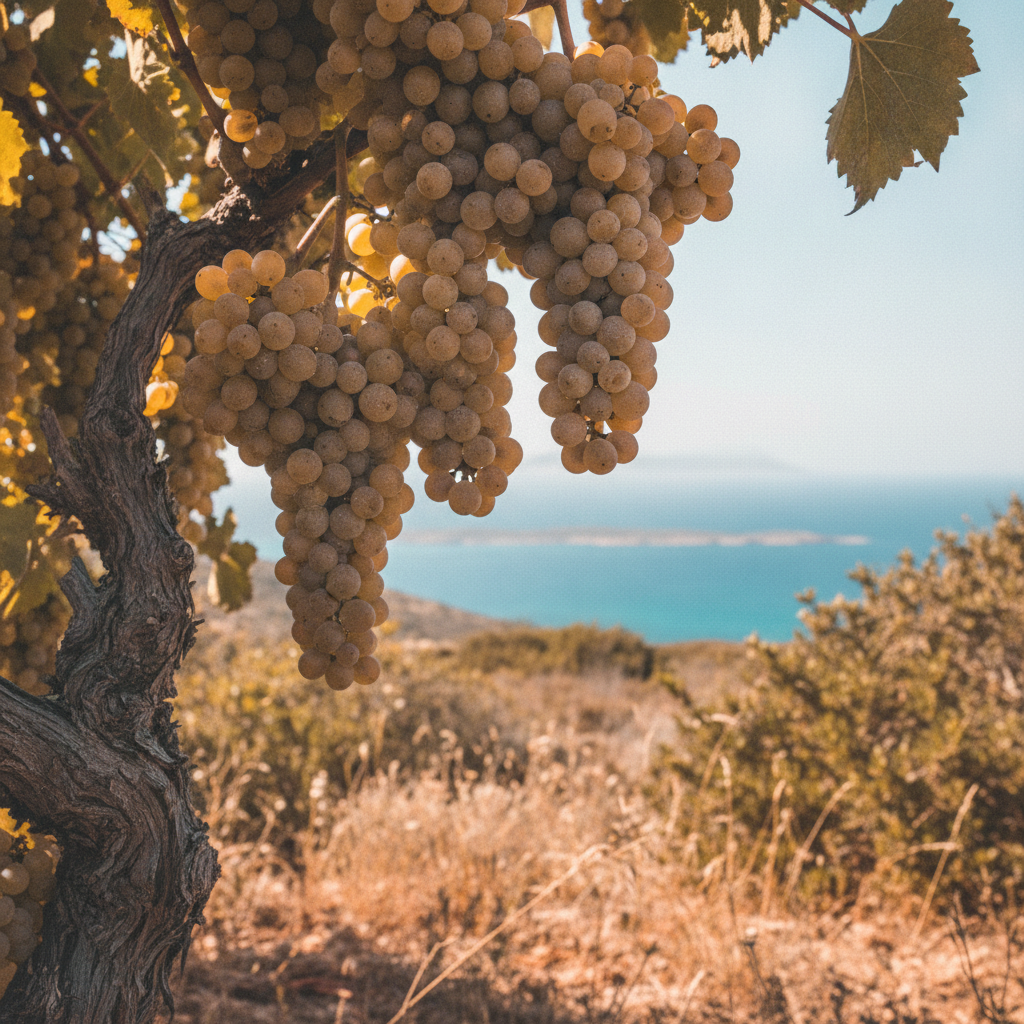
Wines identified as "Bianco Sardo" tend to share some distinctive characteristics, influenced by the Mediterranean climate, volcanic and sandy soils, and the use of indigenous grape varietals such as Vermentino, Nuragus, Malvasia Bianca, Torbato, and Moscato Bianco. Generally, these wines present a straw-yellow color, more or less intense, with greenish or golden reflections depending on aging and grape varietal.
On the nose, they offer fresh and aromatic scents, ranging from floral notes (broom, white flowers) to fruity hints (citrus, green apple, tropical fruit) and sometimes mineral or saline notes, reminiscent of the proximity to the sea. On the palate, Bianco Sardo is often characterized by good acidity, which imparts vivacity and freshness, and a pronounced minerality. The body can vary from light to medium, making them versatile and pleasant wines. Any slight bitter note, typical of some Sardinian grape varietals, adds complexity and persistence.
What Do Foreign Buyers Look for in Sardinian Wines?
International buyers are constantly seeking products that offer uniqueness, quality, and good value for money. In the context of Sardinian wine, and particularly "Bianco Sardo," several factors can attract the interest of the foreign market: authenticity and connection to Sardinian territory, interest in lesser-known indigenous grape varietals globally, product quality and consistency, potential for gastronomic pairings with rich Sardinian cuisine, and competitive pricing.
The narrative of "wine that tastes of Sardinia" is a powerful marketing tool. Wines produced from grapes like Vermentino, Nuragus, or Torbato offer an interesting alternative to more common international grape varietals. Buyers expect well-made, balanced wines that deliver on their aromatic and gustatory promises, complying with European and national wine production regulations.
What Are the Market Opportunities for Bianco Sardo Abroad?
For wineries producing "Bianco Sardo" and wishing to expand their presence in international markets, developing a clear strategy is crucial. It is important to define the identity of their Bianco Sardo, focus on quality, research target markets where there is growing interest in niche Italian wines or Mediterranean wines, and consider participating in international fairs and events.
Collaborating with partners experienced in exporting Italian wines can simplify logistics, distribution, and regulatory compliance in destination markets. "Bianco Sardo" represents a market segment with significant potential for Sardinian wineries due to its authenticity, unique characteristics, and the growing curiosity of foreign consumers towards distinctive products.
Frequently Asked Questions
What are the most common grape varietals used for Bianco Sardo?
The most common grape varietals used for Bianco Sardo include Vermentino, Nuragus, Malvasia Bianca, Torbato, and Moscato Bianco. These indigenous grape varietals contribute to the wine's distinctive characteristics, influenced by the Mediterranean climate and Sardinian soils.
Is Bianco Sardo suitable for specific food pairings?
Yes, Bianco Sardo is often characterized by good acidity and minerality, making it versatile for food pairings. It pairs well with fresh fish dishes, seafood, Sardinian cheeses, and light meats, enhancing Mediterranean flavors.
What are the main foreign markets of interest for Sardinian wines?
The main foreign markets of interest for Sardinian wines, including Bianco Sardo, can include countries such as Germany, Switzerland, Austria, North America, and some Asian markets, where there is growing interest in niche Italian wines and products with a strong territorial identity.
In conclusion, "Bianco Sardo," while not a formally recognized designation, represents a market segment with significant potential for Sardinian wineries. Its authenticity, unique characteristics derived from the terroir and indigenous grape varietals, and the growing curiosity of foreign consumers towards distinctive products make it a promising candidate for export. Understanding the regulatory framework, clearly defining the product's identity, and adopting targeted marketing strategies will be key to success in international markets.