How to Sell Recioto Abroad: Regulations and Strategies for Wineries
Wines Export Editorial · Last updated:
Recioto, a complex sweet passito wine, represents an Italian winemaking excellence with deep roots in specific geographical areas and rigorous production regulations. For Italian wineries looking to export, a thorough understanding of the regulations governing its production and the expectations of international buyers is crucial for successful market penetration. This article explores Recioto's production rules, its distinctive characteristics, and analyzes what foreign importers seek in such a prized wine, offering a clear guide for global market success. Learn more: Federdoc — National Confederation of Italian Wine Protection Consortia.
How Do Production Rules Ensure Recioto's Quality?
The production regulation, in line with European legislation (Regulation (EU) 2024/1143 and Regulation (EU) 2021/2117), defines the rules for PDO/PGI wines, ensuring authenticity and typicity. It specifies the name, categories, type of geographical indication, analytical and organoleptic characteristics, as well as specific oenological practices like grape drying (appassimento).
What Key Elements Must a Production Regulation Include According to EU Law?
According to Article 94 of Regulation (EU) 2024/1143, a production regulation must include the product name, wine product categories, the type of geographical indication (PDO or PGI), a detailed description of the wine (analytical and organoleptic characteristics for PDOs, and evaluation/indication for PGIs), and any specific oenological practices or restrictions.
Why Are Geographical Restrictions Allowed in Production Regulations?
Restrictions, such as the requirement for bottling within a defined geographical area, are permitted under Regulation (EU) 2019/33 only if they are necessary and proportionate. They serve to safeguard quality, certify origin, or ensure product control, while respecting the free movement of goods.
Who Verifies Compliance with Production Regulations?
Compliance with production regulations is verified by competent authorities or delegated bodies, as indicated in Article 116a of Regulation (EU) 2024/1143. Member States maintain lists of compliant operators for denominations registered in the Union's register of geographical indications.
How Are Changes to Production Regulations Managed?
Modifications to production regulations follow established procedures, distinguished between Union modifications (with a European opposition procedure) and ordinary modifications (managed at a national or third-country level), as stipulated by Regulation (EU) 2021/2117, Article 105. Each request must be justified and describe the proposed changes.
What are Recioto's Distinctive Characteristics?
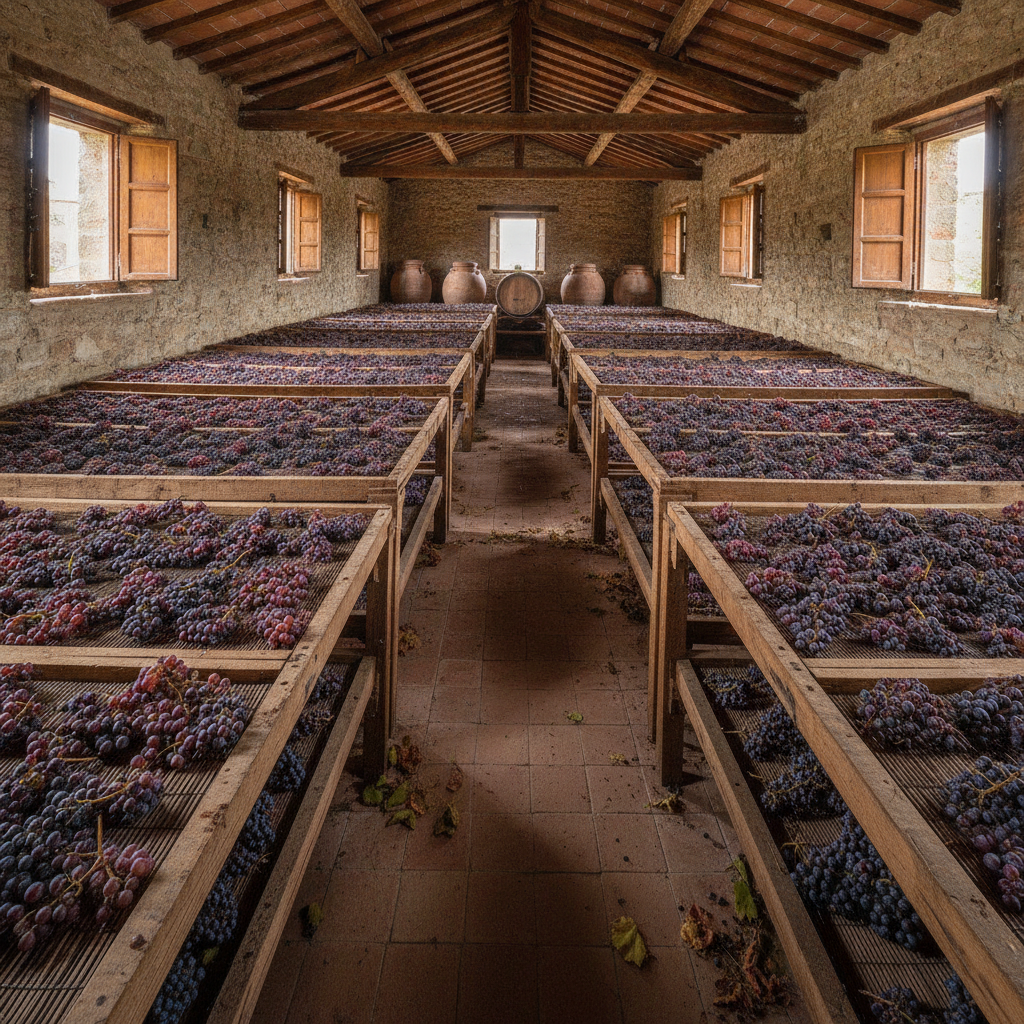
Recioto, particularly Recioto della Valpolicella DOCG, owes its unique qualities to the drying of grapes (appassimento). This process concentrates sugars, acids, and aromatic compounds, imbuing the wine with an inherent sweetness and significant complexity.
What are the Main Organoleptic Characteristics of Recioto?
Recioto presents an intense ruby red color, tending towards garnet with age. On the nose, it is intense and persistent, with notes of ripe fruit (sour cherries, plums), sweet spices (cinnamon, cloves), cocoa, and floral hints. On the palate, it is sweet, velvety, warm, and enveloping, with a balance between sugars and acidity, and considerable aromatic persistence. The structure is full, with good alcohol content and soft tannins.
How is Recioto Paired?
Thanks to its qualities, Recioto is an ideal meditation wine. It pairs perfectly with chocolate-based desserts, dried fruits, and blue-veined or aged cheeses, offering a refined gustatory experience.
What Do International Buyers Look for in Recioto?
International buyers seek products with distinctive value, consistent quality, and market potential. For Recioto, authenticity linked to Italian territory, unique organoleptic characteristics derived from grape drying, and the ability to position itself in premium market segments are key factors.
What is the Importance of Authenticity and Origin for International Buyers?
The strong connection to Italian territory, such as Valpolicella, is a major strength. Buyers look for wines that tell a story, linked to traditions, indigenous grape varieties, and a specific terroir. Protected Designation of Origin (PDO) is a seal of guarantee that assures provenance and controlled quality.
Why are Recioto's Unique Characteristics Appreciated by Buyers?
The drying process and the resulting organoleptic characteristics make Recioto a special wine, capable of standing out from the crowd and offering a memorable sensory experience. Balanced sweetness, aromatic complexity, and structure are key elements sought after.
How Do Buyers Assess Recioto's Market Potential?
Buyers evaluate Recioto's ability to position itself in premium or niche market segments, aimed at consumers seeking refined enogastronomic experiences. Its versatility in pairings, while generally oriented towards desserts and cheeses, can be a selling point.
What is the Role of Producer Reliability and Regulatory Compliance?
The certainty that the wine fully complies with the production regulations and European and international legislation is fundamental. Buyers need reliable suppliers who guarantee product compliance, from vineyard to bottle, with clear documentation and transparency on production processes.
What Economic Factors Do Buyers Consider?
While quality is paramount, the purchase price and potential profit margin are decisive. Buyers look for good value for money that allows them to be competitive in their respective markets, carefully evaluating these aspects.
Why Are Production Consistency and Availability Important?
A winery's ability to supply consistent volumes of quality Recioto year after year is crucial for building a lasting commercial relationship. Product availability and vintage predictability are aspects highly considered by buyers for planning purposes.

Frequently Asked Questions
What Does it Mean for a Wine to be PDO?
A PDO (Protected Designation of Origin) wine indicates that all production stages, from grape cultivation to winemaking, take place in a well-defined geographical area, following strict production rules that guarantee its authenticity and typical characteristics.
What is the Difference Between PDO and PGI for Wines?
PDO (Protected Designation of Origin) requires all production stages to occur in a specific area and that the wine's characteristics are closely linked to that origin. PGI (Protected Geographical Indication) has less stringent requirements, mandating that at least one production stage occurs in the indicated area and that the wine possesses a quality or reputation attributable to that origin.
What are the Advantages of Exporting Wines with Protected Designation of Origin?
Exporting wines with Protected Designation of Origin offers a significant competitive advantage. PDO guarantees international buyers authenticity, controlled quality, and a link to a specific territory, elements highly valued in global markets that facilitate penetration into premium market segments.
For Italian wineries, Wines Export offers a strategic bridge to international markets, facilitating access to new clients and ensuring that excellences like Recioto reach the right consumers worldwide.