Foreign online wine retailers: how large online wine shops buy, what they ask for and how to pitch without an importer
Wines Export Editorial · Last updated:

A foreign online retailer is a buyer, just like a wine shop or a chain: it has a buyer, a purchasing list, a warehouse (or a contract with someone who has one) and a precise way of receiving goods. The difference from a physical shop is that it asks you for much more content (photos, product sheets, awards, text in the local language) and much less presence, and that its list changes every week. This page does not cover your own direct sales website, which is already covered by the guide to wine e-commerce for export. It covers foreign online shops as customers: how they buy, the three models through which they will work with you, what they ask of the winery, and excise and VAT when a bottle travels to a private consumer. Online sales count for less in wine than in spirits, but it is the channel where the brand of a mid-sized winery is more visible: a product page stays online, a shelf does not.
Which online retailers matter by country
IWSR measures the weight of the channel. In July 2023 it estimated that wine accounted for 37 per cent of online alcohol sales in the 16 largest markets in 2021, and that this would fall to 31 per cent in 2026, while spirits (from 44 to 46 per cent) and beer, cider and ready-to-drink products (from 19 to 23) gain share. Online alcohol trade as a whole had grown 30 per cent a year between 2019 and 2021 and was expected to slow to 6 per cent a year until 2026, with wine at 2 per cent. In February 2025 IWSR, in data reported by WineNews, forecast that online alcohol sales in 18 markets (including Italy, France, Germany, the Netherlands, Spain, the United Kingdom, the United States, Japan, China, Australia and Brazil) will exceed 36 billion dollars in 2028, up 20 per cent on 2023. It identified Italy as a market growing faster than the rest, from a low base, with about half a million additional online alcohol buyers in 2024.
Operators fall into four families, present in different forms in every country.
| Type of online retailer | How it buys | What it wants from you |
|---|---|---|
| Online shop with its own warehouse (pure player or wine shop with a website) | Buys stock, like a wine shop; reorders based on sales | Wholesale price, small lots, content |
| Supermarket website or wine shop chain | The same buyer as the physical store; single listing | The chain's specifications and logistics |
| Marketplace (the site sells on behalf of third-party shops) | Does not buy: partner shops sell through the platform | Already being stocked by the partner shops |
| Clubs, subscriptions and flash sales | Buys by lot for a campaign, often at a low net price | Defined volume, temporary exclusivity, a story to tell |
Source of the classification: our elaboration of the models described by IWSR (2023, 2025) and of the terms published by marketplaces. Vivino, for example, presents itself to shops as a platform where you can "become a merchant partner" and sell your range, with payment and delivery depending on the partner shop.
The rule for reading this picture: a marketplace is not a customer, it is a showcase for your customers. If your wine is not in the warehouse of a partner shop in that country, it will not appear on the marketplace. For the difference between consumer marketplaces and B2B platforms for finding importers, see the page on wine marketplaces and B2B platforms.
How they buy: buyers, listings, photos and product sheets
The buyer of an online retailer thinks in terms of product pages, not shelves. Every reference has a listing cost (photos, text, data, translation), a storage cost and a rotation measured per day. A wine that does not sell in six weeks leaves the catalogue without anyone warning you.
What it looks at before buying:
- The price compared with online competitors. IWSR notes that 63 per cent of online alcohol buyers research thoroughly before purchasing, and that price comparison and product discovery are the main drivers of search. The buyer knows that if your wine is already sold online in that country by someone else, it will be compared down to the cent. Always ask who else sells it and at what price.
- The range. Again according to IWSR, breadth of assortment and promotions weigh heavily in the choice of an online shop. The buyer buys to fill a gap in its range ("we have no Verdicchio under twelve euros"), not to add another reference from a category it already covers.
- Content. High-resolution photos of the bottle on a white background, front and back; a product sheet with grape varieties, alcohol content, residual sugar, format, closure, allergens and ingredients; three or four lines of text in the local language, written for a consumer; awards and scores with source and year. The format is that of the technical sheet for importers, plus the part for the consumer.
- Availability. The online retailer sells the vintage it shows in the photo. A change of vintage that is not communicated means a return and a negative review.
The listing is a form: EAN code, logistics data (weight, carton dimensions), tax data (customs code, alcohol strength, volume for calculating excise), images, texts. Many retailers accept uploads only in their own template. Prepare one file with all the fields once, and update it with each vintage.
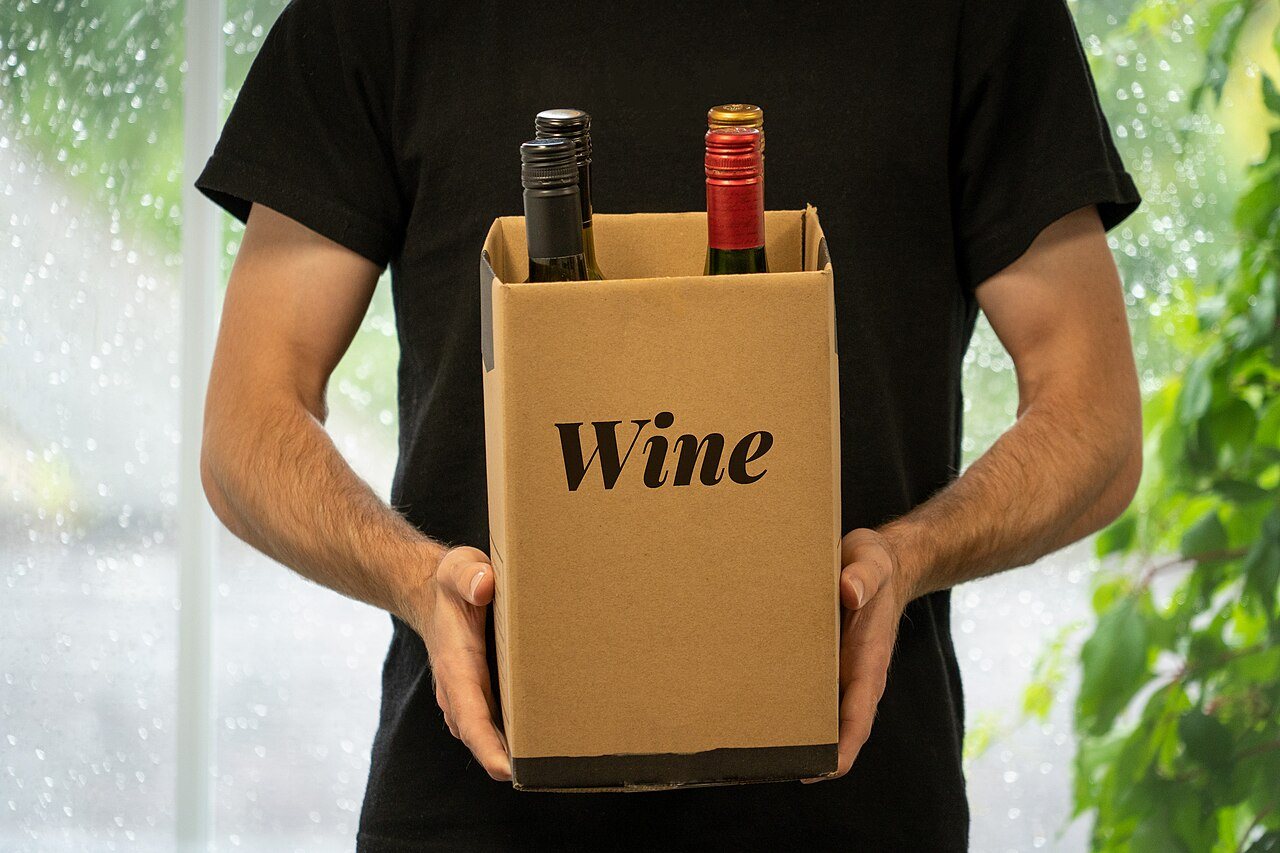
Dropshipping, storage, delivery: the models
Whoever holds the wine decides who pays excise, who answers to the customer and how much you earn.
- Stock purchase. The retailer buys pallets or mixed cartons, takes them into its warehouse (a tax warehouse, if it imports on its own) and sells from its own stock. This is the model of online wine shops with a warehouse. For you it is a normal B2B sale: you invoice the retailer, the accompanying document is issued, and it pays the excise in its own country. The risk of unsold stock is its own.
- Consignment storage. The wine sits in the warehouse of the retailer or of a logistics provider, but it remains yours until sold; the invoice is issued on what is sold. Sites that want a wide range without tying up capital ask for this. For you it means stock abroad, in a third party's tax warehouse, with a monthly statement to check.
- Dropshipping. The retailer sells, you ship from the winery to the private customer abroad. It looks like the simplest model, but it is complicated: shipping to a consumer in another Member State is a distance sale of excise goods, with the obligations described below, and express couriers do not carry alcohol to private individuals in many countries without specific agreements. It only works with a logistics operator that handles excise and delivery.
In between are "fulfilment" services for wine: operators that hold your stock in a tax warehouse in the destination country, pay excise on your behalf and deliver to the retailer's customer. The online retailer often asks you to work with an operator it already knows. How much each step costs, and who pays it, is covered in the guide to excise and VAT along the chain, from DAP to DDP.
What they ask of the winery (content, awards, prices)
Beyond the listing, an online retailer asks for four things that a traditional importer does not ask for, or asks for less.
A price that holds up to public comparison. The online price is visible to everyone, including your importers in other countries. If a German site sells your Chianti at a lower price than your Austrian distributor, the Austrian distributor will point it out to you. Before opening the channel, put in writing a pricing policy per country and a recommended minimum online price, within the limits allowed by competition law: fixed prices are not permitted, recommended prices are.
Content you can publish. Photos with transferred rights, texts free of claims banned in the country (rules on health and alcohol vary), a five-line history of the winery, the name of the vineyard, the profile of the oenologist. Retailers with a blog or newsletter will ask you for an interview: that is advertising you do not pay for.
Recent awards and scores. Product pages convert with a score that has a source; a score three vintages old does not help. Plan competitions according to the online markets you want to enter.
Samples and presence at flash sales. Private flash sales and clubs ask for lots with exclusivity for a few weeks, a net discount, and a video interview or an online evening. To send samples outside the Union, see the guide on how to ship wine samples through customs.
A warning about returns and breakage: the online consumer has a right of withdrawal, and the retailer will pass on to you the cost of bottles broken in transit if the contract provides for it. Clarify before shipping who pays for returns and with which packaging.
Excise and VAT on online sales
This is the part that stops the most wineries, and it is the least negotiable. The rules depend on who ships to whom.
If you sell to a retailer (B2B), the wine travels under excise suspension between tax warehouses, with the electronic document, or with excise paid using the simplified document; the excise is paid by the retailer in its country. VAT follows the rules for intra-Community supplies or exports. It is the same practice as for any sale to an importer.
If you ship directly to a private customer in another Member State (dropshipping), Article 44 of Directive 2020/262 applies: products already released for consumption in Italy and shipped to a private individual in another Member State are subject to excise in the destination state, which becomes chargeable at the time of delivery, at the rate in force on that day. The European Commission summarises the obligations as follows: the sender is responsible for paying the excise; before shipping, it must register and provide a guarantee with the competent office of the destination country; it pays the excise after delivery; and it keeps records of deliveries. The destination state may allow the sender to appoint a tax representative established there, who becomes responsible for the tax and the procedures; some states provide that, if the sender does not comply, the recipient is liable. Excise already paid in Italy is refunded on request. The European minimum rates set wine at zero euros per hectolitre, but each state is free to apply higher rates, and many do. How to set up a tax representative is covered on the page about the tax representative and excise in B2C wine sales within the EU.
VAT on distance sales to private consumers has followed the one-stop-shop rule since 1 July 2021: above an annual threshold of 10,000 euros of distance sales and digital services to all other Member States (calculated on the current year and the previous one), VAT is due in the consumer's country and is declared through the OSS. The Commission clarifies that goods subject to excise fall within the definition of intra-Community distance sales and may be declared under the Union scheme, whereas the import scheme (IOSS) does not apply to products subject to excise.
Outside the European Union, wine sold to private customers is an export and an import in every sense, and in the country of arrival it pays duties and taxes. In the United Kingdom, for example, the excise on wine between 8.5 and 22 per cent is 30.62 pounds per litre of pure alcohol from 1 February 2026. Those who sell online to British consumers almost always work with a local importer or bonded warehouse, as explained on the page about wine importers in the United Kingdom. The country-by-country picture for cross-border direct sales is in the guide on cross-border e-commerce and DTC, and the one for platforms is in the guide on digital export and e-commerce.
How to pitch
The buyer of an online retailer receives proposals every day and reads them in thirty seconds. The email that works has four lines and an attachment.
- Line one: who you are and the gap in its range that you fill (you checked this beforehand).
- Line two: ex-cellar price per carton and the consumer price you propose online in its country, with a comparison against your wines already sold there, if any.
- Line three: ready content: a link to a folder with photos, product sheets in the local language, scores.
- Line four: proposed logistics (stock purchase from your warehouse, or through logistics operator X, which already works with them).
The attachment is the listing file with all the fields. Anyone who writes "happy to send you samples" without a price and without photos gets no reply. After the trial order (often a mixed carton per reference), the second sale depends on rotation in the first few weeks: ask for sales data and propose a promotion or a newsletter at your expense if the wine moves slowly. Online retailers delist silently; the winery that asks for the numbers every month is the one that stays in the catalogue.
Frequently asked questions
Can I sell to a foreign online shop without having an importer in that country?
Yes, if the shop buys the stock and receives it in its tax warehouse: in that case it is the importer and pays the excise in its own country. If instead you ship from the winery to private customers (dropshipping), you are the party liable for excise in the destination country and must register, provide a guarantee and pay after delivery, or appoint a tax representative.
How much of online alcohol sales does wine represent?
According to IWSR, wine accounted for 37 per cent of online alcohol sales in the 16 largest markets in 2021 and will fall to 31 per cent in 2026. In 2025 the same firm forecast online alcohol sales above 36 billion dollars in 2028 across 18 markets, up 20 per cent on 2023, with Italy as a market growing faster than the rest from a low base.
What content should I have ready for an online retailer?
Front and back photos of the bottle on a white background in high resolution with rights transferred, a product sheet with grape varieties, alcohol content, format, closure, allergens and ingredients, EAN code, logistics and customs data, a text in the local language for the consumer, awards with source and year, and the current vintage updated with every change.
How does VAT work if I ship wine to private customers in other EU countries?
Since 1 July 2021, above 10,000 euros a year of distance sales to other Member States, VAT is due in the consumer's country and is declared through the OSS one-stop shop, which also covers products subject to excise. Excise remains a separate obligation, in the destination country, under Article 44 of Directive 2020/262.
Sources
- IWSR, "Wine's share of ecommerce sales continues to erode: how can it win back consumers?" (27 July 2023): https://www.theiwsr.com/wines-share-of-ecommerce-sales-continues-to-erode-how-can-it-win-back-consumers/
- WineNews, IWSR forecasts for online alcohol sales in 18 markets to 2028 (10 February 2025): https://winenews.it/en/?p=549343
- European Commission, Distance selling of excise goods: https://taxation-customs.ec.europa.eu/taxation/excise-duties/common-excise-duty-provisions/distance-selling-excise-goods_en
- Directive (EU) 2020/262, Article 44 (text on legislation.gov.uk): https://www.legislation.gov.uk/eudr/2020/262/article/44/data.html
- European Commission, Excise duties on alcohol (minimum rates): https://taxation-customs.ec.europa.eu/taxation/excise-duties/excise-duties-alcohol_en
- European Commission, One Stop Shop (OSS) for VAT on distance sales: https://vat-one-stop-shop.ec.europa.eu/one-stop-shop_en
- GOV.UK, Alcohol Duty rates (updated 1 February 2026): https://www.gov.uk/guidance/alcohol-duty-rates
- Vivino, page for partner shops: https://www.vivino.com/merchants
- How to Find Italian Wine Suppliers in Belgium (English)
- Organic and natural wine fairs: Millésime Bio, RAW Wine
- Italian Wine Suppliers in Germany: Guide for Importers
- Bulk Wine Export Price: Where to Check Quotes and Trends
- Italian Wine Suppliers in Japan: Guide for Buyers
- Bulk wine export: flexitank, prices and who buys it