Bulk Wine Price: Commodity Exchange Quotes, ISMEA and OIV, Differences Between White, Red and DOP, and What Flexitank Transport Adds
Wines Export Editorial · Last updated:
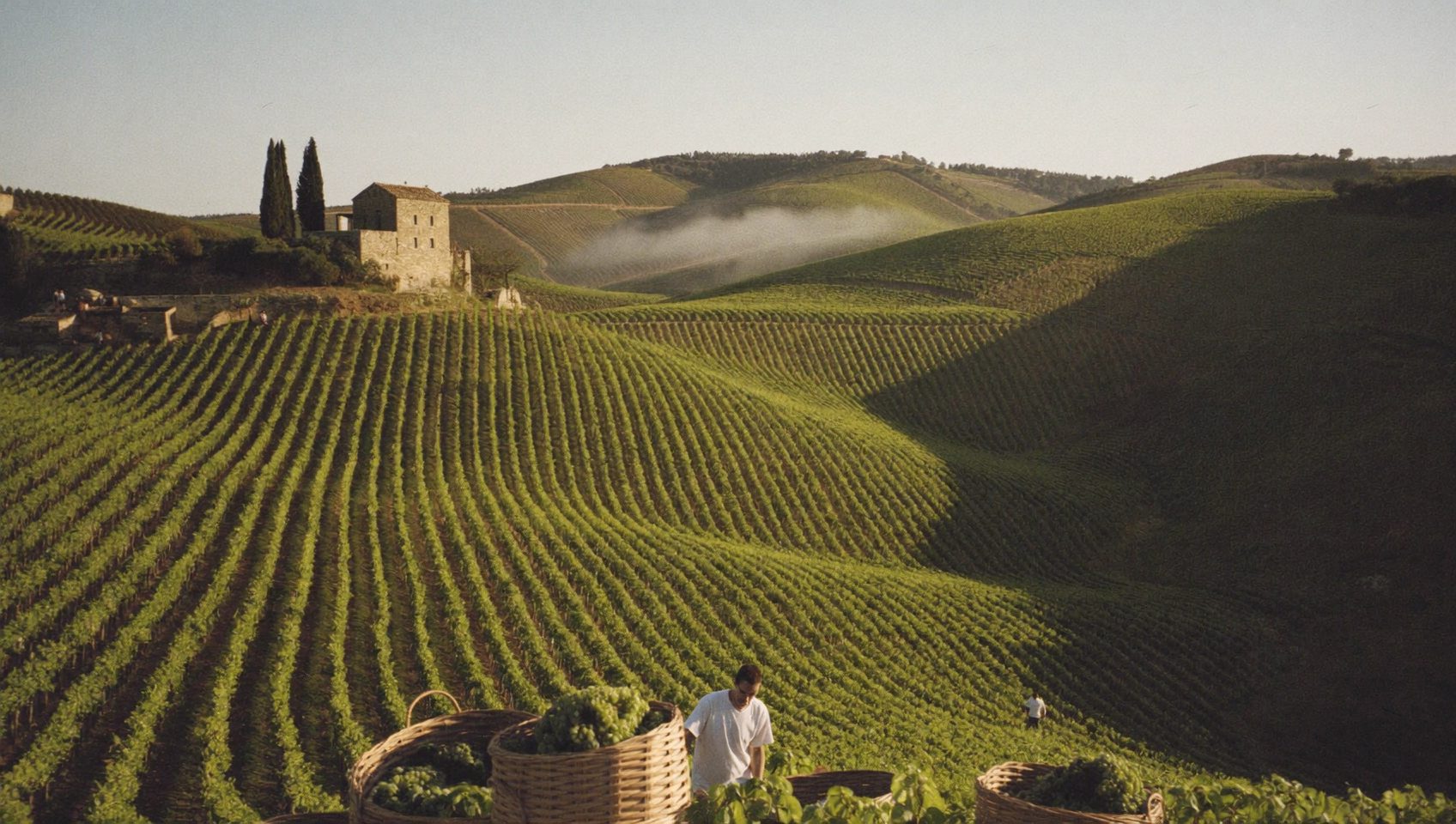
Bulk wine export prices are formed starting from the price lists of the Chambers of Commerce commodity exchanges and the periodic surveys by ISMEA, to which are added the costs of stabilisation, analytical certification and logistics in tanker or flexitank. Unlike bottled product, where brand positioning absorbs part of the fluctuations, bulk wine responds directly to the vintage balances, winery stocks and the actual alcohol content. Those who sell to foreign importers or large bottlers must be able to break down the ex-winery quotation in order to turn it into a clear offer, expressed per hectolitre or per degree-hectolitre. Knowing the reference markets and the chemical parameters required by international buyers allows you to protect your margin during negotiations and avoid disputes or deductions on the final payment at delivery.
Where to find official bulk wine quotations
To check the market value of a lot before making an offer to a foreign buyer, the first reference in Italy is the price commissions of the Chambers of Commerce and the local commodity exchanges. Historic markets in the most wine-oriented regions publish periodic bulletins recording the contracts actually registered between brokers, farms, bottlers and cooperative structures. These price lists do not set a price imposed by law; they capture a range of minimum and maximum values for each specific type, always intended for goods unpackaged ex works (Ex Works), excluding VAT and net of brokerage fees.
Alongside the Chamber surveys, the institutional source for monitoring national trends is the survey network of ISMEA (Istituto di Servizi per il Mercato Agricolo Alimentare). Through the portal dedicated to agricultural markets, ISMEA aggregates ex-origin quotations by separating common white and red wines from wines with a Protected Geographical Indication (IGP) and a Protected Designation of Origin (DOP). Analysing ISMEA reports allows you to understand whether a given market is under pressure on prices due to a shortage of product or whether, on the contrary, an excess of stocks is pushing quotations down.
When the negotiation moves to the international level, foreign operators compare Italian price lists with those of the main competing countries, in particular Spain, France, Chile, South Africa and Australia. For an overview of global flows, production balances and the weight of bulk wine in world trade, the technical reference is the OIV (International Organisation of Vine and Wine), which in its annual reports on the state of the world vine and wine sector tracks the volumes exported in containers larger than two litres and the aggregated average values. At association and trade-fair level, the analyses of the Unione Italiana Vini (UIV) and the B2B meetings at the World Bulk Wine Exhibition (WBWE) in Amsterdam complete the information picture: it is in these venues that major international brokers compare the price differential between a generic Iberian white and an Italian varietal white, defining their sourcing strategies for the commercial vintage.
To explore the general structure of export price lists further, you can consult our guide on how to calculate the wine export price, where we analyse the passage from industrial cost to the sale price to the importer.
White, red, DOP, organic: differences in price formation
Not all bulk wines are quoted with the same unit of measure. The first fundamental distinction you must master when preparing a quotation for a foreign buyer concerns the pricing criterion: sale per degree-hectolitre (euro per alcohol degree per hectolitre) versus sale per dry hectolitre (euro per hectolitre, regardless of the precise strength, provided it is within legal or regulatory limits).
Common or generic wines without a geographical indication, as well as bases intended for blending, fortification or industrial sparkling wine production, are traditionally quoted per degree-hectolitre. In this segment, the actual and potential alcohol is the primary commercial parameter. If a commodity exchange quotes a common white wine at a certain value per degree-hectolitre, to obtain the price of one hectolitre of wine you must multiply that coefficient by the actual alcohol content of your lot. This mechanism protects both seller and buyer: a warmer vintage that concentrates sugars and raises the strength fetches a proportionally higher value per single tank than a lighter, more diluted base.
When moving to varietal wines, IGP and above all DOP wines, the market almost always abandons the degree-based calculation in favour of quotation per hectolitre (or per litre, widely used by Anglo-Saxon and German buyers). Those who buy a bulk wine with a designation or a specific varietal are not buying alcoholic structure for blending, but the right to use that name on the label in their domestic market, together with a precise aromatic profile and the certificate of conformity issued by the control body.
Within this macro-structure, dynamics linked to colour and certifications come into play:
- White wines and sparkling bases: In recent market cycles, international demand for sparkling, fizzy and fresh white wines of moderate strength has made white bases particularly sought after. For these volumes, value depends not on alcohol but on acid freshness, olfactory cleanliness, absence of oxidative notes and a light colour tone.
- Red wines: Generic or ready-to-drink reds suffer most from the price competition of large world producers, while structured reds or those suitable for ageing are assessed on colour intensity, polyphenolic content and tannic softness.
- Organic and vegan certification: Certified organic bulk wine achieves a positive differential over conventional only if the lot is accompanied by impeccable documentary traceability and completely clean multiresidue analyses, an essential requirement for large bottlers in Northern Europe and the Scandinavian monopolies.
Understanding these segments is essential for those managing large volumes, as we explain in our in-depth article on the business model of the cooperative winery in the B2B market, where the enhancement of common, IGP and DOP volumes determines the economic return for the member growers.
What flexitank and tanker transport adds to the cost
A commodity exchange quotation always expresses the value of still wine in the steel tanks of the selling winery. However, a foreign importer or large bottler assesses the attractiveness of your wine on the "landed" cost, meaning goods delivered to its own bottling plant. Food-liquid logistics has a significant impact on the final price per litre and is divided into two main operating modes: road transport in insulated tanker trucks and intermodal sea transport in flexitanks.
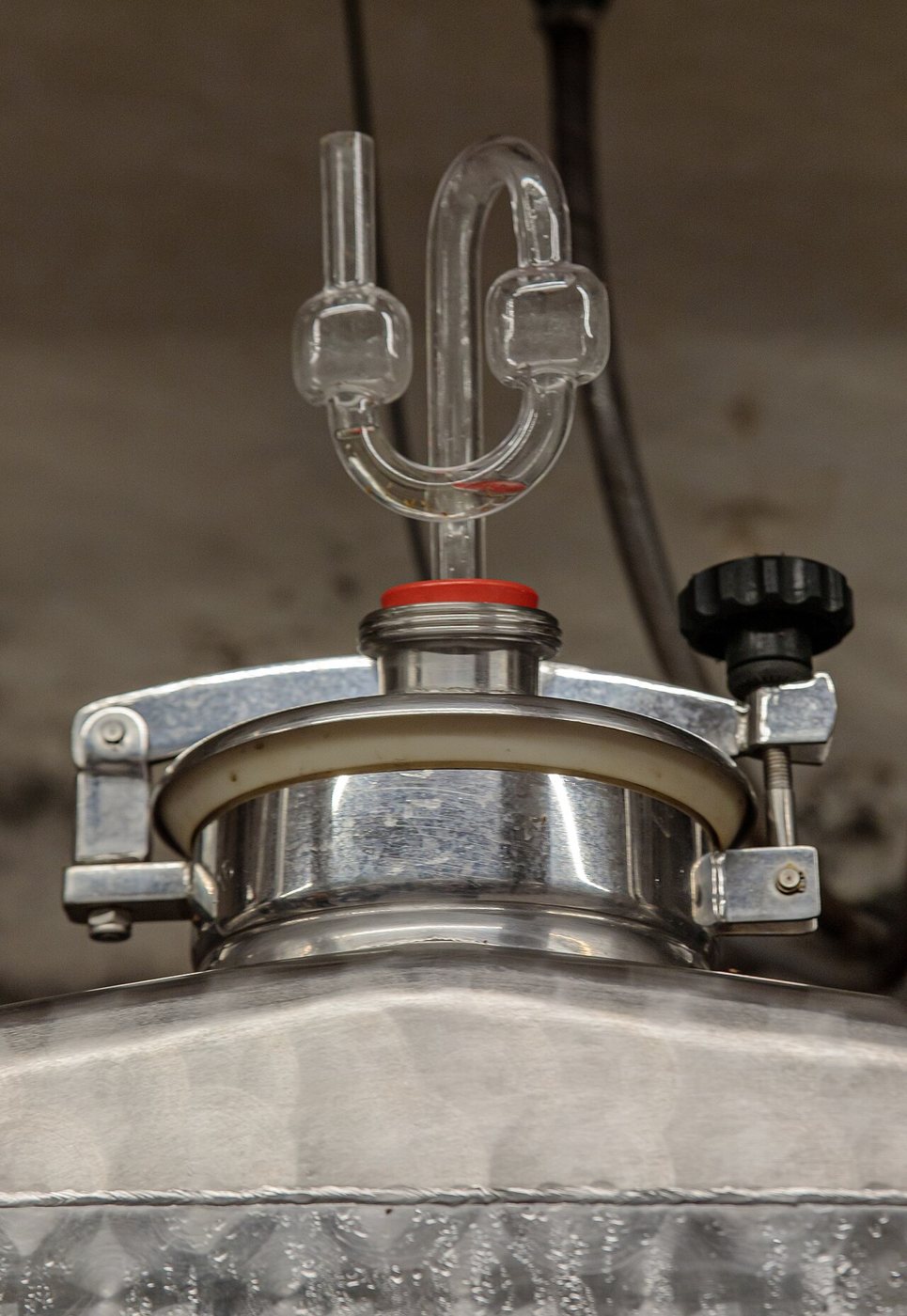
For European destinations reachable by road (such as Germany, France, the United Kingdom, the Netherlands, Poland or the Baltic countries), the standard is the insulated stainless steel tanker, often divided into several independent compartments. This configuration allows the buyer to purchase split lots or different types in the same journey, provided the total load fills the capacity of the vehicle to amortise the road freight. In the price calculation you must check who takes charge of the sterile washing of the tank before loading (accompanied by the relevant EFTCO washing certificate) and of any saturation with inert gas (nitrogen or carbon dioxide) during pumping to prevent oxidation during transit.
For overseas shipments to the United States, Canada, Japan, China, Australia or South America, the tanker gives way to the sea container fitted with a flexitank. This is a single-use bag made of multilayer food-grade plastic material, with an oxygen barrier (often in EVOH), housed inside a standard 20-foot dry container. This logistics solution turns a standard container into a liquid tank that does not require an empty return journey, drastically reducing the sea freight cost per litre compared with ISO metal tanks, and offering a notable competitive advantage over transporting already bottled wine (where you pay for the weight of glass, the volume of pallets and the lower load density per container).
When quoting an overseas supply in flexitank, your cost sheet must include specific cost items that do not exist in an ex-winery sale to a local broker:
- Supply and installation of the flexitank: The cost of the certified bag, the bulkhead partitions and the specialised labour for fitting out the container.
- Road haulage and VGM weighing: Positioning the container at your winery for loading, verification of the Verified Gross Mass (VGM) and transport to the port of loading.
- Liquid-specific insurance: Standard policies often exclude damage from spillage or contamination in flexitanks; a dedicated cover is needed to protect the value of the goods and any container cleaning costs in the event of bag rupture.
- Customs management and excise duties: Issuing the electronic document e-AD through the EMCS system for movement under duty suspension until the port of exit from the European Union.
To understand how the operating procedures work and which international operators buy in this way, you can read our specific guide on bulk wine export in flexitank and who buys it. If you need to define with the foreign customer how customs and tax responsibilities are shared during transport, see the page on excise and VAT on wine in the DAP and DDP chain.
Chemical analyses, stability and quality penalties in the contract
In international bulk wine trade, the price agreed between the parties is always subject to the analytical and organoleptic conformity of the delivered lot with respect to the approved reference sample (contract sample). While in bottled wine sales the buyer purchases a finished and stable product, in bulk the buyer acquires a semi-finished raw material that will have to be filtered, possibly blended and bottled in the destination country. Every corrective intervention the importer must carry out in its own cellar because of an anomaly in the wine received translates into an industrial cost, which is immediately passed back to the supplier in the form of a request for a discount, a contractual penalty or, in the most serious cases, rejection of the entire tank.
The first element affecting price formation from the outset is the processing state of the volume. A "raw" wine (not fined, not filtered and not cold-stabilised) has a lower price than a wine "ready for bottling" (stabilised for protein and tartaric matters, microfiltered and brought to the correct levels of free sulphur dioxide). When you read a commodity exchange quotation, bear in mind that it almost always refers to raw but sound and fair wine; if the foreign buyer asks for a product ready to go onto the bottling line as soon as it is unloaded from the flexitank, you must add to the base price your cellar costs for tartaric stabilisation, protein fining and tangential or cartridge filtration.
To prevent the margin calculated on paper from being eroded by complaints on arrival, the sales contract must regulate the analytical parameters and the sampling procedure with precision:
- Alcohol content and residual sugars: In degree-hectolitre contracts, a variation of a few tenths of a degree with respect to what was declared changes the total amount of the invoice; moreover, for foreign markets where excise bands depend on alcohol strength, exceeding a certain threshold can trigger a much higher tax for the importer, generating serious disputes.
- Volatile acidity and sulphur dioxide: International buyers set contractual limits often stricter than the maximum levels permitted by EU legislation. Too high a total sulphur dioxide leaves the buyer's winemaker little room for manoeuvre for subsequent pre-bottling additions, while too low a free level exposes the wine to risks of oxidation or refermentation during the sea voyage.
- Protein and tartaric stability: If the contract provides for the supply of stable wine, the buyer's laboratory will carry out hot and cold stability tests before unloading; any instability entails charging the cost of treatment at the destination plant.
- Sampling counterparts: At the departure of the tanker or flexitank, several representative samples of the volume must always be drawn, sealed with numbered lead seals and countersigned by the driver or the forwarder. One sample travels with the documents, one remains at your winery and one is kept for possible arbitration by an accredited third-party laboratory in case of discrepancy between the departure and arrival analyses.
Example table: how bulk wine export pricing is structured
To summarise the differences between the various product categories and how the technical and logistical components add up to the base price, the table below illustrates the cost formation scheme for three representative B2B supply types, without fixed figures that vary according to the vintage campaign.
| Type of supply | Ex-origin quotation unit | Technical parameter driving the price | Required processing state | Logistics and documentary cost to add |
|---|---|---|---|---|
| Common table wine (White / Red) | Euro per degree-hectolitre (€/degree/hl) | Actual alcohol content, absence of defects, colour intensity (for reds) | Raw or racked, sound and merchantable | Tank washing, inert gas saturation, e-AD document, road or flexitank freight |
| Varietal or IGP wine for Private Label | Euro per hectolitre (€/hl) or Euro per litre (€/l) | Primary aromatic profile, acid freshness, colour stability, residual sugar | Fined, brilliantly filtered, often required cold and protein stable | Cellar stabilisation costs, control body certification for IGP/varietal claim, flexitank fitting with EVOH barrier |
| DOP or certified organic wine | Euro per hectolitre (€/hl) | Conformity with the production specification, total absence of phytosanitary residues (for organic) | Ready for bottling or aged according to the specification requirements | Fees and checks of the certification body, accredited multiresidue analysis, SIAN electronic management and COI certificate for third countries |
When selling bulk makes sense and how to integrate it into the B2B strategy
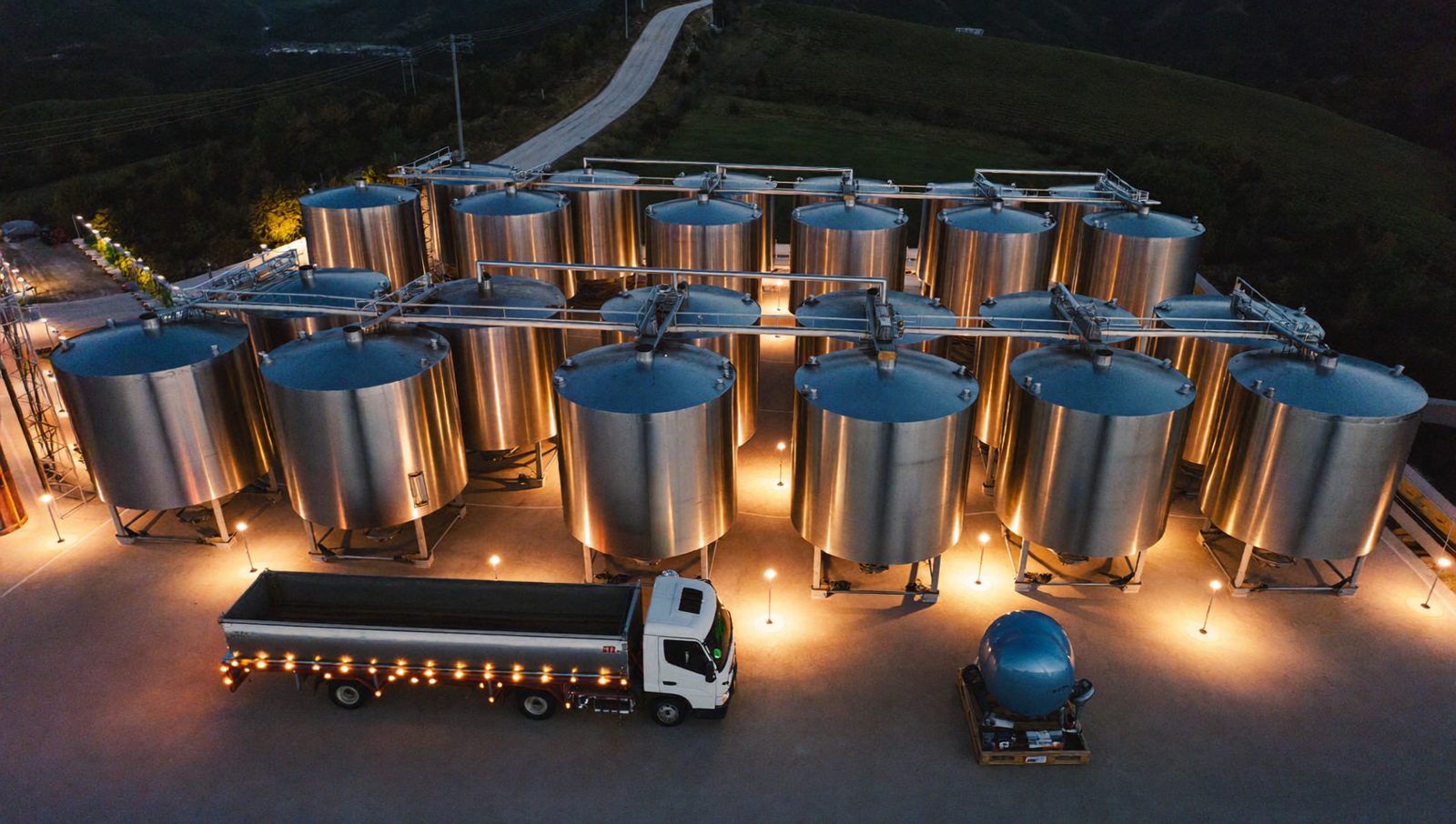
For a medium-sized winery, selling bulk wine abroad should not be seen solely as an emergency outlet when tanks are full and the new harvest is approaching. If managed with an industrial and planned approach, the marketing of lots in tanker or flexitank integrates with bottled sales, serving specific financial and commercial functions.
The first objective advantage concerns cash flow and working capital turnover. Exporting bottled wine requires upfront investment in glass, corks, capsules, labels and cartons, as well as line downtime and pallet storage times in the warehouse, with payment terms that on international markets can stretch considerably. Selling a bulk lot allows you to release significant volumes in a single transaction, freeing physical space in the wine vessels and generating immediate liquidity, often settled with payment in advance on unloading or at short maturity, without tying up money in packaging materials.
Secondly, the bulk channel opens the door to a category of B2B counterparts who would never buy your winery brand: large foreign organised retail chains running private label bottling programmes in destination countries, state monopolies tendering for bag-in-box formats, and sparkling wine houses or bottling plants located in markets where customs duties or environmental taxes on packaging heavily penalise the import of full glass bottles. In these contexts, becoming accredited and consistent suppliers of qualitatively impeccable volumes creates multi-year contractual relationships that stabilise company turnover.
On the other hand, the decision to sell bulk wine requires careful evaluation of your territory's rules and your brand positioning:
- Production specification constraints: Many Italian designations expressly prohibit bottling outside the delimited production area or impose strict restrictions on the movement of bulk wine beyond national borders in order to protect added value and supply-chain controls. Before quoting a DOP in tanker for export, you must always verify what the current specification provides regarding the area of vinification and bottling.
- Indirect shelf competition risk: If you sell designated or varietal bulk wine to a large foreign bottler, that wine will end up on the shelves of local mass retail at a very aggressive shelf price, thanks to the lower logistics and industrial costs of on-site bottling. It is essential that your company brands bottled at origin are positioned on quality tiers, distribution channels (such as Horeca or specialist retail) or well-distinguished vineyard selections, so that your own bulk wine does not become a direct competitor of your bottles.
To structure this separation correctly between the industrial line and the own-brand line, we invite you to consult the technical sheet in our regulatory section dedicated to pricing and market positioning, where we explore how to build a price list architecture for international markets.
Frequently asked questions
What does a degree-hectolitre quotation mean in bulk wine price lists?
A degree-hectolitre quotation indicates the price for each unit of alcohol contained in one hundred litres of wine. To calculate the actual price of one hectolitre of product ex winery, you must multiply the value shown in the commodity exchange list by the actual volumetric alcohol content (and, if the contract provides for it, the potential alcohol content) of the lot being sold.
Do the prices published by ISMEA and commodity exchanges include transport and brokerage?
No, the official ISMEA surveys and Chamber of Commerce bulletins always express quotations for goods unpackaged, delivered ex winery by the producer (Ex Works), net of VAT. Special pumping costs, stabilisation treatments, any broker's commission, tanker freight or flexitank fitting must always be calculated and quoted separately.
Who pays for laboratory analyses in a bulk wine export sale?
Unless otherwise agreed in the contract, the selling winery bears the cost of the initial analyses needed to guarantee the conformity of the lot, to issue the accompanying documents and, when required by the destination third country, to obtain the official export certificates. The foreign buyer instead pays for its own control analyses on arrival of the tanker before authorising unloading.
What is the difference between selling raw bulk wine and wine ready for bottling?
Raw wine is sold after racking and the first transfers; it is chemically sound but still unstable for tartaric and protein matters and not microfiltered. Wine ready for bottling has already undergone in the cellar all the fining, cold stabilisation and filtration needed to go directly onto the packaging line on arrival, justifying a surcharge per hectolitre.
Sources
- Organic and natural wine fairs: Millésime Bio, RAW Wine
- Bulk wine export: flexitank, prices and who buys it
- Foreign online wine retailers: how to pitch Italian wine
- 2027 Wine Fairs: Calendar, Dates and Cities for Exporters
- How to Find Italian Wine Suppliers in Belgium (English)
- Winemaker dinner abroad with your importer: how it works