Bulk wine export: who buys (bottlers, monopolies, chains), flexitank and ISO tank, prices and documents
Wines Export Editorial · Last updated:

Exporting bulk wine allows your winery to free up tank space before the harvest, generate immediate cash flow and supply large foreign bottlers without bearing the costs of glass, closures and labels. The international bulk market no longer concerns only generic blending wines: it absorbs a growing share of varietal and geographically indicated wines that foreign buyers prefer to bottle at destination in order to reduce transport costs and carbon footprint. To sell profitably in this channel, you must know who buys large volumes, master flexitank or tank logistics and prepare analytical and customs documentation without errors.
How much Italian wine ships in bulk and where to
Global bulk wine trade, monitored constantly by the International Organisation of Vine and Wine (OIV) and, in Italy, by the reports of ISMEA and ISTAT, is a structural component of global wine trade. Italy consistently ranks among the main supplying countries internationally, alongside Spain in terms of volumes moved within the European continent and toward overseas markets.
Geographic flows follow precise industrial logic. In Europe, the first absorbing market for Italian bulk wine has historically been Germany, where large bottling plants buy sparkling bases, semi-sparkling and still varietal wines to supply supermarket chains and discounters in Germany and northern Europe. France regularly imports Italian bulk wine lots, both for the blending needs of large négociants and for producing bases intended for distillation or sparkling winemaking. A third key hub is the United Kingdom: here logistics costs and the tax system have led many importers to move packaging operations across the Channel, importing wine in large containers and bottling it close to the distribution centres of British large-scale retail. Scandinavian countries, Central and Eastern European markets and the United States also regularly take bulk lots to feed private label programmes and packaging in alternative formats such as bag-in-box or cans.
For a medium-sized private winery or for those operating in the B2B market of cooperative wineries, bulk wine serves a dual function: on one hand, it allows you to rebalance cellar stocks when an abundant vintage risks saturating storage capacity; on the other, it offers a steady revenue line with lower commercial and marketing costs than packaged product. However, you must always check production regulations: many designations of origin (DOP) and some geographical indications (IGP) prohibit bottling outside the defined production area, restricting bulk export to common wines, varietals or designations that explicitly allow bottling at destination.
Who buys bulk wine abroad
International bulk wine buyers are not looking for a terroir story to tell in a restaurant, but for a semi-finished or finished product that meets strict physical-chemical parameters, has a competitive price per litre and guarantees consistent quality from one lot to the next. Buyer profiles fall into four main categories:
- Large industrial bottlers and co-packers: companies equipped with high-speed packaging lines located in consumer markets (Germany, United Kingdom, Benelux, North America). They buy still wine or sparkling base to bottle in glass, bag-in-box, kegs for the food service sector or cans, working on contract for third parties or with their own brands.
- Large-scale retail (GDO) chains and discounters: the purchasing departments of foreign supermarkets build their own entry-price private label lines by buying bulk volumes directly at origin or through their trusted bottlers. In this way they control the cost of the raw material and standardise the organoleptic profile of the wine from one year to the next.
- State monopolies: in countries where retail sale of alcoholic beverages is managed by a public monopoly (such as Sweden, Norway, Finland and Canadian provinces), a significant share of purchase tenders concerns wines intended for the bag-in-box segment. Importers that win the tender often buy bulk wine in Italy and package it in certified plants close to the destination market in order to comply with the strict environmental requirements on packaging imposed by the monopolies.
- Producers of flavoured beverages, vermouth and spirits: foreign industries producing sangria, wine-based cocktails, dealcoholised wines, vermouth or spirits regularly seek neutral base wines, musts or blending wines with specific alcohol levels and acidity.
Flexitank, ISO tank, tanker: pros and cons
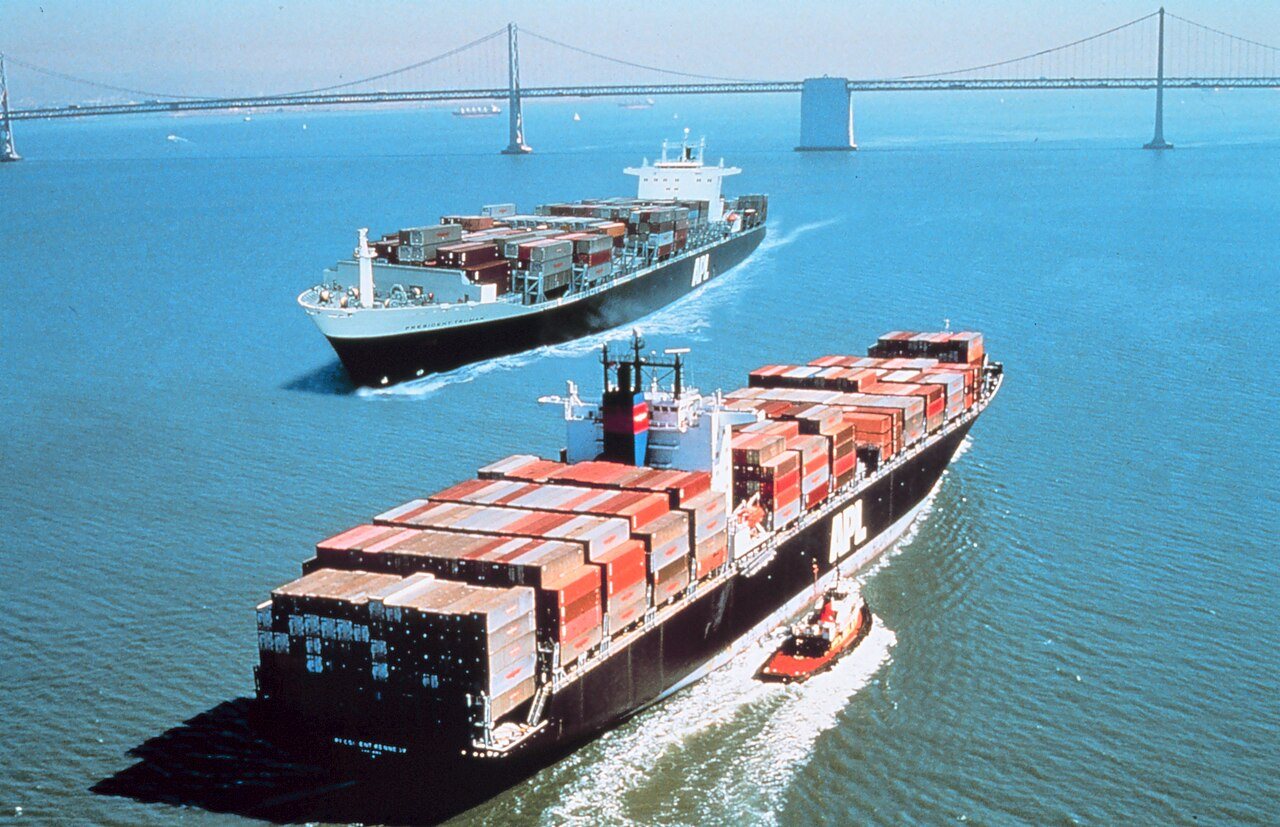
The choice of transport system directly affects the cost per litre at destination and the preservation of your wine's organoleptic quality. For continental shipments by road, the road tanker remains the standard; for sea and intermodal routes, the choice is between the flexitank and the ISO tank. When planning the logistics and transport of wine, you must agree with the buyer which solution to adopt based on distance, wine pressure and oxygen sensitivity.
| Feature | Road tanker | Flexitank (in standard container) | ISO Tank (intermodal tank) |
|---|---|---|---|
| Contact material | Food-grade stainless steel | Multilayer polyethylene (single use) | Food-grade stainless steel |
| Transport mode | Road (possible ro-ro ferry) | Sea, rail, road | Sea, rail, road |
| Empty return | Borne by the road carrier | None (the bladder is disposed of/recycled) | Required (affects routes without a return load) |
| Oxygen protection | Total | High (only with EVOH barrier film) | Total |
| Temperature control | Insulated or climate-controlled tanker | None (unless thermal covers or reefer containers are used) | Insulated tank (often with heating/cooling system) |
| Suitable for sparkling wines or pressurised bases | Yes (if isobaric tanker) | No (still wines without residual pressure only) | Yes (if certified for the required pressure) |
The stainless steel road tanker is the usual solution for shipping bulk wine to central and northern Europe. Often divided into several independent compartments, it allows different lots to be shipped on the same trip (for example a white and a red) while maintaining thermal insulation during days in transit by road.
The flexitank has transformed sea export of bulk wine. It is a large single-use flexible bladder, made of several layers of food-grade polyethylene and equipped with a barrier against oxygen permeation (usually EVOH), installed inside a standard dry cargo sea container. The economic advantage is clear: a standard container, easy to source, is used and, once the wine is unloaded at destination, the bladder is removed and sent for recycling, eliminating the costs of washing, sanitising and returning an empty tanker. On the downside, the flexitank does not tolerate internal pressure: the wine must be completely still, microbiologically stable to avoid refermentation during the sea voyage, and protected from temperature swings by insulating linings applied to the container walls.
The ISO tank is a cylindrical stainless steel tank enclosed in a metal frame with the same external dimensions as a standard container, which allows it to travel by truck, train and container ship. It offers superior mechanical and chemical protection compared with the flexitank, withstands pressure and has effective thermal insulation. It is the preferred choice for higher-end wines, for bases that need to travel in a controlled atmosphere or for intermodal shipments in Europe where a balanced flow of tanks amortises the cost of repositioning. To set up these shipments correctly, it is advisable to rely on forwarders specialised in wine logistics, able to provide certified installation of the bulkhead and the flexitank bladder directly in your winery yard.
Analysis and required documents
When you sell bulk wine, the contract is not closed on tasting a labelled bottle, but on the conformity of the final load to the approved sample. The standard procedure involves sending a representative sample from the tank (sample). If the buyer approves the organoleptic profile and the price, they will ask you to lock the volume and provide a certificate of analysis issued by an accredited laboratory.
The analytical parameters that every foreign bottler examines before authorising the load include:
- actual and potential alcohol content by volume;
- residual reducing sugars (essential for assessing the risk of refermentation in transit);
- total acidity, volatile acidity and pH;
- free and total sulphur dioxide (which must be adjusted before departure, considering transit times and the legal limits of the destination country);
- protein and tartaric stability, plus microbiological control (count of yeasts and lactic acid bacteria) if the wine travels already ready for bottling (so-called bottle-ready).
At the time of loading at the winery, it is standard practice to take at least three samples from the tanker or the freshly filled flexitank, seal them with wax or numbered seals and countersign them together with the driver: one stays with you, one travels with the carrier for the consignee and the third is kept as a reference sample in case of quality disputes on arrival.
From a customs and tax standpoint, bulk wine almost always travels under duty suspension. Your winery, operating as an authorised tax warehouse, must issue the electronic administrative document (e-AD) through the telematic system before the vehicle leaves the premises; you will find all the operational steps in the dedicated page on EMCS, tax warehouses and accompanying documents. For exports outside the European Union, the e-AD covers the goods up to the export customs office (often the port of loading), where it is matched with the export customs declaration and the health or origin certificates required by the authority of the importing country. In addition, every loading and unloading movement of bulk wine must be promptly recorded in the winery's electronic register (SIAN), indicating the product category codes for wine products and any oenological practices carried out.
Bulk wine prices: where to look
Unlike bottled wine, whose price list is built on brand positioning, bulk wine prices follow the dynamics of agricultural commodities: they fluctuate week by week based on harvest forecasts, stocks held in national wine storage, weather conditions (spring frosts, drought, downy mildew) and direct competition from Spanish, French or South American volumes.
In Italy, the official references for tracking origin price trends are the bulletins published by ISMEA (through the Ismea Mercati price survey network) and the weekly or fortnightly price lists of the Chambers of Commerce and commodity exchanges in the main production centres (such as Verona, Modena, Reggio Emilia, Foggia, Bari, Trapani, Asti). To these are added the market analyses published by the Unione Italiana Vini (UIV) through its observatory and the trade publication Corriere Vinicolo.
When you consult these price lists or make an offer to a foreign buyer, keep in mind how prices are expressed in commercial practice:
- Euro per hectolitre (EUR/hl): used mainly for wines with designation of origin, for structured geographical indications and for premium sparkling bases, where the value is linked to origin and type more than to alcohol content alone.
- Euro per degree hectolitre (EUR/degree/hl): the historical unit of measure for common table wines, blending wines and musts. To obtain the price per hectolitre, the price per degree is multiplied by the actual alcohol content of the lot.
All prices recorded on Italian markets are normally understood as ex works (EXW), net of VAT, brokerage and transport costs, for bulk goods (unpackaged) loaded onto the buyer's tanker. If a foreign importer asks you for an FOB (Italian port of loading) or CIF (port of destination) quotation in flexitank, you must add to the wine price the cost of purchasing and installing the flexitank, the container freight from your winery to the port, loading charges (THC) and export customs procedures.
Trade fairs and bulk brokers
Selling bulk wine abroad relies on technical B2B relationships and a specialised intermediary network. While in bottled wine the winery deals directly with the importer or Ho.Re.Ca. distributor, in bulk a significant share of transactions passes through the figure of the international broker (mediator).
The bulk broker knows in real time which Italian wineries have surpluses of a given grape variety, what the chemical parameters of the available tanks are and which German, French or British bottlers are looking for exactly that wine profile. Working with a reliable broker gives you access to large industrial buyers and assistance in drafting the contract, managing approval samples and coordinating pickup with tankers, in exchange for a commission usually calculated as a percentage of the transaction value or as a fixed amount per hectolitre.
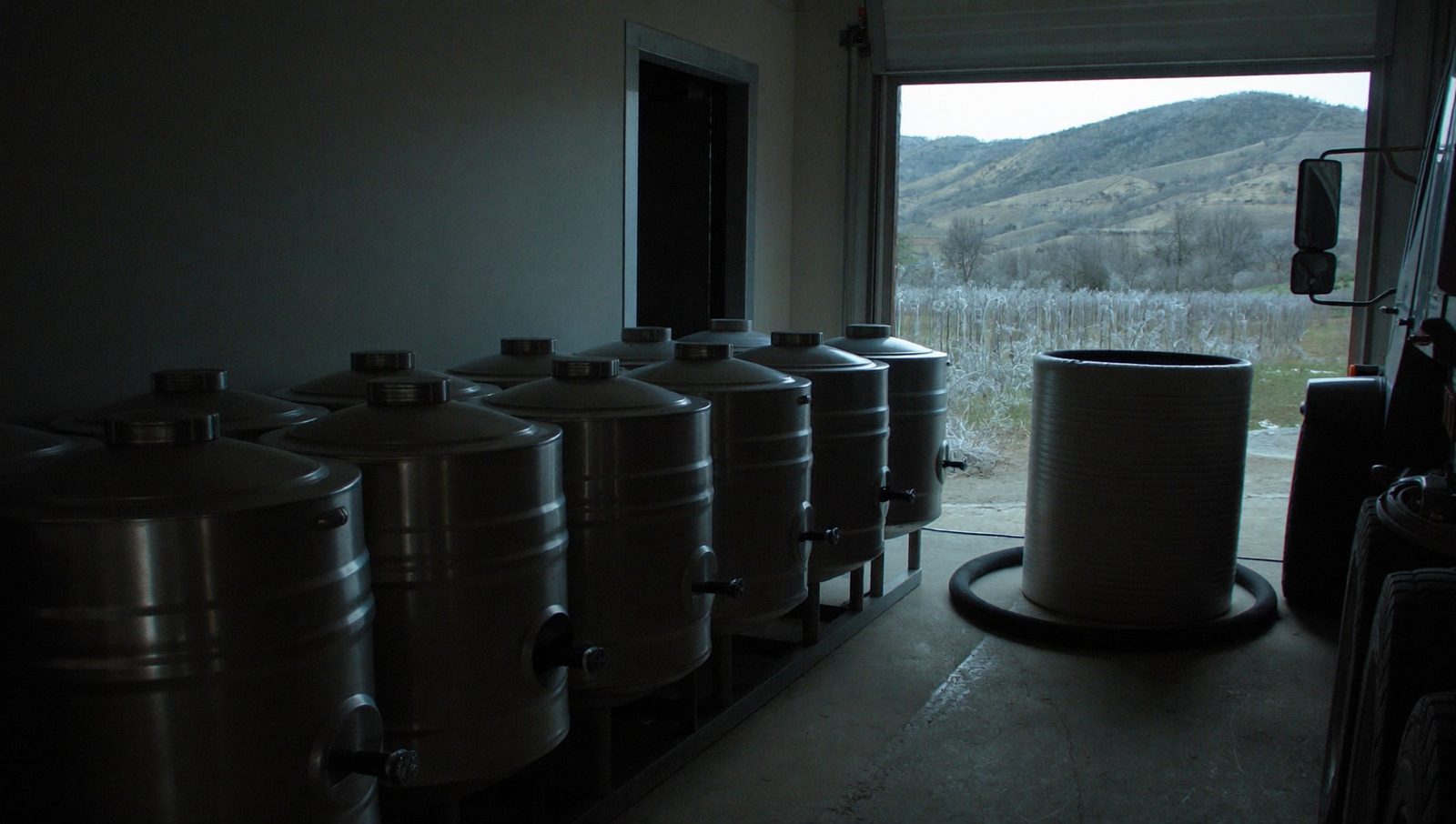
If instead you want to meet in person with purchasing directors of large bottling groups, GDO buyers and global brokers, the reference event in Europe is the World Bulk Wine Exhibition (WBWE), held every year in Amsterdam (organised by the Vinexposium group). Unlike traditional fairs dedicated to bottles, at the WBWE there are no design stands: producers display tank samples sorted by type, vintage and ex-cellar price, allowing buyers to taste dozens of volumes in a few hours and negotiate annual supply contracts. Other meeting opportunities for B2B operators and private label brands include specialised areas within large events such as Vinitaly (with focus sessions dedicated to the bulk and private label segment) and Wine Paris.
Frequently asked questions
What is the minimum volume to export bulk wine in a flexitank?
A flexitank cannot travel partially empty, because the wave motion produced by the liquid during navigation or braking (sloshing effect) would damage the container walls. The order volume must therefore match the nominal capacity of the chosen bladder, with a minimum tolerance specified by the flexitank manufacturer; for smaller lots, separate compartments of a road tanker or IBC containers (palletised cubes for food liquids) are used.
Who pays for the flexitank installation and transport?
It depends on the Incoterms delivery term negotiated in the sales contract. If you sell ex works (EXW) or free carrier (FCA winery), the foreign buyer instructs their own forwarder to bring the container with the flexitank already installed to your premises, and you are only responsible for pumping the wine; if you sell FOB or CIF, supply of the bladder, its installation and transport to the port are your responsibility and must be included in the price per litre.
Can a DOC or IGP wine be exported in bulk?
It depends exclusively on the production regulations of the individual designation or geographical indication. Many DOP regulations require mandatory bottling within the production area to protect traceability and controls, making bulk export impossible; many IGPs and some DOPs without a territorial bottling requirement, however, allow shipment in tanker abroad, provided it is accompanied by certifications from the authorised control body.
How do you protect yourself on payments in bulk wine sales?
Since these are high-value supplies per single load and the goods, once unloaded into the foreign customer's tank, lose their individual identity, shipping on open account to new counterparties is risky. The prudent practice is advance payment before the tanker departs, opening a bank letter of credit or hedging the customer risk through export credit insurance.
Sources
- ISMEA – Institute for Services to the Agricultural and Food Market (Ismea Mercati)
- OIV – International Organisation of Vine and Wine (statistics on world wine trade)
- ISTAT – Italian National Institute of Statistics (foreign trade data)
- Unione Italiana Vini (UIV) – Association of Italian wine companies
- World Bulk Wine Exhibition (WBWE) – International bulk wine fair
- Bulk Wine Export Price: Where to Check Quotes and Trends
- 2027 Wine Fairs: Calendar, Dates and Cities for Exporters
- Organic and natural wine fairs: Millésime Bio, RAW Wine
- Winemaker dinner abroad with your importer: how it works
- Foreign online wine retailers: how to pitch Italian wine
- Wine-Searcher for wine importers: from shelf price to buyer