Organic Wine Importers Abroad: Markets That Ask for It (Nordics, Germany, USA), Certifications and How to Contact Them
Wines Export Editorial · Last updated:
Organic wine importers are found where organic already holds a steady share of food spending: Denmark and Switzerland, which in 2023 had the highest organic market shares in the world (11.8% and 11.6% according to FiBL); the Nordic monopolies, where organic wine was 24.9% of the wine volume sold by Systembolaget in 2024; Germany, Europe's leading organic market with 16.1 billion euros in sales in 2023; and the United States, the world's largest market with 59 billion euros, where the word "organic" on a label follows rules different from European ones. The buyer of organic wine is almost always a generalist importer with an organic line or an importer specialised in organic and natural wine. In both cases they ask for the control body's certificate, the code on the label, and sulphite analyses. This page lists the markets, the documents and how to contact them. The organic rules themselves (Regulation 2018/848, biodynamic, natural) are covered in the page on sustainability, organic and biodynamic and in the guide on what is needed to export organic and sustainable wine.
Where organic sells the most (data)
The reference data come from the FiBL-IFOAM report "The World of Organic Agriculture 2025", published in February 2025 with 2023 data. The United States is the world's largest market with 59.0 billion euros in sales, and the European Union is second. Germany, with 16.1 billion, is the largest European market. In Europe, retail sales reached 54.7 billion euros, of which 46.5 billion were in the European Union, with growth of 3.0% (EU: 2.9%). The average European consumer spent 66 euros a year on organic products, and the average EU consumer 104 euros. The Swiss (437 euros) and Danes (362) spend the most. The highest market shares remain in Denmark (11.8% of food spending) and Switzerland (11.6%). On the production side, Italy has the highest number of organic producers in Europe (84,191) and of processors (nearly 25,000), while Germany has the highest number of importers (nearly 2,000), which says by itself where the buyers are.
| Indicator (2023 data, FiBL-IFOAM 2025) | Value |
|---|---|
| United States | 59.0 billion euros |
| Germany | 16.1 billion euros |
| Europe / European Union | 54.7 / 46.5 billion euros |
| Market growth Europe / EU | +3.0% / +2.9% |
| Organic share of food spending: Denmark | 11.8% |
| Organic share of food spending: Switzerland | 11.6% |
| Per capita spending: Switzerland / Denmark / EU average | 437 / 362 / 104 euros |
| Organic importers in Germany | nearly 2,000 |
Source: FiBL and IFOAM – Organics International, press release on Europe dated 11 February 2025.
For vineyards, the same report, cited by the Austrian Wine Marketing Board via Wine Intelligence (August 2025), gives the shares of organic vineyard area for 2023: Spain 17.8%, France 17.4%, Italy 14.6%, Austria 22.6% (rising to 25% in the country's most recent data). Italy therefore has a lower organic share of vineyards than its two direct competitors, and this matters in negotiations: a German importer looking for a mid-range organic wine finds more supply in Spain and France and compares prices.
According to the director of the Austrian body quoted in the same article, demand comes mainly "from export markets such as Scandinavia and Canada". The Nordic data confirm this.
Nordic monopolies and organic: the shares in tenders
Systembolaget publishes organic product sales every quarter. In 2024 the Swedish monopoly sold 52.2 million liters of organic wine out of 209.3 million liters of total wine: 24.9% of the volume. Across all beverages, the organic share was 13.5% (76.0 million liters out of 561.6). Organic wine volume fell 3.9% compared with 2023, in line with the general decline in sales, but organic still accounts for a quarter of wine sold.
| Systembolaget 2024 (volume) | Organic | Total | Organic share |
|---|---|---|---|
| Wine | 52,172,049 liters | 209,345,029 liters | 24.92% |
| Spirits | 1,391,586 liters | 23,918,072 liters | 5.82% |
| Beer | 18,059,963 liters | 296,062,452 liters | 6.10% |
| All beverages | 76,002,278 liters | 561,628,116 liters | 13.53% |
Source: Systembolaget, "Försäljning, ekologiskt odlade produkter, kvartal 4 2024".
What this means for the winery: some tenders from Systembolaget, Vinmonopolet and Alko explicitly list "ekologiskt", "økologisk" or "luomu" among their requirements. The local importer responding to a tender looks for a certified winery with the right wine in terms of price, style and analysis. The organic certificate from the control body and the EU logo on the label are conditions of admission, not sales arguments. How tenders work, from publication dates to sample delivery, is explained in the guide on Systembolaget, Vinmonopolet and Alko tenders. The position of Italian wine and organic in Sweden is covered on the page on Italian share and organic trends in Sweden. In these markets organic-specialist importers do exist, but most organic wines pass through large generalist importers that have a dedicated line, so look at both.
Germany and Naturkost
Germany is Europe's leading organic market. According to BÖLW (the German organic food and farming association), organic food and beverage sales grew 5.7% in 2024 to about 17 billion euros, and the organic share of agricultural land reached 11.4%. German organic wine reaches consumers through two channels: general food retail (supermarkets and discounters, which have their own organic lines and buy through importers or directly), and the Naturkostfachhandel, the network of specialised organic shops with their wholesalers. In wine, the Naturkostfachhandel works with dedicated importers and with wineries certified also by private brands (Bioland, Naturland, Demeter), which are stricter than the European regulation.
For an Italian winery, German buyers of organic wine fall into three types. Specialised organic and natural importers, small and medium-sized, who supply wine shops, restaurants and Naturkost stores and who ask, beyond the EU certificate, often for an additional certification or at least compliance with lower sulphite limits. Naturkost wholesalers, who supply specialised shops and buy from price lists. Chains and discounters, who want low-priced organic in large volumes, often under private label. The general structure of the market, with the names of its links (Importeur, Fachgroßhandel) and their numbers, is covered on the page on wine importers and wholesalers in Germany.
USA: EU-US equivalence and labeling
The United States is the world's largest organic market, but American "organic" wine is not European "biologico" wine. According to the guide from the US Department of Agriculture (USDA), hosted by the TTB, there are two labeling categories for wine, plus a residual one. "Organic" wine cannot contain added sulphites (only natural ones, below 10 parts per million) and may carry the USDA Organic seal. "Made with organic grapes" wine may contain added sulphur dioxide up to 100 parts per million, which must be declared, but it cannot use the USDA seal. Both categories must be certified by an accredited certification body, and the label goes through both the certifier and the TTB's COLA procedure. In the European Union, by contrast, the organic regulation allows added sulphites at limits lower than conventional wine. Wine Spectator, reporting the entry into force of European rules with the 2012 vintage, cites 100 milligrams per liter for reds and 150 for whites and rosés, with an additional margin for sweet wines. The same article notes that American "made with organic grapes" wines can be sold as organic in Europe.
The consequence is well known to American importers and should be to you: a European organic wine with added sulphites is sold in the United States as "made with organic grapes", not as "organic wine". The equivalence agreement between the European Union and the United States, signed on 15 February 2012 and in force from 1 June 2012 (Wine Spectator), recognises the two systems as equivalent but left out precisely this point. In practice, the American importer will ask for the certificate from your control body and a statement on sulphites in order to choose the wording. The rest of the American requirements (COLA, Prior Notice, FSVP) are explained in the guide on FDA, Prior Notice and FSVP for wine in the USA.
| Wording in the USA | Added sulphites | USDA seal | EU organic wine with added sulphites |
|---|---|---|---|
| Organic wine | no (natural only, below 10 ppm) | yes | not allowed |
| Made with organic grapes | yes, SO2 up to 100 ppm, declared | no | allowed, if within 100 ppm |
| Other (less than 70% organic) | yes | no | only listing the organic ingredients, with certificate |
Source: USDA Agricultural Marketing Service, "Labeling organic wine", document hosted by the TTB.
Importers specialised in organic and natural wine
The importer specialised in organic and natural wine is a figure that emerged over the last twenty years in the Nordic countries, Germany, the Benelux, the United Kingdom, Japan and the major American cities. They have a catalogue of a few dozen wineries, all certified or "natural" by declared practice. They sell to restaurants, wine shops and specialised stores, and attend dedicated trade fairs (natural wine fairs and the organic pavilions at ProWein and Vinitaly). They ask the winery four things that a generalist importer does not ask: the up-to-date organic certificate, with the control body's number appearing on the label next to the EU logo; total sulphur analyses lot by lot; a description of vineyard and cellar practices (yeasts, fining, filtration); and, increasingly often, the absence of animal-derived allergens so that they can write "vegan".
Generalist importers with an organic line are more numerous and buy larger volumes. For them, organic is a product requirement (the monopoly tender, the supermarket's organic line, the restaurant's request), and price matters as much as the certificate. With them, the winery competes with Spanish and French organic wines, which have more area and often lower prices. The Italian lever is the appellation and the indigenous grape variety, which competitors do not have.
To tell the two types apart before writing, look at the online catalogue. If every winery in the catalogue is certified, it is a specialist and organic is its business. If organic is a search filter on a catalogue of hundreds of labels, it is a generalist with a line. The questions to ask before signing are the same for everyone and are covered in the guide on how to check a foreign importer.
How to contact them and with which documents
The sequence is the same as for any importer (a short email, the technical sheet, the trade fair, samples), with three additional documents ready from the first contact.
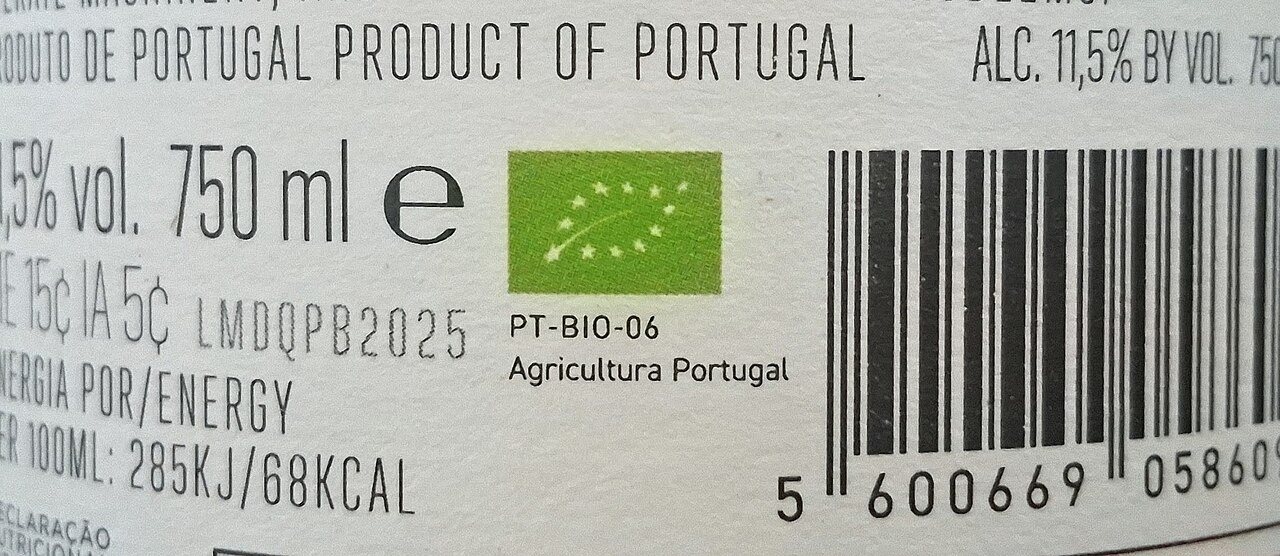
The organic certificate from the control body, valid, with the list of certified products. The importer asks for it right away and keeps it in the supplier file, because their checks (and, in the monopolies, admission to the tender) depend on it. The label must show the EU logo, the control body's code and the origin of the raw materials, as required by Regulation 2018/848.
The sulphite analyses for each wine, with the total value. The German buyer needs them to know whether they can sell the wine in Naturkost, the Swedish buyer to respond to the tender, and the American buyer to choose between "organic" and "made with organic grapes". Include them in the technical sheet for importers, not in a separate attachment.
A label compliant with the destination market. For the European Union, the ingredient list and nutrition declaration (including via QR, as explained in EU label with ingredients and QR) are combined with the organic indications. For the United States, you need a draft with the correct organic wording for review by the certifier and for COLA.
Where to find them: in the exhibitor lists of organic pavilions at trade fairs, in the registered importer lists published by the Nordic monopolies, in the catalogues of German Naturkost wholesalers, and on the menus of restaurants that describe themselves as organic or natural. The email that works states in three lines the appellation, the grape variety, the certification, total sulphur dioxide and the ex-cellar price, and attaches the sheet. The rest happens at the trade fair, with the sample.
Further reading: sulfite labelling rules by export market.
Frequently asked questions
Which markets buy the most organic wine?
By organic share of food spending, Denmark (11.8%) and Switzerland (11.6%). By absolute value, the United States (59 billion euros) and Germany (16.1 billion), FiBL 2023 data. For wine specifically, the Nordic monopolies: at Systembolaget, organic was 24.9% of wine volume in 2024.
Can my European organic wine be called "organic" in the United States?
Only if it contains no added sulphites. With added sulphur dioxide up to 100 parts per million, declared on the label, the correct wording is "made with organic grapes", without the USDA seal (USDA, guide to organic wine labeling).
Is an additional certification needed beyond the European one?
To sell as organic in the European Union and the Nordic monopolies, the control body's certificate with the logo and code on the label is enough. In Germany, some importers and Naturkost stores prefer stricter private brands. In the United States, the label must be approved by the certifier and the TTB.
A generalist importer or a specialist?
The specialist in organic and natural wine buys less volume, sells to wine shops and restaurants, and builds your name. The generalist with an organic line buys more, often for tenders and chains, and compares your price with Spanish and French organic wines. Many wineries work with both, in different countries or for different wines.
Which documents do they ask for at first contact?
A valid organic certificate with the product list, total sulphur dioxide analysis for each wine, a technical sheet, and a draft label for the destination market. The analyses go in the technical sheet, not in a separate attachment.
Sources
- FiBL — Almost 11 percent of agricultural land in the European Union is organically farmed (press release, 11 February 2025)
- Systembolaget — Försäljning, ekologiskt odlade produkter, kvartal 4 2024
- Wine Intelligence / Austrian Wine — Austria reaches historic milestone: a quarter of vineyards now organic (FiBL 2023 data for Spain, France, Italy)
- USDA Agricultural Marketing Service — Labeling organic wine (document hosted by the TTB)
- Lebensmittel Praxis — BÖLW: Bio-Markt wächst auf 17 Milliarden Euro Umsatz (11 February 2025)
- Wine Spectator — U.S. and Europe have different definitions of organic wine (24 February 2012)
- Private label wine export: how it works and what buyers ask
- Nordic monopoly tenders: Systembolaget, Vinmonopolet, Alko
- Restaurant wine markups abroad: coefficients by country
- Natural Wine Importers Abroad: Who Buys and What They Want
- Travel retail wine: how Italian wines enter duty free
- Wine Fairs in Latin America: Meet Importers and Buyers