Lapola: An Indigenous Italian Grape Variety for the Global Market
The Lapola grape variety, with its centuries-old history and unique characteristics, represents a concrete opportunity for Italian wineries seeking to expand their presence in international markets. A thorough understanding of its peculiarities, from cultivation to winemaking, is the first step to valorizing this indigenous variety and successfully positioning it abroad. Learn more: MASAF — National Register of Vine Varieties.
What are the historical origins of the Lapola grape variety?
The earliest documented references to the Lapola grape variety date back to 1299, attested by notarial deeds. This ancient grape, also known by numerous synonyms such as Ribola or Ribolla, has its roots in Friuli-Venezia Giulia, attesting to a long and consolidated winemaking tradition in the region.
Its historical longevity is a strong point for export, as international markets increasingly seek authentic stories and deep territorial connections. Lapola's tradition offers a captivating narrative capable of attracting consumers interested in wines with a well-defined identity and significant cultural heritage.
What are the cultivation needs of the Lapola grape variety?
Lapola favors dry or alluvial clay soils, provided adequate summer hydration is ensured. It adapts to various soil types but thrives in fresh, fertile, and deep ones. Expansive training systems with long prunings are recommended, with the possibility of mechanized harvesting.
To optimize quality, south-facing calcareous soils and Guyot or overhead training systems with medium-long prunings are advised. Irrigation can increase production but potentially at the expense of the wine's final quality.

What is Lapola's sensitivity to diseases and adversities?
The Lapola grape variety exhibits medium sensitivity to downy mildew and good resistance to botrytis and sour rot. It is, however, susceptible to powdery mildew and phylloxera. These characteristics require careful agronomic management to ensure vine health and harvest quality, crucial aspects for successful exports.
What are the ampelographic characteristics of Lapola (shoot tip, leaf, bunch, berry)?
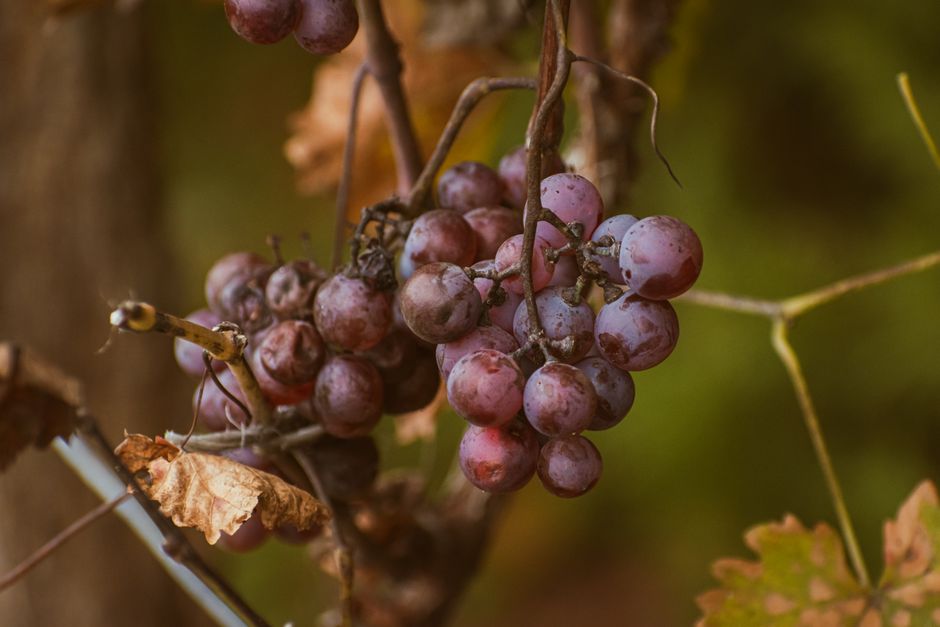
The shoot tip is downy and bronze. The adult leaf is medium to large, orbicular, with three or five lobes and a slightly wavy limb. The bunch is medium-small, compact, conical or cylindrical-conical, sometimes winged. The berries are spherical or slightly ovoid, yellow-green in color, with medium-thick skins and colorless, juicy, and neutral pulp.
The variation in bunch weight (between 110g and 300g) and yield per vine (1.5-5.5 kg) highlights the influence of cultivation conditions on yields and quality.
What are the characteristics of Lapola grape must?
Must analyses indicate an average sugar content around 20.45 °Brix and acidity of 9.5 g/l, with a pH of 3.16. Other measurements report acidity between 7.0-10.0%o and sugars between 17.0-20.0%, with peaks up to 23% in specific contexts.
These values suggest potential for producing wines with good sugar-acidity balance and freshness, characteristics valued in international markets.
What type of wine is obtained from the Lapola grape variety?
Wine derived from Lapola presents an intense ruby red color, notes of blackberry and sour cherry, and a distinct spicy aroma. It is medium-bodied and quite tannic. Other descriptions indicate it as full-bodied, harmonious, slightly acidic, and fresh, or straw-yellow, velvety, and savory.
This diversity in descriptions highlights Lapola's versatility, capable of yielding different wine styles depending on winemaking techniques and terroir conditions.
How can the Lapola grape variety be utilized, and what is its export potential?
Lapola is traditionally vinified as a single varietal or in blends with Refosco dal peduncolo rosso, enriching it with aromatic complexity and spicy notes. Its versatility allows for the production of table wines, dessert wines, sparkling wines, or fortified wines, broadening its appeal across various markets.
Its export potential is high due to its history, versatility, distinctive aromatic profile, and the possibility of creating unique blends. Communicating its Friulian heritage and unique characteristics is essential to attract foreign consumers seeking authenticity and quality.
Frequently Asked Questions
Is the Lapola grape variety suitable for all climates for export?
Lapola prefers fresh, fertile, and deep soils, and south-facing calcareous soils for quality. Its adaptability