Wine trade shows and events in the United States: Vinexpo America, tours and samples
Wines Export Editorial · Last updated:
In the United States, wine events that connect producers with importers and distributors are few and concentrated. Vinexpo America, the B2B trade show that the organizer Vinexposium holds in New York, is a direct meeting point with the trade. Alongside the show, there are travelling tours and state fairs that bring wine to other cities. However, a tasting alone does not close a contract: the wine must arrive with the correct federal documents, and without an importer holding the federal permit you have no regular route to get it to a buyer. Before choosing an event, therefore, check who attends and how samples will enter, and also read how to choose importers in the United States.
The three-tier system and what it means for a US trade show
The American wine market is organized in three tiers: the producer sells to an importer, the importer sells to a wholesale distributor, and the distributor sells to retail outlets and restaurants. For this reason, anyone attending a trade show must understand which tier their counterpart occupies. A buyer who approaches your stand may be an importer, who buys for their own account, or a distributor, who buys in order to resell. The right question at the table is therefore which of the two tiers they cover and in which states they operate.
The first step is licensing. The TTB, the federal agency for alcohol and tobacco, requires that anyone importing wine for commercial use hold a permit, and that every product and every label be covered by a Certificate of Label Approval (COLA). This also applies to wine arriving for a trade show, except for the sample exemptions described below. A trade show, therefore, does not replace the import structure: it completes it.
Vinexpo America: who attends, costs, formats
Vinexpo America is the wine and spirits trade show that the organizer Vinexposium presents in New York. On the page for the 2024 edition, held on 24 and 25 June at the Javits Center, the organizer reports the presence of exhibitors and visitors from several countries. The programme includes conferences, masterclasses and business sessions, so it is not only a tasting room. An exhibitor cited on the same page describes meeting importers and distributors, which is the figure that matters to a winery.
Dates and venue change from one edition to the next. Some third-party listings indicate Miami Beach for 2027, while recent editions were held in New York: before booking, check the organizer's website. Stand and participation fees are not reported here either, because they do not appear on the official pages. Ask the organizer for the exact package, the number of B2B meetings planned, and whether samples are included in the allocated space.
Travelling tours and state fairs: consortia, guides, local events
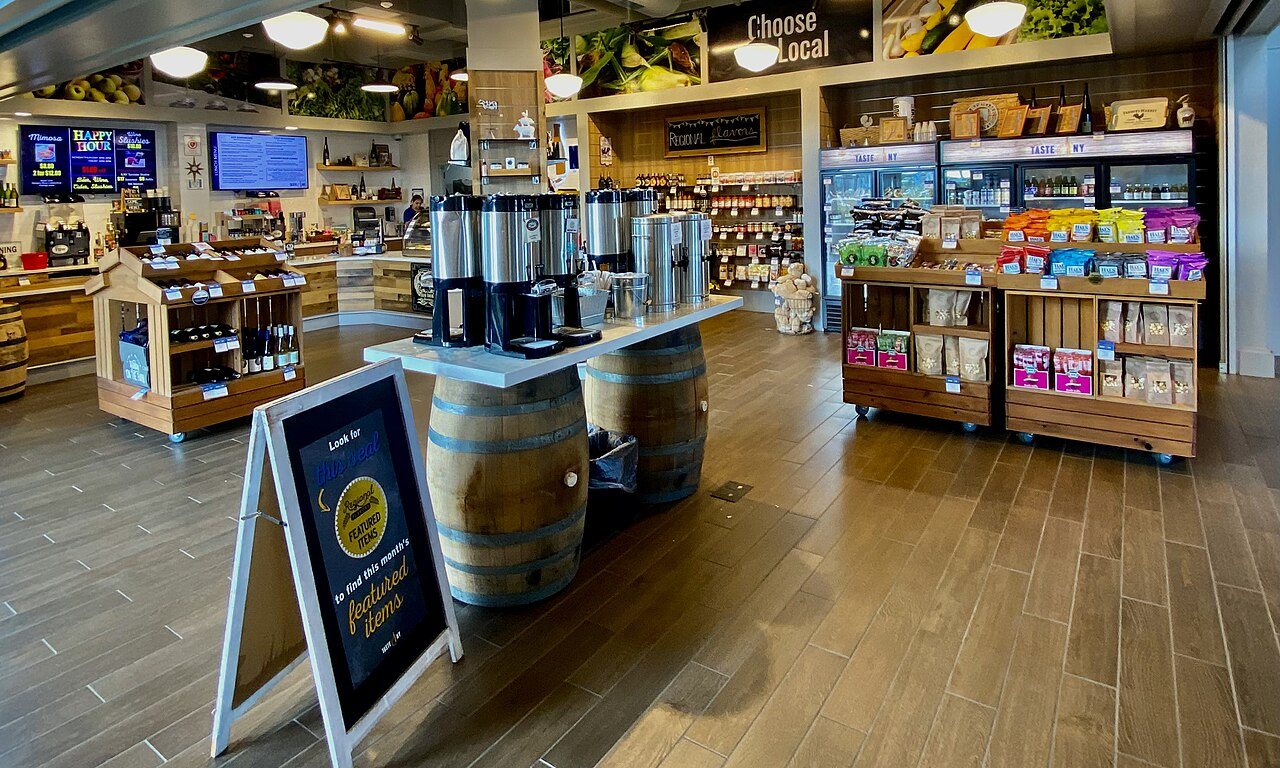
Beyond the main show, the American market has travelling events: tours organized by consortia, presentations run by guides, and festivals held in individual cities or states. These events are smaller, have a more specific audience, and often rotate among different cities. For a mid-sized winery, they are mainly useful for making contact with regional distributors and with venues that select wine for their own area.
The calendar for these tours changes every year, so it is not useful to fix it in an article. Before choosing a stop, also read how American buyers and importers work. Read the programme on each organizer's website and check who attends from the buyer side. If a tour provides no meetings with import or distribution operators, the cost-to-result ratio becomes difficult to justify. For Italy, the ICE Agency maintains a coordination office for the USA in New York and publishes a guide dedicated to export and investment in the United States: it is a useful starting point for understanding the institutional contacts available.
Bringing samples: TTB, FDA and a supporting importer
The sample is a delicate matter, and for shipping it is advisable to follow the guide to shipping private samples to the United States. The TTB provides that wine imported solely for use at a trade show or to take orders may enter without a COLA, provided the importer applies for an exemption, known as a waiver. The request is submitted online with a letter, and the TTB no longer accepts waiver requests sent by email. The letter must state the type and quantity of each wine, country of origin, brand, purpose of the import with the dates and location of the event, the federal permit number of the importer, and the signature of an authorized person. Applicable taxes and duties must still be paid.
The federal regulation on alcohol imports, in 27 CFR part 27, clarifies that the tax exemption for samples applies only to samples intended for taking orders for foreign products. The sample is therefore not a sale: it is a tool for opening a negotiation. Anyone bringing it to a trade show must already have an importer who receives and manages it, otherwise there is no party to whom the TTB could grant the waiver.
Alongside the TTB is the FDA. The TTB pages on importation remind that the alcohol producer must be registered with the FDA and that the importer must notify the FDA of each shipment in advance. The FDA, for its part, specifies that it does not approve individual products, labels or shipments, but that importers may bring in food without its prior approval provided that the facilities are registered and the prior notice is submitted. For wine, the practical message is that the FDA notification is a separate requirement from the TTB permit, and that both must be ready before the sample leaves.
Documents compared: trade show sample and commercial import
| Document | Who submits it | For what use | Source |
|---|---|---|---|
| Federal importer permit | Importer holding the permit | Import for commercial use | TTB page on new importers |
| Certificate of Label Approval (COLA) | Importer, for each label | Sale and commercial import | TTB page on new importers |
| COLA exemption for samples (waiver) | Importer, with a letter to the TTB | Samples for trade shows or order taking | TTB page on samples for trade shows |
| FDA prior notice | Importer or their representative | Each shipment of imported food | FDA page on food import |
The table summarizes the documents listed on the official pages. The exact form terms change, so the list should be confirmed with your freight forwarder before each shipment.
What a US importer asks at the table
When an importer stops at the stand, the recurring questions concern licensing, labelling and logistics. They want to know whether the wine has a COLA or whether a waiver has been requested for the sample. They ask who bears transport and customs clearance costs, and whether your wine can enter with a FDA notice already prepared. They also want to know whether the winery already has a distributor in other states, because an importer with national coverage assesses a product differently from one that enters only a single market.
Prepare, therefore, a one-page sheet with the wine's data, availability, production capacity and the name of the party in Italy who manages the shipment. A buyer you meet at the fair will then ask for material for follow-up, not only the sample. If you do not yet have an importer, the table serves to collect names and to understand which operators already distribute wines similar to yours, not to close a sale.
After the event: the distributor and individual states
A trade show opens the negotiation, but does not close it. After the event, the importer must find a distributor to bring the wine into individual states, and each state has its own rules on alcohol sales. The three-tier system means that your selling price to the importer is a different figure from the shelf price, and the margin at each step depends on the channel. To understand how the price is formed, read the page on shelf price in the United States.
After the fair, a useful task is following up with the operators who showed interest. Send the requested material, update the sheet with any label or price changes, and keep track of shipment dates. Anyone who obtained a waiver for samples must know that the sample cannot be sold, so the move from sample to commercial goods requires a new import route. For this step we refer you to the guide on how to sell wine in the USA without an importer, which explains why there is no shortcut.
Frequently asked questions
Do I need an importer to bring wine to a trade show in the United States?
For a sample intended for a trade show or for taking orders, the TTB provides a COLA exemption that is requested through an importer holding the federal permit. Without an importer, the request has no party to whom it can be granted. For actual sale, an importer holding the permit is always required.
Can a trade show sample be sold to a buyer?
No. A sample imported under the waiver is intended for taking orders, not for sale. The move from the trade show to commercial goods requires a new import with all authorizations, including the COLA for each label.
Is Vinexpo America always held in New York?
Recent editions have been held in New York, at the Javits Center, according to the organizer's pages. Some third-party listings instead indicate Miami Beach for 2027. The venue and dates should be confirmed on the Vinexposium website before any decision.
Sources
Who buys wine in the United States? A few names
According to the Wines Export Observatory (November 2026), the Italian denomination most carried by wine buyers in the United States is Prosecco: 29% of those whose Italian range we know carry it, followed by Barolo (26%) and Chianti (23%).
The Wines Export database covers the whole wine trade in the United States: importers, distributors, wholesalers, wine shops and online stores, city by city, updated continuously (23 November 2026). The Italian denominations most carried by buyers in the United States, in order: Prosecco, Barolo, Chianti, Pinot Grigio and Brunello.
New York
MCF Rare Wine · Grand Cru Selections · Millesima USA Wine Store New York
Miami
BEST WINES, Best Wines of Miami LLC · MANZANOS WINES USA LLC · IWK USA IMPORTERS, LLC
Houston
La Botte LLC · Karmo, Inc. · J & J Wines LLC
- Wine importers and buyers in Australia: rules and channels
- Wine Price Hong Kong vs Singapore: Duty and Excise
- Wine Importers in Brazil: Who Buys and Under Which Rules
- Wine shelf price in Australia: how it is built
- Wine importers in Ecuador: who buys and under what rules
- Wine importers Western Europe: 8 countries compared