Shipping wine to the United States: what is allowed (licensed importer, samples) and what is not (direct sales to private buyers from Italy), state by state
Wines Export Editorial · Last updated:
You cannot ship wine from Italy to an American consumer. The Federal Alcohol Administration Act requires that whoever imports wine into the United States hold a federal importer permit, and the TTB specifies that to obtain it you must "maintain and staff an office in the United States", otherwise you "must contract with an already authorized importer". A private American may bring in or receive wine once for personal use, but the quantities and licenses are set by the state of arrival, and the US postal service does not accept alcoholic beverages. Samples for trade fairs and for soliciting orders have a waiver, but they still pass through an importer holding a permit. Direct sales to private buyers exist, but the state licenses that permit them are reserved for wineries that already hold a US production license. Below you will find what is allowed, what is not, and how to organize a first B2B shipment.
Why can't you ship to a private American buyer?
For three reasons that add up. The first is federal: the TTB, the Treasury agency that regulates alcoholic beverages, states that whoever imports wine into the United States must "apply for a Federal Basic Importer's Permit" and that the holder "must maintain and staff an office in the United States". An Italian winery without a US office cannot obtain that permit. The same page indicates the alternative, "contract with an existing importer authorized in the United States", which "eliminates the need to obtain an importer's permit". The permit itself costs nothing, but it requires a US company.
The second is state-level. The TTB notes that "state and local jurisdictions may have their own import requirements, in addition to federal ones", and US Customs (CBP) states that "the laws of the state where you first arrive in the United States govern the quantity of alcohol" you may bring in "and whether you need a license". In practice every state has its own alcohol control authority, and almost all of them reserve the receipt of alcohol for licensed parties.
The third is logistical: the US Postal Service states that "beer, wine and spirits cannot be mailed, except in limited circumstances". Private couriers accept wine only from licensed senders with a specific agreement for alcoholic beverages. A six-bottle parcel from Italy to a private address in New Jersey will be stopped at the first check, or will not leave at all.
As for the private American, he does not need an importer permit if he imports "once for personal use", says the TTB, but "federal, state and local taxes and duties may apply", and "repeated or ongoing imports may raise suspicion of a commercial purpose". It is a route for the tourist returning with two bottles, not a sales channel for you.
Three-tier: the mandatory chain
The American system, which the articles on how to export wine to the United States and on wine distributors in the USA explain in detail, separates three levels: importer (or producer), wholesale distributor, retailer or restaurant. The wine changes hands with a license at each step, and the consumer buys only from the third level.
| Tier | Who it is | License | What it does with your wine |
|---|---|---|---|
| First | Importer with a Federal Basic Importer's Permit and a US office | TTB (federal) and state of registration | Clears customs, pays federal duty and excise, holds the COLA for each label |
| Second | Distributor or wholesaler | State by state | Buys from the importer and sells to shops and restaurants in its state |
| Third | Shop, restaurant, chain | State and county | Sells to the consumer |
Source: TTB, Importing bottled alcohol beverages into the United States; CBP for state jurisdiction.
The TTB adds two obligations that clarify who does what. The importer "must hold a COLA", the certificate of label approval, "at the time of importation", and to sell wholesale wines it did not import under its own permit it "must also apply for a Wholesaler's Basic Permit". FDA registrations and the advance notice of each shipment, which wineries often underestimate, are explained in the article on FDA registration, Prior Notice and FSVP for wine.
The point for you is simple: your customer is the importer. Finding him, verifying him and signing with him is the work; logistics come afterwards, and he or his freight forwarder usually organizes them.
Samples: how do they move?
Samples are the exception that allows you to look for an importer before you have one. The federal regulation (27 CFR 27.49) exempts from internal taxes "samples of distilled spirits, beer and wine for use in the United States", but "this exemption applies only to samples used to solicit orders for products from foreign countries", with precise limits: "in no case" more than one sample per product, per quarter, per recipient, and "no wine sample may contain more than 4 ounces", about 118 ml.
For samples intended for trade fairs or for soliciting orders in standard format, the TTB provides a separate procedure. The products "will be imported by the holder of a Federal Importer's Basic Permit", who may request a waiver from the COLA "by submitting an online request letter", signed by hand by an authorized person; the indicated timeframe is about 15 days, with no possibility of urgency. Each container must carry a sticker reading "For Trade Show (or Sample) Purposes Only – Not for Sale", the federal health warning and, for wine, the words "Contains Sulfites"; "all applicable taxes and duties will be paid".
In short, samples too require an importer with a permit to receive them, and from Italy the shipment must be prepared with a correct pro forma invoice, labeling and declared value. How to prepare them, market by market, is explained in the guide on how to ship wine samples through customs. If you do not yet have an importer, there are three possible channels: a freight forwarder with a service importer who receives on behalf of third parties, the trade fair organizer who has a contracted importer, or the candidate importer himself, who receives the samples under his own permit. The third route is the simplest, because whoever is interested in your wine already has everything that is needed.
DTC: what exists and for whom?
Direct-to-consumer sales (DTC) exist, which is why the question "can I ship wine to a private American buyer?" has no flat answer. But it is a sale regulated state by state, with a direct shipper permit issued by the destination state. The Wine Institute, which keeps the map of the rules up to date, divides the states into three groups: shipping permitted, permitted with restrictions, prohibited. Among the common conditions it lists "obtaining a license or permit before shipping", paying state taxes, respecting quantity limits, labeling parcels to prevent delivery to minors, and filing reports with the authorities. The same page warns that the information "is intended only for licensed producers".
New York is a clear example of who the permit is reserved for. The state law (ABC Law, section 79-c) issues the out-of-state direct shipper license to "any holder of a winery license in another state", on condition that the state where the winery is based grants New York wineries "reciprocal shipping privileges", and it limits shipments to "no more than thirty-six cases (of no more than nine liters each) of wine produced by the license holder per year". The New York alcoholic beverage authority notice specifies that "out-of-state" means "a winery located in a state other than the State of New York", and that the applicant must register as an alcoholic beverage distributor and as a state taxpayer. A winery in Montalcino does not hold a production license in a US state: it does not qualify.
DTC is therefore a lever for those already inside the system, that is, for the importer or for a US entity that owns the cleared wine and holds the state permits. Some licensed importers and online retailers ship to private buyers where the state allows it: in that case your wine reaches the consumer's home, but the sale is made by their shop, not by you. You can find importers who bring Italian wines in this way in the article on wine importers in the United States and how to choose them.
Couriers and freight forwarders for the United States
For B2B the shipping is ordinary: pallets or containers by sea, with a freight forwarder who knows US customs practice and a customs broker who files the declaration on behalf of the importer. The documents required and the broker's role are covered in the guide to customs documents for wine in the United States. The TTB notes that it is customs (CBP) that collects "federal excise taxes and import duties" and that "importers are responsible for their payment": with an EXW or FOB sale, those items do not concern you.
For samples and small quantities, express couriers accept alcoholic beverages only under certain conditions: a sender registered as an alcohol shipper, a recipient with a US license, approved packaging, and an adult's signature on delivery. Each courier has its own contract for alcoholic beverages, and a standard account is not enough. The TTB itself advises, for shipments to private individuals, to "contact the carrier before shipping", because "many carriers have strict rules" and "some states prohibit direct shipment of alcohol to individuals". This applies even more to you as a shipper from abroad: before requesting a quote, ask the courier whether it accepts wine to the United States with a recipient holding a TTB permit, and ask for packaging and documentation instructions in writing.
What the first B2B shipment requires
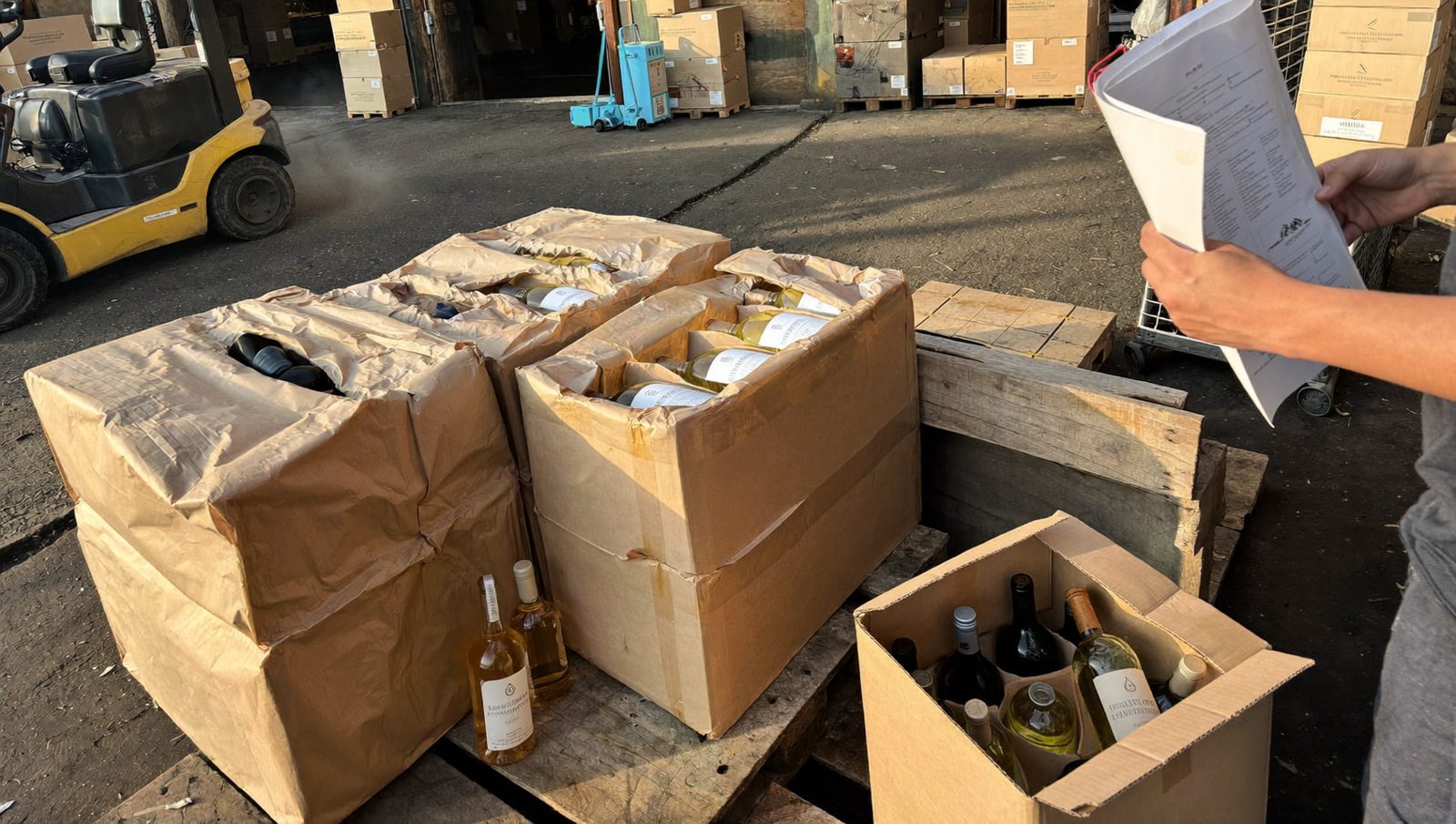
The list is short, if you look at it from the point of view of the receiver.
| Element | Who does it | Where it is explained |
|---|---|---|
| Importer with a Federal Basic Importer's Permit and a US office | The importer (verify the permit number on the public TTB register) | Guide to verifying a foreign importer |
| COLA for each label, with any label changes for the US market | The importer, with the label files you provide | US customs documents |
| FDA facility registration and Prior Notice of the shipment | Registration: the winery (with a US agent); Prior Notice: the importer or the freight forwarder | FDA, Prior Notice, FSVP |
| Certification of oenological practices, if required by the country | Not needed for Italy: the EU has an agreement with the US on oenological practices, cited by the TTB among the exemptions | TTB, import page |
| Invoice, packing list, export declaration, excise accompanying document | The winery and the freight forwarder | Excise and VAT in the export chain |
Source for federal requirements: TTB, Importing bottled alcohol beverages into the United States.
Two practical tips that avoid the most common blockages. First: do not ship until the importer confirms that he holds the COLA in hand, because the TTB is explicit that it must be held "at the time of importation", and a shipment arriving before approval stays stuck in port at someone's expense. Second: ask the importer in which states he has an active distributor. The federal permit allows him to import, but to sell in California, Texas or Florida you need the second tier in each state, and an importer in New York with no distributors elsewhere will only take you as far as New York.
Frequently asked questions
A private customer of mine in Chicago wants to order twelve bottles directly from the winery: can I ship them to him?
No. You do not have a federal importer permit, which requires a US office, and you do not have an Illinois direct shipper license, which is reserved for wineries holding a US production license. The correct route is to refer the customer to a licensed retailer that carries your wine, or to the importer, if he ships to private buyers where the state allows it.
Can I send six bottles of samples to an importer I have not yet signed with?
Yes, if the importer holds a Federal Basic Importer's Permit: he receives the samples under his own permit, asks whether a COLA waiver is needed with the online letter to the TTB, applies the "Not for Sale" stickers and pays duties and taxes, which are exempt on samples in 4-ounce format. Prepare a pro forma invoice with the correct value and wording, and be aware that the TTB timeframe is about 15 days.
Can the TTB importer permit be issued to my Italian company?
Only if you maintain "an office in the United States with staff", as the TTB writes. Many wineries open a US company for this, but at that point they become importers themselves, with all the obligations: registration as a dealer, COLA, Prior Notice, federal and state taxes, and in any case a distributor in every state where they want to sell.
If I sell EXW, who pays federal duty and excise on arrival?
The importer, through his customs broker: the TTB writes that customs collects excise and duties on importation and that importers are responsible for them. Your EXW or FOB price excludes them; you would include them only with a DDP sale, which in the United States is impractical for anyone without a permit.
Is American DTC a route for the future of my winery?
Only through a licensed American entity. Direct shipper licenses, such as the New York one, are issued to holders of a production license in a US state, with reciprocity between states and annual case limits. An Italian winery can benefit indirectly, if its importer or a licensed online retailer ships to private buyers where it is permitted.
Sources
- TTB, Importing bottled alcohol beverages into the United States (TTB G 2015-3, updated 29 September 2026): https://www.ttb.gov/node/762
- TTB, Personal importation of alcohol beverage products: https://www.ttb.gov/regulated-commodities/beverage-alcohol/importers/personal-importation-of-alcohol-beverage-products
- TTB, Importing alcohol for trade shows and for soliciting orders: https://www.ttb.gov/node/761
- 27 CFR 27.49, Commercial samples of alcoholic beverages (Cornell LII): https://www.law.cornell.edu/cfr/text/27/27.49
- U.S. Customs and Border Protection, Prohibited and restricted items, section Alcoholic beverages: https://www.cbp.gov/travel/us-citizens/know-before-you-go/prohibited-and-restricted-items
- USPS, Shipping restrictions: https://www.usps.com/ship/shipping-restrictions.htm
- New York Alcoholic Beverage Control Law, section 79-c, Out-of-state direct shipper's license: https://www.nysenate.gov/legislation/laws/ABC/79-C
- Wine Institute, State shipping laws: https://wineinstitute.org/our-industry/state-shipping-laws/
- Shipping Wine to Latin America: Ports, Containers, Transit
- Shipping Wine to Spain: Zero Excise, Documents and VAT
- Shipping wine to Asia: containers, ports and transit times
- Shipping Wine to Ireland: Excise Duty and VAT Rules
- Shipping wine to Austria: excise, B2B and consumers
- Selling wine in the EU: excise, VAT and documents