Drying and Overripening: How to Export Prestigious Italian Wines
Wines Export Editorial · Last updated:
Italy boasts a rich heritage of traditional winemaking techniques, including the drying and overripening of grapes, which impart unique and highly prized organoleptic characteristics to wines. This guide focuses on wines produced using these practices in the Veneto region, providing Italian wineries with the essential tools and knowledge to successfully navigate foreign markets. A thorough understanding of these methods is crucial for highlighting the product's uniqueness and communicating its intrinsic value to international buyers, opening up new growth opportunities and solidifying the presence of Italian wine worldwide. In-depth look: OIV - International Organisation of Vine and Wine.
How Does Drying Concentrate Grapes for More Intense Wines?
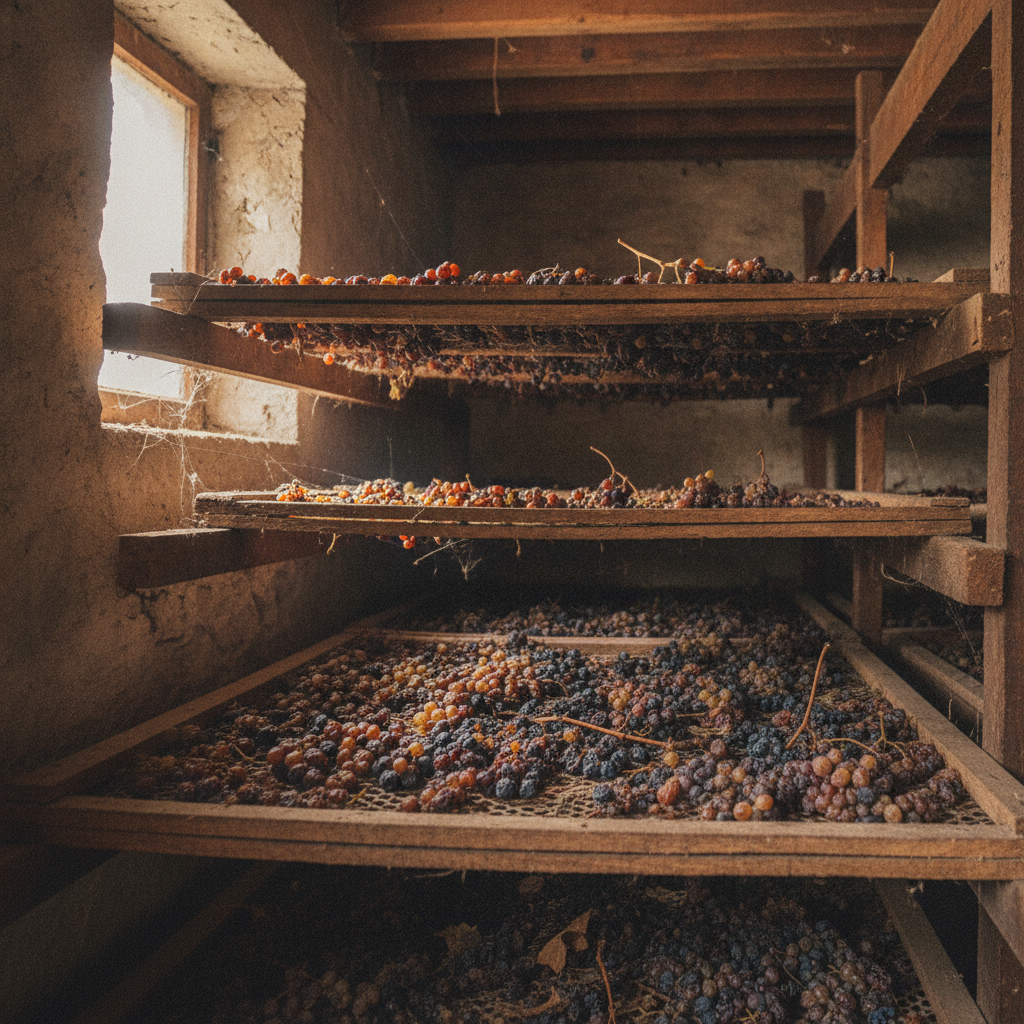
Drying is a technique that partially dehydrates grapes, either on the vine (overripening) or after harvest in special drying lofts. This process reduces water content, concentrating sugars, acids, and aromatic compounds. The result is wines with greater structure, complexity, and aging potential, often characterized by a high alcohol content and a smooth or sweet taste, balanced by good acidity.
The aromas intensify, revealing delicate floral notes and fruity hints of ripe yellow fruit. The good acidity, maintained during harvest and the process, is fundamental to balancing the sweetness and ensuring the wine's equilibrium.
What Are the Methods for Drying Grapes?
Grapes intended for drying are harvested manually, selecting only the finest bunches. They are stored in well-ventilated environments, with constant monitoring of their sanitary condition until pressing. The duration of the drying period varies according to the desired characteristics in the finished product.
The temperature fluctuations between day and night, typical of the late summer/autumn period, and the natural ventilation of the production area favor this process.
How Does the Veneto Terroir Favor Wines from Dried Grapes?
The Veneto region, with its rich winemaking history, is a prime territory for producing wines obtained through drying. The pedoclimatic conditions, such as slopes well-exposed to the sun, well-drained soils, and the presence of watercourses that ensure constant humidity, create an ideal microclimate.
In some areas, these conditions even favor the development of "noble rot" (Botrytis cinerea), which contributes to imparting unique characteristics to the wines.
Which Grape Varieties and Harvest Practices Are Ideal for Drying?
The choice of grape varieties and the timing of the harvest are decisive for the quality of wines made from dried grapes. It is essential that the grapes achieve adequate sugar content, proper acidity, and a full expression of the varietal's qualitative and organoleptic characteristics.
Italy, in general, is capable of producing wines with good sugar content, which naturally impart alcoholic strength and body to the wines – aspects highly sought after in foreign trade.
What Are the Main Challenges in Exporting Italian Wines with Traditional Techniques?
To successfully enter international markets, wineries must pay particular attention to regulatory compliance and the required documentation. This includes preparing labels that conform to EU and local regulations, managing any health warnings or specific markings required by the destination country, and retaining certificates of analysis and origin.
The request for certificates of physical-chemical analysis, declarations of conformity to winemaking practices authorized by the OIV or by bilateral agreements, and certificates of origin are standard steps for exporting to non-EU countries. It is essential to verify the specific regulations of each market.

How to Best Position Dried Grape Wines in Foreign Markets?
Italian wine enjoys a historic leadership position, but for wines produced using drying techniques, which often position themselves in the mid-to-high price range, a targeted marketing strategy is crucial.
It is advisable to identify importers with active wholesale licenses and a proven presence in the Horeca channel. The demand for superior quality wines is structurally growing. Traditional techniques like drying represent a strong differentiator; communicating the history, tradition, and uniqueness of these wines is critical.
What Aspects of Quality and Authenticity Are Sought by Foreign Buyers?
Foreign trade seeks wines that meet certain quality standards and conform to consumer expectations. The production of typical wines, always compliant, is a necessity indicated by Italian Consulates abroad.
Drying, when executed well, helps create wines that meet these demands, offering depth, complexity, and a connection to the land and tradition.
Frequently Asked Questions
What are the documentary requirements for exporting Italian wines abroad?
For export to non-EU countries, certificates of physical-chemical analysis, declarations of conformity to winemaking practices authorized by the OIV or by bilateral agreements, and certificates of origin are generally required. It is crucial to verify the specific regulations of each destination market.
How do dried grape wines differ from other Italian wines?
Wines produced from dried grapes are distinguished by the concentration of sugars, acids, and aromatic compounds achieved through grape dehydration. This gives them greater structure, complexity, aging potential, and often a smooth or sweet taste, with intense aromas and a velvety finish.
What is the importance of acidity in wines for export?
Acidity is a key factor for wine balance, especially for wines made from dried grapes. It is important that wines for export do not exceed a certain threshold of total acidity (e.g., 6%) and are packaged in a way that avoids harshness and roughness, to meet the preferences of foreign consumers.
The techniques of drying and overripening represent an invaluable Italian winemaking heritage, capable of generating wines of extraordinary quality and complexity. For wineries wishing to expand their presence in international markets, understanding and valuing these practices is fundamental. From meticulous vineyard care to careful management of the drying process, through regulatory compliance and a well-defined export strategy, every step is crucial to conquering new markets and offering foreign consumers an authentic taste of Italy.