Italian Wine Bottle Dimensions: Export Requirements
Wines Export Editorial · Last updated:
Exporting Italian wine demands meticulous attention to every detail, including bottle height. This seemingly minor aspect is fundamental for complying with specific foreign market regulations and optimizing logistics. Understanding standard dimensions and any restrictions related to bottle height is essential for export managers aiming to successfully position their wine internationally. This article explores the regulations and practical considerations concerning bottle height, offering a guide to navigating the complexities of enological export. Learn more: OIV — International Organisation of Vine and Wine.
What European Regulations Define the Characteristics of Wine Bottles?
European regulations, particularly Regulation (EU) 2019/33, establish the characteristics of various bottle types, defining precise dimensional ratios that determine their shape. These standards are crucial for ensuring uniformity, recognition, and compliance with the traditions and regulations of specific countries or designations.
Does the "Flûte d'Alsace" Type Have Specific Dimensional Requirements?
Yes, the "Flûte d'Alsace" (or "Alsace" / "vin d'Alsace") has dimensions defined by Regulation (EU) 2002/753: the total height divided by the base diameter is 5:1, and the height of the cylindrical part is one-third of the total height. This bottle is reserved for specific French protected designations of origin, such as "Alsace" or "vin d'Alsace," but only for wines made from grapes harvested in France.
Does the "Bocksbeutel" or "Cantil" Bottle Have Particular Characteristics?
The "Bocksbeutel" or "Cantil" is a glass bottle with a short neck, a plump, rounded but flattened shape. The base and the cross-section at its widest point have an axis ratio of approximately 2:1, and the ratio between the height of the rounded body and the neck is about 2.5:1. Regulation (EU) 2009/607 mentions it for certain Portuguese wines, reserving it for rosé wines or other wines with a protected designation of origin or geographical indication for which traditional use is proven.
What Are the Dimensions and Restrictions for the "Clavelin" Bottle?
The "Clavelin" bottle has a capacity of 0.62 liters and a cylindrical shape with broad shoulders. Its dimensional ratios are: total height divided by base diameter equals 2.75, and the height of the cylindrical part equals half the total height. It is reserved for French wines with protected designations of origin such as "Côte du Jura," "Arbois," "L'Etoile," and "Château Chalon."
Are There Specific Height Requirements for the "Tokaj" Bottle?
For Tokaj wine, the typical bottle is made of colorless glass, with a long neck and a cylindrical shape. The dimensional ratios are: the height of the cylindrical part divided by the total height is 1:2.7, and the total height divided by the base diameter is 1:3.6. Standard capacities include 500 ml, 375 ml, 250 ml, 100 ml, or 187.5 ml, the latter specifically for export to third countries.
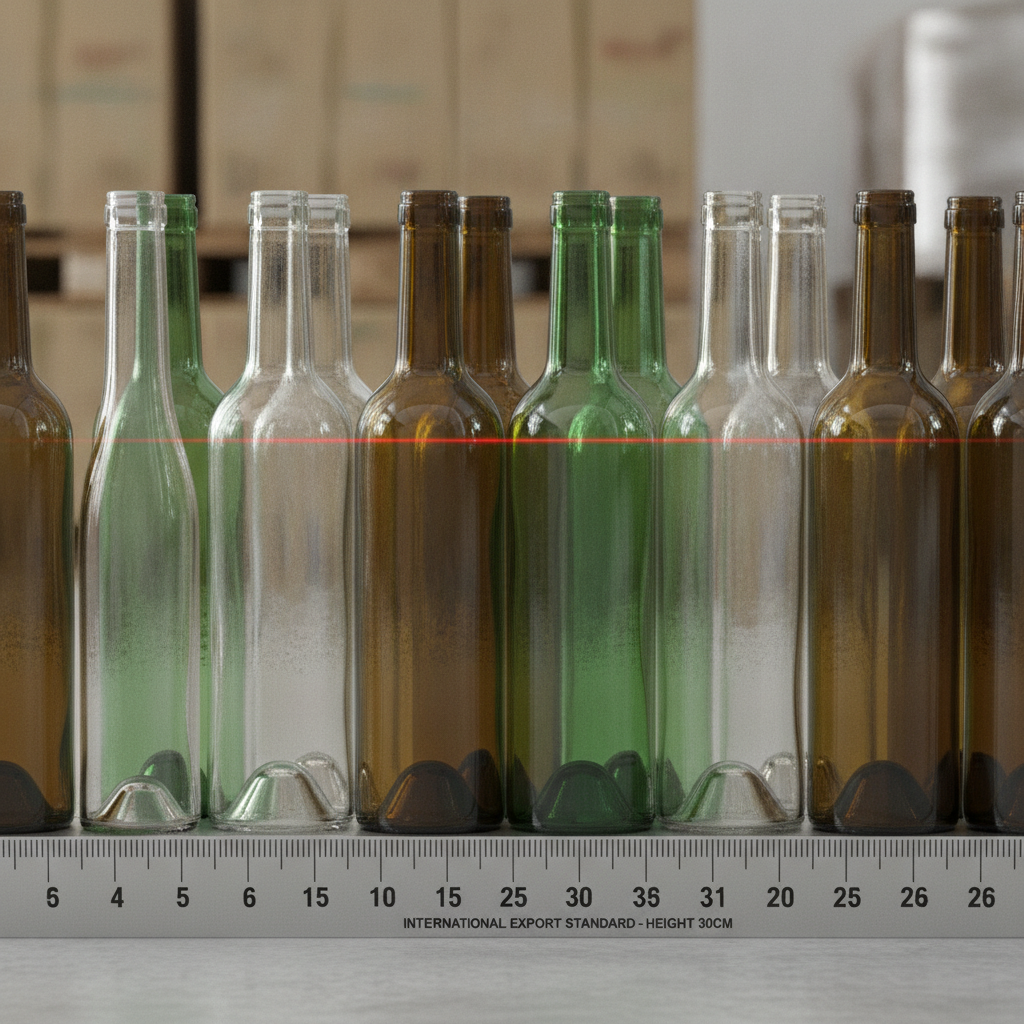
How Does Bottle Height Affect Logistics and Packaging for Export?
Bottle height and shape directly influence load density on pallets and, consequently, transportation costs. Irregular or excessively tall shapes can reduce the number of bottles transportable per pallet, increasing unit costs. Standardization or choosing formats that fit well on standard European pallets (120x80 cm), as mentioned in Regulation (EU) 2020/2151 for safe and recyclable materials, is a key factor for logistical efficiency.
What Are the Considerations for Bottle Materials and Strength for Export?
Regulation (EU) 2020/2151 emphasizes the importance of using safe, recyclable, and resistant materials. The structural integrity of the bottle, including its height and robustness, is crucial for preventing breakage during transport and handling. Mandatory symbols for recycling, fragility, or returnable packaging must be clearly visible.
How to Adapt Bottles to Target Markets?
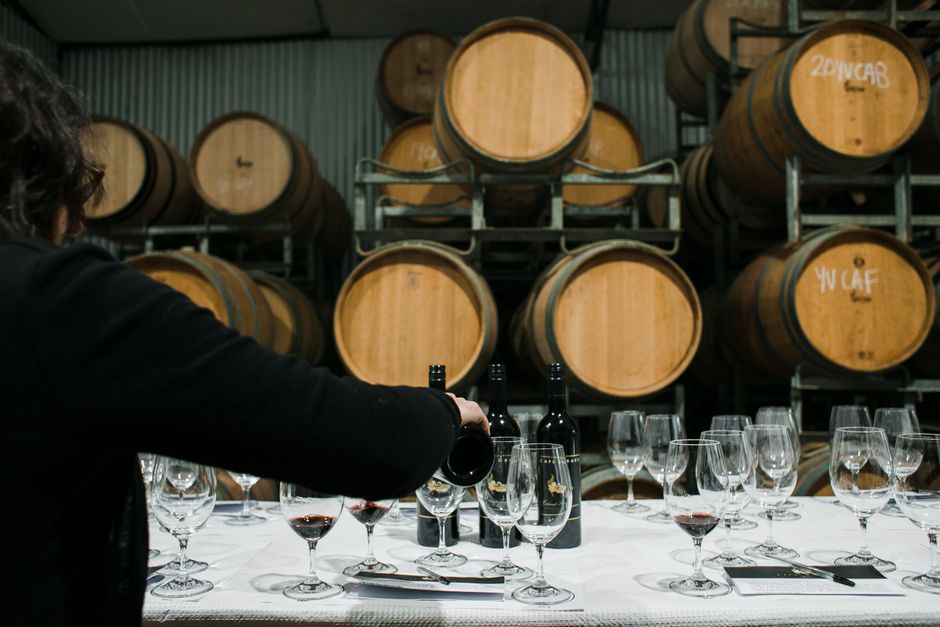
Each target market may have specific requirements or cultural preferences related to bottle formats. For example, the U.S. market requires preliminary verification of label compatibility with TTB (Alcohol and Tobacco Tax and Trade Bureau) requirements before promising immediate availability. General compliance of packaging and labeling is a prerequisite.
What Practical Steps Should an Export Manager Take Regarding Bottle Height?
An export manager should verify the specific regulations of the target market, optimize logistics by considering bottle dimensions to maximize efficiency and minimize costs, maintain clear communication with local importers for information on non-obvious requirements or market preferences, and strategically select bottle formats that best suit the regulatory and logistical requirements of target markets.
Frequently Asked Questions
Are there height limitations for wine bottles intended for export to non-European markets?
Specific regulations vary from market to market. It is essential to verify the requirements of the destination country, as there may be restrictions or dimensional preferences related to bottle height, in addition to general labeling and packaging compliance.
What are the advantages of using standardized bottle formats for export?
Using standardized bottle formats that fit well on European pallets can optimize cargo space, reduce transportation costs, and simplify logistics. This is particularly important for export efficiency.
How can I ensure my wine bottles comply with the regulations of a foreign market?
It is essential to consult ICE guides, the customs authorities of the destination country, and maintain constant communication with the local importer. These partners can provide valuable information on any specific requirements, including bottle dimensions.
In conclusion, wine bottle height requires strategic attention in export. Understanding regulations, optimizing logistics, and maintaining effective communication with international partners are crucial steps to ensure the success of Italian wine in global markets.