Vinsanto: The Italian Raisin Wine for the International Market
Vinsanto, an Italian raisin wine, represents a niche opportunity for wineries focused on export. Its production, tied to centuries-old traditions and rigorous regulations, makes it a product of significant interest for international markets. A thorough understanding of its denomination, production regulations, and the expectations of foreign buyers is crucial for Italian wineries aiming to expand their global presence. This article explores the key aspects of Vinsanto, offering a comprehensive guide for producers and industry professionals interested in export. In-depth look: Federdoc — National Confederation of Italian Wine Consortia for the Protection of Designations.
How does regulation protect Vinsanto?
European and national regulations protect denominations of origin and geographical indications through detailed technical dossiers. These include the denomination name, the applicant, production regulations, and a summary document. The regulations define production conditions, wine characteristics, winemaking practices, the geographical area, and maximum yields per hectare, protecting the product from improper use and ensuring consumer compliance.
What are the key elements of production regulations?
Production regulations are at the heart of denomination protection. They include a description of the wine (analytical and organoleptic characteristics), specific winemaking practices and any restrictions, the delimitation of the geographical production area, and maximum yields per hectare. The permitted grape varieties are also indicated, generally belonging to the Vitis vinifera species.
How is Vinsanto's authenticity guaranteed abroad?
Vinsanto's authenticity abroad is guaranteed by European legislation, particularly Regulation (EU) No 479/2008 and Regulation (EU) No 333/2008. These regulations prohibit the improper commercial use, counterfeiting, imitation, or evocation of names of origin and geographical indications, preventing practices that could mislead consumers about the true origin of the product.
What are the typical characteristics of Vinsanto?
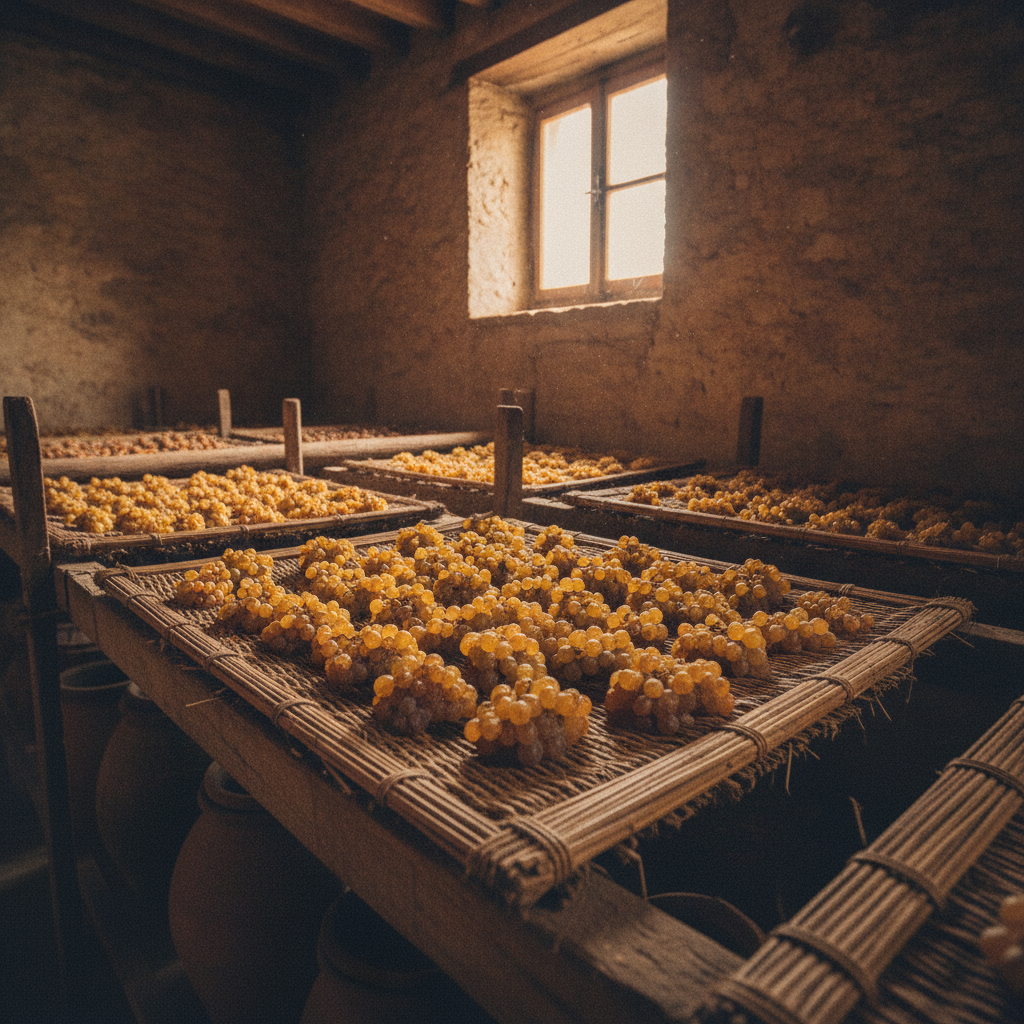
Typical characteristics of Vinsanto include a color ranging from golden amber to intense copper. On the nose, it presents ethereal and complex aromas with notes of dried fruit, honey, almond, and spices. On the palate, the taste is sweet, velvety, and persistent, with a good balance between sugars and acidity. These qualities stem from the grape drying process and the wine's long aging period.
What do foreign buyers look for in Vinsanto?
International buyers seek not only a high-quality product in Vinsanto but also an authentic story and added value that justifies the price. They appreciate wineries that demonstrate a deep connection to their territory and maintain traditional practices, such as grape drying and extended aging in wood.
Why are authenticity and tradition important to foreign buyers?
Foreign markets are increasingly seeking authentic products that reflect the culture and tradition of their region of origin. Vinsanto, with its historical roots and the production techniques passed down through generations, embodies this desire. Buyers value wineries that can demonstrate a profound link to their territory and keep traditional practices alive.
What is the importance of quality and consistency for Vinsanto buyers?
Consistent quality is a fundamental prerequisite for international buyers. They expect Vinsanto to strictly adhere to its production regulations, guaranteeing consistent organoleptic and analytical characteristics over time. The ability to provide documentation attesting to regulatory compliance (such as PDO/PGI certifications) is essential.
How does Vinsanto differentiate itself in the global market?
Vinsanto stands out in the global market due to its distinctive production method, grape drying, which imparts unique characteristics to the wine. The use of indigenous grape varieties specific to certain Italian regions adds a further layer of uniqueness and territoriality. Furthermore, many Vinsantos have excellent aging potential, an aspect highly valued by consumers.
What is the role of sustainability in Vinsanto exports?
Sustainability is becoming an increasingly important purchasing criterion for foreign buyers. They are interested in learning about agricultural and winemaking practices that respect the environment and promote biodiversity. Wineries that can demonstrate a commitment to sustainability will have a competitive advantage. Regulation (EU) 2021/2117 allows for the inclusion of a description of the contribution to sustainability in production regulations.
Wines Export and Vinsanto
Wines Export collaborates with a pool of Italian wineries specializing in the production of sweet and raisin wines, including those that produce Vinsanto. Our network comprises producers operating in regions historically suited for this type of wine, respecting specific Protected Designation of Origin (PDO) or Protected Geographical Indication (PGI) regulations, and utilizing typical indigenous grape varieties.
How does Wines Export support wineries in Vinsanto production for export?
Wines Export supports wineries in Vinsanto production for export by selecting producers who excel in quality, authenticity, and their ability to meet the demands of global markets. We offer personalized consulting to identify producers best suited to the market needs of foreign buyers, ensuring privileged access to Italian gourmet excellence.
What types of Vinsanto are available through Wines Export?
Through Wines Export, you can access a curated selection of Vinsanto produced under specific Protected Designation of Origin (PDO) or Protected Geographical Indication (PGI) regulations. Our network includes wineries that use typical indigenous grape varieties and have proven experience in exporting sweet and raisin wines to international markets.

Frequently Asked Questions
What are the main differences between various Italian Vinsantos?
The main differences between various Italian Vinsantos stem from the specific regulations of each denomination, which define the grapes used, the drying and winemaking techniques, and the production area. These variations lead to different organoleptic and analytical characteristics.
Is it possible to export Vinsanto without a specific denomination?
Yes, it is possible to export Vinsanto without a specific denomination, provided the product complies with current regulations and possesses the characteristics that identify it as Vinsanto. However, a protected designation of origin or geographical indication offers greater protection and recognition in the international market.
What are the most interested foreign markets for Vinsanto?
The text does not specify the most interested foreign markets for Vinsanto but indicates that international buyers seek authenticity, tradition, quality, uniqueness, and sustainability.
Are you an Italian winery interested in exporting your Vinsanto or other raisin wines? Contact us to discover how Wines Export can support your internationalization strategy and connect you with the best international buyers.