The Netherlands: who buys Italian wine, under which rules, and how to choose the right importer
Wines Export Editorial · Last updated:

In the Netherlands Italian wine is bought mainly by importers, who receive it in a tax warehouse or as registered consignees and resell it to supermarket chains, wine shops (wijnhandel), liquor stores (slijterij) and foodservice wholesalers. Four sets of rules matter: Dutch excise of 95.69 euros per hectolitre on wine above 8.5% vol, shipment under EMCS with the e-AD, the Alcoholwet that decides who may sell and to whom, and the EU label with ingredients and nutrition values (Wet op de accijns, art. 10; Douane, June 2026; Alcoholwet, art. 3, 18 and 20; RVO, April 2025). In 2024 the Netherlands imported 388.2 million litres of wine worth 1,534 million dollars, and Italy was the second supplier after France with 64.6 million litres and 285 million dollars (UN Comtrade, HS 2204). This guide explains who buys, what Dutch law requires and how to choose a partner.
The names of the buyers of Italian wine active in the country, by city and by type, are on the data page wine buyers in the Netherlands. Related topics have their own guides: shipping wine to the Netherlands: excise and documents, wine prices in the Netherlands and Belgium: excise and margins and one importer for the whole Benelux. The version written for Dutch buyers looking for suppliers is Italian wine suppliers in the Netherlands.
How much Italian wine does the Netherlands buy?
Italy is the Netherlands' second wine supplier, with about a fifth of import value. Dutch customs data reported to UN Comtrade for 2024 give this picture.
| Supplier | Litres imported 2024 | Value 2024 (million dollars) | Share of value |
|---|---|---|---|
| France | 96.2 million | 463.8 | 30% |
| Italy | 64.6 million | 285.0 | 19% |
| Spain | 60.6 million | 203.5 | 13% |
| Germany | 58.9 million | 166.5 | 11% |
| World total | 388.2 million | 1,533.6 | 100% |
Source: UN Comtrade, reporter Netherlands, imports, HS code 2204, year 2024 (read on 14 November 2026; 2025 data were not yet published).
The average declared value of Italian wine is about 4.4 dollars per litre, French wine about 4.8: Italy sells more volume at a slightly lower unit value. The Dutch total also includes wine that leaves again for other countries, as the re-export section explains: domestic consumption is smaller than imports.
Who buys Italian wine in the Netherlands?
Foreign wine almost always enters through an importer, and the market is concentrated. The KVNW (Koninklijke Vereniging van Nederlandse Wijnhandelaren), the wine traders' association based in The Hague, states that its members together account for more than 80 percent of the country's annual wine imports. The members listed on its website include importers, agencies, "wijnkopers" (houses that buy and resell), chains such as Jumbo, Koninklijke Ahold, Gall & Gall and HEMA, and the wholesaler Sligro Food Group (KVNW, member list).
| Type of buyer | What it buys | What it asks of the winery |
|---|---|---|
| Generalist importer | hundreds of labels from every country, for supermarkets, slijterij, HoReCa and wijnhandel | a wine that fills a precise gap in the range (appellation, price band, format) and continuity of supply |
| Importer specialised in Italy or Southern Europe | shorter ranges, sold to restaurants and wine shops | the winery's story, material in English, visits and tastings with its network |
| Agent | does not buy: brings orders from importers and chains, on commission | a clear mandate with defined territory and customers |
| Supermarket or slijterij chain | branded wines through importers; private label also direct | volumes guaranteed for the year, specifications, audits; if buying direct, a tax warehouse to receive the goods |
| Wijnhandel and restaurants | almost always from importers and HoReCa wholesalers | rarely have an excise number to receive directly from Italy |
The practical consequence for an Italian winery: writing to a hundred wine shops achieves little; it pays to find the specialist importer that already serves them. The difference between importing and distributing is explained in Italian wine importers and distributors.
A label that enters supermarkets rarely makes it into wijnhandel and restaurants afterwards, because they do not want a wine that can be compared on the shelf. Many wineries solve this with one label for large retail and another for the specialist channel.
Why can a Dutch importer open other countries too?
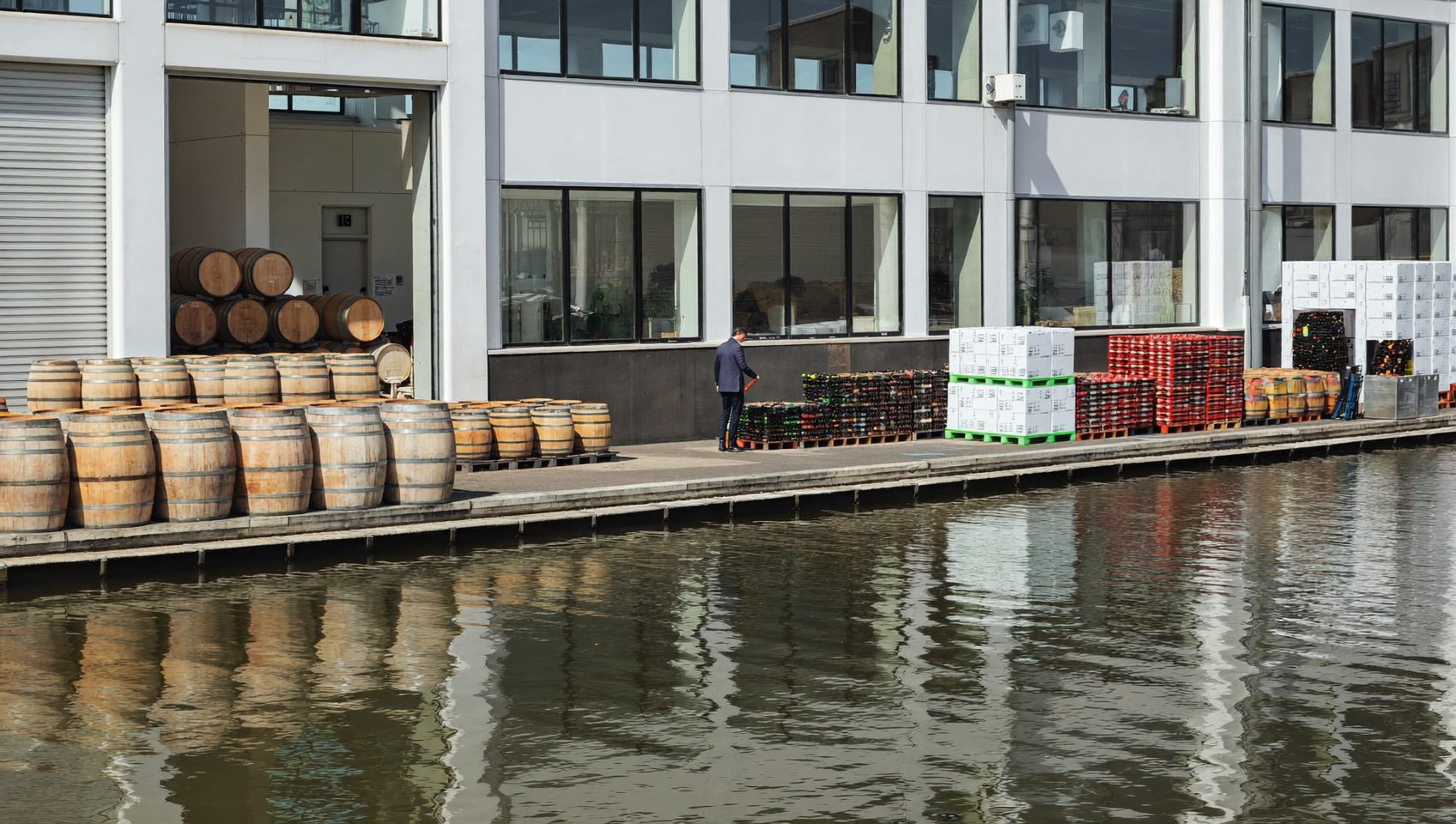
Because the Netherlands re-exports a lot of wine without producing significant quantities. In 2024 the country exported 69 million litres of wine worth 423 million dollars, mainly to Belgium (25.2 million litres), Norway (15.4 million) and the United Kingdom (10.4 million) (UN Comtrade, reporter Netherlands, exports, HS 2204, 2024).
Many Dutch importers therefore do not buy for the domestic market alone: they have tax warehouses, excise numbers and relationships with the Nordic monopolies. When you assess one, ask which countries it serves besides the Netherlands. Exclusivity written for the Benelux or Northern Europe is worth much more than one for the Dutch market alone and should be negotiated accordingly: the Nordic tenders are explained in Systembolaget, Vinmonopolet and Alko tenders, the clauses in the export distribution contract checklist.
How much is Dutch excise on wine?
The Netherlands taxes wine by volume, not by strength: 47.95 euros per hectolitre up to 8.5% vol and 95.69 euros per hectolitre above, with the same rate for still and sparkling wine (Wet op de accijns, art. 10, version in force since 20 June 2026, same amounts since 1 January 2026). On a 75 cl bottle of wine at 13% the excise is therefore 0.72 euros.
| Product | Band | Excise 2026 (euros per hectolitre) | Source |
|---|---|---|---|
| Still or sparkling wine | up to 8.5% vol | 47.95 | art. 10 |
| Still or sparkling wine | above 8.5% vol | 95.69 | art. 10 |
| Intermediate products (fortified wines, vermouth) | up to 15% vol | 114.85 | art. 11d |
| Intermediate products | above 15% vol | 161.80 | art. 11d |
Source: Wet op de accijns, art. 10 and 11d (wetten.overheid.nl, version from 20 June 2026).
For excise law, "wine" is a product of codes 2204 and 2205 between 1.2 and 15% vol with alcohol entirely from fermentation, and up to 18% if produced without any enrichment (Wet op de accijns, art. 8a). A wine from dried grapes at 16%, produced without enrichment, therefore remains wine for tax purposes and does not become an intermediate product.
On top of excise comes Dutch VAT (btw) at 21 percent, the rate for drinks with more than 1.2 percent alcohol (Belastingdienst, VAT rates on drinks). The government writes that alcohol excise has not changed since 2024 and proposes, in the 2027 tax plan, to index it to inflation every year; if the Eerste Kamer approves, the measures would apply from 1 January 2027 (Rijksoverheid, Belastingplan 2027). Beware of outdated summaries: the Netherlands sheet of ICE's wine export guide (February 2025) still shows lower excise rates and 9 percent VAT, which do not match the law in force.
Who can receive the wine, and with which documents?
Wine travels from Italy under excise suspension with the e-AD in EMCS and must arrive at an authorised party: a tax warehouse (accijnsgoederenplaats) or a registered consignee (geregistreerde geadresseerde). Dutch Customs explains that the registered consignee licence allows several shipments a year from different consignors; the temporary licence covers a single quantity from a single consignor and can be requested at most three times (Douane, Vergunning geregistreerde geadresseerde information sheet, June 2026).
| Step | What applies | Source |
|---|---|---|
| Guarantee | the registered consignee lodges a guarantee for the excise before using the licence | Douane, June 2026 |
| Licence lead time | up to 8 weeks to obtain it | Douane, June 2026 |
| Arrival of the goods | the buyer confirms receipt in EMCS within 5 working days | Your Europe, excise duties |
| Return and payment | by the Friday after the week of receipt | Douane, June 2026 |
| Wine already taxed in Italy | certified consignor and certified consignee (gecertificeerde geadresseerde), with payment within one working day of receipt | KVK, Bier en wijn importeren |
| Small producers | below 1,000 hectolitres a year on average, member states may waive the e-AD and accept the wine accompanying document (Directive 2020/262, art. 48) | Douane, June 2026 |
ICE's Netherlands sheet lists the documents for a shipment: export invoice with HS code and Incoterm, wine accompanying document, e-AD, CMR for road transport and a packing list referring to the e-AD; certificates of origin and analysis certificates are not mandatory (ICE, wine export guide, February 2025). Before the first shipment, check the customer's excise number: SEED excise number: how to check an EU customer. Completion is covered in e-AD and EMCS step by step, the duty-paid case in e-DAS and the certified consignor.
What does the Alcoholwet say about who may sell wine?
Under Dutch law wine is never "sterke drank" (spirits), even above 15 degrees: the definition of sterke drank expressly excludes it, so wine is a "zwak-alcoholhoudende drank", a low-alcohol drink (Alcoholwet, art. 1). Four rules follow.
- Supermarkets and food shops may sell wine for consumption elsewhere, as may slijterij; wine must be clearly distinguishable from alcohol-free drinks (Alcoholwet, art. 18).
- Bars, restaurants and slijterij need a licence from the mayor (vergunning from the burgemeester) to run a horeca or slijterij business (Alcoholwet, art. 3).
- No alcohol under 18: sellers must establish age with an identity document (Alcoholwet, art. 20). Selling alcohol at petrol stations and their shops is prohibited (art. 22).
- Importing wine requires no alcohol licence, but anyone trading in it must be registered as a food business with the NVWA, the Dutch food and consumer product safety authority (KVK, Bier en wijn importeren).
For the winery the practical point is that your importer needs no special licence to sell to supermarkets, whereas its restaurant or slijterij customer must hold its own vergunning.
What must the label carry for the Netherlands?
Since 8 December 2023 wine sold in the EU must show ingredients, allergens, energy value and a nutrition declaration under Regulation (EU) 2021/2117; wine labelled before that date without these details may be sold until stocks run out (RVO, Regels voor het wijnetiket, April 2025). Ingredients and nutrition values may go in a QR code under three conditions set by the RVO guide: the code sits in the principal field of vision, the word "ingrediënten" (and "voedingswaarde" where relevant) appears next to it, and the landing page contains no marketing or sales content.
On language, Dutch sources do not say exactly the same thing. The RVO guide requires mandatory information "in a language easily understood by the consumer" (Regulation (EU) 1169/2011, art. 15) and calls Dutch "highly desirable"; the KVK, the Dutch chamber of commerce, writes that mandatory information must be in Dutch. In practice importers ask for Dutch, and if the same label also serves Belgium, French has to be added. How to prepare the label is explained in EU wine label: ingredients and QR code rules.
Which rules apply to advertising and online sales?
Alcohol advertising in the Netherlands follows the Reclamecode voor Alcoholhoudende Dranken, the industry's self-regulatory code, last amended on 1 April 2024. Among the main rules (articles of the code):
- advertising may not reach an audience made up of more than 25 percent minors (art. 20) and may not be aimed specifically at minors (art. 10);
- hired models and well-known people must be at least 25 (art. 11); on social media, influencers must be and look at least 25 and must show #Ad (art. 23);
- where an 18+ filter exists it must be used, as on YouTube, Instagram, Facebook and X; advertising on TikTok is prohibited (art. 23);
- every advertisement shows the NIX18 logo, optionally with the line "Geniet, maar drink met mate" (art. 32).
Online sales to consumers are allowed, but the seller must use an age verification system at the time of purchase and ensure that the courier checks age on delivery (Alcoholwet, art. 20a). The NVWA checks with test purchases made by 17-year-olds and, if the wine is delivered, may fine the seller (NVWA, supervision of online alcohol sales). If an Italian winery sells directly to Dutch consumers, excise is due in the Netherlands even if it has already been paid in Italy, and a tax representative in the country is usually required (Your Europe, paying excise duties): details in EU distance selling of wine: fiscal representative and excise.
How do you choose the right importer?
Choose the importer for the channels and countries it really serves, not for its size. Questions to ask before signing:
| Question | Why it matters |
|---|---|
| Which channels does it serve: supermarkets, slijterij, HoReCa, wijnhandel, online? | it decides where your wine ends up and whether you can open the other channels too |
| Which countries does it cover besides the Netherlands? | Belgium, Luxembourg and the Nordic monopolies change the value of exclusivity |
| Does it have a tax warehouse or a registered consignee licence? | without one it cannot receive under excise suspension |
| How many Italian labels does it carry in your price band and area? | if it already has three like yours, you will not be the priority |
| Who pays for and organises promotions, tastings and Dutch-language price lists? | it defines your marketing commitment |
| How does it handle the label and NVWA checks? | whoever places the wine on the market is responsible for consumer information |
| Which payment terms does it propose, with which guarantees? | financial soundness should be checked before the first invoice |
Check the company with verifying a foreign importer: due diligence. For a first contact, write briefly in English: who you are, which labels you propose for the Netherlands and why, sample availability. The sequence of email, trade fair and samples is in how to approach a wine importer; fair meetings are booked in advance, for example at Wine Paris: meeting French and Benelux importers. ICE offers free guidance through its Brussels office, which covers the Netherlands, via the client area of its portal (ICE, wine export guide). The general method for other countries is in Italian wine importers by country.
Frequently asked questions
What is the excise duty on wine in the Netherlands in 2026?
95.69 euros per hectolitre for still or sparkling wine above 8.5% vol and 47.95 euros up to 8.5% (Wet op de accijns, art. 10, 2026 version). On a 75 cl bottle above 8.5 degrees that is 0.72 euros, plus 21 percent Dutch VAT.
Do you need a licence to import wine into the Netherlands?
No alcohol licence is needed to import wine, but registration as a food business with the NVWA is required (KVK). To receive wine under excise suspension you need a tax warehouse or a registered consignee licence from Dutch Customs.
Can a Dutch supermarket sell wine?
Yes. The Alcoholwet treats wine as a low-alcohol drink and allows it to be sold in food shops and supermarkets, clearly separated from alcohol-free drinks (Alcoholwet, art. 1 and 18). Spirits of 15 degrees and above, wine excluded, are sold only in slijterij.
Does the label have to be in Dutch?
The RVO guide requires a language easily understood by the consumer and recommends Dutch; the KVK writes that mandatory information must be in Dutch. Importers ask for it anyway, and ingredients and nutrition values are also required, on the label or via QR code (Regulation (EU) 2021/2117).
Can I sell online to Dutch consumers from Italy?
Yes, but Dutch excise is due in the Netherlands and a tax representative is usually required (Your Europe). Age checks at order and on delivery under Alcoholwet art. 20a also apply, and the NVWA verifies them with test purchases.
Why can a Dutch importer also serve Belgium and Norway?
Because the Netherlands re-exports: in 2024, 69 million litres of wine left the country, mainly for Belgium, Norway and the United Kingdom (UN Comtrade). Many importers have tax warehouses and links with the Nordic monopolies, and negotiate exclusivity across several countries.
Sources
- Wet op de accijns, art. 8a, 10 and 11d, version in force since 20 June 2026 (wetten.overheid.nl) and version from 1 January 2026
- Alcoholwet, art. 1, 3, 18, 20, 20a and 22, version in force since 12 February 2025 (wetten.overheid.nl)
- Douane, Vergunning geregistreerde geadresseerde information sheet, June 2026
- Belastingdienst: VAT rate on drinks
- Rijksoverheid: government plans for alcohol excise, Belastingplan 2027
- KVK: Bier en wijn importeren
- RVO: Regels voor het wijnetiket, April 2025
- NVWA: supervision of online alcohol sales
- Stichting Reclame Code: Reclamecode voor Alcoholhoudende Dranken
- Your Europe (European Commission): paying excise duties
- UN Comtrade: wine imports and exports (HS 2204) reported by the Netherlands, 2024
- ICE Agency: wine export guide, Netherlands sheet (February 2025)
- KVNW, Koninklijke Vereniging van Nederlandse Wijnhandelaren: members
Answer four questions about your winery and we will write back.
- Independent wine shops abroad: how to become a supplier
- Wine Importers in China: Who Buys and Under Which Rules
- Italian food wholesalers abroad: do they sell wine too?
- Wine Importers in Canada: Who Buys and Under What Rules
- Italian Wine Importers by Country: How They Work
- Wine importers in Belgium: excise, rules and channels