Lambrusco export price: ex-cellar tiers and what foreign markets pay
Wines Export Editorial · Last updated:
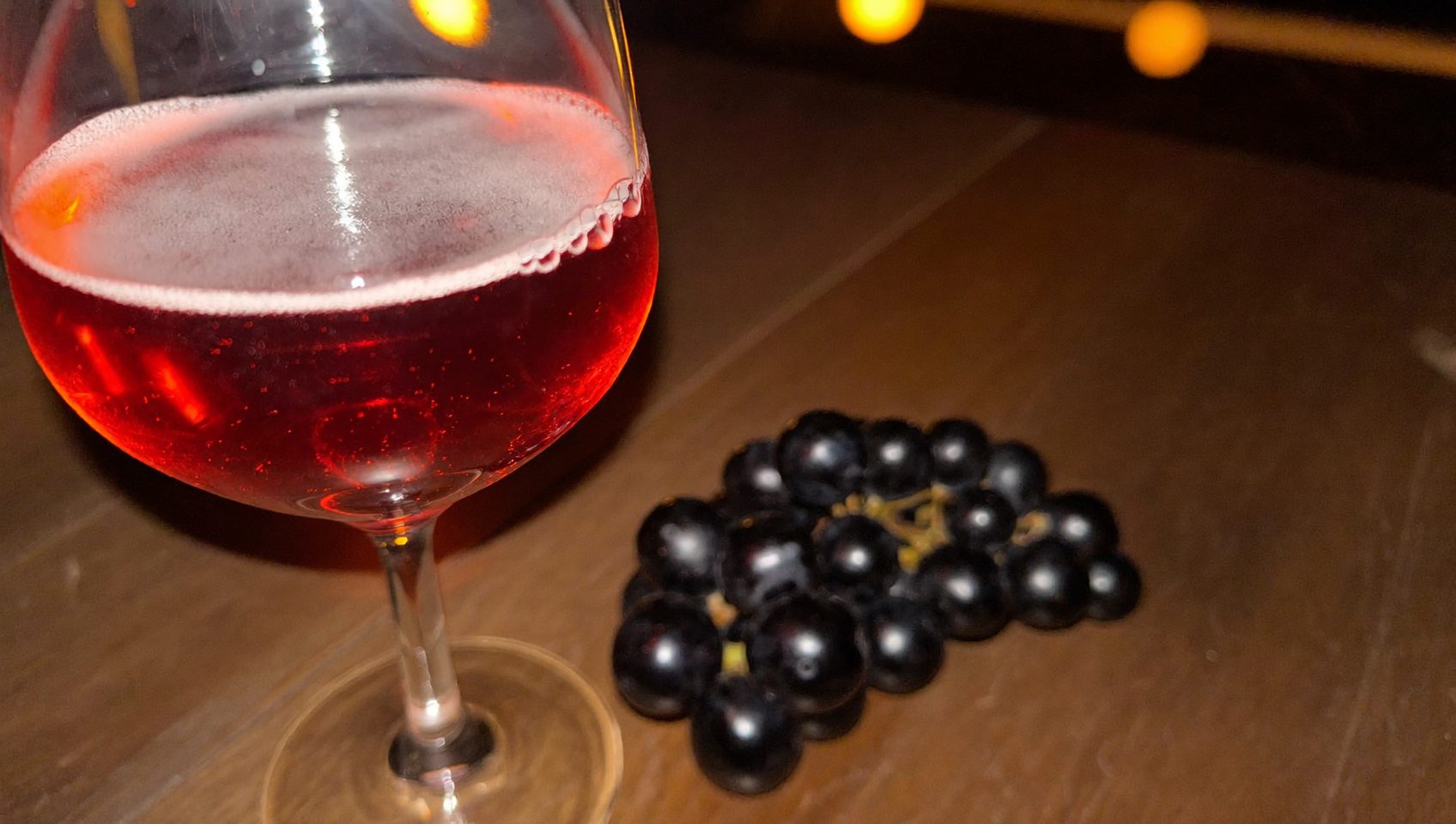
Lambrusco export pricing is formed on two levels. The first is the ex-cellar price, meaning ex-winery, which the ISMEA survey records every week by type of bulk wine. The second is the shelf price in the destination country, which adds duties, excise, transport and the margins of importer and distributor. For red and rosé Lambrusco IGT, the Reggio Emilia survey of 2 November 2026 shows 3.95 euros per degree-hectolitre, that is about 0.395 euros per litre for a wine at 10 degrees. This figure is a starting point, not a final price. To understand the cost structure, start with the page on the Lambrusco designation and what the foreign buyer needs to know.
How much Lambrusco Italy exports and where it goes
The Lambrusco Consortium presents this wine as widely distributed worldwide, and describes it as a product with a clear identity, linked to its designations and to the Modena and Reggio Emilia territory. This wide distribution is why Lambrusco appears on many foreign wine lists, often alongside sparkling wines from other regions.
However, export volumes should be read carefully. Italian customs statistics, collected in the ISTAT Coeweb database, separate the still wine and sparkling wine headings and do not always distinguish Lambrusco from other frizzante wines. Before building a pricing plan, therefore, verify the customs heading for your product and the destination country, because an aggregate figure for all Italian wine says little about the price of a dry Lambrusco in Germany.
The Consortium is also the first point of contact for anyone seeking documentation on the designation and its sub-zones. Information on the product's identity, such as the sparkle and character of each type, helps the importer place the wine in the right shelf tier.
Sorbara, Grasparossa, Salamino, Reggiano: ex-cellar tiers
The Lambrusco designation includes several sub-zones and types, and the Consortium publishes the list on its website. The four that foreign markets recognise most often are Lambrusco di Sorbara, Lambrusco Grasparossa di Castelvetro, Lambrusco Salamino di Santa Croce and Lambrusco Reggiano. Each has a different profile: Sorbara is lighter and more acidic, Grasparossa is more structured and deeply coloured, Salamino is more balanced, and Reggiano is easier to drink and closer to volume production.
The practical point is this: the ISMEA survey cited does not separate prices by sub-zone. It records the generic heading "Red and rosé IGT wines - Emilia Lambrusco", with the declared average degree. The difference between a Sorbara and a Grasparossa therefore has to be built from the prices offered by your winery or your supply contract, and not taken from a public price list that does not distinguish sub-zones.
Alcohol content matters as much as the sub-zone. In the survey, red Lambrusco is recorded at 10.0 degrees, while white Lambrusco appears at 11.5 degrees. Since the ISMEA price is per degree-hectolitre, meaning per hectolitre and per degree, a wine with higher alcohol does not necessarily cost more. Always compare on the price per degree-hectolitre, and then on the price per litre.

Ex-cellar prices recorded by ISMEA for Lambrusco and similar wines
| Product surveyed | Market | Survey date | Average degree | Price (euro/degree-hectolitre) | Condition |
|---|---|---|---|---|---|
| Red and rosé IGT wines, Emilia Lambrusco | Reggio Emilia | 02-11-2026 | 10.0 degrees | 3.95 | Ex-winery |
| White IGT wines, Emilia Lambrusco Bianco | Reggio Emilia | 02-11-2026 | 11.5 degrees | 4.15 | Ex-winery |
| Common red and rosé wines, 9/11 degrees | Reggio Emilia | 02-11-2026 | 10.0 degrees | 3.40 | Ex-winery |
| Common red and rosé wines, 9/11 degrees | Modena | 02-11-2026 | 10.5 degrees | 3.60 | Ex-winery |
| White IGT wines, Emilia Trebbiano | Modena | 02-11-2026 | 10.0 degrees | 4.15 | Ex-winery |
Source: wine price survey published by ISMEA Mercati. The values refer to bulk wine and not to the bottle. The table has no price-per-litre column. To derive it from the per-degree-hectolitre figure, multiply the price by the average degree and divide by one hundred.
The table shows that red Lambrusco IGT sits below white Lambrusco in the same market and a few cents above common red wine in the same market. For an importer, this means that the raw material of Lambrusco is not expensive in absolute terms, and that the foreign shelf price depends almost entirely on the later stages: bottling, logistics, taxes and margins.
Germany: discount Lambrusco and the average price per litre
Germany is the market that buys Lambrusco in volume, often through mass retail and discounters. In this channel the shelf price is low and the pressure on the importer's margin is strong. For this reason, the main lever is the industrial cost of the bottle, not the quality tier.
No figure for the average German price per litre appears here: statistics from the Deutsches Weininstitut and German import data are not among the sources listed at the end. For the market in general, the ICE portal dedicated to Germany lists an office in Berlin and gathers information on trade fairs, regulations and business opportunities, which is the starting point for anyone who wants to verify local shelf prices.
Those selling in this channel should calculate the price starting from the ex-cellar cost, adding transport, customs and the excise of the destination country, then the distributor's margin and that of the retail chain. The process is described on the page on the discount and mass retail channel in Germany, which covers formats and purchasing conditions in detail.
United States and Northern Europe: the premium tier and monopolies
In the United States and the Nordic countries, Lambrusco moves in a different tier. In the United States distribution runs through several levels, importer, distributor and retailer, and each adds its own margin. The shelf price therefore rises considerably compared with the ex-winery price, and the wine must justify its tier with a story about the designation, a recognisable bottle and a suitable sales channel.
In the Nordic countries the system is different. Sweden, Norway and Finland sell spirits through state monopolies, which publish price lists and set the retail price. For a Lambrusco, this means the shelf price is the result of a formula set by the monopoly, and the question to ask is which tier of the list the wine enters and how much margin the monopoly and the importer take. The calculation is described on the page on how the shelf price is calculated in the Nordic monopolies.
In Northern Europe, the positioning of Lambrusco depends on the list tier in which the monopoly places it, so the entry price must be calculated carefully. In the United States, premium positioning requires more distribution and storytelling work, and the return comes later.
How to choose the route: volume or positioning
Lambrusco has two routes. The first is volume: a simple wine, produced in large quantities and sold at a low price in mass channels, such as German mass retail. The ex-cellar price is low, the margin is thin and the risk lies in a price that moves with the bulk market. The second is positioning: a sub-zone Lambrusco with a distinctive bottle and a selected channel, such as a Nordic monopoly or a US importer working the upper tier.
The choice depends on the winery's production capacity and on the capital available for marketing work. A winery with average volumes and a single product line will struggle to sustain volume, because bottling and transport costs weigh equally on every bottle. A winery that already has a sub-zone product can instead test the premium tier in one market, measuring the result before expanding.
To compare the two routes in terms of price and tier, the page on price tiers by type of Italian wine sets out the most used thresholds and positionings. The regional guide for Emilia-Romagna, on the other hand, helps identify which producers and designations close to Lambrusco are already present in foreign markets: you will find it on the page on the Emilia-Romagna wine export guide.
Price list example for a dry Lambrusco
Let us make a simple calculation, starting from the ISMEA figure for red Lambrusco IGT in Reggio Emilia. At 3.95 euros per degree-hectolitre and 10.0 degrees, the bulk wine costs about 39.50 euros per hectolitre, that is about 0.395 euros per litre. A 0.75-litre bottle therefore contains about 0.296 euros of bulk wine at ex-cellar price.
This number is not the price of the bottle. It does not include the glass, the cork, the label, bottling, transport, customs, the excise of the destination country, or the margins of the importer and the retailer. When a foreign price list is built, these added costs often weigh more than the wine itself. For this reason, the ex-cellar price serves to verify the raw material, while the foreign price tier is decided by the elements the wine carries with it: bottle, designation, channel.
If you want to compare your price list with the shelf prices of a country, look up the public lists of the monopoly or the local distributor and work backwards to the ex-cellar price. The difference between the two numbers is the sum of all costs and margins, and it shows how much room remains for the winery.
Further reading: Dealcoholized wine export price: duties and buyers.
Further reading: US wine wholesalers: how they work and how to get in.
Frequently asked questions
How much does bulk Lambrusco cost in Italy?
According to the ISMEA survey for Reggio Emilia of 2 November 2026, red and rosé Lambrusco IGT is recorded at 3.95 euros per degree-hectolitre, ex-winery. The figure refers to bulk wine and not to the bottle. The price per litre, for a wine at 10 degrees, is about 0.395 euros.
Is the ISMEA price also the price of the bottle?
No. The ISMEA figure refers to bulk wine sold ex-winery, so it does not include glass, cork, label, transport, customs, the excise of the destination country, or the margins of the importer and distributor. The foreign shelf price is obtained by adding all of these elements.
Does Lambrusco sell better in Germany or in the United States?
Sales figures by country are not in the sources listed at the end, so no leader can be indicated. In Germany the strong channel is discount and mass retail, with low prices. In the United States, multi-level distribution supports a higher tier.
What is the difference between Sorbara and Grasparossa for the importer?
The two sub-zones have different profiles in colour, acidity and structure. The price cannot be derived from a public list that does not separate them, so the difference has to be defined in the winery's supply contract.
Sources
- Exporting Natural Wines and Cured Meats: A Winery Guide
- Italian White Grape Varieties: Key Types, DOCs and Markets
- Exporting Italian Wine: A B2B Winery Guide
- Italian native red grapes for export: twelve varieties
- Bag-in-box wine export: DOC rules, formats, Nordic data
- Is Exporting Wine Worth It? When a Winery Is Ready