Sulfur dioxide in winemaking: how much to add at harvest, after malolactic fermentation, during ageing and at bottling; free and total SO2; EU and organic limits; alternatives (chitosan, lysozyme, ascorbic acid)
Wines Export Editorial · Last updated:
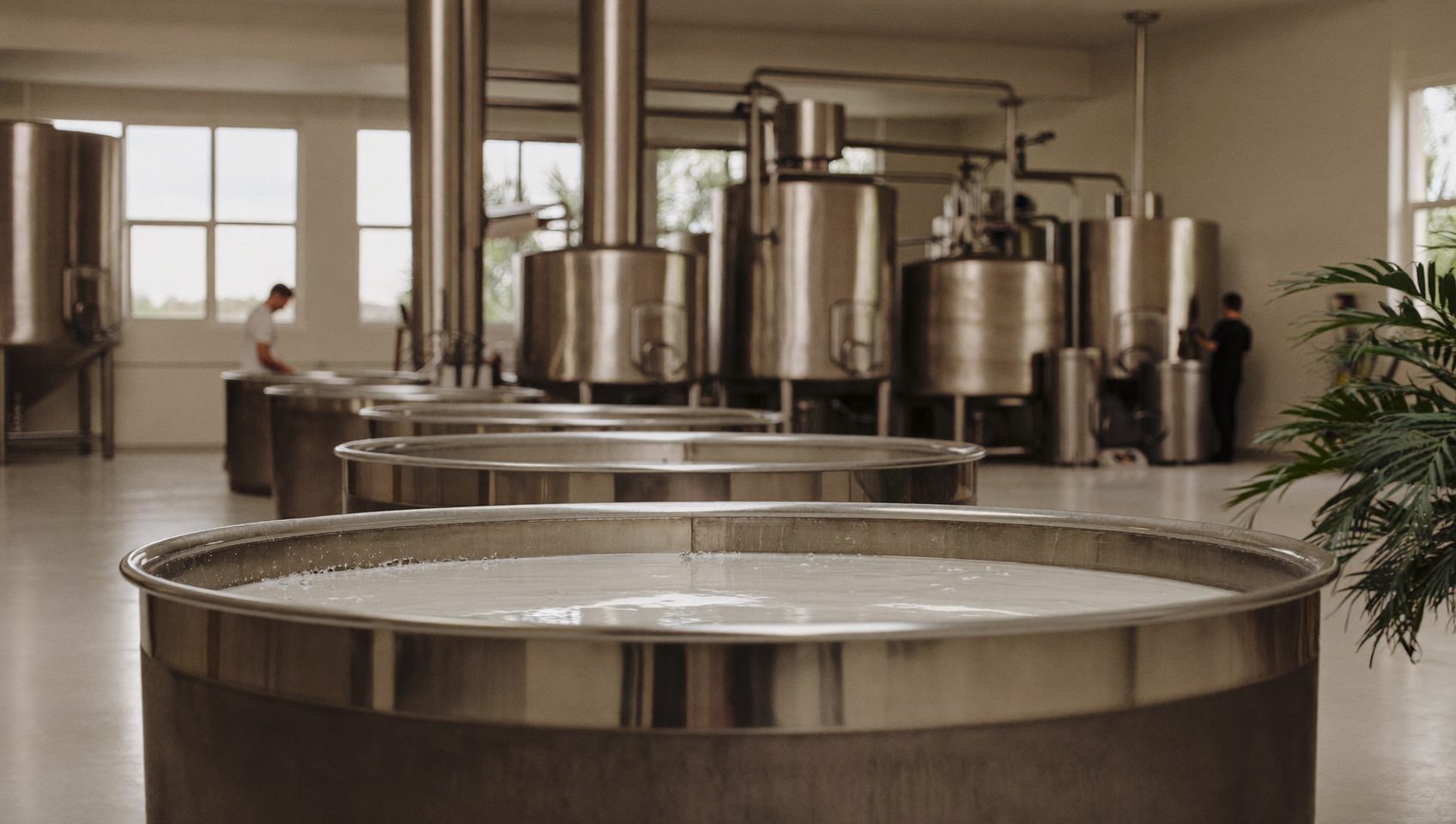
Planning sulfur dioxide additions along the winemaking process helps you protect wine from oxidation and microbiological deviations without approaching legal maximums. Effective dosing is not based on fixed recipes, but on calculating the active molecular fraction in relation to your wine's pH and on the reduction of carbonyl compounds that bind sulfite. Distributing interventions at key moments — crushing, end of malolactic fermentation, ageing and pre-bottling — and integrating processing aids authorised by the OIV International Code of Oenological Practices allows you to reach the market with stable wines and a controlled total sulfite content.
Free, total, molecular: what to measure in the lab
When you analyse a must or a wine in the cellar, the total sulfur dioxide value tells you how much preservative you have accumulated compared with regulatory maximums, but says little about the real technical protection of the batch. Sulfur dioxide added to a tank is in fact divided into two main fractions: the combined share, which binds reversibly or irreversibly to acetaldehyde, sugars, keto acids and anthocyanins, and the free share, which remains available in solution.
In turn, free sulfur dioxide is divided into bisulfite ion and molecular sulfur dioxide. To learn more about the chemical binding mechanisms and the protective role against oxidation, you can consult the technical sheet on the relationship between sulfur dioxide and oxygen in wine. From an operational standpoint, when planning dosages you must distinguish these two forms:
- The bisulfite ion is the prevailing fraction at normal wine pH values: it performs chemical antioxidant action by reacting with hydrogen peroxide and quinones, and exerts antioxidasic action by inhibiting oxidase enzymes such as tyrosinase and laccase in musts.
- Molecular sulfur dioxide is the undissociated gaseous fraction and is the only one with marked antimicrobial efficacy against unwanted yeasts, lactic acid bacteria and acetic acid bacteria.
The percentage of free sulfur dioxide that is in molecular form depends directly on wine pH, as well as on alcohol content and temperature. The higher the pH, the smaller the molecular fraction present for the same free sulfur dioxide measured in the lab. If you work with structured red wines or white wines from warm climates with high pH, adding massive doses of metabisulfite in an attempt to reach the microbiological safety threshold quickly saturates the total sulfur dioxide limit and brings out pungent notes on the nose. In these cases, controlling pH in the vineyard or acidifying the must (through chemical, microbiological or membrane methods codified by the OIV) becomes decisive for making even a reduced dose of sulfur dioxide effective.
| SO2 fraction | Reference chemical species | Main function in the winery | Regulatory or technical parameter |
|---|---|---|---|
| Combined sulfur dioxide | Bound to acetaldehyde, sugars, keto acids | Inactive as antioxidant; slight bacteriostatic action against some lactic acid bacteria | Contributes to the calculation of total SO2 |
| Free sulfur dioxide (bisulfite ion) | HSO3- | Chemical antioxidant action, inhibition of tyrosinase and laccase, binding of acetaldehyde | Measured in the lab to assess the antioxidant reserve |
| Molecular sulfur dioxide | Undissociated dissolved SO2 | Direct antiseptic action on contaminating yeasts, lactic and acetic acid bacteria | Calculated from free SO2 and pH for biological stability |
| Total sulfur dioxide | Sum of free and combined | No direct technical function beyond that of the individual fractions | Subject to the maximum limits of Commission Delegated Regulation (EU) 2019/934 |
Harvest and crushing: managing the first addition
The first sulfiting intervention takes place when grapes are received, in the destemmer-crusher or directly in the press pan. At this stage there are three objectives: blocking the grape's endogenous oxidase enzymes (or exogenous ones if grey mould is present), inhibiting unwanted spontaneous microbial flora (in particular apiculate yeasts and acetic acid bacteria) and favouring the dissolution of phenolic compounds in red winemaking.
To calibrate the initial dose without waste, you should assess four concrete factors on the incoming batch:
- Health status of the grapes: on intact, healthy grapes, basic protection against tyrosinase is sufficient. If instead the harvest shows attacks of Botrytis cinerea, the laccase produced by the fungus is much more resistant to sulfur dioxide than tyrosinase and requires a higher dose, combined with rapid static clarification for whites or targeted skin management for reds. Moreover, grapes affected by rot already contain high concentrations of keto acids and dicarbonyl compounds that instantly combine the added sulfur dioxide, reducing the effective free fraction.
- Winemaking destination and malolactic fermentation: if you are vinifying a red or a white destined to undergo malolactic fermentation, sulfiting at crushing must be kept contained. The combined sulfur dioxide formed during alcoholic fermentation still exerts an inhibiting action on lactic acid bacteria; excessive sulfiting at crushing means delaying or blocking the start of the bacteria after racking.
- Grape temperature and physical protection: grapes harvested in the warm hours accelerate both enzymatic reactions and microbial proliferation. Cooling the crushed must or using inert gases during pressing reduces the sulfite requirement in the pre-fermentation phase.
- Kinetics of alcoholic fermentation: sulfur dioxide is never added during active alcoholic fermentation. If you intervene while yeasts are working, they respond to the stress by producing high quantities of acetaldehyde, which immediately binds the added sulfite, nullifying the operation and permanently raising the total sulfur dioxide of the finished wine. Prompt inoculation with selected strains with low production of sulfur compounds and acetaldehyde, supported by proper nitrogen nutrition and the possible use of thiamine as provided for in OIV practices, allows you to reach the end of fermentation with minimal combining power.

After malolactic fermentation and during ageing: protecting without accumulating
Once alcoholic fermentation has finished (for wines that do not undergo malolactic fermentation) or once the degradation of malic acid is complete (for wines that complete it), the most effective window for stabilising the batch opens. At this point yeasts have completed their metabolic cycle, and any free acetaldehyde has largely been consumed by lactic acid bacteria during malolactic fermentation.
Before adding potassium metabisulfite or liquid sulfur dioxide, it is useful to wait a few days after the analytical end of fermentation and carry out a first coarse racking to remove the biomass, which would otherwise absorb part of the preservative. The first post-fermentation sulfiting always has an apparent yield lower than the theoretical one: a fraction of the addition will inevitably saturate the remaining binding sites (residual acetaldehyde, pyruvic acid, alpha-ketoglutaric acid). Only once these compounds are saturated will subsequent additions remain stably in the form of free sulfur dioxide.
During ageing in steel, concrete or wood, the loss of free sulfur dioxide is linked to oxygen ingress through topping-up, the walls of wine vessels and cellar handling operations. To keep the molecular fraction within the microbiological safety margin and avoid the development of contaminants such as Brettanomyces in barrels, you can complement analytical monitoring with rigorous microbiological management of the cellar.
In periodic checks of tanks and barriques, keep in mind that rapid analytical methods based on iodometric titration (such as the Ripper method) tend to overestimate free sulfur dioxide in red wines, because iodine also reacts with polyphenols and any ascorbic acid present. For precise dosing decisions on wines of high value or close to legal limits, the aeration-oxidation method (Rankine) provides a real value unaffected by the phenolic matrix.
Bottling: how to calculate the final dose and manage oxygen
The pre-bottling adjustment is the last step in fixing the commercial longevity of the wine, especially for batches destined for international shipments by sea or road that face temperature swings. The most frequent error at this stage is calculating the free sulfur dioxide dose based only on the desired shelf value, without measuring the dissolved oxygen accumulated during final filtration and filling.
The oxygen incorporated into wine at bottling — formed by the sum of the dissolved oxygen in the liquid and that present in the headspace of the bottle (Total Package Oxygen, TPO) — reacts within a few weeks with phenolic compounds and stoichiometrically consumes free sulfur dioxide. If you run the bottling machine with a high load of dissolved oxygen and try to compensate by raising free sulfur dioxide, you risk finding within a few months that the whole fraction has been converted into sulfates or combined sulfur dioxide, losing aromatic freshness.
The correct procedure for packaging therefore involves:
- Carrying out the correction addition a few days before final filtration, verifying in the lab the actual increase in free SO2 after chemical equilibrium has been re-established in the tank.
- Inerting the pipework, the filler bowl and the bottle neck with inert gas (nitrogen, carbon dioxide or argon) to keep TPO to a minimum.
- Choosing technical or natural closure based on oxygen transmission rate (OTR) consistent with the wine's profile and the time expected before consumption.
EU limits, organic and export markets: the regulatory framework
When you export your wines, total sulfur dioxide content must comply both with EU production rules and with the limits set by the third countries of destination. In the European Union, maximum total sulfur dioxide levels and permitted oenological practices are governed by Commission Delegated Regulation (EU) 2019/934, which sets thresholds by wine type (red, white and rosé, sparkling, liqueur wines) and by residual sugar content expressed as the sum of glucose and fructose: white and rosé wines and wines with residual sugar have higher maximums than dry red wines, since reds already benefit from the antioxidant protection provided by tannins.
For organic certified wines, Regulation (EU) 2018/848 and its implementing acts set maximum total sulfur dioxide limits stricter than those for the corresponding conventional wines, while allowing for temporary derogations in vintages characterised by exceptional climatic conditions and severe pest attacks. For the full detail of legal parameters in the main world markets, refer to the framework on analytical regulations and export limits, while for allergen labelling obligations on bottles destined for different commercial channels you can consult the article on sulfites on labels and perception in foreign markets.
In the United States, the Alcohol and Tobacco Tax and Trade Bureau (TTB) regulates the presence of sulfites both in terms of maximum limits permitted in the cellar and mandatory labelling (sulfite declaration), and requires specific prior approval of formula or analysis for certain categories or particular wording (such as wines made from organic grapes claiming no added sulfites under US standards, which are subject to rules different from European organic wine). Before shipping a lot overseas, always verify that the analysis certificate from your accredited laboratory meets the requirements of the importing country.
Alternatives and processing aids to reduce doses in the winery
Although no single currently authorised additive fully replaces all the functions of sulfur dioxide (antioxidant, antioxidasic and broad-spectrum antimicrobial), the OIV International Code of Oenological Practices and Commission Delegated Regulation (EU) 2019/934 make available several treatments and processing aids that allow you to significantly lower sulfite doses at every stage. You will find the complete regulatory list in the sheet on authorised oenological practices.
Here is how to use the main authorised alternatives in a complementary way:
| OIV / EU substance or treatment | Specific technical action | What it replaces of SO2 | Operational limits in the winery |
|---|---|---|---|
| Chitosan (fungal origin) | Fining agent and contact antimicrobial | Control of Brettanomyces, lactic and acetic acid bacteria in musts and wines | Has no antioxidant action; requires settling and racking |
| Lysozyme | Muramidase enzyme extracted from egg white | Inhibition of lactic acid bacteria (Oenococcus, Lactobacillus, Pediococcus) and control of malolactic fermentation | Ineffective against yeasts and acetic acid bacteria (Gram-negative); mandatory labelling as an egg-derived allergen |
| Ascorbic acid | Rapid chemical reducer and oxygen scavenger | Immediate capture of dissolved oxygen in musts and at bottling | On oxidising it produces hydrogen peroxide: must always be paired with a share of free SO2 |
| Glutathione and glutathione-rich inactivated yeasts | Antioxidant tripeptide | Blocking of quinones in white musts (prevention of browning) and protection of varietal thiols | No antimicrobial effect; acts in synergy with a low sulfite dose |
| Sorbic acid (potassium sorbate) | Antifungal against yeasts | Prevention of re-fermentation in bottle in wines with residual sugar | Ineffective against bacteria; if attacked by lactic acid bacteria it produces a geranium odour |
| Physical techniques (inert gases, pasteurisation, membrane filtration, PEF, high pressure) | Physical removal or inactivation of microorganisms and exclusion of oxygen | Antiseptic action at pre-bottling and oxidative protection during handling | Leave no residual coverage in the bottle after packaging |
Combined use of these tools requires technical care. Ascorbic acid, for example, reacts with oxygen much faster than sulfur dioxide, protecting fruity aromas during pressing or bottling; however, the product of its oxidation is hydrogen peroxide, a powerful oxidant that must be neutralised by free sulfur dioxide. Using ascorbic acid in a wine lacking free sulfur dioxide accelerates oxidation rather than preventing it.
Likewise, chitosan and lysozyme allow you to manage the microbiological stability of high-pH red wines without resorting to high sulfur dioxide doses during ageing: lysozyme can be used to postpone or block malolactic fermentation (bearing in mind the impact on allergen labelling due to the presence of egg derivatives), while chitosan reduces populations of Brettanomyces and contaminating bacteria before barrel ageing or preparation for tirage.
Frequently asked questions
Why does free sulfur dioxide analysis show less than calculated after a metabisulfite addition?
Because part of the added sulfur dioxide binds quickly to carbonyl compounds present in the wine (acetaldehyde, pyruvic acid, alpha-ketoglutaric acid, sugars and anthocyanins), moving into the combined fraction, while a small share is consumed by dissolved oxygen during homogenisation. The share that actually remains free depends on the specific combining power of that wine batch.
Can ascorbic acid be used instead of sulfur dioxide at bottling?
No, ascorbic acid does not replace sulfur dioxide but works in synergy with it. Ascorbic acid captures dissolved oxygen quickly but, on oxidising, generates hydrogen peroxide; without an adequate reserve of free sulfur dioxide ready to neutralise this peroxide, the wine undergoes even more marked oxidation. Moreover, ascorbic acid has no antimicrobial function.
What is the difference between lysozyme and chitosan in microbiological control?
Lysozyme is an enzyme of animal origin (extracted from egg, therefore subject to allergen declaration on the label) active exclusively against Gram-positive bacteria, that is, the lactic acid bacteria responsible for malolactic fermentation and lactic off-notes. Chitosan permitted in oenology is a polysaccharide of fungal origin (non-allergenic) that acts by contact with a broader spectrum, proving effective also against contaminating yeasts such as Brettanomyces and acetic acid bacteria.
How can the increase of combined sulfur dioxide during winemaking be avoided?
Intervene upstream on grape health (avoiding bunches affected by rot, rich in combining keto acids) and on the management of alcoholic fermentation: never add sulfur dioxide once fermentation has started, choose yeast strains with low acetaldehyde production, and ensure proper nitrogen and vitamin nutrition (thiamine) of the must. In wines undergoing malolactic fermentation, letting lactic acid bacteria degrade acetaldehyde before sulfiting further reduces combining power.
Sources
- OIV — International Code of Oenological Practices
- EUR-Lex — Commission Delegated Regulation (EU) 2019/934 on authorised oenological practices and sulfur dioxide limits
- EUR-Lex — Regulation (EU) 2018/848 on organic production and labelling of organic products
- TTB — Alcohol and Tobacco Tax and Trade Bureau (US regulations on wine, formulas and labelling)
- CREA — Council for Agricultural Research and Economics
- Supertuscan Wines: IGT Toscana vs Bolgheri DOC for Importers
- Stuck Fermentation in Wine: Causes and How to Restart
- Tartaric Stabilization of White Wine: Cold and Methods
- Classic Method vs Charmat Sparkling Wine: Buyer Guide
- Tasting notes for importers: structure and vocabulary
- Yeast for White Wines: Fruity, Floral, Thiol Strains